Best App to Learn Mandarin in 2026: 9 Apps Compared
Looking for the best app to learn Mandarin? We compare 9 Mandarin learning apps on lessons, speaking practice, characters, price, and free plans for 2026.
- Editor's choice
 Duolingo
Building a daily Mandarin habit
Starts atFreeVisit duolingo.comFull review - Great alternative
 HelloChinese
Absolute beginners starting Mandarin
Starts at$11.99 per monthVisit hellochinese.comFull review - Also consider
 ChineseSkill
Game-style learning for beginners
Starts atSee websiteVisit chineseskill.comFull review
TL;DR:
- HelloChinese and SuperChinese are the strongest Mandarin-first choices for beginners, with structured paths from pinyin to conversation.
- Duolingo and Drops work well as daily habits, but they are lighter on grammar and explanation than specialist Mandarin apps.
- Pimsleur and Rosetta Stone suit learners who prefer audio or immersion, while LingoDeer and Busuu add grammar notes and review.
- Check whether an app teaches simplified characters, traditional characters, or both before you pay, since that choice shapes later reading.
- A free plan is a good trial, but most full courses sit behind a subscription, so try the free lessons first.
Quick comparison
| Tool | Best for | Starts at | Free plan? | |
|---|---|---|---|---|
| Duolingo | Building a daily Mandarin habit | Free | Yes | Visit |
| HelloChinese | Absolute beginners starting Mandarin | $11.99 per month | Yes | Visit |
| ChineseSkill | Game-style learning for beginners | See website | Yes | Visit |
 LingoDeer | Learners who want grammar explained | See website | Yes | Visit |
 Pimsleur | Audio-first learners and commuters | See website | Free trial | Visit |
 Rosetta Stone | Immersion-style visual learning | See website | Free trial | Visit |
 SuperChinese | Structured speaking and review | $11.99 per month | Yes | Visit |
 Drops | Vocabulary in five-minute sessions | See website | Yes | Visit |
 Busuu | Learners who want community feedback | See website | Yes | Visit |
The best apps to learn Mandarin
We compared Mandarin-first apps and general language apps on course structure, speaking practice, character teaching, and price, so you can pick one that fits how you actually study.
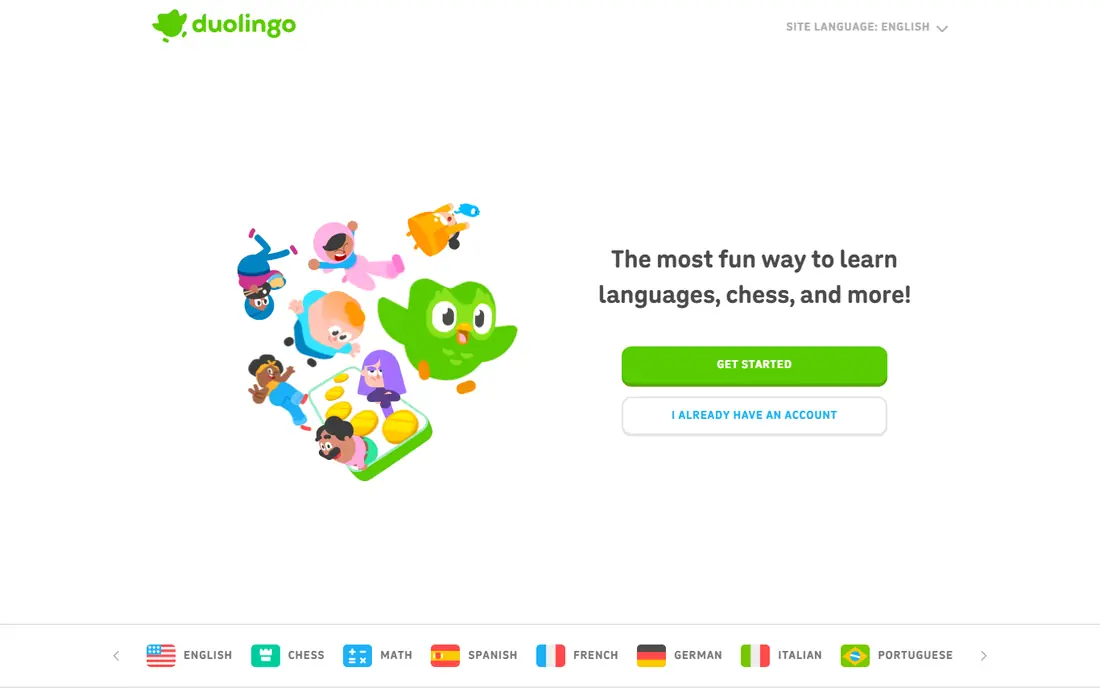
Duolingo is often the first stop for new learners, and for good reason. The lessons are short, the exercises are varied, and the free version covers a useful set of everyday words and phrases. If your main problem is consistency, the streak system and reminders do real work. The catch is depth. Tones, measure words, and sentence patterns get less explanation here than in a Mandarin-first app. Treat Duolingo as a warm-up or a companion app, and pair it with a course that explains grammar and characters in more detail when you are ready to go further.
- Free core course
- Short gamified lessons
- Streaks and reminders keep practice regular
- Grammar explanations are thin
- Advanced Mandarin content is limited

HelloChinese feels built for someone starting from zero. Early lessons focus on pinyin, tones, and simple sentences, and speech recognition pushes you to say words out loud rather than only tapping answers. Short lessons, games, and native-speaker videos keep the pace friendly. Once you move past the beginner and lower-intermediate stages, you will likely want extra reading, listening, or tutoring material. That is a normal limit for a beginner app, not a flaw in its early course. For the first months, though, HelloChinese is our pick for most people.
- Speaking-first lessons with speech recognition
- Clear path from pinyin to conversation
- Character writing practice included
- Content thins out at higher levels
- Full course requires a paid plan

ChineseSkill takes a similar game-based route to other beginner apps, but with a Mandarin-only focus that shows in its tone drills and character work. Lessons mix listening, speaking, reading, and writing, so you are not only memorising word lists. The bite-size format suits a commute or a lunch break. As with most beginner apps, the ceiling matters. Learners who reach an intermediate level will need graded readers, podcasts, or conversation practice to keep progressing. Start here if you like playful lessons and want a clear Mandarin path without paying on day one.
- Playful lessons with speaking and writing practice
- Covers pinyin, characters, and grammar basics
- Works well in short sessions
- Less depth for intermediate learners
- Some advanced topics are covered lightly
LingoDeer stands out because it explains why a sentence works, not just what it means. Grammar notes sit inside the lessons, and the course moves in a logical order from sounds to sentence patterns. That structure helps learners who get frustrated by apps that only ask for translations. Speaking gets less attention than in HelloChinese or SuperChinese, so you may want to read sentences aloud and record yourself even when the app does not ask. For learners who like to understand the rules before they practise, LingoDeer is a strong, calm choice.
- Detailed grammar notes
- Structured Asian-language courses
- Offline lessons on mobile
- Mandarin course is shorter than some rivals
- Speaking practice is less central
Pimsleur teaches Mandarin mainly by listening and speaking. Each lesson builds a short conversation piece by piece, then asks you to respond, which is close to how real conversation feels. Pronunciation and tone get repeated attention, and you can study without looking at a screen. The trade-off is reading. If your goal includes reading characters, menus, or messages, you will need a separate app or textbook for characters. Pimsleur is best for travellers, commuters, and anyone who wants to speak first and read later.
- Conversation-based audio lessons
- Strong pronunciation focus
- Hands-free learning while driving or walking
- Character reading is not the focus
- Subscription cost adds up over time
Rosetta Stone uses images and spoken Mandarin to teach meaning, with very little English in the lessons themselves. That immersion style suits visual learners who like to guess from context and build intuition. Speech recognition gives feedback on pronunciation, and the course covers a wide set of everyday topics. Some learners will miss clear grammar notes, especially for particles and word order that do not map neatly onto English. If you like explanations, pair Rosetta Stone with a grammar guide. If you like learning by seeing and hearing, it remains a solid option.
- Picture-based immersion without translation crutches
- Speech recognition included
- Long-established course library
- Grammar is taught by example rather than explanation
- Less Mandarin-specific depth than specialist apps
SuperChinese organises its course around real situations, such as ordering food, checking into a hotel, or talking about work. Each unit builds vocabulary and phrases you can actually use, and the pronunciation feedback points to specific sounds that need work. Spaced repetition brings older words back before you forget them. The app is open about not being an exam drill tool, so HSK test takers should add dedicated exam practice. For learners who want a steady, speaking-focused course with clear levels, SuperChinese is one of the best Chinese learning apps in this list.
- Scenario-based lessons
- Detailed pronunciation feedback
- Spaced repetition for review
- Not built as an exam drill app
- Higher tiers cost more for AI tutor features
Drops does one thing well: it helps you learn and remember words fast. Each session lasts about five minutes, and the visual style makes new characters and sounds easier to link in memory. It is a good fit for busy days when a full lesson feels like too much. Do not expect Drops to carry your Mandarin alone. It teaches vocabulary, not conversation or grammar, so use it beside a main course. As a second app for word building, it earns its place, especially for learners who enjoy short, focused practice.
- Beautiful visual vocabulary drills
- Very short sessions
- Good for tones and word recall
- Not a full Mandarin course
- Grammar and conversation practice are limited
Busuu blends a structured course with a community feature that lets native speakers correct your written and spoken exercises. That feedback is valuable for tones and natural phrasing, and the study plan helps you set a realistic weekly target. Grammar tips are clearer here than in many gamified apps. The Mandarin course does not go as deep as HelloChinese or SuperChinese for specialist topics, so advanced learners will outgrow it. For beginners and lower-intermediate learners who want corrections from real people, Busuu is a friendly and useful choice.
- Structured lessons with grammar tips
- Feedback from native speakers
- Personalised study plans
- Mandarin content is less deep than specialist apps
- Full features require a premium plan
How we picked these
We compared official feature pages, pricing pages, and app store listings, along with privacy policies and public reviews, for Mandarin-first and general language apps. We favoured apps that teach tones and pinyin from the start, offer speaking practice, and cover characters in some form, rather than apps that only teach isolated words. Prices shown are starting prices from vendor or app store listings where we could verify them, and we used See website where a price varies by region or plan.
What to look for in a Mandarin learning app
A good Mandarin app teaches sound before spelling in a way that fits the language. Tones change meaning, so speech recognition or at least clear audio examples matter from lesson one. Pinyin helps at the start, but the app should also introduce characters gradually, with stroke order or reading practice, if you plan to read anything beyond menus.
Match the app to your goal
Travellers need phrases, listening, and pronunciation. Students need grammar, characters, and reading. Workers need workplace vocabulary and polite forms. Pick the app whose course matches that goal, rather than the app with the longest course list.
Check characters and levels
Some apps teach simplified characters only, others offer traditional characters, and some let you switch. Check this setting before you invest months of practice. Also check where the course ends. An app that stops at lower-intermediate level is fine as a starter, as long as you know you will need a next step.
Try before you pay
Use the free lessons to test the voice, the pace, and the review system. If you dread opening the app after a week, a different style will serve you better than a cheaper price. The best app for learning Mandarin is the one you will open most days.
FAQ
What is the best app to learn Mandarin for beginners?
HelloChinese is our pick for most beginners because it teaches pinyin, tones, and basic conversation in a clear order, with speaking practice from the start. SuperChinese is a close alternative if you prefer scenario-based lessons and detailed pronunciation feedback. Try both free versions and keep the one whose lessons you enjoy repeating.
What is the best Chinese learning app for speaking practice?
HelloChinese, SuperChinese, and Pimsleur all put speaking first, but in different ways. HelloChinese and SuperChinese use speech recognition inside short lessons, while Pimsleur builds full conversations by audio alone. If you want to read and speak, pick a Mandarin app. If you mainly want to talk, Pimsleur is hard to beat.
Are there good free apps to learn Mandarin?
Yes, Duolingo, HelloChinese, Drops, and Busuu all offer free plans that cover useful beginner material. Free plans usually limit daily lessons, advanced content, or review features, so they work best as a trial or a daily habit. For a full structured course, expect a subscription.
Is Duolingo good for learning Mandarin?
Duolingo is good for building a daily habit and learning basic words and phrases, and its free course is a low-risk way to start. It is weaker on grammar explanations and advanced Mandarin than specialist apps such as HelloChinese or SuperChinese. Many learners use Duolingo beside a main Mandarin course rather than as their only app.
What is the best app for learning Chinese characters?
HelloChinese includes character writing practice, and LingoDeer and SuperChinese also teach characters as part of their courses. For deep character study, a dedicated dictionary or writing app can help, but a main course that introduces characters gradually is usually easier to stick with. Check whether the app uses simplified or traditional characters before you commit.
How long does it take to learn Mandarin with an app?
That depends on daily time, prior language experience, and whether you also practise speaking with real people. A daily 15 to 30 minute habit can build basic conversation skills over several months, while reading fluency takes longer and needs extra reading practice. Apps help most when they are part of a routine that includes listening, speaking, and review.