8 Best Apps to Learn English Speaking Fluently in 2026
Discover the best app to learn english speaking fluently for live practice, AI drills, or pronunciation coaching, with honest prices and limits for each pick.
- Editor's choice
 Speak
Daily AI conversation drills
Starts at$17.99 per monthVisit speak.comFull review - Great alternative
 ELSA Speak
Pronunciation and clear speech
Starts atFreeVisit elsaspeak.comFull review - Also consider
 italki
One-to-one lessons with a tutor you choose
Starts atSee websiteVisit italki.comFull review
TL;DR:
- Speaking fluency comes from speaking out loud often, not from collecting vocabulary points alone.
- Live tutors give the most natural correction, while AI apps give unlimited low-pressure practice between lessons.
- Pronunciation coaching helps when listeners often ask you to repeat yourself.
- A free app can build a daily habit, but most learners need a paid plan or tutor time to reach confident conversation.
- Try one speaking app and one habit app together for two weeks before judging either one.
Quick comparison
| Tool | Best for | Starts at | Free plan? | |
|---|---|---|---|---|
| Speak | Daily AI conversation drills | $17.99 per month | Free trial | Visit |
| ELSA Speak | Pronunciation and clear speech | Free | Yes | Visit |
| italki | One-to-one lessons with a tutor you choose | See website | No | Visit |
 Cambly | Chatting with native speakers on demand | $39 per month | No | Visit |
 Duolingo | Building a free daily English habit | Free | Yes | Visit |
 Babbel | Structured lessons that include speaking | $17.95 per month | No | Visit |
 Busuu | Short lessons plus feedback from other learners | Free | Yes | Visit |
 Preply | Regular weekly tutoring with one teacher | See website | No | Visit |
The best apps to learn English speaking fluently
Fluency is a speaking skill, so the best app for you is the one you will actually talk into every day. The list below separates live human practice from AI practice, so you can pick the mix that fits your budget and your nerves.
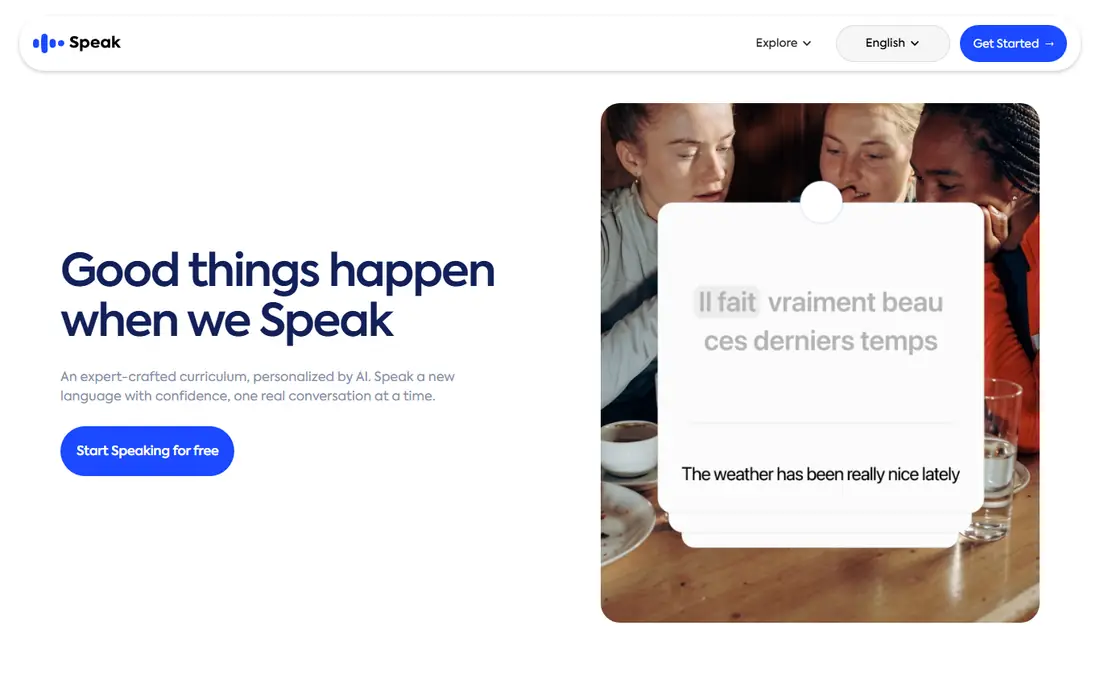
Speak is built around talking, not tapping through quizzes. You answer prompts, hold short conversations, and get feedback on what you said and how you could say it more naturally. That loop helps learners who understand English well but freeze when they need to reply quickly. Short sessions fit into a commute or a lunch break, which makes daily practice realistic. The limit is that an AI partner never gets confused the way a real person does, and it never asks a follow-up question you did not expect in quite the same way. Speak works best as a rehearsal tool. Pair it with occasional real conversation, even a short tutor lesson, to test whether your practice holds up with a human listener.
- Unlimited-style AI speaking practice
- Instant feedback on phrasing
- Conversation topics for work and daily life
- No human tutor
- AI feedback can miss cultural nuance
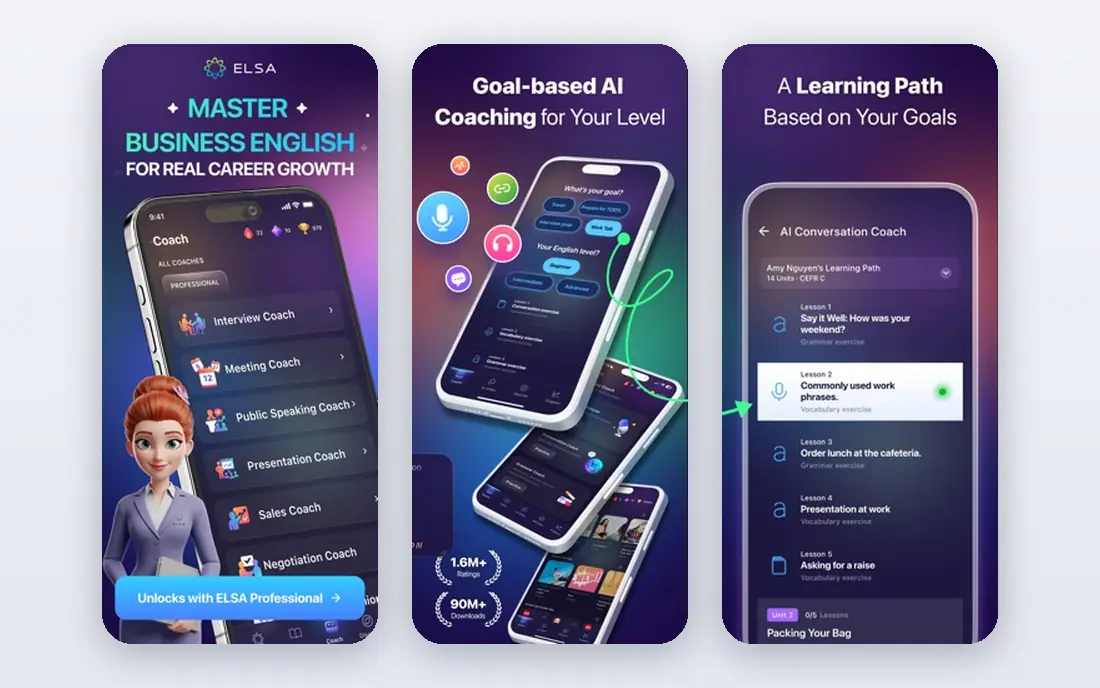
ELSA Speak listens to how you say words and points to the specific sounds that need work, such as stress, intonation, and vowel sounds. That detail matters when your grammar is fine but listeners struggle to follow you. Lessons are organized by topic, so you can practice interview answers, presentations, or daily conversation with a clear goal. ELSA is not a full conversation partner. It drills and corrects, but it does not replace a free-flowing chat where you must think on your feet. Use it when clarity is your main barrier, and add a conversation app or tutor when you are ready to practice longer, less scripted replies.
- Detailed sound-by-sound feedback
- Lessons for work and interviews
- Free tier to test the approach
- Focused on pronunciation, not open conversation
- Paid plans vary by region and promotion
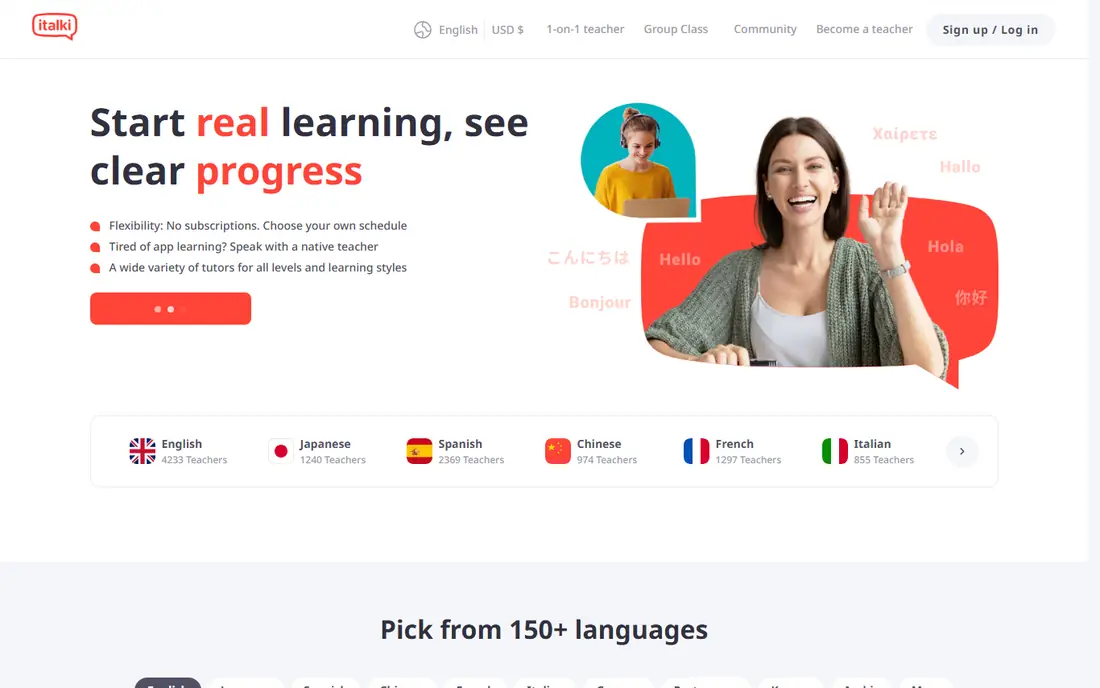
italki connects learners with tutors for live one-to-one lessons, with prices that vary widely by tutor, experience, and lesson type. You can pick a tutor for interview prep, business English, or casual conversation, and you can try a discounted trial lesson before committing. That control is valuable, because a good tutor relationship often matters more than any app feature. The trade-off is effort. You must browse profiles, book times, and manage cancellations, and a tutor who suits one learner may not suit another. italki suits learners who want real correction and real conversation, and who are willing to spend a little time finding the right teacher.
- Wide tutor choice and price range
- Lessons tailored to your goals
- Pay per lesson on many listings
- Quality varies by tutor
- Scheduling takes effort
Cambly is for learners who want to talk now, without building a long course plan first. You connect with a tutor, often a native speaker, and practice conversation on topics you choose. That on-demand style suits shift workers and busy parents, since you are not tied to a fixed class time. Recorded lessons let you replay moments where you struggled. Cambly is less structured than Babbel or a formal course, so progress depends on how you use the time. Go in with a topic or a work situation to practice, and ask the tutor to correct key errors rather than every small slip. Without that focus, chats can stay pleasant but shallow.
- Tutors available at many hours
- Conversation-first format
- Lessons can be recorded for review
- Higher monthly cost than AI apps
- Less structured curriculum than a course app
Duolingo is the easiest app on this list to start, and that matters. Short lessons, streaks, and reminders help a beginner practice every day, and the free tier covers vocabulary and basic grammar without a payment. For a learner starting from a low level, that daily contact with English builds a base for speaking later. Duolingo alone rarely creates fluency, because most tasks are short and guided. Speaking prompts exist, but they do not match the pressure of a real conversation. Treat Duolingo as a warm-up and vocabulary tool, then add Speak, ELSA, or a tutor for the speaking work that actually moves fluency forward.
- Free tier with short lessons
- Streaks and reminders support consistency
- Good for beginners
- Limited open speaking practice
- Ads and energy limits on the free tier
Babbel takes a more course-like path, with lessons that build grammar and vocabulary in order and dialogues drawn from everyday situations. Speech recognition gives you a chance to say lines out loud and get a basic check, which helps beginners gain confidence before live practice. The structure suits learners who like to know what comes next. Babbel does not offer the open conversation or detailed pronunciation coaching found in more specialized apps. It is a strong foundation tool, especially for learners who want order and review, but most users will still need live or AI conversation practice to become fluent speakers.
- Clear lesson progression
- Dialogues based on real situations
- Speech recognition in exercises
- No live tutor on the standard plan
- Monthly cost adds up over a year
Busuu combines short, level-based lessons with a community feature where other learners and native speakers can correct your spoken and written exercises. That human feedback, even in short form, adds something AI drills cannot: a real listener reacting to your English. The free tier is enough to test the format before paying. Feedback speed and quality vary, since it depends on other users. Busuu also works best as a structured study app rather than a conversation app. It fits learners who want lessons, review, and occasional human correction in one place, at a low starting cost.
- Free tier for core lessons
- Community corrections on speaking and writing
- Clear level path
- Community feedback quality varies
- Some features sit behind Premium
Preply focuses on finding a tutor and keeping a regular weekly rhythm, which helps learners who improve with accountability. You can filter by price, specialty, and availability, try a trial lesson, and then book a recurring slot. A steady tutor learns your weak points over time, from verb tenses to interview phrasing, and can track progress across weeks. Preply is less flexible than Cambly for on-demand chats, and costs depend heavily on the tutor you choose. It suits learners who can commit to a weekly lesson and who want a teacher who knows their history, rather than a new conversation partner each time.
- Tutor profiles with reviews and trial lessons
- Regular schedule supports progress
- Wide price range
- Tutor prices vary a lot
- Commitment suits learners with a steady schedule
How we picked these
We compared official pricing and feature pages, app store listings, and public reviews, with a focus on speaking time rather than general language study. An app earned a place if it offers real speaking practice, pronunciation feedback, or live tutor conversation, and if its pricing and free options could be checked. We left out apps that teach mainly reading or vocabulary, since they do not directly answer a speaking fluency goal.
How to build a routine that actually improves speaking
Speak out loud every day, even for ten minutes, and record yourself once a week so you can hear change over time. Pick topics from your real life, such as work meetings, school runs, or job interviews, because fluency grows fastest on language you actually need. Do not wait until your English feels perfect to start talking, since waiting is what keeps many learners stuck.
A simple weekly mix
Try three short AI or pronunciation sessions, one live conversation or tutor lesson, and one review session where you repeat corrected phrases out loud. Keep a small list of phrases you got wrong, and practice those first the next day. If a week feels too full, cut lesson length, not speaking days, because frequency matters more than a single long session.
Common mistakes to avoid
Avoid spending all your time on grammar apps while avoiding speech, and avoid only chatting without any correction, since errors can become habits. Also avoid switching apps every few days. Give a routine at least two weeks, track whether you speak more easily at the end of a session, and then adjust one thing at a time.
FAQ
Can an app alone make me fluent in English?
An app can build a large part of fluency, especially with daily AI speaking and pronunciation work, but most learners progress faster with some live conversation. Real listeners force you to handle surprises, interruptions, and unclear questions.
How long does it take to speak fluently?
It depends on your starting level, daily practice, and prior exposure. With 20 to 30 minutes of speaking practice most days, many learners notice clearer conversation in three to six months, while confident professional fluency often takes longer.
Is a live tutor better than an AI app?
A live tutor is better for natural correction and real conversation, while an AI app is better for unlimited, low-pressure reps. Many learners get the best result from both, using AI for daily practice and a tutor for weekly real conversation.
What if I understand English but cannot speak it?
That gap is common, and it usually means you need more speaking reps, not more input. Short AI conversations, shadowing short audio clips out loud, and a weekly tutor lesson all target that exact problem.
Should I focus on accent or grammar first?
Focus on clarity first, then grammar. If listeners understand you, small grammar slips matter less in daily life. Pronunciation coaching helps when specific sounds cause confusion, while grammar work helps when errors change meaning.
Are free apps enough?
Free apps can build vocabulary and a daily habit, and some offer limited speaking or community feedback. For confident conversation, most learners eventually pay for AI speaking time or tutor lessons, or use free language exchange with a careful partner.