Best Apps to Learn English in 2026: 8 Apps Compared
Find the best apps to learn English in 2026, with free plans, speaking practice, grammar courses, and live tutors compared for every level and budget.
- Editor's choice
 Duolingo
Daily habit building
Starts atFreeVisit duolingo.comFull review - Great alternative
 Babbel
Structured grammar and vocabulary
Starts atSee websiteVisit babbel.comFull review - Also consider
 Rosetta Stone
Immersive learning without translation
Starts atSee websiteVisit rosettastone.comFull review
TL;DR:
- No single app covers every skill, so pair a daily habit app with speaking practice for faster progress.
- Duolingo and Busuu give the best free starting point, while Babbel and Rosetta Stone suit structured study.
- ELSA Speak is the strongest choice in this list for pronunciation and accent feedback.
- italki and HelloTalk add real conversation, which is the skill most self study apps handle least well.
- Check the billing term before you pay, because monthly and annual prices for the same app can differ a lot.
Quick comparison
| Tool | Best for | Starts at | Free plan? | |
|---|---|---|---|---|
| Duolingo | Daily habit building | Free | Yes | Visit |
| Babbel | Structured grammar and vocabulary | See website | Free trial | Visit |
| Rosetta Stone | Immersive learning without translation | See website | Free trial | Visit |
 Busuu | Short courses with community feedback | Free | Yes | Visit |
 ELSA Speak | Pronunciation and speaking confidence | Free | Yes | Visit |
 Memrise | Vocabulary with native speaker video | Free | Yes | Visit |
 italki | Live one to one lessons | See website | No | Visit |
 HelloTalk | Language exchange with native speakers | Free | Yes | Visit |
The best apps to learn english
We compared free tiers, lesson structure, speaking practice, grammar teaching, and price. The best app to learn English for you depends on your level, your daily time, and the skill you most need to improve.

Duolingo is the easiest place to start, and that is a real strength. Lessons are short, visual, and built around repetition, so a learner can finish a session on a bus or during a lunch break. The free tier is genuinely useful, not just a demo, and the course path moves from basic words and phrases toward longer sentences and reading. For a beginner who has never studied English in an app, Duolingo lowers the barrier to a daily habit.
The limit is depth. Duolingo teaches vocabulary and sentence patterns well, but it does not replace conversation with a real person, and its grammar notes are brief. Paid Super removes ads and limits, and Max adds AI conversation features in some markets, but prices vary by store and country. Use Duolingo as your daily base, then add speaking practice elsewhere if speaking is your goal.
- Free tier covers a full English course path
- Short lessons fit a busy day
- Streaks and leagues help many learners stay consistent
- Free tier has ads and limits
- Speaking practice is limited compared with live conversation
- Grammar explanations are shorter than Babbel
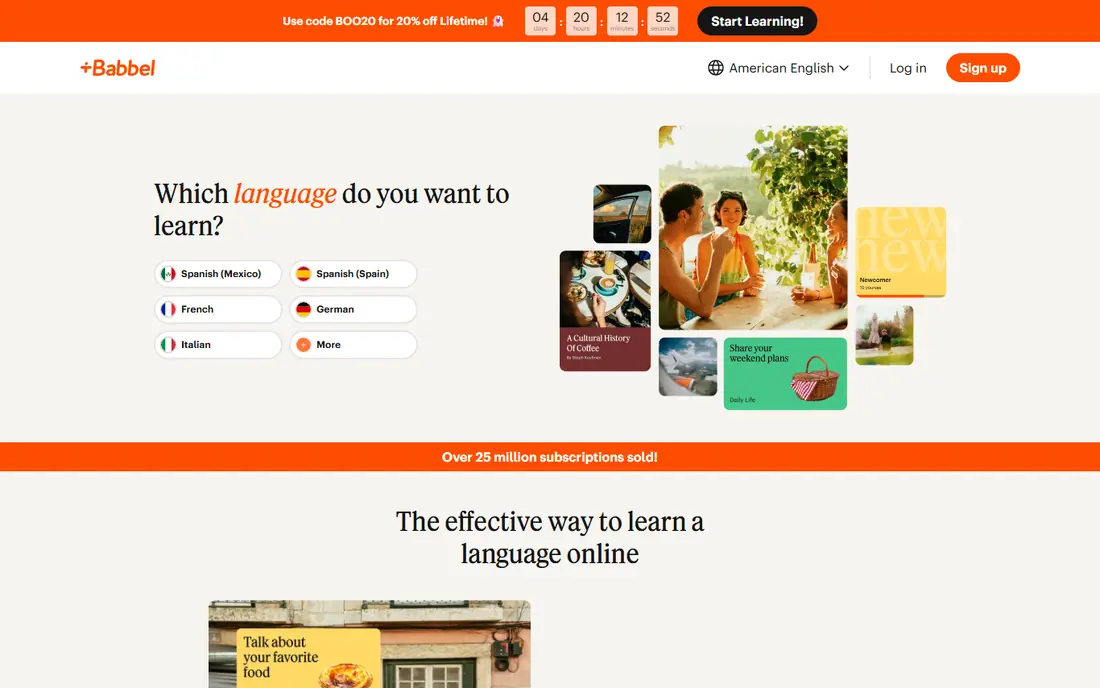
Babbel feels more like a course than a game. Lessons explain a grammar point, then ask you to use it in a dialogue, a listening task, and a review. That structure suits learners who want to know why a sentence works, not just repeat it. The topics cover work, travel, and daily life, and the lesson length is short enough for a daily routine without feeling rushed.
The main drawback is access. Babbel offers first lessons free in many courses, but full access needs a subscription, and the price depends on the billing term you choose. It also does not offer live conversation in the main app, so you will still need a speaking partner for fluency. If you like order and clear explanations, Babbel is a strong core app for learning English.
- Clear grammar explanations in short lessons
- Dialogues reflect real life situations
- Review sessions help vocabulary stick
- No full free tier, only first lessons in many courses
- No live tutor in the core app
- English courses are aimed at speakers of certain other languages

Rosetta Stone takes a different route. It shows images and spoken English together, without translating into your first language, so you learn meaning from context. That method can help learners who translate word by word in their head and want to think in English more directly. Lessons build slowly, with repetition of core patterns, and the speech tool checks your pronunciation as you speak.
That approach is not for everyone. Some learners want a clear grammar rule before they practise, and Rosetta Stone gives patterns rather than explanations. The free trial is short, and full access is a subscription, so try the trial with a clear goal in mind. If immersion suits you, Rosetta Stone is a calm, steady way to build listening and speaking basics.
- Image based lessons build intuition for word meaning
- Speech recognition gives pronunciation feedback
- TruAccent style tools support speaking
- No translation can frustrate absolute beginners
- Grammar rules are learned by pattern, not explained directly
- Subscription cost is higher than some rivals
Busuu combines a structured course with a community. You work through short lessons, then submit writing or speaking exercises for correction by native speakers. That feedback loop is valuable, because it shows mistakes you would not notice on your own. The course levels follow a clear scale, so you can see progress from beginner toward upper intermediate work.
The free tier is useful for daily study, but Premium adds grammar lessons, offline mode, and a fuller review system. Community corrections depend on other users being active, so feedback may not arrive at once. If you want a free English learning app with real human feedback, Busuu is one of the best options in this list.
- Free tier covers core lessons
- Community corrections from native speakers
- Courses are mapped to levels from beginner to upper intermediate
- Full grammar and offline features need Premium
- Community feedback speed varies
- Some advanced content is thinner than beginner content
ELSA Speak is the most focused app here. It listens to your speech, scores individual sounds, and points to the exact sound or stress pattern to fix. That level of detail is hard to get from a general course app. After an entry assessment, it builds a path around your weak sounds, and lessons cover interviews, presentations, and exam style speaking as well as daily conversation.
It is not a complete English course. Grammar, reading, and writing get less attention than speaking, so pair ELSA with Duolingo or Babbel if you need a full course. The free tier gives limited lessons each day, which is enough to test the feedback style. If clear speech is your main goal, ELSA Speak is our pick for most learners in this group.
- Detailed feedback on sounds, stress, and intonation
- Personal learning path after an assessment
- Lessons cover work, exams, and daily speech
- Focus is speaking, not full grammar or reading
- Full library needs a paid plan
- Some features vary by device and region
Memrise is built for vocabulary that sticks. It uses short clips of native speakers, so you hear natural speed, rhythm, and slang, not just a recorded voice reading a word list. Spaced repetition brings words back just before you are likely to forget them, which helps a learner build a usable word bank for daily life and work. Lessons are short, and the app works well as a second app beside a main course.
The weakness is structure. Memrise does not teach grammar in the same depth as Babbel, and course quality can vary. Treat it as a vocabulary booster, not a full course. If you already know basic grammar and need more words and listening practice, Memrise is a strong, low cost addition to your routine.
- Short video clips show real speakers using phrases
- Spaced repetition helps recall
- Free tier covers core vocabulary courses
- Less structured grammar teaching than Babbel
- Some courses vary in quality
- Full features need a paid plan
italki is the closest option here to a real classroom, because you speak with a teacher live. You can pick a teacher by price, accent, specialism, and student reviews, then book a trial lesson before you commit. That flexibility suits learners who need interview practice, exam preparation, or help with a specific work task. Pay per lesson pricing also means you can study intensively for a month, then pause without a subscription running.
The trade off is effort. You must choose a teacher, book a time, and show up ready to speak, which is harder than opening an app for five minutes. Prices vary by teacher, so a cheap tutor and a certified teacher are not the same service. If speaking is your weak point, one italki lesson each week plus daily app study will usually move you faster than app study alone.
- Choose from many professional teachers and community tutors
- Pay per lesson with no fixed subscription
- Lessons can target exams, work, or conversation
- Prices vary widely by teacher
- You must schedule lessons in advance
- No structured course path unless your teacher builds one
HelloTalk turns language learning into conversation. You chat with native English speakers who are learning your language, and you correct each other in text, voice, and calls. Built in tools let you translate a message, check pronunciation, and fix grammar in a chat, which makes a real exchange feel less daunting. For learners who know some English but freeze when speaking, regular short chats can build confidence fast.
It is not a course. There is no set path, no grammar syllabus, and partner quality varies. Use the safety tools, keep personal details private, and set a clear exchange pattern, such as ten minutes in English and ten minutes in your language. As a free way to practise English speaking with real people, HelloTalk is hard to beat.
- Free language exchange with native speakers
- Built in corrections, translation, and voice tools
- Large community for English learners
- Quality of partners varies
- It is a social app, so it needs care with privacy
- Structured lessons are limited compared with Babbel
How we picked these
We compared official pricing pages, app store listings, course structures, and public reviews for apps that teach English to non native speakers. We looked for a usable free tier or trial, clear level progression, speaking practice, and honest limits. We left out apps that no longer offer an English course, that focus only on children, or that could not be verified as active in October 2026. We did not claim hands on testing, and we based our view on official feature pages, pricing, and public user feedback.
How to choose the best app for learning English
Start with your goal and your time. A learner with ten minutes a day needs a different app from a learner preparing for a job interview in three weeks. Pick one core app, one speaking route, and a review habit, then keep that routine for at least a month before you judge it.
Match the app to your weakest skill
If grammar confuses you, Babbel or Busuu will help more than a vocabulary app. If people cannot understand your speech, ELSA Speak will help more than reading lessons. If you understand English but cannot speak, italki or HelloTalk will help more than another grammar course. Be honest about the gap, because the right app for a beginner is not always the right app for an intermediate learner.
Use free tiers before you pay
Duolingo, Busuu, Memrise, ELSA Speak, and HelloTalk all offer free access that is enough to test the teaching style. Use the free tier for a week, check the lesson length, the voice quality, and the review system, and only then pay for a longer term. Annual plans look cheaper per month, but they only save money if you still use the app in month six.
Build speaking into every week
Apps can teach words and grammar, but fluency comes from speaking. Book a weekly italki lesson, join a HelloTalk exchange, or practise aloud with ELSA Speak every day. Record yourself once a week if you can, because hearing your own progress is a strong motivator and it shows which sounds still need work.
FAQ
What is the best app to learn English for free?
Duolingo gives the fullest free course path in this list, with a free tier that covers lessons, review, and basic speaking. Busuu and Memrise also offer useful free tiers for lessons and vocabulary. For free speaking practice, HelloTalk adds real conversation, while ELSA Speak gives limited free pronunciation lessons each day.
What are the best English learning apps for speaking?
ELSA Speak is best for pronunciation feedback, italki is best for live lessons with a teacher, and HelloTalk is best for free language exchange. A good routine is ELSA for daily sound practice, plus a weekly italki lesson or HelloTalk exchange for real conversation. That mix covers both accuracy and confidence.
What is the best app for learning English speaking at work?
ELSA Speak covers interview and presentation practice, and italki lets you book a teacher who specialises in business English. Babbel also includes work dialogues that help with meetings and email language. Choose a teacher or a lesson path that matches your job, and practise the exact phrases you use at work.
Are the best apps for learning English enough on their own?
Apps can build vocabulary, grammar, and listening, but most learners also need real speaking practice to become fluent. Pair an app with conversation, reading, and listening to English media. A daily app habit plus weekly speaking will usually beat a longer app habit with no speaking at all.
What is the best free English learning app for beginners?
Duolingo is our pick for most beginners, because it is free, short, and easy to use every day. Busuu is a close second, with levelled courses and community feedback. Start with Duolingo for two weeks, then add Busuu or ELSA Speak once the daily habit feels easy.