Best AI Tools For Research in 2026: 8 Options Compared
Looking for best ai tools for research? We compared 8 options in 2026, checking features, pricing, free plans and limits to help you choose Start here.
- Editor's choice
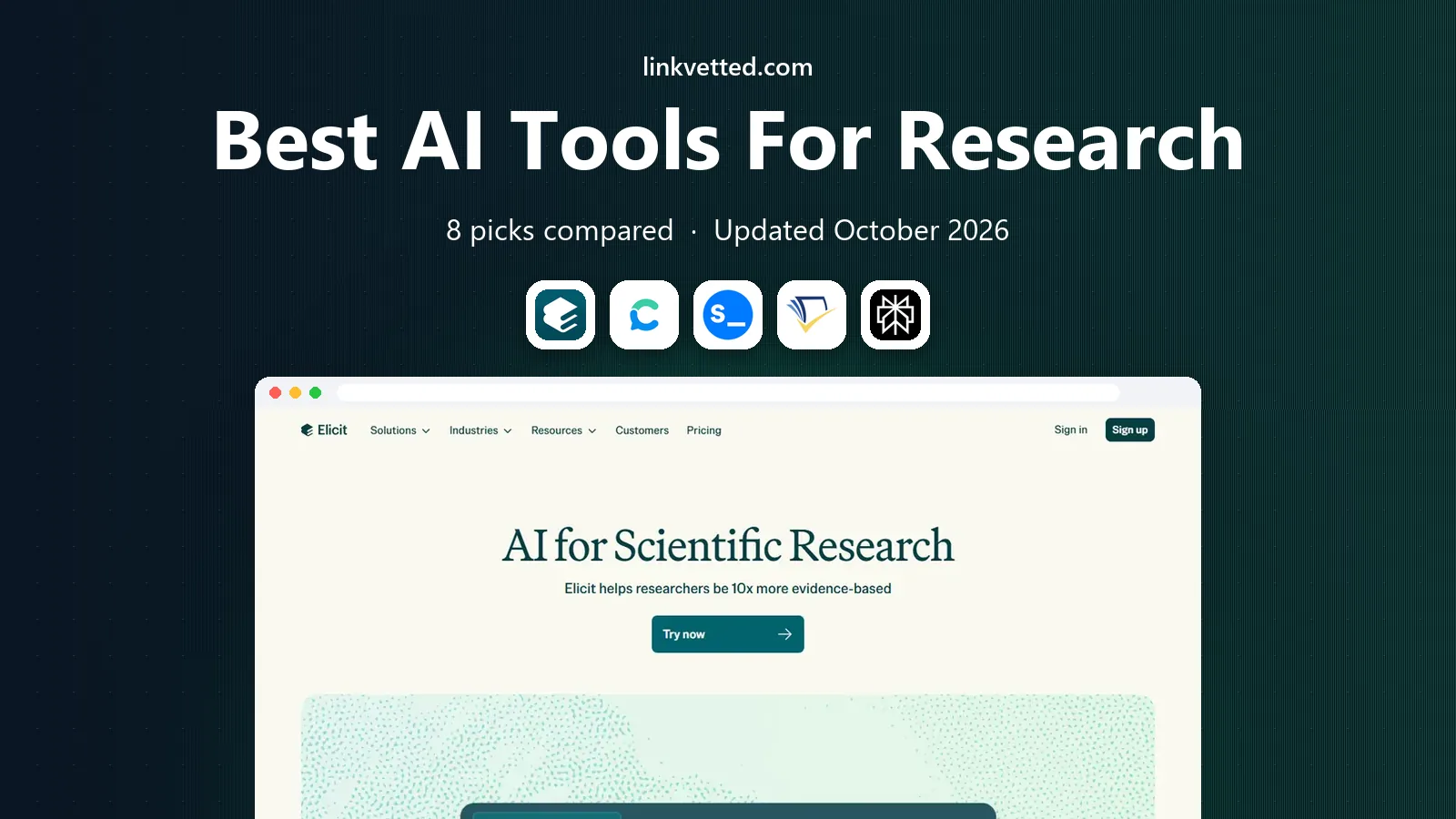
 Elicit
AI research assistant
Starts atSee websiteVisit elicit.comFull review - Great alternative
 Consensus
Evidence-based research search
Starts atSee websiteVisit consensus.appFull review - Also consider
 Scite
Citation context checker
Starts atSee websiteVisit scite.aiFull review
TL;DR:
- Our pick for most people is Elicit, because it balances aI research assistant with a usable free or trial option.
- Consensus stands out for evidence-based research search, while Scite is a strong choice for citation context checker.
- Prices and free plans change often, so check the official pricing page before you buy, and treat See website as a prompt to verify the current price.
- If you need a free start, Semantic Scholar offers a free plan, but check its limits before relying on it for daily work.
- We compared official feature pages, pricing pages and public reviews, and we did not include products that no longer work or do not fit the topic.
Quick comparison
| Tool | Best for | Starts at | Free plan? | |
|---|---|---|---|---|
| Elicit | AI research assistant | See website | Free trial | Visit |
| Consensus | Evidence-based research search | See website | Free trial | Visit |
| Scite | Citation context checker | See website | Free trial | Visit |
 Semantic Scholar | Free academic search | Free | Yes | Visit |
 Perplexity | AI search with citations | See website | Free trial | Visit |
 ResearchRabbit | Paper discovery by network | Free | Yes | Visit |
 Litmaps | Visual literature maps | See website | Free trial | Visit |
 Connected Papers | Graph of similar papers | See website | Free trial | Visit |
The best best ai tools for research
We compared official feature pages, pricing pages, app store listings and public reviews for best ai tools for research, best ai tool for research and best ai research tools. The products below all work in October 2026, and each one is judged on fit, price and honest limits rather than on marketing claims alone.

Elicit fits researchers doing literature reviews, because it finds papers, extracts claims and ties summaries to sources. Its strengths include finds papers and extracts claims, Summaries tied to sources, Good for literature reviews. It offers a free trial, with a starting price of See website, so you can test it on real work before committing.
The catch is checking: summaries can miss nuance, so open the original paper before citing any claim. Try Elicit on that same task first, and check exports, support response and total cost at your team or household size before you commit. If aI research assistant matters most to you, Elicit deserves a place on your shortlist, provided the limits above fit your budget and workflow.
- Finds papers and extracts claims
- Summaries tied to sources
- Good for literature reviews
- Coverage depends on underlying databases
- Summaries still need source checks
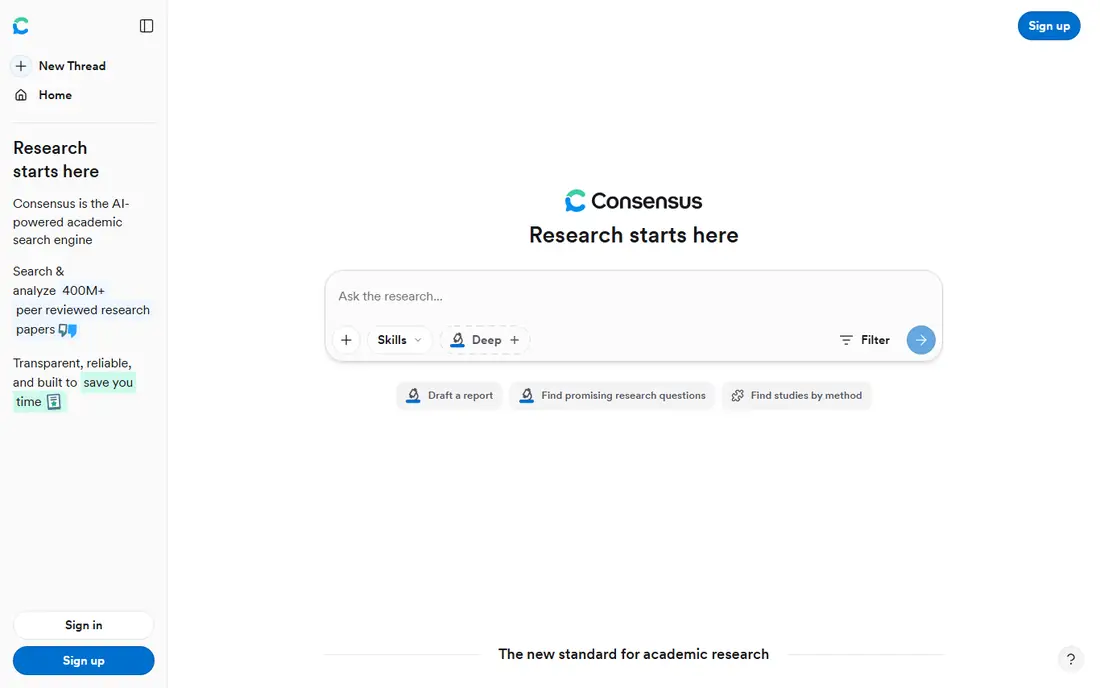
Consensus fits researchers who want paper-based answers to a question, with a meter showing how studies lean. Its strengths include asks questions and returns paper-based answers, Consensus meter for agreement, Filters by study type. It offers a free trial, with a starting price of See website, so you can test it on real work before committing.
The catch is scope: it works best for science and health questions, and very new topics may have too few papers to judge. Try Consensus on that same task first, and check exports, support response and total cost at your team or household size before you commit. If evidence-based research search matters most to you, Consensus deserves a place on your shortlist, provided the limits above fit your budget and workflow.
- Asks questions and returns paper-based answers
- Consensus meter for agreement
- Filters by study type
- Best for science and health questions
- Less useful for very new or niche topics
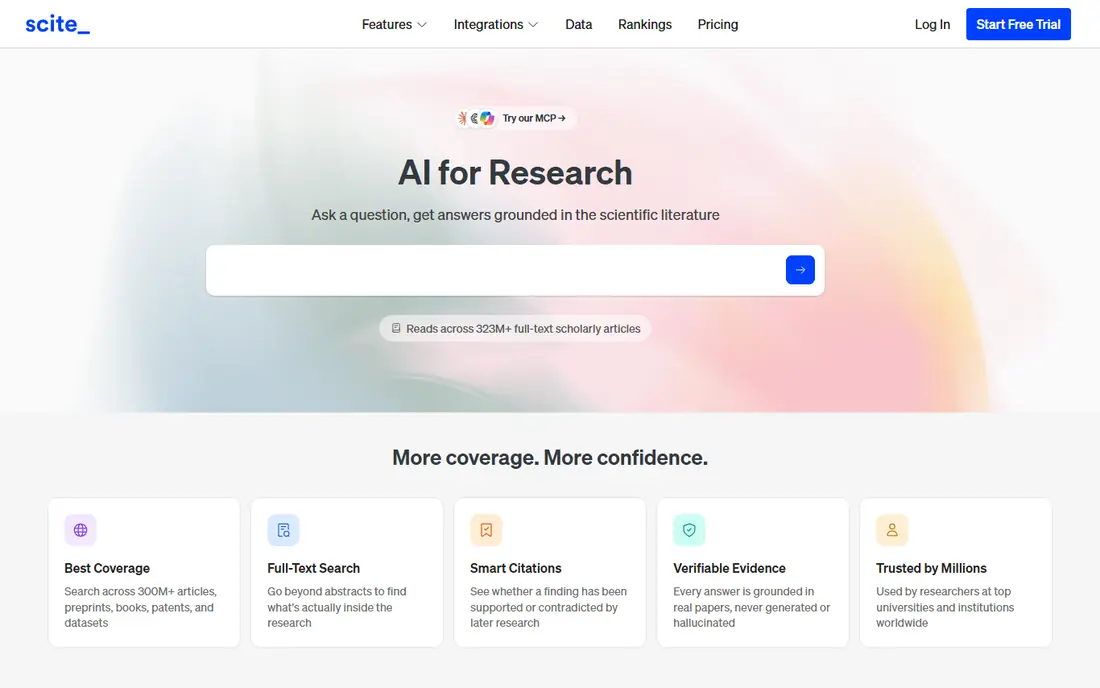
Scite fits researchers who need to check how a claim has been cited, with supporting and contrasting citations shown in context. Its strengths include shows supporting and contrasting citations, Smart citations for claims, Dashboard for topics. It offers a free trial, with a starting price of See website, so you can test it on real work before committing.
The catch is judgement: a citation label is a starting point, not proof, so read the citing paper before relying on it. Try Scite on that same task first, and check exports, support response and total cost at your team or household size before you commit. If citation context checker matters most to you, Scite deserves a place on your shortlist, provided the limits above fit your budget and workflow.
- Shows supporting and contrasting citations
- Smart citations for claims
- Dashboard for topics
- Full features need a paid plan
- Citation labels need human judgement
Semantic Scholar fits anyone who wants a large free academic index, with short TLDR summaries and strong author filters. Its strengths include large free paper index with TLDR summaries, Author and venue filters, API for researchers. It offers a free plan, with a starting price of Free, so you can test the core features before paying for more.
The catch is depth: TLDR summaries are short by design, so they help triage papers rather than replace reading them. Try Semantic Scholar on that same task first, and check exports, support response and total cost at your team or household size before you commit. If free academic search matters most to you, Semantic Scholar deserves a place on your shortlist, provided the limits above fit your budget and workflow.
- Large free paper index with TLDR summaries
- Author and venue filters
- API for researchers
- Summaries are short and general
- No full AI writing workflow
Perplexity fits quick research overviews, with answers that cite sources and follow-up questions that keep context. Its strengths include answers with cited sources, Good for quick research overviews, Follow-up questions keep context. It offers a free trial, with a starting price of See website, so you can test it on real work before committing.
The catch is quality: citations vary, so verify key facts against the original source before using them in academic work. Try Perplexity on that same task first, and check exports, support response and total cost at your team or household size before you commit. If aI search with citations matters most to you, Perplexity deserves a place on your shortlist, provided the limits above fit your budget and workflow.
- Answers with cited sources
- Good for quick research overviews
- Follow-up questions keep context
- Citations vary in quality
- Not a substitute for peer-reviewed reading
ResearchRabbit fits researchers exploring a field visually, because it maps papers by citation networks and alerts you to related work. Its strengths include maps papers by citation networks, Alerts for new related work, Visual exploration of a field. It offers a free plan, with a starting price of Free, so you can test the core features before paying for more.
The catch is starting point: it needs good seed papers, so a weak starting set gives weak recommendations. Try ResearchRabbit on that same task first, and check exports, support response and total cost at your team or household size before you commit. If paper discovery by network matters most to you, ResearchRabbit deserves a place on your shortlist, provided the limits above fit your budget and workflow.
- Maps papers by citation networks
- Alerts for new related work
- Visual exploration of a field
- Free tool with no AI writing features
- Needs seed papers to start well
Litmaps fits researchers who think visually, with interactive maps that show how papers connect around a topic. Its strengths include interactive maps of papers and connections, AI summaries for clusters, Good for scoping a topic. It offers a free trial, with a starting price of See website, so you can test it on real work before committing.
The catch is coverage: its database is smaller than major indexes, so cross-check important papers elsewhere. Try Litmaps on that same task first, and check exports, support response and total cost at your team or household size before you commit. If visual literature maps matters most to you, Litmaps deserves a place on your shortlist, provided the limits above fit your budget and workflow.
- Interactive maps of papers and connections
- AI summaries for clusters
- Good for scoping a topic
- Smaller database than major indexes
- Paid plan needed for larger maps
Connected Papers fits researchers who have one strong paper and want its neighbours, with a simple graph of similar work. Its strengths include builds a graph of similar papers from one seed, Quick way to find core literature, Simple visual layout. It offers a free trial, with a starting price of See website, so you can test it on real work before committing.
The catch is meaning: similarity is not quality, so judge each paper on its own methods before citing it. Try Connected Papers on that same task first, and check exports, support response and total cost at your team or household size before you commit. If graph of similar papers matters most to you, Connected Papers deserves a place on your shortlist, provided the limits above fit your budget and workflow.
- Builds a graph of similar papers from one seed
- Quick way to find core literature
- Simple visual layout
- Free graphs are limited each month
- Graphs show similarity, not quality
How we picked these
We started from the topic and the related searches readers actually use, then checked each product on its official feature page, pricing page, app store listing and privacy policy where relevant. We kept only products that exist and work in October 2026, that truly fit the topic, and that offer a clear way to try, buy or cancel. Where we could not verify a current price from the vendor, we wrote See website rather than guessing a figure.
We also weighed public reviews and known limits, such as free plan caps, platform limits and support quality. A product with a strong feature list but a poor fit for ordinary users did not make the list ahead of a simpler tool that does the core job well. Our pick for most people reflects that balance, not a paid placement.
How to choose the right one for you
Start with budget and trial terms. A free plan or trial lets you test the core job before paying, but check what the free tier actually includes, such as export limits, user limits or watermark rules. If the price is listed as See website, open the pricing page and check for per-user fees, add-ons and renewal terms, because the headline price is rarely the full cost.
Next, match the tool to your situation rather than to the longest feature list. Check platform support, such as Windows, Mac, iOS, Android or browser use, and check whether it works with tools you already use. For teams, check admin controls, support hours and data export, because switching later is harder than choosing well now.
Finally, test privacy and support before you rely on a product for important work. Read the privacy policy for data use and retention, check how to delete your data, and try support with a real question during the trial. If a product cannot answer clearly on price, privacy or cancellation, that is a useful signal on its own.
FAQ
What is the best best ai tools for research for most people?
Our pick for most people is Elicit, because it covers aI research assistant with a usable free or trial option and a clear upgrade path. Most readers do not need the most advanced tool, they need one that handles the core job reliably. Try it first on a real task, then compare it with Consensus if you need a different strength.
Is there a free best ai tools for research option?
Yes, Semantic Scholar offers a free plan, and several others offer a free trial. Free plans usually limit features, storage, exports or user numbers, so they work best for testing or light use. If you plan to use the tool daily, budget for a paid plan and check what the free tier leaves out.
How much does best ai tools for research cost?
Costs vary widely by product, plan and team size, and many vendors price by user or by usage. Where we verified a starting point from the vendor, we listed it in the comparison table, and where we could not verify a current price, we wrote See website. Always check the official pricing page for add-ons, renewal terms and per-user fees before buying.
What should I check before choosing best ai tools for research?
Check platform support, free plan limits, export options, privacy terms and support quality. Also check whether the tool fits your existing workflow, such as your phone, computer or team tools, and whether you can cancel or export your data easily. A short trial on a real task will reveal more than a feature list alone.
How does best ai tool for research compare with best ai tools for research?
best ai tool for research is a closely related search, and most products in this list cover both needs, though their strengths differ. Elicit is our general pick, while Consensus may suit readers who prioritise evidence-based research search. Compare the best_for column in the table, then test your top two choices on the same task before deciding.