Choosing AI Tools for Digital PR in 2026: 6 Options Compared
A practical look at the best AI tools for digital PR in 2026, covering media databases, outreach, monitoring and content research, with limits and buying tips.
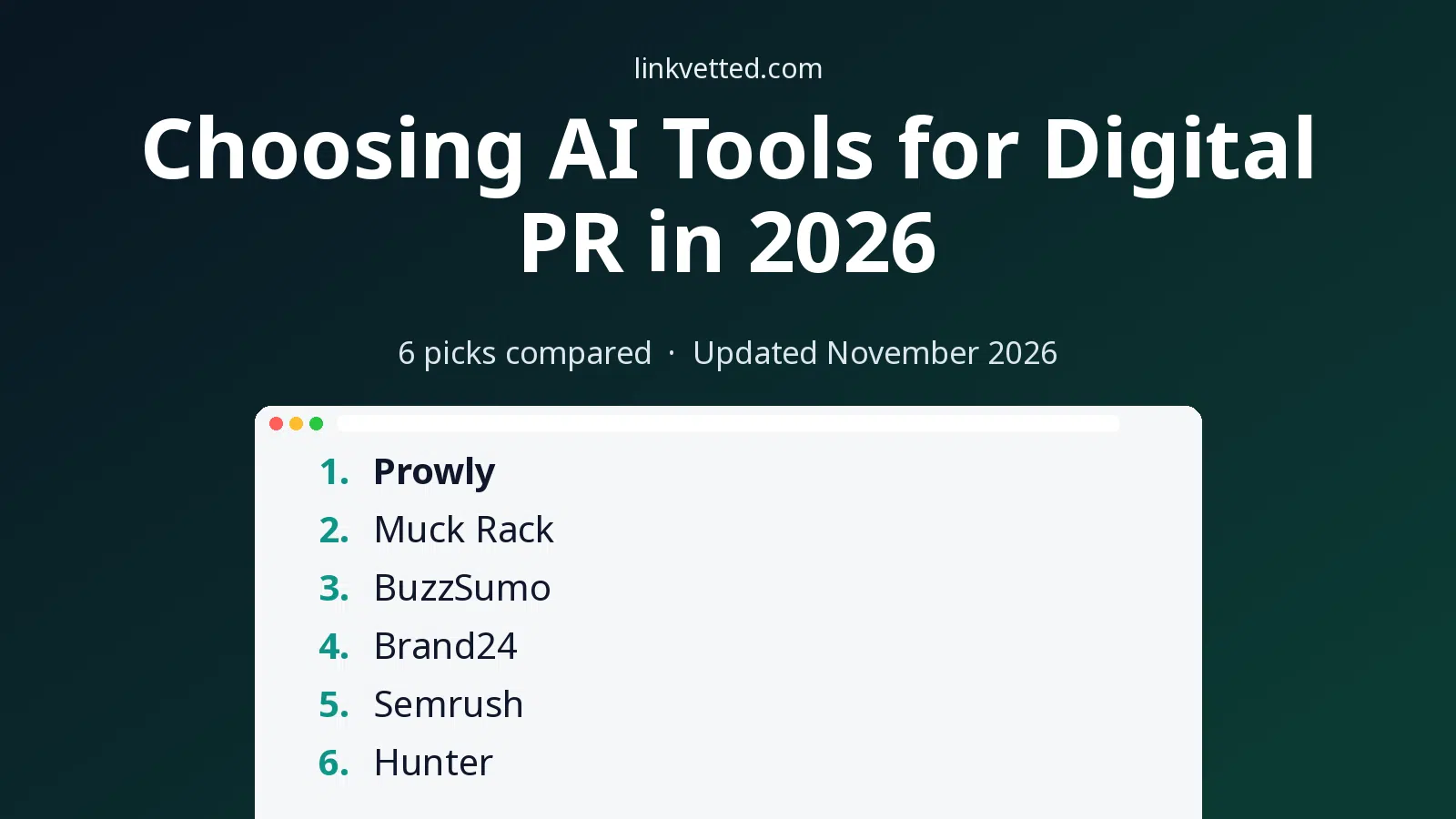
- Editor's choice
 Prowly
Running full digital PR campaigns
Starts atSee websiteVisit prowly.comFull review - Great alternative
 Muck Rack
Journalist contact data and outreach
Starts atSee websiteVisit muckrack.comFull review - Also consider
 BuzzSumo
Finding data-led story angles
Starts atSee websiteVisit buzzsumo.comFull review
Direct answer
My first pick is Prowly, because it combines media database search, campaign planning, pitching and reporting in one place, which suits small agencies running digital PR campaigns. For teams that mainly need journalist contact data and outreach, Muck Rack is the stronger fit. If your digital PR work leans on data-led story ideas, BuzzSumo helps with content research and trend spotting before you pitch.
TL;DR:
- Digital PR tools split into media databases, outreach platforms, monitoring services and content research tools, and most teams need more than one.
- Start with the workflow you repeat most often, such as building media lists or tracking coverage, and pick a tool that covers that step well.
- AI features are usually assistants inside a larger product, so judge the underlying database and workflow first.
- Always confirm current features, limits and pricing on the vendor site, because plans change between updates.
- Treat AI output as a draft: journalists still respond to specific, relevant pitches, not generic generated text.
Last checked November 2026. Plan prices are not quoted in this guide because they change often; see each vendor's own pricing page for current figures before you buy.
Quick comparison
| Tool | Best for | Starts at | Free plan? | |
|---|---|---|---|---|
| Prowly | Running full digital PR campaigns | See website | Free trial | Visit |
| Muck Rack | Journalist contact data and outreach | See website | Not stated | Visit |
| BuzzSumo | Finding data-led story angles | See website | Free plan | Visit |
 Brand24 | Tracking mentions and coverage | See website | Free trial | Visit |
 Semrush | Teams already doing SEO work | See website | Free plan | Visit |
 Hunter | Finding and verifying email addresses | See website | Free plan | Visit |
The best AI tools for digital PR compared
I put this list together from vendor documentation and public sources, not from hands-on tests. I run a small SEO agency, so I looked at how each tool fits the steps I actually repeat in digital PR: finding journalists, building lists, pitching, and tracking what gets published. The notes below describe what each vendor says the product does and where it tends to fall short.
Prowly is a PR platform from Semrush that covers media database search, contact management, press release distribution and reporting. It fits small agencies and in-house teams that want one place to plan a campaign, build a media list and send pitches without stitching several tools together.
For digital PR, the useful part is the workflow around a story. You can search for journalists by beat, save them to a list, send a pitch and then track coverage against the campaign. The AI features help with drafting and list work, but the core value is the structured process, which keeps outreach organised when you run several campaigns at once.
The limit is scale. If you need a very large journalist database or deep media analytics, a dedicated database may suit you better. Skip Prowly if you only send occasional pitches and do not need campaign tracking.
- Media database with contact details
- campaign planning and pitching in one place
- coverage reporting built in
- Smaller database than some rivals
- best value only if you use most of the workflow
Muck Rack is a media database and PR management platform. It lets you search journalists by outlet and beat, build lists, send pitches and monitor coverage. It is a common choice for agencies and in-house teams that pitch media regularly and need reliable contact data.
In a digital PR workflow, Muck Rack is most useful at the list-building stage. You can check what a journalist covers before you pitch, which reduces wasted sends. Monitoring then shows where coverage landed, so you can report on a campaign without manual searching.
The main drawback is fit for small operations. The platform is built for teams with ongoing media relations, and solo users may find it more than they need. Check the vendor site for current plan details before committing.
- Large media database
- monitoring and reporting features
- profile pages for journalists
- Pricing aimed at larger teams
- features can feel heavy for solo users
BuzzSumo is a content research tool. You search a topic and see what has performed well, which questions people ask, and who writes about the subject. For digital PR, that helps you shape a story angle before you approach journalists.
The practical use is early in a campaign. You check whether an idea has been covered heavily, look for gaps, and identify writers and sites that already cover the topic. That research feeds your media list and your pitch, so you are not guessing at what a journalist might want.
Its limits are clear: BuzzSumo does not send pitches or manage media contacts. Treat it as a research step and pair it with a database or outreach tool. Skip it if your bottleneck is contact data rather than ideas.
- Content research by topic and domain
- trend and question discovery
- influencer search
- Not a pitching or media database tool
- results need manual filtering
Brand24 is a media monitoring service. It tracks mentions of keywords, brands and campaign phrases across news sites, blogs and social platforms, and sends alerts when something new appears. It fits teams that need to know when coverage goes live.
For digital PR, monitoring closes the loop. After a campaign, you can follow a campaign hashtag or phrase and collect links and mentions as they appear, which makes reporting faster. Alerts also help you spot a mention that needs a reply or a correction.
The drawback is that monitoring is only one part of PR. You still need a way to find contacts and pitch. Also expect some noise in results, so set clear keywords. Skip it if you already have monitoring inside another platform.
- Mention monitoring across many sources
- sentiment and share-of-voice views
- alerts for new coverage
- Monitoring focus, not a pitching tool
- noisy results need filtering
Semrush is an SEO and marketing platform with keyword research, competitor analysis, content tools and, through Prowly, PR features. It fits teams that already use Semrush for SEO and want digital PR work in the same environment.
For digital PR, the value is context. You can research which topics and pages attract links, check competitor coverage, and then move into pitching through the PR side. That link between SEO research and PR outreach is useful when campaigns are planned around search goals.
The limit is focus. Semrush is large, and PR is one module among many. If your team only does media relations, a dedicated PR tool may be simpler. Check the vendor site for what is included in each plan.
- Broad SEO and content toolkit
- PR features via Prowly
- competitor and keyword research in one place
- Digital PR is one part of a large suite
- can be overwhelming for PR-only users
Hunter is an email finding and verification tool. You enter a domain and it suggests likely email addresses, then checks whether they are deliverable. It fits anyone who needs to reach a specific writer or editor and cannot find a direct address.
In digital PR, Hunter is a small but useful step. When you identify a journalist or site you want to pitch, you can look for a contact address and verify it before sending. That reduces bounces and keeps your outreach list cleaner.
Its limits are obvious: it is not a media database and does not manage campaigns. Results depend on what a site publishes, so some addresses will not be found. Use it alongside a proper PR platform rather than as a replacement.
- Email finding by domain
- verification to reduce bounces
- simple interface
- No media database or PR workflow
- results vary by site
How I chose
I built this list from vendor documentation and public sources, including each product's own feature pages and help content. I did not run hands-on tests, so I am not claiming measured results. Instead, I looked at what each tool says it does, which step of a digital PR workflow it covers, and where the documentation points to limits. That method favours tools with clear, checkable feature descriptions over vague marketing claims.
I also weighed fit. A small agency needs a different balance from a large in-house team, and a research tool solves a different problem from a media database. Where a product is strong in one area and weak in another, I said so in the cons. Before you buy, confirm current features, plan limits and pricing on the vendor site, because these change and my notes reflect public information at the time of writing.
What to check before you buy
- Confirm the size and coverage of the media database for the beats and regions you pitch, not just the headline number.
- Check whether pitching, list management and reporting are included or sold as separate modules.
- Ask how AI features are used, such as drafting or list suggestions, and whether outputs need manual review.
- Test the monitoring setup with a sample campaign phrase to see how much noise you get.
- Review export options for coverage reports, since clients often want links and metrics in a specific format.
- Confirm current pricing, seat limits and contract terms directly with the vendor before committing.
FAQ
What are AI tools for digital PR?
They are software products that use automation or AI features to support digital PR tasks such as finding journalists, building media lists, drafting pitches, monitoring coverage and researching story angles. Many are established PR or SEO platforms with AI assistants added, rather than standalone AI products.
Do I need more than one tool?
Usually yes. Media databases, monitoring services and content research tools cover different steps. A small team might start with one platform that covers most of the workflow, then add a research or monitoring tool where the gap is clearest.
Can AI write pitches for me?
AI can draft a pitch, but the result still needs a specific angle, correct names and a reason the story fits that journalist. Generic generated pitches tend to perform poorly. Use AI for structure and speed, then edit for relevance before sending.
Are free plans enough for digital PR?
Free plans and trials are useful for checking interface and basic features, but they usually limit searches, contacts or monitoring. For regular campaigns you will likely need a paid plan. Confirm what each free tier includes on the vendor site.
How do I compare tools without testing them all?
Start with your most repeated task, then read vendor documentation for the tools that cover it. Compare database coverage, included features, export options and plan limits. Shortlist two or three and use trials where available before deciding.
Sources
- https://prowly.com
- https://muckrack.com
- https://buzzsumo.com
- https://brand24.com
- https://www.semrush.com
- https://hunter.io