Best AI Media Monitoring Tools for PR in 2026: 8 Tools Compared
Best AI media monitoring tools PR compared: Meltwater, Brandwatch, Talkwalker and more on coverage, sentiment, alerts, reports and pricing in 2026 today.
- Editor's choice
 Meltwater
Enterprise PR and media intelligence
Starts atSee websiteVisit meltwater.comFull review - Great alternative
 Brandwatch
Consumer insight and sentiment
Starts atSee websiteVisit brandwatch.comFull review - Also consider
 Talkwalker
Visual listening and global coverage
Starts atSee websiteVisit talkwalker.comFull review
TL;DR:
- Meltwater and Cision give PR teams the broadest mix of news, broadcast and social coverage.
- Brandwatch and Talkwalker lead on consumer insight, sentiment and visual listening at scale.
- Brand24 and Mention suit smaller teams that need fast alerts without an enterprise contract.
- Muck Rack is the strongest pick when journalist relationships matter as much as mentions.
- Most enterprise tools are quote-only, so request a trial on your own brand terms before buying.
Quick comparison
| Tool | Best for | Starts at | Free plan? | |
|---|---|---|---|---|
| Meltwater | Enterprise PR and media intelligence | See website | No | Visit |
| Brandwatch | Consumer insight and sentiment | See website | No | Visit |
| Talkwalker | Visual listening and global coverage | See website | No | Visit |
 Cision | PR workflows and distribution | See website | No | Visit |
 Muck Rack | Journalist relations | See website | No | Visit |
 Mention | Fast affordable alerts | See website | Free trial | Visit |
 Brand24 | Mid-market AI listening | See website | Free trial | Visit |
 Sprout Social | Social management plus listening | $199 per user per month | Free trial | Visit |
The best AI media monitoring tools for PR
PR teams need more than a mention count. They need to know where a story started, how sentiment is shifting, who is sharing it and whether a response is needed now or can wait. The tools below all use AI for sentiment, summaries or alerts, but they serve different team sizes and budgets.
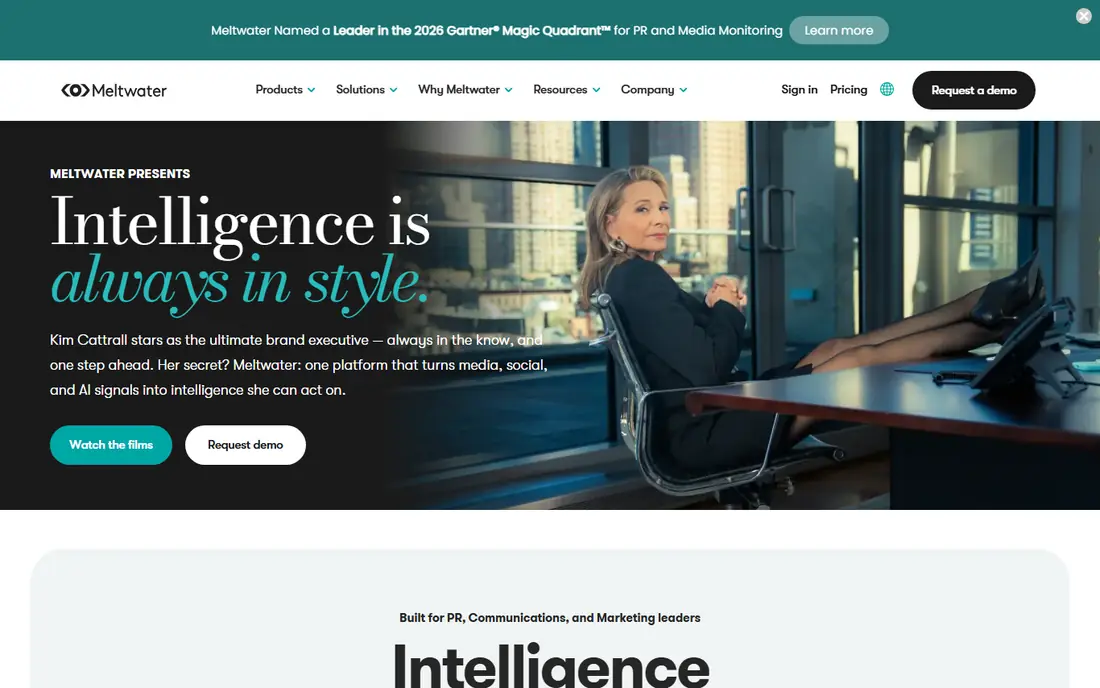
Meltwater remains a default shortlist pick for PR and communications teams that must track news, social, broadcast and podcasts in one place. Its AI features help turn a flood of mentions into summaries, sentiment trends and spike alerts, so a comms lead can see the shape of a story without reading every post. Reporting tools also make it easier to show coverage and reach to senior leaders.
The main drawback is access. Pricing is quoted, contracts tend to be annual, and smaller teams may pay for coverage depth they rarely use. Meltwater fits best when media relations is a core job, not an occasional task, and when the team needs one source of truth for earned media.
- Very broad news and social coverage
- AI summaries and alerts
- Strong reporting for PR teams
- Quote-only pricing
- Can feel large for a small team
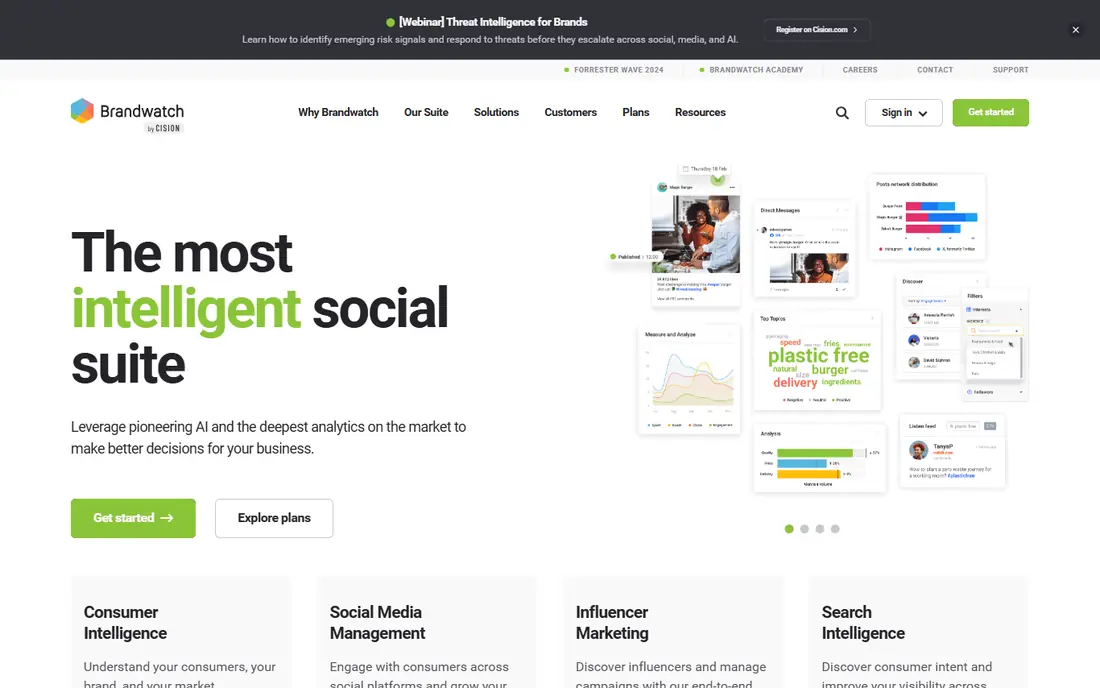
Brandwatch is built for research as much as for daily PR monitoring. Its long historical archive lets teams compare a launch with past campaigns, track how conversation changes over years and study audience segments in detail. AI tools help build queries, summarise themes and surface shifts in emotion that a simple keyword count would miss.
That depth has a cost in money and learning time. There is no public price, and new users often need onboarding before they get full value from the platform. For insight teams, agencies and large brands, that investment can be worth it. For a team that only needs daily alerts, a lighter tool may serve better.
- Deep historical data
- AI-assisted analysis
- Image and logo detection
- Quote-only pricing
- Needs training to use well
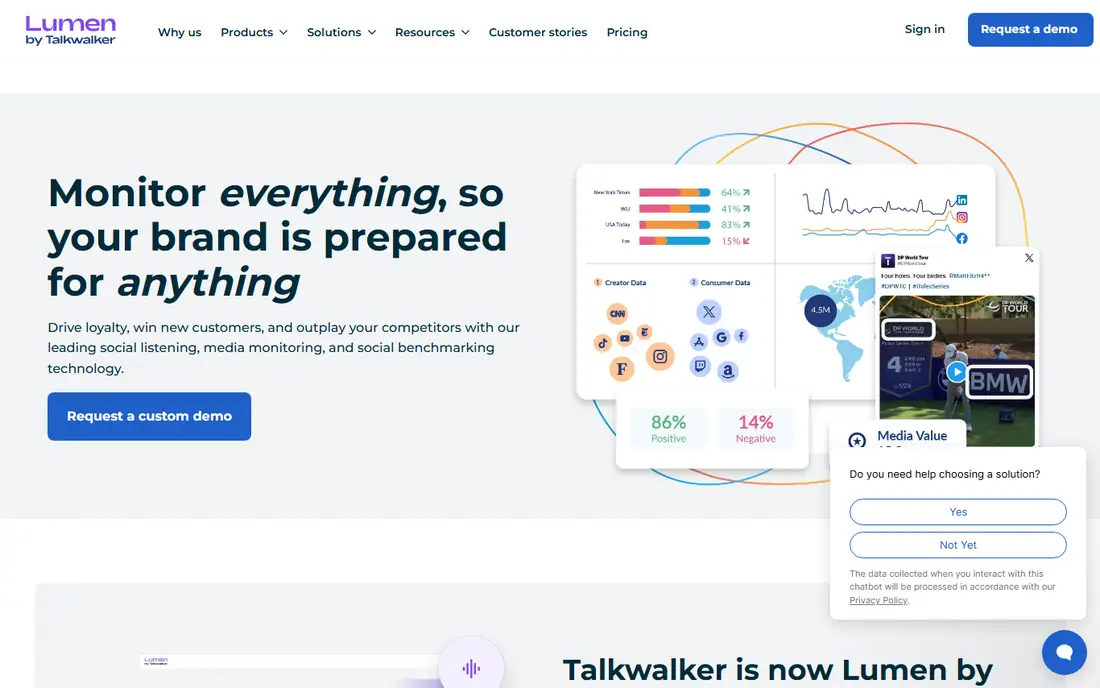
Talkwalker stands out when a brand appears in images and video, not just text. Its visual listening can find logos and brand mentions in photos and clips, which matters for sponsorship, product launches and crisis work where a screenshot travels faster than an article. Coverage spans many languages and source types, and alerts help teams react before a story spreads.
Like other enterprise platforms, Talkwalker is quote-led and best suited to larger teams. Smaller brands may find the contract size hard to justify. If visual coverage, global reach and early warning are top priorities, Talkwalker earns a place on the shortlist.
- Visual and video mention detection
- Broad global sources
- Fast spike alerts
- Enterprise pricing
- Some features sit in higher tiers
Cision combines monitoring with the practical work of PR: finding journalists, sending releases and tracking what happens next. That joined-up workflow saves time for teams that pitch stories every week, since contacts, coverage and reporting live in one system. Broadcast and print coverage also help teams that still care about TV, radio and newspapers.
The suite is broad, and that breadth can make onboarding slower. Pricing is quoted and aimed at professional PR teams and agencies. If your team mainly needs social listening, a specialist listening tool may be simpler. If media relations is the job, Cision covers more of the workflow in one place.
- Media database plus monitoring
- Distribution tools
- Broadcast coverage
- Quote-only pricing
- Suite can feel complex
Muck Rack is the pick for teams that think in terms of journalists first and mentions second. Its database helps find the right reporter, track pitches and see who covered a story, which is exactly what a media relations workflow needs. Monitoring is clear and well organised, without the extra consumer research layers that larger insight platforms add.
Teams that want deep audience segmentation or social trend research may need another tool alongside it. Muck Rack also prices by quote, so budget planning needs a sales conversation. For PR-led teams, though, the focus on people and relationships is a real advantage.
- Strong journalist database
- Pitch tracking
- Clean media monitoring
- Less consumer insight depth
- Quote-only pricing
Mention is a practical choice for small and mid-size teams that need to know, within minutes, when their brand appears online. Setup is fast, alerts arrive by email, Slack or mobile, and Boolean search helps filter out noise from common brand names. It covers social, news, blogs, forums and review sites well enough for daily PR work.
It will not match Brandwatch on historical research or Meltwater on traditional media breadth. Reporting is also simpler, which some teams will see as a benefit. If speed, price and ease matter more than enterprise depth, Mention is a strong starting point.
- Quick setup
- Real-time alerts
- Good Boolean search
- Less depth than enterprise platforms
- Higher tiers cost more
Brand24 hits a useful middle ground between free alerts and enterprise listening. Its AI tools flag sudden changes in mention volume, summarise sentiment and help teams spot a problem early. Coverage includes social, news, blogs, podcasts and reviews, which gives a fuller picture than social-only tools.
The trade is scale. Very large brands with huge mention volumes may need enterprise tiers or a larger platform. For agencies and mid-size brands, Brand24 offers a manageable price, a clear interface and alerts that a small team can actually act on. A free trial makes it easy to test on your own brand terms.
- AI sentiment and anomaly alerts
- Accessible pricing
- Podcast and review coverage
- Smaller source base than enterprise rivals
- Advanced reports need higher plans
Sprout Social suits teams that manage social channels every day and want listening in the same place as publishing and replies. Its listening tools track keywords, sentiment and trends, while engagement workflows help teams assign messages, approve posts and report results. That combination reduces tool switching for social-led PR.
It is not a full traditional media monitoring platform, so teams that need print, TV and radio coverage will need another source. Per-user pricing also adds up for larger teams. For social-first brands and agencies, Sprout Social gives a tidy, team-friendly setup.
- Publishing, engagement and listening in one tool
- Strong reports
- Team workflows
- Traditional media coverage is limited
- Price rises with seats
How we picked these
We compared official product pages, pricing information and independent 2026 comparisons for media monitoring tools with AI sentiment, summarisation or alert features. We included enterprise platforms for PR and insight teams, plus accessible tools for smaller teams, and we required live monitoring across news or social sources. Where vendors do not publish prices, we state that plainly rather than repeating unverified estimates as facts.
How to choose an AI media monitoring tool for PR
Start with the coverage you actually need. A consumer brand may care most about social, forums and reviews, while a corporate PR team may need print, broadcast and trade press too. List your top ten outlets, languages and channels, then test each tool on those exact terms. A platform that misses your key trade press is not a good fit, however strong its AI features look in a demo.
Sentiment, alerts and crisis use
AI sentiment is useful only if it matches how your audience talks. Test sentiment on your own brand mentions, including sarcasm, product names and common misspellings. Check alert speed, spike detection and whether alerts can reach Slack, email or mobile at night. For crisis work, also check who can access the platform, how fast a report can be shared and whether historical context is available during a live incident.
Reporting, integrations and cost control
PR reporting should answer simple questions: how much coverage, where, with what sentiment, and what changed. Check export options, dashboard sharing and whether the tool connects to your CRM, Slack or reporting stack. On cost, ask what counts toward mention limits, how historical data is charged and what happens when a campaign spikes. A trial with real brand data will reveal those limits before a contract locks them in.
FAQ
What does AI add to media monitoring?
AI helps with sentiment analysis, topic grouping, summaries and anomaly detection. Instead of reading thousands of mentions, teams can see themes, tone shifts and sudden spikes quickly. Human review still matters, since AI can misread sarcasm, slang and brand names that have other meanings.
How much do AI media monitoring tools cost?
Prices vary widely. Smaller tools may start with a free trial and paid plans for small teams, while enterprise platforms are quote-only and often run into thousands of dollars per year. Sprout Social publishes a starting price of $199 per user per month for its standard plan, but most PR platforms require a quote based on mentions, users and coverage.
Can these tools monitor AI search and chatbots?
Some platforms now track how brands appear in AI answers and chat tools, but coverage varies by vendor and plan. If AI search visibility matters to your team, ask each vendor exactly which AI engines it tracks, how often data refreshes and whether that module costs extra.
Do I need both social listening and traditional media monitoring?
Many PR teams do, because stories move between news, social, broadcast and podcasts. Social listening shows audience reaction, while traditional monitoring shows where a story started and how far it travelled. A combined platform saves time, but a social tool plus a focused media service can also work.
How do I avoid noise from common brand names?
Use Boolean search, exclusion terms, language filters and source filters during setup. Test queries on past mentions and refine them before relying on alerts. A short setup session with your real brand terms usually cuts false alerts far more than any default setting.
Is a free trial enough to judge a monitoring tool?
A trial is a good start if you use your real brand, competitors and crisis terms, not just demo data. Check alert speed, sentiment accuracy, coverage gaps and reporting during the trial. For enterprise tools that offer only a demo, ask for a pilot on your own data before signing.