Best AI Consulting Services in IT Industry in 2026: 9 Firms Compared
Looking for the best AI consulting services in IT industry? We compare 9 firms on strategy, build, governance, and fit for your company size and budget.
- Editor's choice
 Accenture
Large transformation
Starts atSee websiteVisit accenture.comFull review - Great alternative
 Deloitte
Regulated industries
Starts atSee websiteVisit deloitte.comFull review - Also consider
 IBM Consulting
Hybrid cloud AI
Starts atSee websiteVisit ibm.comFull review
TL;DR:
- Accenture is our pick for large, multi-country AI programs because it combines strategy, cloud delivery, and managed services at scale.
- McKinsey QuantumBlack suits board-level AI strategy, while BCG X suits companies that want strategy and product build from one firm.
- Deloitte and IBM Consulting lead for regulated industries where governance, audit, and risk controls shape every AI decision.
- Mid-market companies often get better value from Slalom, Thoughtworks, or a specialist builder than from a top-tier strategy firm.
- Every firm here prices by scope, so ask for a fixed-scope pilot with clear success measures before signing a large program.
Quick comparison
| Tool | Best for | Starts at | Free plan? | |
|---|---|---|---|---|
| Accenture | Large transformation | See website | No | Visit |
| Deloitte | Regulated industries | See website | No | Visit |
| IBM Consulting | Hybrid cloud AI | See website | No | Visit |
 McKinsey QuantumBlack | Board-level strategy | See website | No | Visit |
 BCG X | Strategy plus build | See website | No | Visit |
 Cognizant | Legacy modernization | See website | No | Visit |
 Capgemini | Scaling pilots | See website | No | Visit |
 Thoughtworks | Engineering-led builds | See website | No | Visit |
 Slalom | Mid-market delivery | See website | No | Visit |
The best AI consulting services in the IT industry
AI consulting covers strategy, data readiness, model building, governance, and running AI in production. We compared public service pages, methods, industry focus, and pricing models to pick these nine firms.
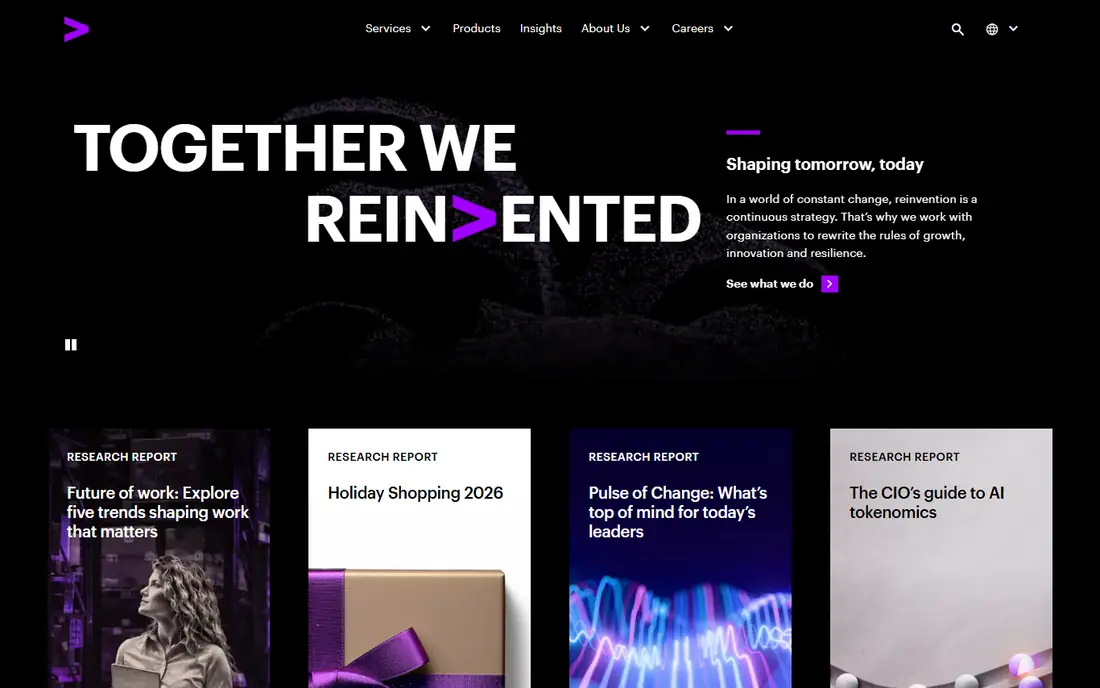
Accenture is the largest name on this list for end-to-end AI work, with tens of thousands of AI practitioners and a dedicated AI Refinery offering for building agents and copilots. It covers strategy, data modernization, cloud migration, and managed AI operations, which suits a company running the same program in several countries at once. Partnerships with the major cloud providers and model makers give it a wide bench of delivery options.
The tradeoff is scale itself. Accenture programs are priced by scope and sit at the premium end, and a small company with one use case may find the engagement model heavier than needed. For a large IT organization with a multi-year AI agenda, that scale is the reason to choose Accenture.
- Very large AI practice
- Cloud and managed services depth
- Global delivery footprint
- Premium pricing
- Large programs can move slowly at the start

Deloitte pairs AI consulting with its audit, risk, and tax heritage, which matters when AI decisions must stand up to regulators and boards. Its Trustworthy AI framework covers fairness, transparency, security, and accountability, and its teams work heavily in financial services, health care, and the public sector. That governance focus helps companies move from pilots to production without losing control of risk.
The style is thorough, which some teams experience as slow. Pricing is by scope at the premium end. If your AI program touches customer data, credit, health records, or public services, Deloitte's governance depth is a strong reason to shortlist it.
- Trustworthy AI framework
- Audit and risk strength
- Deep regulated industry experience
- Premium pricing
- Engagements can be process-heavy
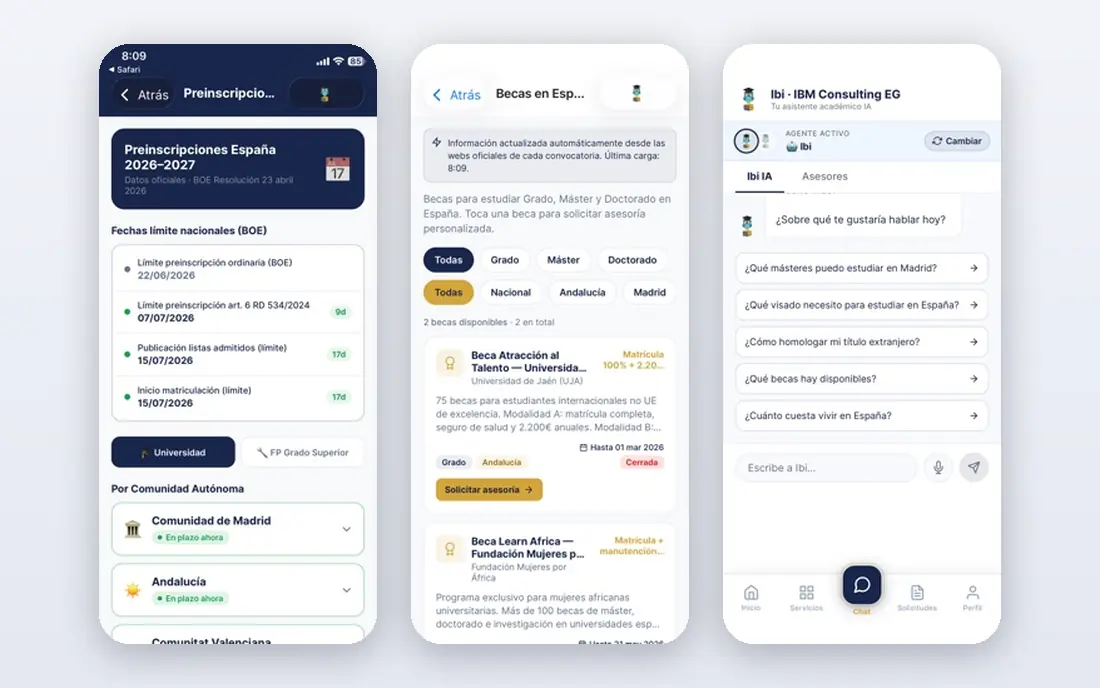
IBM Consulting combines consulting with the watsonx platform, including watsonx.governance for model risk and compliance tracking. That pairing suits companies with hybrid or on-prem constraints, such as banks and government bodies that cannot move all data to a public cloud. IBM's long history in enterprise IT also helps with legacy modernization beside new AI work.
The honest catch is product bias: an IBM-led program will lean toward IBM tools, so ask how open the architecture stays. Pricing is by scope. For a regulated company already running IBM systems, the fit is natural.
- Watsonx platform and governance tooling
- Hybrid and on-prem strength
- Regulated sector focus
- Natural bias toward IBM products
- Pricing by scope
QuantumBlack is McKinsey's AI arm, and it leads when the buyer is the CEO or board and the question is where AI changes the business, not just which tool to buy. Its Rewired method covers strategy, talent, operating model, data, and technology as one program, and McKinsey's research base gives executives benchmarks they can use in the boardroom. Engagements often start in the hundreds of thousands of dollars and rise into millions for large programs.
That pricing rules out most small companies, and QuantumBlack is not the right choice for a single chatbot build. For a large company making a company-wide AI bet, the strategy depth and executive credibility are the point.
- Strong executive strategy
- Rewired method
- Deep research base
- Highest pricing tier
- Less suited to small single-use-case builds
BCG X is Boston Consulting Group's build arm, and its appeal is that strategy and product work live under one roof. A team can shape the business case, prototype the product, and carry it toward production without handing off between firms. Its 10-20-70 framing, which stresses that most AI value comes from people and process rather than algorithms alone, is a useful check on unrealistic plans.
Pricing sits at the premium end and is set by scope. BCG X fits a company that wants a real product, not just a deck, and that can fund a program large enough to use both the strategy and engineering benches.
- Strategy and product build in one firm
- Strong design and engineering bench
- 10-20-70 method
- Premium pricing
- Best for larger programs
Cognizant is a global IT services firm with a growing AI practice built around its Neuro AI platform. It suits companies modernizing legacy systems while adding AI, since the same firm can handle application work, data engineering, and AI delivery. Health care, banking, and insurance are strong sectors, and managed services let a company hand over running AI systems after launch.
As with any large provider, experience depends on the account team, so ask to meet the delivery leads before signing. Pricing is by scope in the mid-premium range. For a mid-to-large IT organization with legacy estates to modernize, Cognizant offers a practical blend of build and run.
- Strong delivery at scale
- Neuro AI platform
- Health care and banking depth
- Large-firm process
- Quality can vary by account team
Capgemini is a strong choice for companies that already have working AI pilots and need to scale them across units and countries. Its cloud partnerships and engineering bench help turn a demo into a supported system, and its industry coverage spans manufacturing, retail, financial services, and the public sector. Pricing is typically mid-range for a global firm, set by scope.
Capgemini carries less board-level strategy prestige than McKinsey or BCG, so a CEO-led transformation story may still need a strategy partner beside it. For an IT leader with pilots to industrialize, Capgemini is a sensible, capable pick.
- Good at scaling pilots across business units
- Strong cloud partnerships
- Broad industry coverage
- Less board-level strategy prestige than MBB firms
- Large programs need clear governance
Thoughtworks is an engineering-led consultancy known for straight technology advice, including its widely read Technology Radar. It suits companies building custom AI platforms, data products, or agentic systems where code quality and architecture matter more than slide decks. Teams are senior, and the firm is comfortable challenging a client's plan when the technology does not support it.
Scale is the limit: Thoughtworks cannot staff a hundred-country rollout the way Accenture can. For a company that wants a well-built AI system and a team that will argue for the right architecture, Thoughtworks is one of the best fits on this list.
- Strong engineering culture
- Honest technology advice
- Good for custom platforms
- Smaller scale than global integrators
- Pricing by scope at the upper mid range
Slalom serves mid-market and large companies through local offices, which gives clients senior teams close at hand rather than a distant delivery center. Its AI work centers on cloud, data, and practical use cases such as copilots, customer service automation, and analytics, often beside Microsoft, AWS, and Google platforms. Pricing is by scope, generally below the top strategy firms.
Global scale is thinner than Accenture or Deloitte, so a multi-continent program may need another partner. For a US mid-market company that wants a responsive team and a working system in months rather than a year-long strategy program, Slalom is a strong choice.
- Local-market model with senior teams
- Strong cloud and data work
- Approachable for mid-market firms
- Less global scale than the largest firms
- Strategy depth varies by office
How we picked these
We compared public service pages, published methods, industry focus, and pricing signals for firms active in AI consulting in 2026. We favored firms with a named method or platform, live delivery teams, and a distinct fit, from board strategy to engineering builds. We did not run hands-on engagements, so treat pricing ranges as public estimates to confirm in a scoped proposal, and ask each finalist for references in your industry.
What to ask before you sign
Start with the problem, not the model. A good firm will ask what decision the AI should improve, what data exists, and how success will be measured, before talking about tools. Be wary of any proposal that promises a production system without a data review, a governance plan, and an owner for the system after launch, since those gaps are where most AI programs stall.
Pilot, proof, and ownership
Ask for a fixed-scope pilot with a clear success measure, such as accuracy, time saved, or cost per case, and a date to judge it. Ask who builds the pilot and whether the same people build production, since handoffs lose knowledge. Ask who owns monitoring, retraining, and support after go-live, and what that costs. Put those answers in the contract.
Governance and data readiness
Ask how the firm handles data privacy, model risk, bias checks, and audit trails, and which framework it uses. Ask for a data readiness review early, since poor data quality is the most common cause of delay. If the firm cannot explain its governance approach in plain terms, keep looking, especially in regulated work.
FAQ
What do AI consulting services actually do?
They help a company find valuable AI use cases, prepare data, build or buy models, set governance, and run AI systems in production. Services range from a short strategy review to a multi-year program covering data platforms, engineering, and change management. The right scope depends on whether you need a decision, a pilot, or a production system.
How much does AI consulting cost?
Costs vary widely by firm and scope. Small specialist projects can start in the tens of thousands of dollars, mid-market programs often run into six figures, and large strategy-led programs from top firms can reach millions. Ask for a fixed-scope pilot price and a clear list of what is included before committing to a large program.
Should a small business hire a big AI consulting firm?
Usually not for a first project. A specialist builder, a local consultancy such as Slalom, or an engineering firm such as Thoughtworks often delivers a working pilot faster and at lower cost. Large firms fit better once the program spans many teams, countries, or regulated processes.
How long does an AI consulting project take?
A focused pilot typically takes 4 to 12 weeks, while a production rollout takes 3 to 12 months depending on data readiness and integration needs. Company-wide transformation programs run longer. Any timeline that skips data preparation and testing deserves a second look.
What is the difference between AI strategy and AI implementation?
Strategy defines which use cases matter, what value they create, and how the operating model must change. Implementation builds the data pipelines, models, integrations, and monitoring that make a use case work in daily use. Firms such as QuantumBlack lean toward strategy, while firms such as Thoughtworks and Cognizant lean toward building, and several on this list do both.
How do I check an AI consulting firm's claims?
Ask for references in your industry, meet the actual delivery leads, and request a pilot with measurable success criteria. Check whether the firm publishes a named method, case studies with concrete outcomes, and a governance framework. Be cautious of firms that cannot name past production systems or explain how they measure model quality.
Sources
- https://www.accenture.com/us-en/services/artificial-intelligence
- https://www.deloitte.com/us/en/services/consulting/services/artificial-intelligence.html
- https://www.ibm.com/consulting/artificial-intelligence
- https://www.mckinsey.com/capabilities/quantumblack
- https://www.bcg.com/x/
- https://www.cognizant.com/us/en/services/ai-services
- https://www.capgemini.com/services/data-and-artificial-intelligence/
- https://www.thoughtworks.com/en-us/what-we-do/data-and-ai
- https://www.slalom.com/services/artificial-intelligence