Best Agile Requirements Management Tools in 2026: Prices, Free Plans and 6 Picks
Best agile requirements management tools: 6 contenders ranked by fit, with entry costs and free tiers. Clear notes on pricing gaps and limits. Details below.
- Editor's choiceReqi
Regulated projects with supply chain traceability
Starts at$190 a monthVisit reqi.ioFull review - Great alternative
 Tuleap
All-in-one agile management and development
Starts atSee websiteVisit tuleap.orgFull review - Also considerPolarion
Complicated, regulated software systems
Starts atSee websiteVisit polarion.plm.automation.siemens.comFull review
Direct answer
Reqi comes first here, mainly for regulated projects with supply chain traceability. Listed starting prices: Reqi from $190 a month. For a different need, Tuleap covers all-in-one agile management and development and Polarion covers complicated, regulated software systems. Details, prices and limits for the rest of the 6 tools are below.
TL;DR:
- Reqi sits first on this list: regulated projects with supply chain traceability.
- Tuleap comes with a trade-off: less known than major competitors.
- Neither Reqi nor Jira, nor any of the other 4 tools, has a permanent free plan; trials and quotes are the norm.
- Jira fits agile teams seeking adaptable project tracking.
Last checked November 2026. Prices and plan details were read from the vendors' own pages in November 2026; vendors change plans often, so confirm the current price on the vendor site before you buy.
Quick comparison
| Tool | Best for | Starts at | Free plan? | |
|---|---|---|---|---|
| Reqi | Regulated projects with supply chain traceability | $190 a month | Free trial | Visit |
| Tuleap | All-in-one agile management and development | See website | Not stated | Visit |
| Polarion | Complicated, regulated software systems | See website | Not stated | Visit |
| Modern Requirements | Requirements management within Azure DevOps | See website | Free trial | Visit |
 Azure DevOps | Microsoft-centric teams needing integrated DevOps | See website | Not stated | Visit |
 Jira | Agile teams seeking adaptable project tracking | See website | Not stated | Visit |
6 agile requirements management tools in detail
Choosing agile requirements management tools usually comes down to price, fit and limits. This LinkVetted guide sets 6 tools side by side on those three points, with the facts kept short and checkable.
Reqi
Best for: Regulated projects with supply chain traceability
Reqi works best for regulated projects with supply chain traceability. The tool helps organizations maintain a clear chain of evidence from requirements to verification.
The main drawbacks: Restricted general agile features.
Worth adding: Reqi's niche focus on regulated projects means it may not offer the wide agile planning features of tools like Jira or Azure DevOps. Reqi pricing: $190 per month. Free access: Free trial.
- Risk management across supply chain
- Trace requirements and compliance evidence
- Niche focus may not suit all teams
Pick Tuleap if this describes you: all-in-one agile management and development. Teams with highly regulated compliance needs might need a more specialized tool.
Honest limits: Less known than major competitors.
That said, for small to mid-size teams seeking an integrated agile tool, Tuleap is a practical choice. The system supports agile practices and collaboration across the development lifecycle. No starting price is listed for Tuleap here; confirm pricing on the vendor site. Trial and free access: Not stated.
- Merges agile management and software development
- Open source choice available
- May lack advanced ALM features
Polarion
Best for: Complicated, regulated software systems

Where Polarion fits: complicated, regulated software systems. Polarion is an application lifecycle management option from Siemens that lets teams define, build, test, and handle complicated software systems in a unified, browser-based environment. Teams seeking a light agile tool might find it overkill.
Even so, for regulated environments where compliance and traceability are non-negotiable, Polarion is a solid contender. Polarion can be heavy for small or straightforward projects, and its broad capabilities may need dedicated training. Pricing for Polarion is not stated here, so ask the vendor for current figures. On free options: Not stated.
Watch-outs: Heavy setup for straightforward projects.
- Browser-based access
- Capable traceability for complicated systems
- May need training to use effectively
Modern Requirements
Best for: Requirements management within Azure DevOps
Modern Requirements is designed for Requirements management within Azure DevOps. Beyond that, Modern Requirements needs Azure DevOps, so it is not a standalone option.
Honest limits: May have a learning curve.
It may have a ramp-up time for teams new to requirements management. The tool enhances Azure DevOps with features tailored for requirements elicitation and management. Check the vendor site for Modern Requirements pricing; none is listed in this comparison. On free options: Free trial.
- Focus on traceability and collaboration
- Supports agile requirements practices
- Needs Azure DevOps
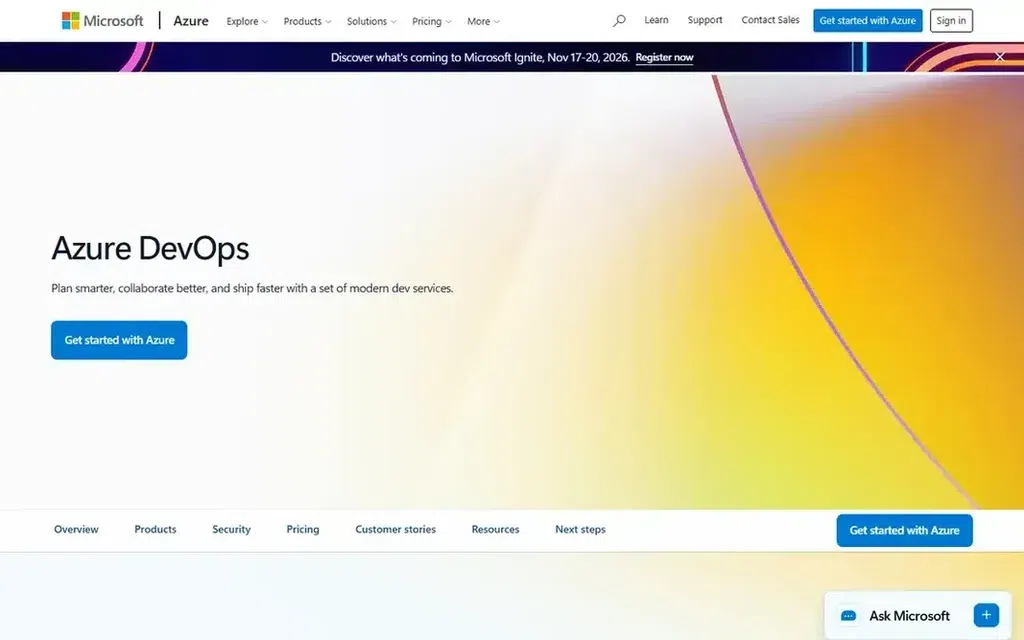
Azure DevOps works best for Microsoft-centric teams needing integrated DevOps. Azure DevOps is most valuable when completely adopted across the team, and its breadth can be overwhelming for smaller projects.
Watch-outs: Best experience within Microsoft stack.
Worth adding: teams outside the Microsoft ecosystem may find integration less smooth. This comparison lists no price for Azure DevOps; ask the vendor. Free access: Not stated.
- Agile tools combined with CI/CD
- Agentic AI for process optimization
- Can be overwhelming for small teams
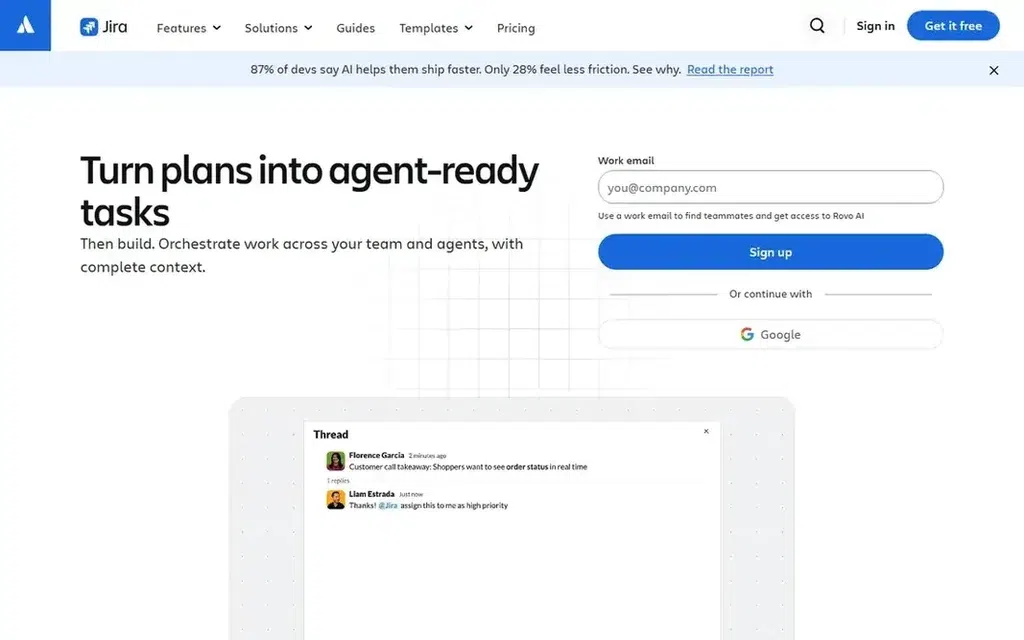
Jira works best for agile teams seeking adaptable project tracking. Jira is best when agility and integration with development workflows are top priorities.
In practice, Jira is a project management tool that brings teams together to reach the next level of productivity with AI agents that orchestrate, plan, and track projects at scale. Beyond that, the system is noted for its adaptability and wide ecosystem, making it a typical choice for software development teams of several sizes. Check the vendor site for Jira pricing; none is listed in this comparison. As for free access: Not stated.
Strengths: Supports agile planning at scale. Drawbacks to consider: Can become complicated without configuration.
- Widely used for issue and requirement tracking
- AI agents orchestrate, plan
- Advanced features may need extras
What went into this list
For each of the 6 tools we noted price, free plan or trial, fit for agile requirements management tools and the main limit, using vendor pages and documentation. Plan names, prices and limits change often. Treat the figures here as a starting point and verify them with the vendor. Position on the page reflects fit for a typical buyer first, with price clarity and free access breaking ties. Treat it as a guide, not a ruling.
Things to verify first
- Get a written quote from Tuleap, Polarion, Modern Requirements and others; the list shows no starting price for them.
- Use real work to test the free trial from Reqi and Modern Requirements, rather than a demo project.
- Before choosing Reqi, weigh its main limit: niche focus may not suit all teams.
- Check whether the features you need in Azure DevOps sit on the entry plan or only on higher tiers.
- Let daily users try Polarion on real work; their feedback beats any feature checklist.
FAQ
How are the tools for agile requirements management tools ordered?
Reqi sits first and Jira last because the order follows typical fit for agile requirements management tools, then price clarity and free access. It is a judgement call, so read each profile for fit and limits.
Which tool is a good match for regulated industries?
For most readers this guide would start with Reqi, built for regulated projects with supply chain traceability. Tuleap is the alternative for all-in-one agile management and development, and Polarion for complicated, regulated software systems. The right answer depends on budget and workflow.
What is agile requirements management?
It emphasizes adaptability, collaboration, and continuous feedback instead of fixed upfront specifications. Tools that support it usually plug into backlogs, sprints, and testing.
Can I use Jira for requirements management?
Yes, Jira is widely used for requirements management, notably in agile teams. It permits you to build and track requirements as issues, link them to tasks and tests, and plan sprints.
Can I try these options before paying?
Often, yes. Reqi and Modern Requirements offer a free trial. Use your own data and a real task during the test, and check what the free tier or trial limits before you rely on it.
Do these tools publish their prices?
Not all of them. Tuleap, Polarion, Modern Requirements and others publish no starting price, so expect a quote request for those. The rest, Reqi included, show a starting price, though seats and billing terms still change the final cost.
Sources
- https://www.reqi.io
- https://www.tuleap.org
- https://polarion.plm.automation.siemens.com
- https://www.modernrequirements.com
- https://azure.microsoft.com/en-us/products/devops
- https://www.atlassian.com/software/jira