Adaptive Learning Software for Math Fluency in 2026: The 6 Best Options Side by Side
Best adaptive learning software for math fluency in 2026: 6 tools with starting prices, free plans and limits. Caveats come with every verdict. Pick by budget.
- Editor's choice
 Khan Academy
Free, adaptive math practice and resources
Starts atSee websiteVisit khanacademy.orgFull review - Great alternativeDreamBox Learning
Interactive adaptive math and reading
Starts at$12.95 a monthVisit dreambox.comFull review - Also considerMathspace
Curriculum-aligned adaptive math program
Starts at$8 per student per yearVisit mathspace.coFull review
Direct answer
Khan Academy is the first pick on this list for free, adaptive math practice and resources. Listed starting prices: DreamBox Learning from $12.95 a month and Mathspace from $8 per student per year. Look at DreamBox Learning for interactive adaptive math and reading, and at Mathspace for Curriculum-aligned adaptive math program. Details, prices and limits for the rest of the 6 tools are below.
TL;DR:
- This list starts with Khan Academy, which is built for free, adaptive math practice and resources.
- What to know about Mathspace first: less emphasis on early elementary fluency.
- ST Math suits visual, concept-focused math learning.
- Mathspace is the only tool of the 6 with a free plan.
Last checked November 2026. Prices and plan details were read from the vendors' own pages in November 2026; vendors change plans often, so confirm the current price on the vendor site before you buy.
Quick comparison
| Tool | Best for | Starts at | Free plan? | |
|---|---|---|---|---|
| Khan Academy | Free, adaptive math practice and resources | See website | Not stated | Visit |
| DreamBox Learning | Interactive adaptive math and reading | $12.95 a month | Free trial | Visit |
| Mathspace | Curriculum-aligned adaptive math program | $8 per student per year | Yes | Visit |
 IXL | Thorough adaptive practice across subjects | See website | Not stated | Visit |
| Redbird Mathematics | Personalized learning from McGraw Hill | See website | Not stated | Visit |
| ST Math | Visual, concept-focused math learning | See website | Not stated | Visit |
Adaptive Learning Software for Math Fluency profiles
This LinkVetted guide covers 6 options for adaptive learning software for math fluency. Each profile lists a starting price, free plan details, strengths and drawbacks, so you can drop poor fits quickly.
In short, Khan Academy is for free, adaptive math practice and resources. Khan Academy is a widely used educational system offering free math practice and instructional videos.
Its adaptive exercises adjust to student performance, making it a practical resource for building math fluency. For in-depth progress monitoring, other tools may be more suitable. Khan Academy shows no starting price here, so confirm the cost on the vendor site. Free plan details: Not stated.
Drawbacks to consider: Restricted live teacher oversight.
- Adaptive practice exercises
- Widely used and well-known
- Less structured for classroom management
DreamBox Learning
Best for: Interactive adaptive math and reading
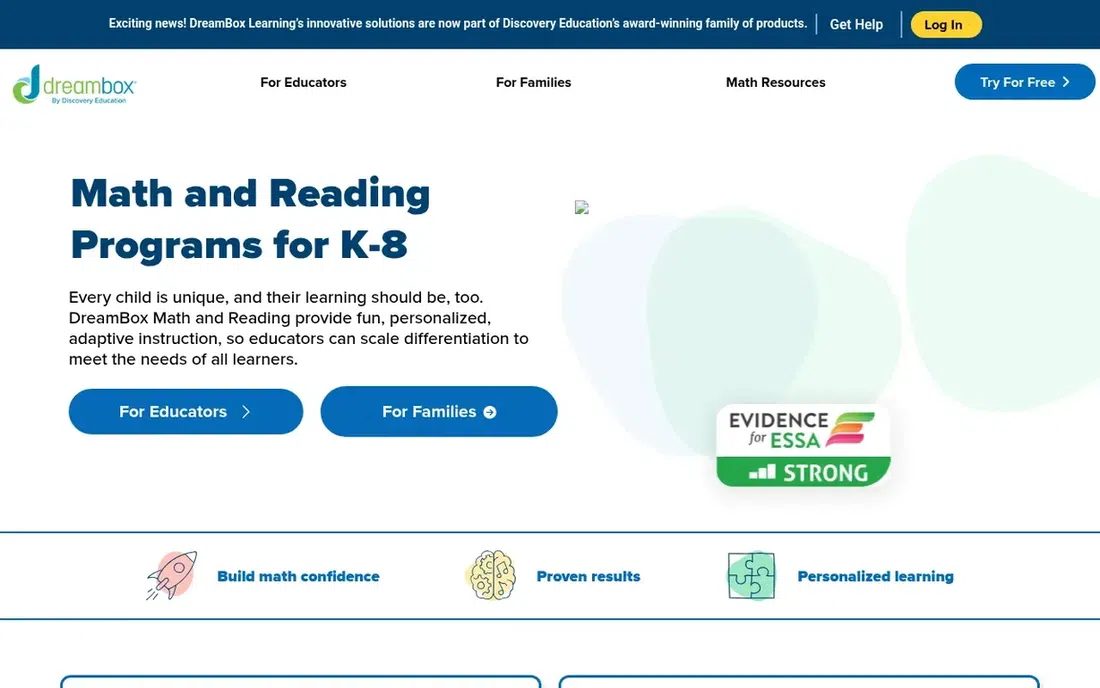
In short, DreamBox Learning is for interactive adaptive math and reading. The math program adjusts in live based on student input, aiming to build fluency and conceptual understanding.
Points against: Restricted transparency in adaptation logic.
DreamBox Learning provides online math and reading programs for students, with a focus on interactive, adaptive lessons. DreamBox Learning pricing: $12.95 per month. Free plan details: Free trial.
- Engaging interactive activities
- Supports differentiated instruction
- Focus on elementary and middle school
Mathspace
Best for: Curriculum-aligned adaptive math program
Pick Mathspace if this describes you: Curriculum-aligned adaptive math program. It supplies adaptive learning features to help students excel and free up teacher time. Beyond that, the system is made for schools and educators looking for a structured, curriculum-focused tool that supports differentiated instruction.
If your priority is entry-level fact fluency for young learners, consider a more specialized choice. Mathspace may be less concentrated on foundational fluency for early elementary grades, and its full feature set might need a demo to evaluate. Starting cost for Mathspace: $8 per student per year. Mathspace includes a free tier.
Limits to weigh: Less emphasis on early elementary fluency.
- Tracks student progress
- Curriculum-aligned content
- May need demo to assess fit
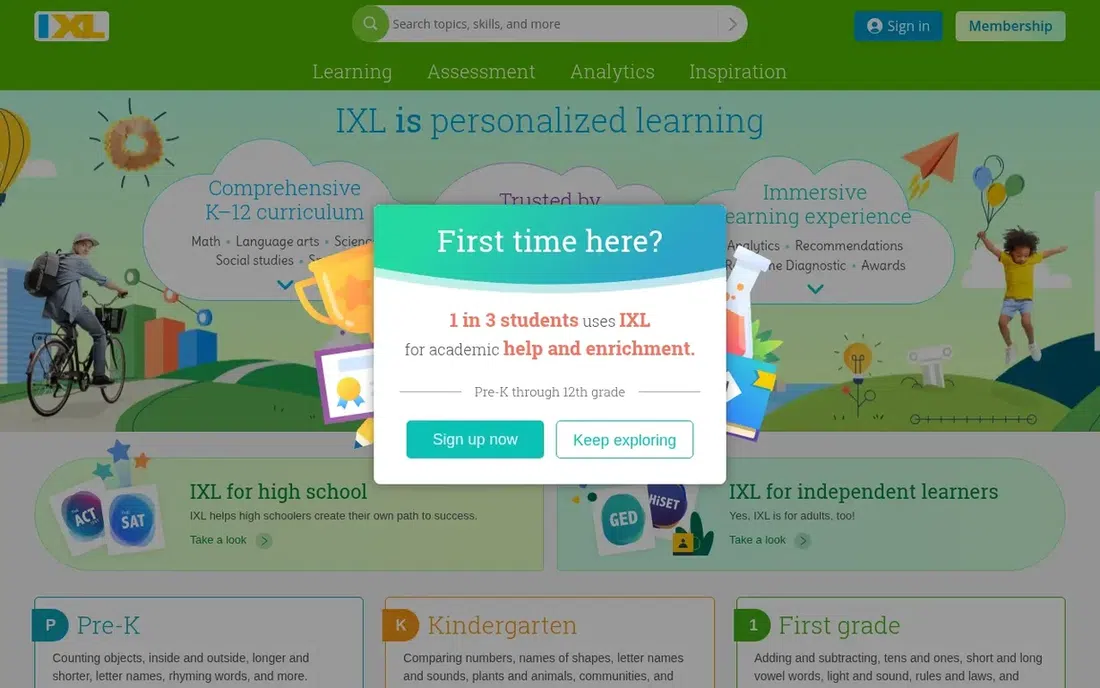
IXL works best for full adaptive practice across subjects. IXL is an online learning product that offers adaptive practice in math, language arts, science, social studies, and Spanish.
Honest limits: Requires consistent adult oversight.
The system is a good match for classrooms or homes seeking a structured, practice-oriented tool that spans several subjects and tracks progress over time. This comparison lists no price for IXL; ask the vendor. Trial and free access: Not stated.
- Adaptive practice in math and other subjects
- Broad grade-level coverage
- Restricted practical conceptual exploration
Redbird Mathematics
Best for: Personalized learning from McGraw Hill
Redbird Mathematics makes the most sense for personalized learning from McGraw Hill. Redbird Mathematics is a personalized learning program from McGraw Hill, built to support math instruction. It uses adaptive technology to tailor learning paths to individual students, aiming to build fluency and understanding.
It is right for schools already using McGraw Hill resources or seeking a personalized math option. For everyday use, public details about Redbird's adaptive engine and specific fluency features are limited, so it is wise to request a demo. It may be most effective as part of a broader McGraw Hill implementation. From a buyer's view, for standalone fluency practice, other tools might offer more transparency. Redbird Mathematics shows no starting price here, so confirm the cost on the vendor site. Free access: Not stated.
Trade-offs to know: May be part of broader curriculum.
- Focus on math instruction
- Personalized learning paths
- Restricted public information on adaptation
ST Math
Best for: Visual, concept-focused math learning
ST Math makes the most sense for visual, concept-focused math learning. ST Math, from MIND Education, is a supplemental math program for preK through grade eight that uses a visual, neuroscience-based approach. It emphasizes conceptual understanding through interactive puzzles and visual models, which can support fluency development by strengthening number sense.
As for the details, ST Math is not a standalone curriculum and provides restricted explicit drill practice for fluency. It performs best as a supplement to a core program. Check the vendor site for ST Math pricing; none is listed in this comparison. Free options: Not stated.
Points against: Supplemental instead of core curriculum.
- Builds conceptual understanding
- Neuroscience-based visual approach
- Restricted explicit fluency practice
Our selection method
The comparison looks at four things: starting price, free access, how well the feature set matches adaptive learning software for math fluency, and the main limit of each tool. Treat prices as a snapshot: vendors change plans often, so check the vendor site for the figure that applies today. The order reflects how well each tool fits the most common buying scenario for adaptive learning software for math fluency, then price clarity, then free plan access. It is a starting point, not a verdict.
Pre-purchase checklist
- Confirm the entry price on the vendor page. For Khan Academy, IXL, Redbird Mathematics and ST Math that means a quote rather than a fixed price.
- Test the free plan from Mathspace against your real workload before relying on it.
- Take the trial from DreamBox Learning and push a live task through it before you pay.
- Read the limits listed for Khan Academy first: less structured for classroom management.
- Ask the daily users to test IXL on a live task before you roll it out to everyone.
- Work out what Mathspace costs with your real seat count, add-ons and usage, not just the entry price.
FAQ
How are the tools for adaptive learning software for math fluency ordered?
Khan Academy sits first and ST Math last because the order follows typical fit for adaptive learning software for math fluency, then price clarity and free access. It is a judgement call, so read each profile for fit and limits.
Can I try these tools before paying?
Often, yes. Mathspace has a free plan and DreamBox Learning offers a free trial. Use your own data and a real task during the test, and check what the free tier or trial limits before you rely on it. Each of the 6 options in this Adaptive learning software for math Fluency guide has its own card above with the price, free plan and limits.
What is adaptive learning software for math fluency?
It aims to offer personalized practice that targets gaps and builds speed and accuracy. These tools frequently bundle progress tracking and reporting for educators.
What is the cheapest option for adaptive learning software for math fluency in this list?
On published monthly entry prices, DreamBox Learning is the lowest here at $12.95 per month. Entry price is only part of the cost, because seats, add-ons and billing terms can change the total. All 6 picks in this Adaptive learning software for math Fluency comparison list a starting price, free plan details and the main limits on their cards above.
Which options for adaptive learning software for math fluency have a free plan?
Mathspace is the only tool in this list with a free plan. Free plans usually cap users, projects or features, so check the limits on the vendor page. One other tool offers a trial instead. For the full picture, the cards above cover all 6 entries of this Adaptive learning software for math Fluency list, including price, free plan and limits.
Sources
- https://www.khanacademy.org
- https://www.dreambox.com
- https://www.mathspace.co
- https://www.ixl.com
- https://www.redbirdlearning.com
- https://www.mindeducation.org