Best AI Language Learning App in 2026: 9 Apps Compared
Compare the best AI language learning app options in 2026, with AI conversation practice, pronunciation feedback, prices, and free plans explained clearly.

- Editor's choice
 Duolingo
Daily habit building
Starts atFreeVisit duolingo.comFull review - Great alternative
 Babbel
Structured grammar lessons
Starts at$17.95 per monthVisit babbel.comFull review - Also consider
 Rosetta Stone
Immersion style learning
Starts at$11.99 per monthVisit rosettastone.comFull review
TL;DR:
- Duolingo remains the easiest free starting point, but its AI conversation features sit behind the Max tier.
- Talkpal, Speak, and Loora put live AI speaking practice first, which suits learners who freeze when they try to talk.
- Babbel and Busuu give more structure for grammar and everyday phrases, with AI features added on top of a set curriculum.
- ELSA Speak is the narrowest pick here, and that focus makes it the strongest choice for English pronunciation.
- No single app replaces real conversation, so pair an AI tutor with human practice when you can.
Quick comparison
| Tool | Best for | Starts at | Free plan? | |
|---|---|---|---|---|
| Duolingo | Daily habit building | Free | Yes | Visit |
| Babbel | Structured grammar lessons | $17.95 per month | Free trial | Visit |
| Rosetta Stone | Immersion style learning | $11.99 per month | Free trial | Visit |
 Busuu | Community and AI conversation | $12.49 per month | Yes | Visit |
 Memrise | Vocabulary from real speakers | $24.99 per month | Yes | Visit |
 Talkpal | Talking in many languages | $14.99 per month | Yes | Visit |
 Speak | AI speaking practice | $17.99 per month | Free trial | Visit |
 ELSA Speak | English pronunciation | $89.99 per year | Yes | Visit |
 Loora | Professional English speaking | See website | No | Visit |
The best AI language learning apps
AI has changed language apps in a useful, practical way. The best tools now listen to your speech, correct mistakes in context, and hold a conversation that adapts to your level. We compared official feature pages, pricing, app store listings, and public reviews to sort the chatty tutors from the dressed up flashcard decks.
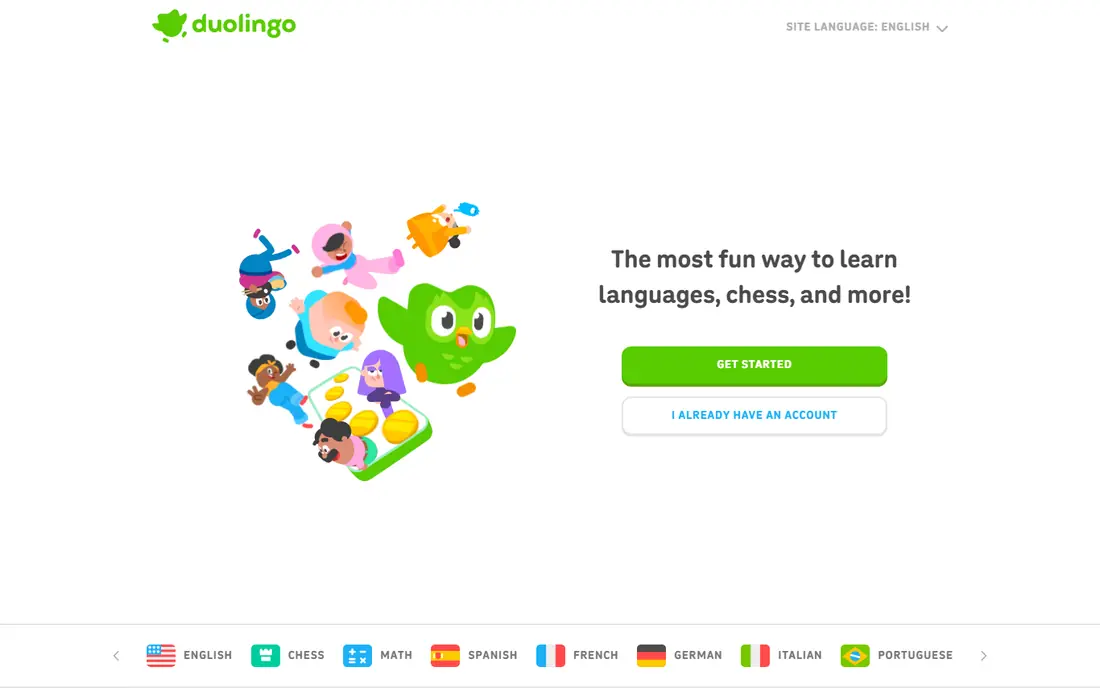
Duolingo is still the app most people stick with, and the reason is simple. Lessons are short, progress is visible, and the streak system gives you a small reason to return each day. For a beginner, that consistency matters more than a perfect curriculum. You learn words and phrases in context, repeat them often, and build a base you can use elsewhere.
The AI side appears mainly in Duolingo Max, which adds roleplay conversations and a video call style practice feature. Those tools let you practise ordering food, asking directions, or handling a job chat without a human listener. The catch is price and access. Max costs far more than Super, and it is not available for every language or in every region, so check your own language before you pay.
- Free tier covers many languages
- Short lessons fit small gaps in the day
- AI roleplay and video call features on Max
- Free tier includes ads and limits
- Advanced grammar depth is thin
- AI features cost extra
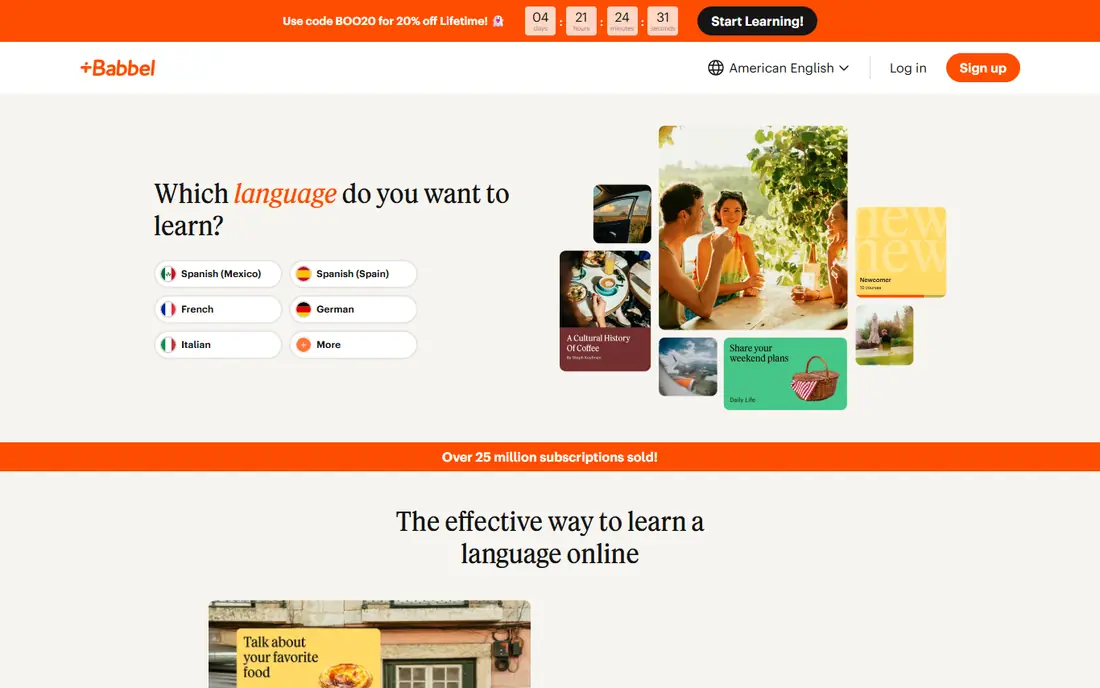
Babbel feels more like a course than a game. Lessons follow a clear path, grammar is explained when you need it, and dialogues cover situations such as travel, work, and daily life. If you have tried a gamified app and felt you were collecting points without understanding sentence structure, Babbel is a sensible next step.
Its AI features support that structure rather than replacing it. Speech recognition checks pronunciation inside lessons, and conversation practice helps you use new phrases out loud. The main drawback is scope. Babbel covers a smaller set of languages, and the monthly rate is steep if you pay month to month. An annual plan brings the cost down, so only commit once you know you like the teaching style.
- Lessons built around real conversations
- Grammar explained in context
- Speech recognition in lessons
- Fewer languages than Duolingo
- Monthly price is high
- First lesson free only
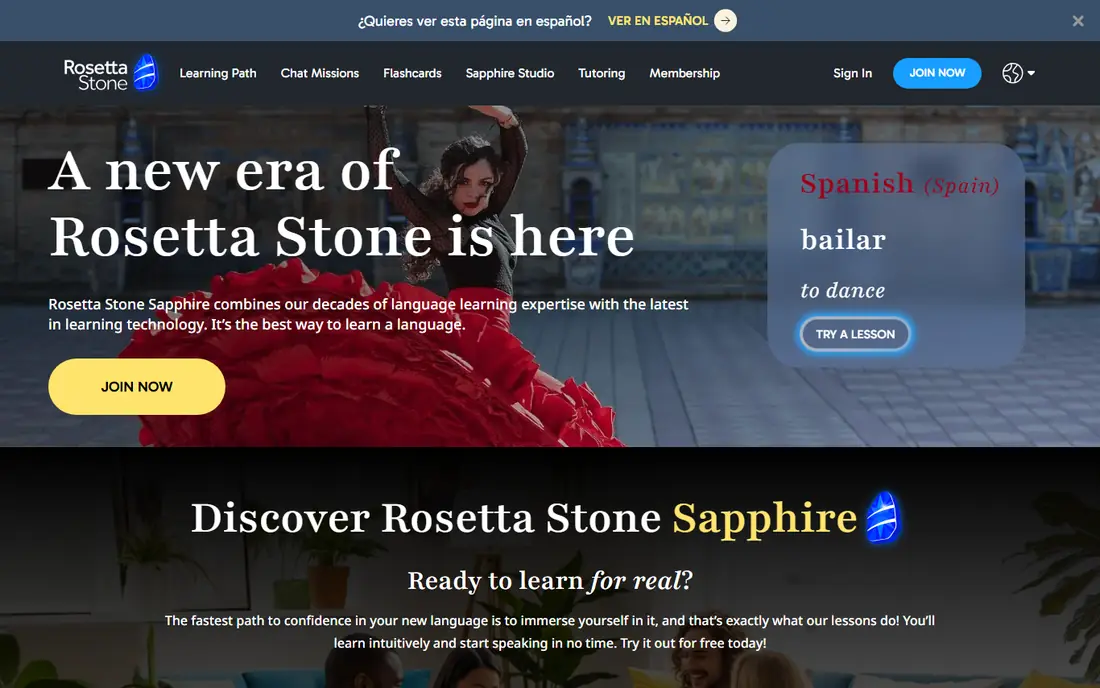
Rosetta Stone takes a different route. It shows pictures, words, and sounds in the new language and asks you to work out meaning from context, much as a child does. Some learners love that approach because it forces them to think in the new language instead of translating every word in their head.
Speech recognition, sold under the TruAccent name, gives feedback on pronunciation as you repeat phrases. That is useful, but it is not the same as an open ended AI tutor that follows your ideas. Rosetta Stone also gives less direct grammar help, which can frustrate learners who want rules spelled out. It works best for patient learners who enjoy immersion and plan to study for months.
- Immersion method avoids translation crutches
- Pronunciation feedback built in
- Lifetime option often on sale
- No grammar explanations for many learners
- Slower for absolute beginners
- AI conversation is limited
Busuu pairs a structured course with human help. You work through levels tied to the Common European Framework, submit writing and speaking exercises, and receive corrections from native speakers in the community. That mix of structure and human feedback is rare in a single app, and it keeps lessons grounded in how people actually speak.
Premium Plus adds AI powered conversations and pronunciation practice, which makes Busuu a fair fit for this list. You can practise a chat with the AI, then get a human correction on a written exercise. The free tier gives you a taste, but grammar review, offline mode, and certificates sit behind the paid plans. Feedback from other learners can also take time, so do not rely on it for urgent corrections.
- Clear CEFR levels from A1 to B2
- Corrections from native speakers
- AI conversations on Premium Plus
- Free tier is limited
- Community feedback speed varies
- Upper level content is thinner
Memrise built its name on memory. It shows you words and phrases used by real speakers on video, then repeats them at spaced intervals so they stick. That method suits learners who already know some grammar and mainly need words they can actually say. Hearing a phrase in a street, a shop, or a home setting makes it easier to recall than a clean studio recording.
Newer Memrise plans add AI conversation features, including a tutor style chat that lets you practise what you have learned. The monthly price looks steep, and an annual plan is the better value if you stay. Grammar explanations remain light, so pair Memrise with a course app if you need sentence structure explained step by step.
- Videos of native speakers in real settings
- Spaced repetition for recall
- AI conversation practice in newer plans
- Monthly price is high
- Grammar teaching is light
- Course depth varies by language
Talkpal is built around talking. You can chat with an AI tutor, take part in roleplays, practise debates, and work through modes aimed at listening, writing, and grammar. The free tier gives you a limited amount of daily use, which is enough to test whether the tutor style suits you before you pay.
Language coverage is the headline strength. With more than 50 languages on offer, Talkpal covers options that bigger course apps skip. The trade off is uneven depth. Popular languages get richer content and sharper feedback, while smaller languages can feel thinner. Monthly billing is also the most expensive route, so the annual or two year plan matters if you plan to stay.
- Covers more than 50 languages
- AI tutor chats, calls, and roleplays
- Free tier for daily practice
- Depth varies a lot by language
- Feedback can feel generic
- Longer plans needed for the lowest price
Speak does one job and does it well. Instead of splitting your time evenly between reading, listening, and writing, it puts speaking at the centre. You talk, the AI responds, and you get feedback on pronunciation, word choice, and fluency in the moment. That loop helps learners who understand a lot but go quiet when they have to answer.
The curriculum is structured, so you are not left guessing what to practise next. Lessons build from simple exchanges toward longer, freer conversation. The limits are language range and price. Speak covers fewer languages than Duolingo or Talkpal, and the top tier for unlimited style practice costs notably more. Check that your target language is supported before you sign up.
- Speaking first design
- Instant feedback on pronunciation and phrasing
- Structured speaking curriculum
- Fewer languages than general apps
- Monthly price is high
- Premium Plus costs much more
ELSA Speak is an English only app, and that narrow focus is its strength. It analyses your speech down to individual sounds, word stress, and intonation, then shows you exactly where you went off track. For learners who are understood in writing but struggle to be understood out loud, that detail is more useful than another vocabulary deck.
Paid plans add AI roleplays, a bilingual tutor, and preparation for exams such as IELTS and TOEFL. The free tier lets you try a small number of lessons each day, which is enough to judge the feedback style. The catch is scope. If you want to learn Spanish, French, or Japanese, ELSA Speak cannot help. It is a specialist tool, best used beside a general course.
- Detailed feedback on sounds, stress, and intonation
- AI roleplays and coaches
- Exam preparation content
- English only
- Free tier is limited to a few lessons a day
- Higher tiers add cost
Loora is an AI English tutor aimed at professionals who need to speak clearly at work. You hold conversations, get feedback while you talk, and practise scenarios such as meetings, presentations, and interviews. That work focus sets it apart from general apps that spend equal time on travel phrases and small talk.
Feedback covers fluency, grammar, and vocabulary in context, and the app builds a path around your weak points. The main drawback is access and price. Loora has moved toward professional and team use, so individual pricing is less clear than a simple monthly plan, and you should check the current offer on its site before you commit. If you need English for work and want speaking practice on demand, it is still worth a look.
- Real time feedback during English conversation
- Business and interview scenarios
- Personalised learning path
- English only
- Pricing is aimed at teams and professionals
- No free individual tier in many cases
How we picked these
We started with apps that offer real AI interaction, not just a chatbot label on a flashcard app. That meant AI conversation, speech feedback, or adaptive tutoring had to be a core feature, not a side note. We then checked that each product is live in 2026, covers the language range it claims, and publishes clear pricing or a free way to try it.
We compared official feature pages, pricing pages, and app store listings, and read public reviews for recurring complaints about accuracy, language coverage, and billing. We did not claim hands on testing. Where prices differed by platform or region, we used the vendor or app store figure we found most recently and noted where you should confirm the price in your own checkout.
How to choose the right AI language app
Start with your weakest skill, not the app with the longest feature list. If you can read well but cannot speak, pick a speaking first tool such as Speak, Talkpal, or Loora. If you need structure and grammar, start with Babbel or Busuu and add an AI tutor for conversation. If pronunciation is the blocker, ELSA Speak gives sharper feedback than a general app.
Try the free tier for a week before you pay. Use it at the same time each day, speak out loud even when it feels awkward, and notice whether the feedback names a problem you can fix. A good AI tutor should tell you what to change, not just that you were wrong. Also check language support, offline access, and cancellation terms, since those details matter more over months than a launch discount.
Watch for overclaiming. No app alone will make you fluent, and AI feedback can miss regional accents or accept a wrong word that sounds close enough. Use the app for daily reps, then add real conversation through a tutor, a language exchange, or a class when you are ready. That combination is slower to describe, but it is the one that holds up in real life.
FAQ
What is the best AI language learning app for speaking practice?
Speak, Talkpal, and Loora lead for speaking, because conversation and live feedback are their core features rather than an extra. Duolingo Max and Busuu Premium Plus also add AI conversation, but they sit inside broader courses. Pick the one that supports your language and gives feedback you can act on.
What are the best AI apps to talk to in another language?
Talkpal is the broadest choice for talking across many languages, with chat, calls, and roleplays. Speak is stronger if you want a structured speaking curriculum in a smaller set of languages. For English at work, Loora focuses on professional conversation and interview practice.
Are there good free AI language learning apps?
Yes, with limits. Duolingo, Busuu, Memrise, Talkpal, and ELSA Speak all offer free tiers, but AI conversation and full feedback usually sit behind paid plans. Use the free tier to test the teaching style, then pay only for the feature you actually use each week.
What is the best AI app for language learning if I am a beginner?
Duolingo is the easiest beginner start, thanks to short lessons and a free tier. Babbel is better if you want grammar explained from the start, and Busuu adds human corrections to a clear level path. Beginners should avoid jumping between five apps, since one steady routine beats a scattered one.
Can an AI language app replace a human tutor?
No, not fully. AI tutors are always available, patient, and good for daily reps, but they can miss nuance, accept near misses, and lack cultural context. Use AI for volume and confidence, and add a human tutor or exchange partner for correction, natural phrasing, and real conversation pressure.
Which AI language learning tool is best for English pronunciation?
ELSA Speak is our pick for English pronunciation, because it scores individual sounds, stress, and intonation in detail. Speak and Loora also help English learners, but they focus more on general conversation. If accent and clarity are your main goals, start with the specialist.