Academic Plagiarism Checkers for Research Papers in 2026: The 6 Best Options Side by Side
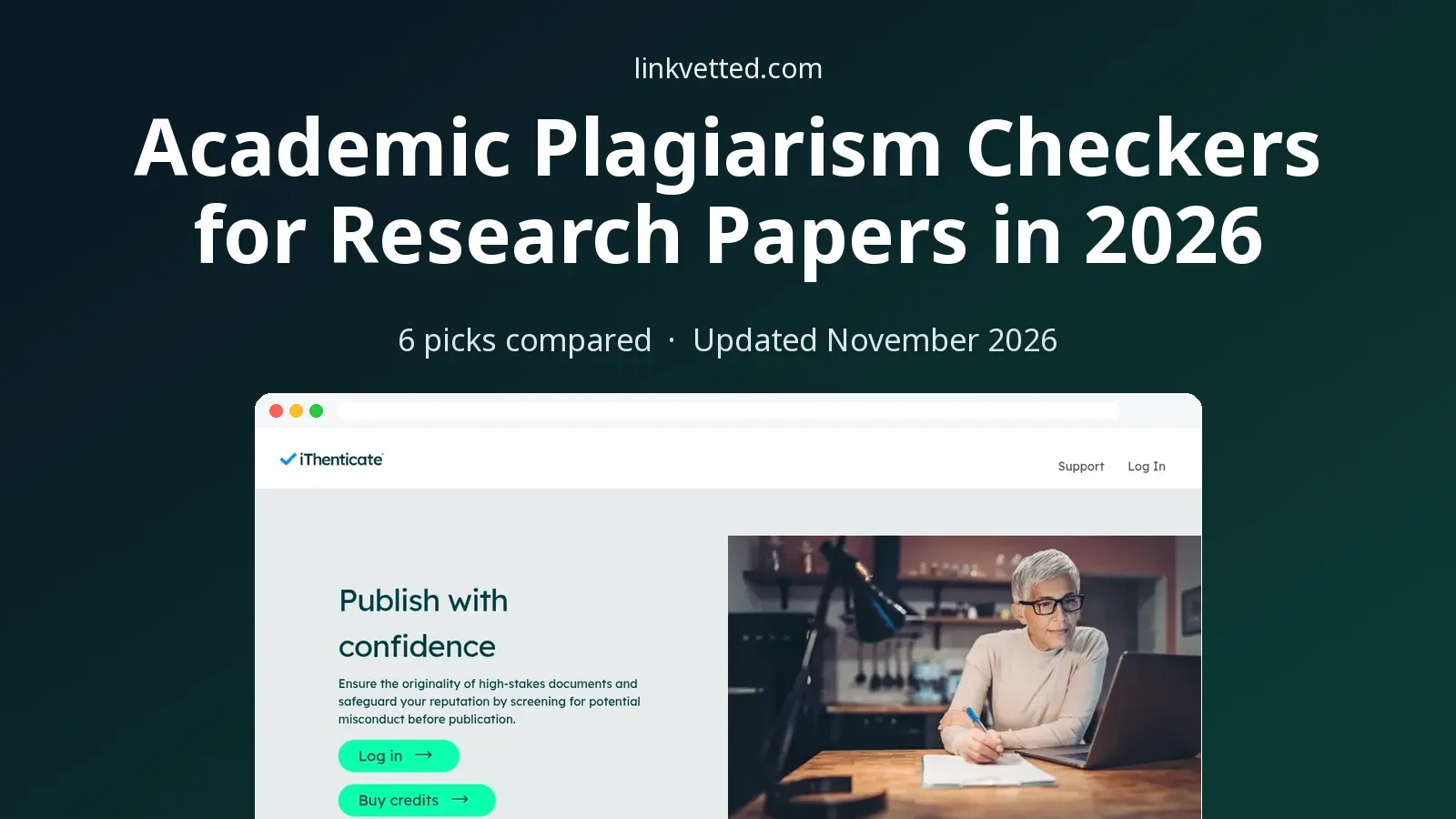
6 best academic plagiarism checkers for research papers, compared on pricing, free plans and best-fit use. Each entry gets a plain verdict. Facts only.
- Editor's choiceQuetext
Plagiarism and AI detection
Starts at$14.99 a monthVisit quetext.comFull review - Great alternativeiThenticate
Screening manuscripts before publication
Starts at$125Visit ithenticate.comFull review - Also considerOuriginal
Institutional text-matching workflows
Starts atSee websiteVisit ouriginal.comFull review
Direct answer
Our first pick is Quetext, best for plagiarism and AI detection. Listed starting prices: Quetext from $14.99 a month, iThenticate from $125 and Grammarly from $12 USD. Alternatives: iThenticate for screening manuscripts before publication, and Ouriginal for institutional text-matching workflows. Details, prices and limits for the rest of the 6 tools are below.
TL;DR:
- This list starts with Quetext, which is built for plagiarism and AI detection.
- For institutional academic integrity screening, Turnitin is worth a look.
- Ouriginal comes with a trade-off: product information now points to Turnitin.
- Quetext, Grammarly: these are the 2 tools out of 6 that offer a free plan.
Last checked November 2026. Prices and plan details were read from the vendors' own pages in November 2026; vendors change plans often, so confirm the current price on the vendor site before you buy.
Quick comparison
| Tool | Best for | Starts at | Free plan? | |
|---|---|---|---|---|
| Quetext | Plagiarism and AI detection | $14.99 a month | Yes | Visit |
| iThenticate | Screening manuscripts before publication | $125 | No | Visit |
| Ouriginal | Institutional text-matching workflows | See website | Not stated | Visit |
| Copyscape | Fast duplicate content detection | See website | Not stated | Visit |
 Grammarly | Writing quality and AI assistance | $12 USD | Yes | Visit |
 Turnitin | Institutional academic integrity screening | See website | Not stated | Visit |
The 6 tools in detail
Choosing academic plagiarism checkers for research papers usually comes down to price, fit and limits. This LinkVetted guide sets 6 tools side by side on those three points, with the facts kept short and checkable.
Quetext
Best for: Plagiarism and AI detection
In short, Quetext is for plagiarism and AI detection. AI detection tools can flag human writing incorrectly, so treat AI scores as a prompt for review instead of a verdict.
What you pay to start with Quetext: $14.99 per month. Quetext includes a free tier.
Downsides: AI detection can produce false positives.
- Combined originality checks
- AI-written content detection
- Academic database coverage is unclear
iThenticate
Best for: Screening manuscripts before publication
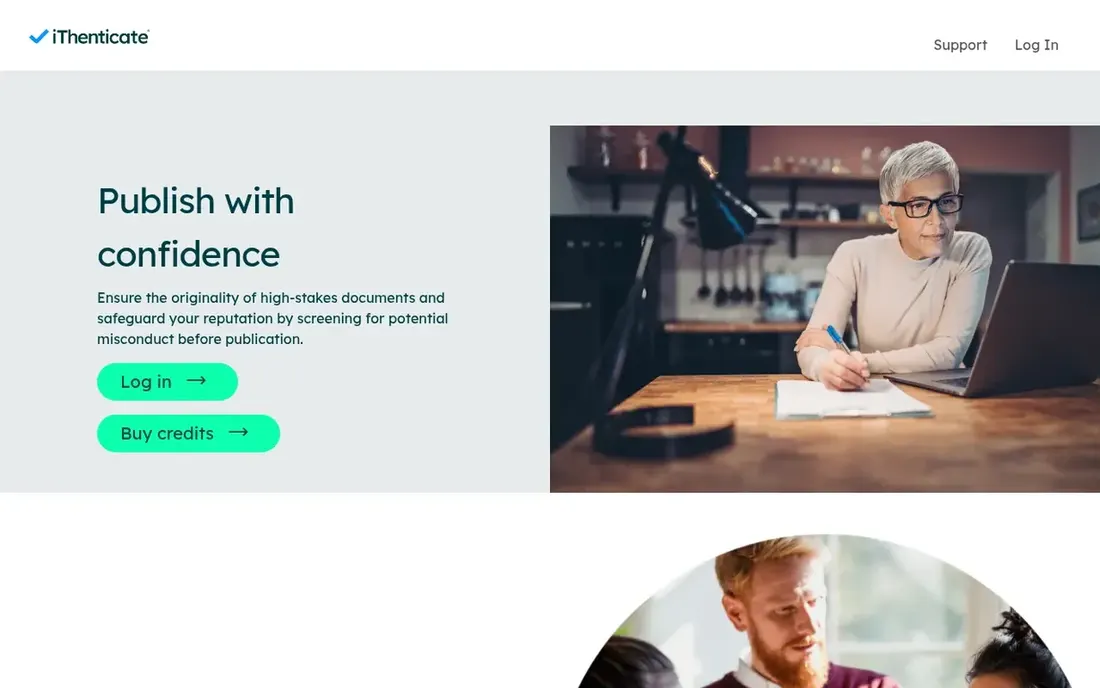
iThenticate works best for screening manuscripts before publication. iThenticate is not a general writing assistant, so it will not help with grammar or style.
Access for individuals may involve purchasing credits, which can be less convenient for those who only check occasionally. iThenticate starts at: $125. No free plan comes with iThenticate.
Watch-outs: Not built for classroom grading.
- Supports originality checks
- Centred on high-stakes document screening
- Individual access may need credits
Ouriginal
Best for: Institutional text-matching workflows
Ouriginal serves institutional text-matching workflows. For a single research paper, a manuscript-oriented checker may be a more direct route.
Also, Ouriginal appears on its homepage as part of Turnitin's latest product overview, highlighting LMS integration, in-depth reports, and academic integrity support. On top of that, the page positions Turnitin Similarity as the alternative, so institutions should check which service is currently supported. Ouriginal shows no starting price here, so confirm the cost on the vendor site. Free options: Not stated.
Trade-offs to know: Individual access is restricted.
- LMS integration mentioned
- Academic integrity support
- Product information now points to Turnitin
Copyscape
Best for: Fast duplicate content detection
Think of Copyscape for fast duplicate content detection. Copyscape is oriented toward web content instead of scholarly databases, so it may miss matches in subscription journals and academic repositories.
Also, use it for a quick web-level sanity check, then depend on a dedicated academic tool for the full paper. Check the vendor site for Copyscape pricing; none is listed in this comparison. Free options: Not stated.
Watch-outs: Centred on web content matching.
- Helps test if text is original
- Straightforward duplicate content checks
- Restricted academic database coverage
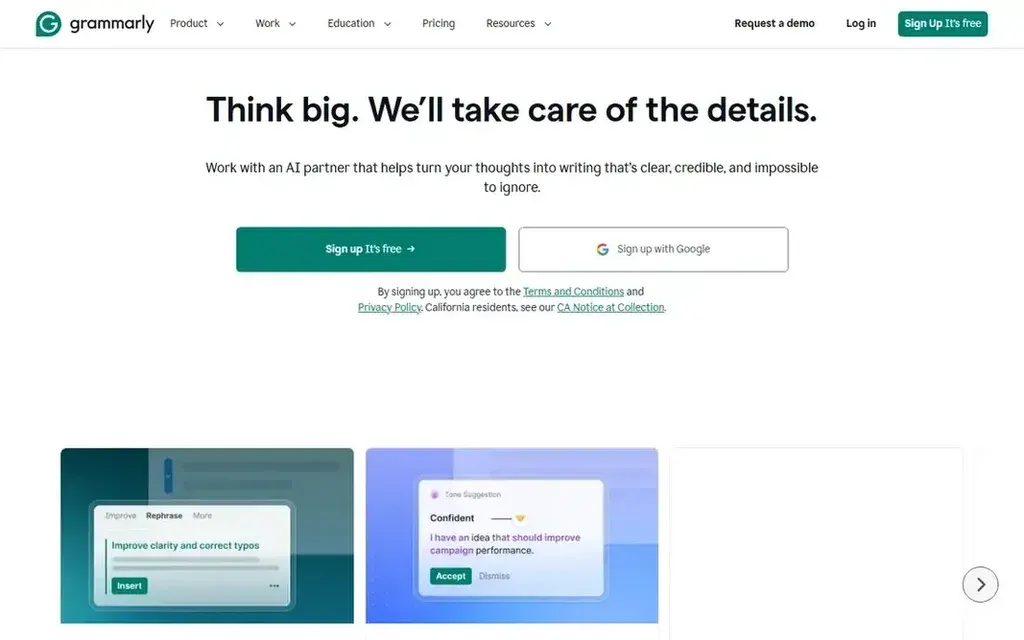
Choose Grammarly for writing quality and AI assistance. If your central concern is verifying originality before submission, choose a dedicated checker.
Points against: Not a dedicated source-matching checker.
Beyond that, Grammarly is not built primarily as an academic plagiarism checker, so it should not be relied on for source comparison against scholarly databases. For everyday use, for research papers, it suits authors who want help with clarity, grammar, and phrasing whereas drafting, instead of a deep source-matching plagiarism report. Entry price for Grammarly: $12 USD. You can start on Grammarly without paying.
- Works across apps and websites
- Helps with text generation
- Originality features are secondary
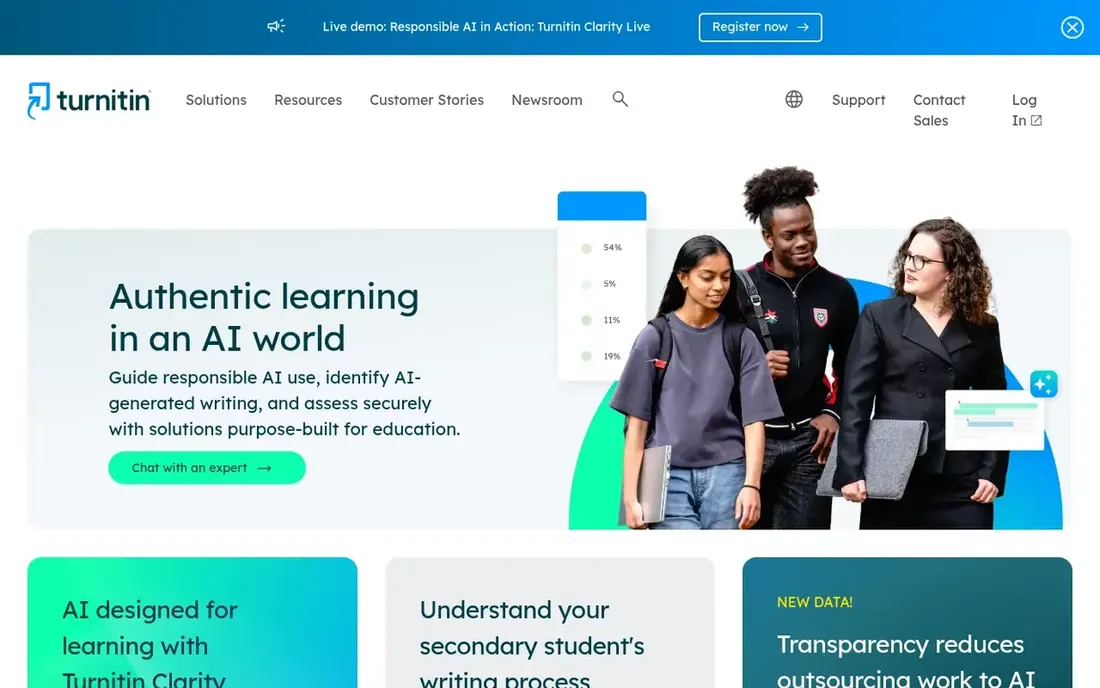
Turnitin is built with institutional academic integrity screening in mind. Since Turnitin is oriented toward institutional workflows, individual researchers may find access relies on their university. Also, Turnitin is best when your goal is classroom or campus-wide integrity support instead of one-off manuscript checks.
Beyond that, Turnitin is an academic integrity product used by institutions to check student work for originality and support feedback. Its homepage emphasizes enabling students to do original work, deterring plagiarism, and improving student outcomes. If you have to screen a manuscript before journal submission, a researcher-focused tool may be more appropriate. This comparison lists no price for Turnitin; ask the vendor. Trial and free access: Not stated.
Downsides: Generally accessed through institutions.
- Aims to deter plagiarism
- Promotes academic integrity workflows
- Less suited to individual manuscript vetting
How the list was put together
The comparison looks at four things: starting price, free access, how well the feature set matches academic plagiarism checkers for research papers, and the main limit of each tool. Seat minimums, billing terms and add-ons can move the real cost, so the starting prices here are a guide and not a quote. The sequence is a judgement call: typical use case first, then pricing transparency, then free access. Use the profiles to check fit.
What to check before you buy
- Get a written quote from Ouriginal, Copyscape and Turnitin; the list shows no starting price for them.
- Read the fine print on the free plans from Quetext and Grammarly; seat, project and feature caps differ.
- Read the limits listed for Quetext first: AI detection can produce false positives.
- Before rolling out Turnitin, verify the integrations your workflow depends on.
- Add up seats, add-ons and usage charges for Quetext before comparing it with cheaper entries.
FAQ
Does Quetext check for AI-generated content?
Quetext describes itself as a plagiarism checker and AI detector using DeepSearch technology. That means it can flag both duplicated text and possible AI writing.
What is the difference between Turnitin and iThenticate?
Turnitin centers on academic integrity workflows for institutions, including grading and feedback. iThenticate is positioned for researchers and publishers screening manuscripts. Your choice relies on whether you need classroom support or pre-publication vetting.
How are the tools for academic plagiarism checkers for research papers ordered?
The order follows typical fit for academic plagiarism checkers for research papers, with Quetext first and Turnitin last, then price clarity and free access. It is editorial judgement, not a score, so another team could rank the tools differently.
Is Quetext the right pick for everyone comparing academic plagiarism checkers for research papers?
No single tool suits every team. Quetext comes first because it fits plagiarism and AI detection, while iThenticate suits screening manuscripts before publication and Ouriginal suits institutional text-matching workflows. Match the tool to your own size, budget and workflow before deciding.
Do these tools publish their prices?
Not all of them. Ouriginal, Copyscape and Turnitin publish no starting price, so expect a quote request for those. The rest, Quetext included, show a starting price, though seats and billing terms still change the final cost.
Which plagiarism checker is a good match for a research paper before journal submission?
Quetext comes first here and is built for plagiarism and AI detection. Buyers with other needs may prefer iThenticate (for screening manuscripts before publication) or Ouriginal (for institutional text-matching workflows). Compare costs and limits first.
Sources
- https://www.quetext.com
- https://www.ithenticate.com
- https://www.ouriginal.com
- https://www.copyscape.com
- https://www.grammarly.com
- https://www.turnitin.com