5 Recommendations for Data Labeling Software Worth Shortlisting in 2026
5 tools for the top recommendations for data labeling software, compared on pricing, free plans and best-fit use. Read the caveats before you buy. Start here.
- Editor's choice
 Encord
Multimodal and sensor-heavy data curation
Starts atPricing on requestVisit encord.comFull review - Great alternative
 Labelbox
Annotation environments for engineering and research teams
Starts atPricing on requestVisit labelbox.comFull review - Also considerV7
Repeatable AI workflows from instructions
Starts atPricing on requestVisit v7labs.comFull review
Direct answer
Our first pick is Encord, best for Multimodal and sensor-heavy data curation. If your case is different, Labelbox suits Annotation environments for engineering and research teams and V7 suits repeatable AI workflows from instructions. Free plan facts and limits for all 5 tools follow. None of these vendors publish plan prices, so pricing is on request for every option.
TL;DR:
- Encord takes the first slot, best suited to Multimodal and sensor-heavy data curation.
- What to know about Labelbox first: message centers on frontier labs.
- Encord, Scale AI and the 3 others all need a premium plan or a trial, since no free plan is listed.
- Scale AI is the one to check for managed data and evaluations for critical systems.
- No starting price is shown for any of the 5 tools, Encord and Scale AI included, so plan time for sales calls.
Last checked November 2026. Pricing on request: vendors did not publish plan prices when this guide was last checked (November 2026), so ask each vendor for a written quote.
Quick comparison
| Tool | Best for | Starts at | Free plan? | |
|---|---|---|---|---|
| Encord | Multimodal and sensor-heavy data curation | Pricing on request | Not stated | Visit |
| Labelbox | Annotation environments for engineering and research teams | Pricing on request | Not stated | Visit |
| V7 | Repeatable AI workflows from instructions | Pricing on request | Not stated | Visit |
 Snorkel AI | Expert data and benchmarks for specialized domains | Pricing on request | Not stated | Visit |
 Scale AI | Managed data and evaluations for critical systems | Pricing on request | Not stated | Visit |
Our 5 picks for recommendations for data labeling software
If you are comparing recommendations for data labeling software, this page covers 5 tools in one place: what each is best for, what it costs to start, whether it has a free plan, and the main limit to know about.
For Multimodal and sensor-heavy data curation, Encord is a natural candidate. In daily use, the multimodal focus means setup and planning are more involved than a straightforward image annotation tool.
Worth adding: teams with plain text or single-format labeling needs may not use much of its capability. Encord does not show a starting price in this comparison, so check the vendor site for current pricing. Free options: Not stated.
What to check first: Oriented toward technical data teams.
- Handles multimodal data including sensor streams
- Handles managing, curating, annotating
- Wide data scope needs planning
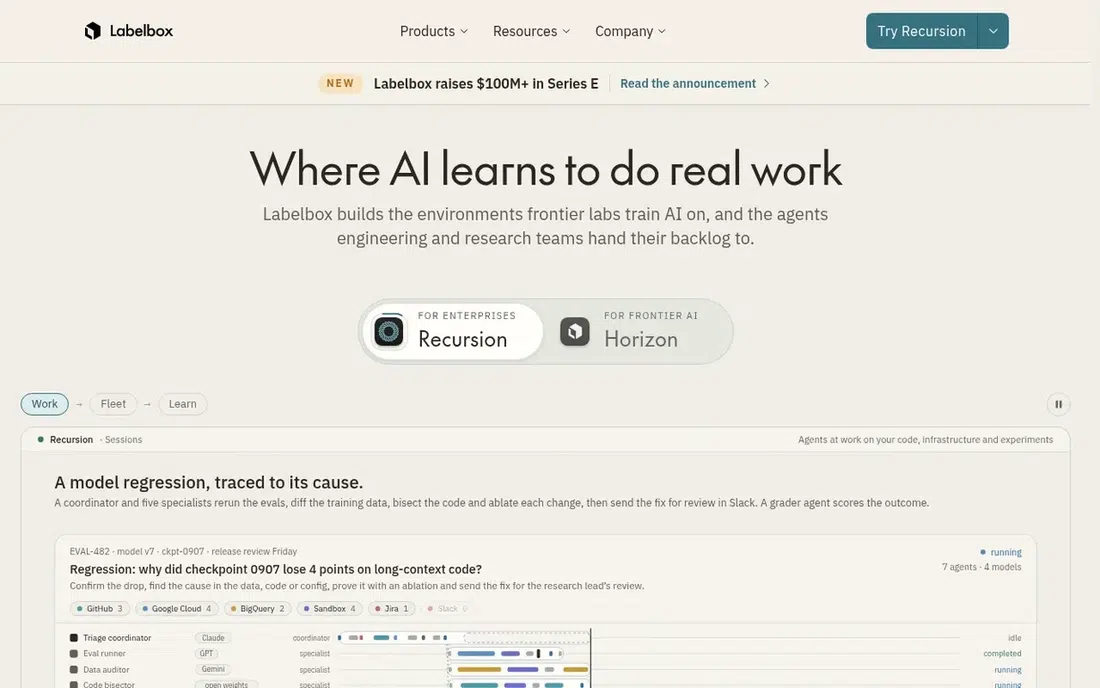
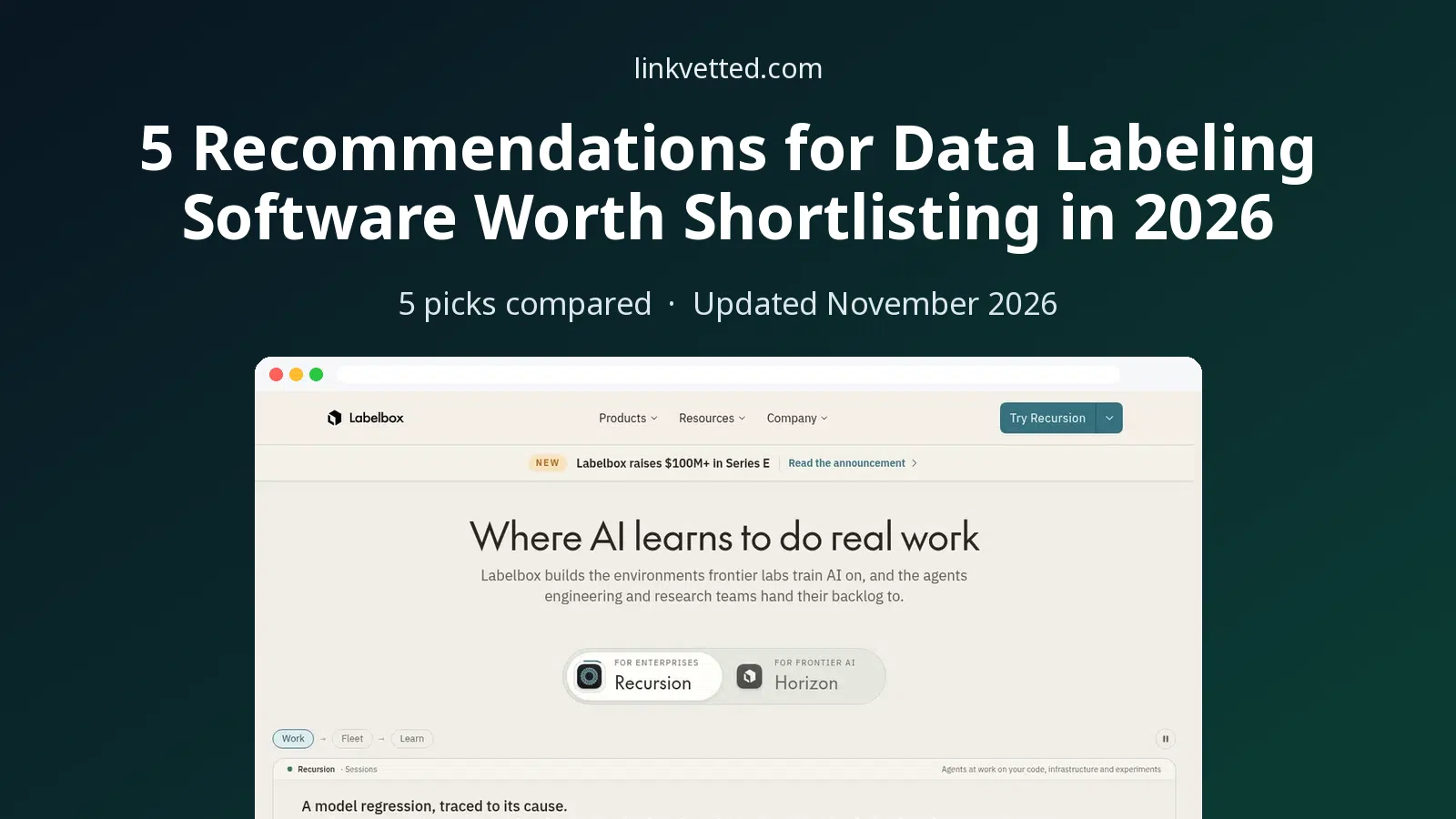
Where Labelbox fits: Annotation environments for engineering and research teams. Labelbox describes itself as where AI learns to do real work, with frontier AI labs training on its environments and expert data. For everyday use, the positioning leans toward advanced labs and research workflows.
So teams wanting a plain annotation queue may find it heavier than needed. Engineering and research teams use it to hand recurring work to agents on Recursion. Consider Labelbox when your labeling work is tied to recurring agent or model training tasks. Labelbox does not show a starting price in this comparison, so check the vendor site for current pricing. Free plan details: Not stated.
The main drawbacks: May be more than straightforward labeling needs need.
- Centred on environments where AI learns real work
- Supports recurring work handed to agents
- Message centers on frontier labs
V7
Best for: Repeatable AI workflows from instructions
V7 is designed for repeatable AI workflows from instructions. V7 Go is positioned as an operating system for repeatable work, turning pages of instructions into AI workflows for due diligence, underwriting, and claims.
On top of that, pick V7 when your labeling need is really a repeatable operational process. Since the focus is repeatable workflows, teams seeking deep annotation tooling for images or sensor data may prefer a dedicated labeling system. V7 does not show a starting price in this comparison, so check the vendor site for current pricing. As for free access: Not stated.
Where it is weaker: not pure labeling depth.
- Runs complicated operations at scale
- Turns instructions into AI workflows
- Best fit is document-heavy operations
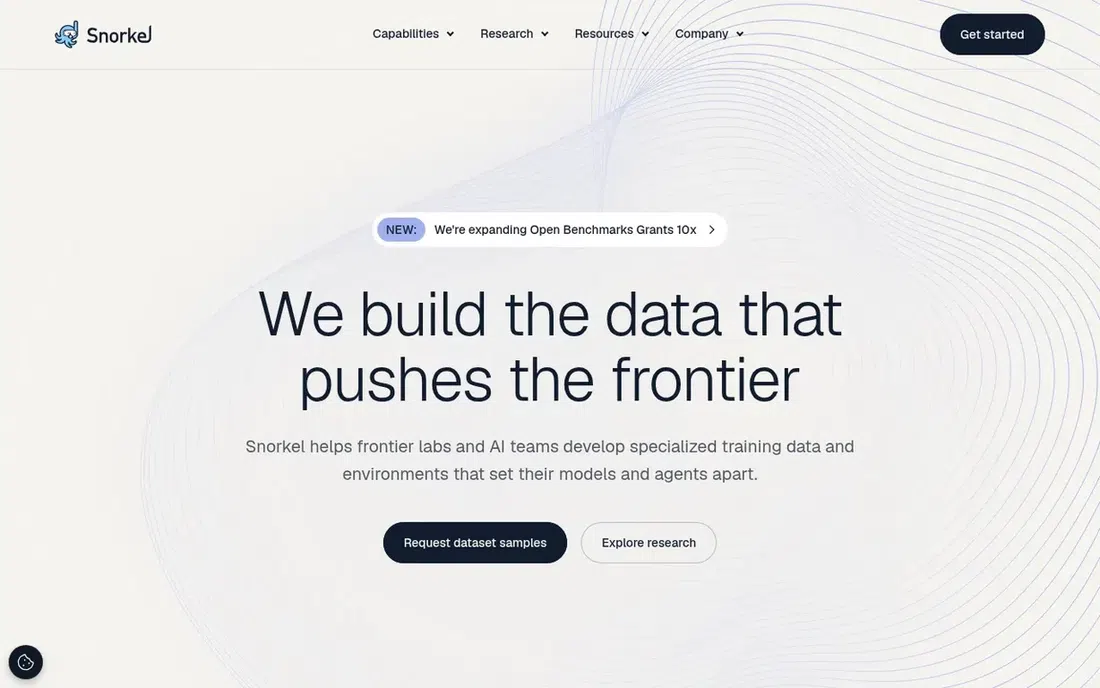
Snorkel AI is aimed squarely at expert data and benchmarks for specialized domains. Pick Snorkel AI when benchmarks and expert-built data are central to your evaluation plans.
Where it falls short: Narrow fit outside specialized domains.
Worth adding: Snorkel AI builds specialized training data, benchmarks, and evaluation environments that help frontier models and agents perform in high-stakes domains. As for the details, the emphasis is on expert data development instead of volume annotation alone. Snorkel AI does not show a starting price in this comparison, so check the vendor site for current pricing. Free access: Not stated.
- Focus on high-stakes domains
- Builds specialized training data and benchmarks
- Needs domain expertise to use well
Scale AI is built with managed data and evaluations for critical systems in mind. As for the details, since the offering spans data, evaluations, and outcomes, scoping a project takes more planning than a straightforward labeling interface.
What to check first: Less suited to small self-serve projects.
As for the details, choose Scale AI when evaluation and managed delivery matter as much as raw labeling throughput. Check the vendor site for Scale AI pricing; none is listed in this comparison. Free options: Not stated.
- Supports high-stakes decision workflows
- Merges data, evaluations, outcomes
- Wide offering can be complicated to scope
Our selection method
The comparison looks at four things: starting price, free access, how well the feature set matches recommendations for data labeling software, and the main limit of each tool. Plan names, prices and limits change often. Treat the figures here as a starting point and verify them with the vendor. The order reflects how well each tool fits the most common buying scenario for recommendations for data labeling software, then price clarity, then free plan access. It is a starting point, not a verdict.
A buyer's checklist
- Confirm the entry price with every vendor: no tool from Encord to Scale AI shows a fixed starting price.
- Read the limits listed for Encord first: oriented toward technical data teams.
- Test the integrations you rely on with Labelbox before committing; some connectors sit on upper tiers.
- Find out what support V7 includes on your plan, and whether onboarding help costs extra.
- Check whether the features you need in Scale AI sit on the entry plan or only on higher tiers.
FAQ
How are the tools for recommendations for data labeling software ordered?
The order follows typical fit for recommendations for data labeling software, with Encord first and Scale AI last, then price clarity and free access. It is editorial judgement, not a score, so another team could rank the tools differently.
Can I try these options before paying?
Not by default. None of the tools, from Encord to Scale AI, lists a free plan or a free trial here, so ask each vendor for a demo before committing.
Does any tool for recommendations for data labeling software here have a free plan?
A permanent free plan is not offered by Encord, Scale AI or the other tools here. Plan a short evaluation period instead.
Is Encord the right pick for everyone comparing recommendations for data labeling software?
No single tool suits every team. Encord comes first because it fits Multimodal and sensor-heavy data curation, while Labelbox suits Annotation environments for engineering and research teams and V7 suits repeatable AI workflows from instructions. Match the tool to your own size, budget and workflow before deciding.