6 Monitor Backlinks Alternatives Worth Switching To in 2026
Looking for Monitor Backlinks alternatives in 2026? Compare six backlink monitoring tools by free plan, workflow, alerts and drawbacks.
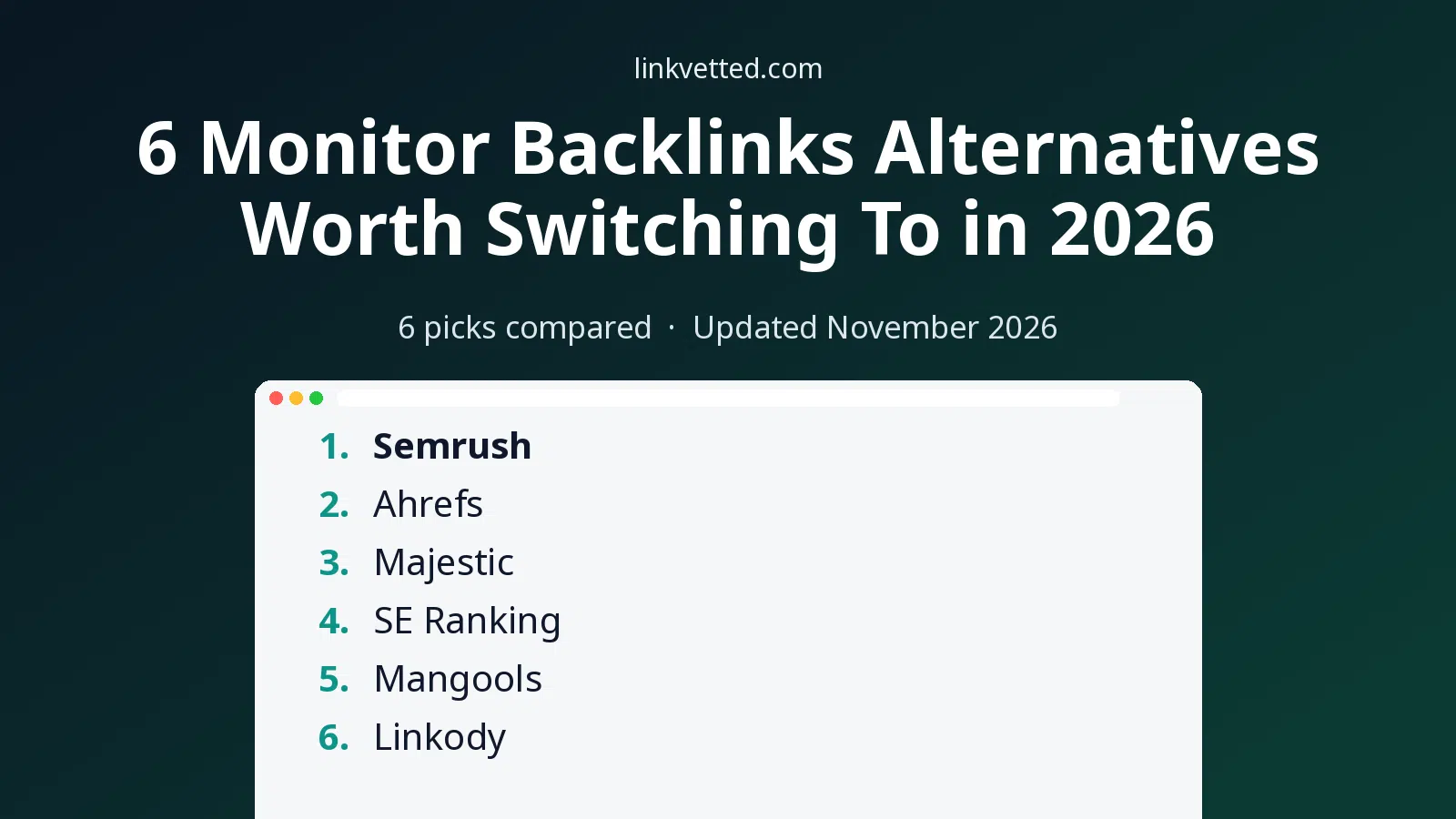
- Editor's choice
 Semrush
Backlinks inside a full SEO suite
Starts atSee websiteVisit semrush.comFull review - Great alternative
 Ahrefs
Link research and competitor gaps
Starts atSee websiteVisit ahrefs.comFull review - Also consider
 Majestic
Link history and trust metrics
Starts atSee websiteVisit majestic.comFull review
Direct answer
My first pick is Semrush, because its backlink index and alerting sit inside a wider search marketing platform. For teams that only need link monitoring, Ahrefs is a strong second, and Majestic suits people who care most about link history and trust signals. People look for Monitor Backlinks alternatives because they want different pricing, fresher data, more integrations, or a tool that also covers audits, rankings and competitor research.
TL;DR:
- Most people search for alternatives because they want link data combined with other SEO work, not a standalone monitor.
- Semrush and Ahrefs offer the broadest feature sets, while Majestic focuses on link history and trust metrics.
- SE Ranking and Mangools are worth a look if budget and simple reporting matter more than index size.
- Linkody is the closest fit for teams that mainly want email alerts about new and lost links.
- Check export limits, crawl frequency and API access before you commit to any plan.
Last checked November 2026. Plan prices are not quoted in this guide because they change often; see each vendor's own pricing page for current figures before you buy.
Quick comparison
| Tool | Best for | Starts at | Free plan? | |
|---|---|---|---|---|
| Semrush | Backlinks inside a full SEO suite | See website | Free plan | Visit |
| Ahrefs | Link research and competitor gaps | See website | Free plan | Visit |
| Majestic | Link history and trust metrics | See website | No free plan | Visit |
 SE Ranking | Agencies wanting SEO plus link monitoring | See website | Free trial | Visit |
 Mangools | Simple link tracking for beginners | See website | Free plan | Visit |
 Linkody | Email alerts on new and lost links | See website | Free trial | Visit |
The best Monitor Backlinks alternatives compared
I compared these tools from vendor documentation and public sources rather than running hands-on tests. The aim is to show how each one handles backlink monitoring, what it includes beyond that, and where it falls short, so you can shortlist based on your own workflow.
Semrush is a broad search marketing platform, and backlink monitoring is one module inside it. You get a backlink analytics view, a backlink audit that flags risky links, and alerts for new and lost links. It fits agencies and in-house teams that already handle rankings, site audits and competitor research and want link data in the same account.
For monitoring, the workflow is straightforward: add your domain, review the referring domains list, set up alerts, and compare your profile against competitors. Because the same platform tracks organic rankings and paid search, you can connect link changes to visibility changes without exporting between tools. That is the main reason people move here from a single-purpose monitor.
The limit is cost and complexity. If you only want an email when a link appears or disappears, Semrush is more than you need. Smaller teams may also find the project and export limits on lower plans restrictive.
- Large backlink index
- Backlink audit and toxic link review
- Alerts and competitor tracking in one place
- Pricier than standalone monitors
- Many features you may not need
Ahrefs is known for its backlink index and site explorer. For monitoring, it shows new and lost backlinks, referring domains over time, and anchor text distribution. It suits SEOs who spend time finding link opportunities and comparing profiles, not just watching their own.
The monitoring side works through saved projects and alerts. You can track a domain, get notified about new and lost links, and review which pages attract links. The link gap view helps you see sites linking to competitors but not to you, which is useful for outreach planning.
The drawback is plan limits. Lower tiers restrict how many projects you can track and how much you can export, so heavy users often need a higher plan. If you want a simple alert tool, Ahrefs is more than necessary.
- Strong referring domain data
- New and lost link notifications
- Useful competitor link gap views
- Lower plans cap projects and exports
- Full feature access needs a higher tier
Majestic is one of the older link intelligence services, and its main draw is historical link data plus its Trust Flow and Citation Flow metrics. It fits SEOs who want to judge link quality and see how a profile changed over time, rather than manage a full SEO campaign.
For monitoring, Majestic provides a site explorer where you can review backlinks, referring domains and historical trends. You can compare domains and check whether links are still live. The data is useful for due diligence on a site or for tracking a profile after a campaign.
The limits are mostly about scope and usability. Majestic does not cover rankings, audits or content tools, and some users find the interface less friendly than newer platforms. Skip it if you want an all-in-one suite.
- Long-running link history
- Trust Flow and Citation Flow metrics
- Site explorer with historical data
- Interface can feel dated
- Fewer surrounding SEO features
SE Ranking is an SEO platform with rank tracking, audits, competitor research and a backlink module. It fits small agencies and consultants who want link monitoring alongside client reporting without paying for several separate tools.
The backlink checker shows referring domains, anchors and new and lost links, and you can monitor domains over time. Because it sits next to rank tracking and site audits, you can tie link changes to ranking movement in one dashboard. That makes it a practical alternative for teams that already do client reporting.
The main limit is index size. SE Ranking's backlink data is smaller than the biggest crawlers, so very large or niche sites may see gaps. Check plan details before relying on it for deep link research.
- Backlink checker with monitoring
- Competitive research and audits in one place
- Reports aimed at client work
- Backlink index smaller than top names
- Some features vary by plan
Mangools is a set of SEO tools aimed at people who want simple interfaces. Its backlink checker covers referring domains, anchors and new and lost links, and it fits freelancers and small businesses that need a clear view without a steep learning curve.
For monitoring, you can check a domain's profile and watch changes over time. The tools are designed to be quick to use, which helps if link monitoring is one of several jobs you handle. It pairs with the brand's rank tracker and keyword tools.
The trade-off is depth. Mangools does not match the largest crawlers for index size or advanced filtering, so heavy link research may need a bigger tool. It is best for straightforward monitoring, not deep analysis.
- Easy to learn
- Backlink checker with monitoring
- Affordable entry point
- Lighter backlink data
- Fewer advanced monitoring options
Linkody is a dedicated backlink monitoring tool. It watches your domains and sends alerts when links are added or removed, and it shows a dashboard of your profile. It fits site owners and small teams that mainly want to know when their links change.
The workflow is built around monitoring: add domains, set alert preferences, and review reports. Because it is focused, it is quicker to set up than a full SEO platform. It also offers competitor monitoring, which helps you see when rivals gain or lose links.
The limit is scope. Linkody does not cover rankings, audits or content research, so it works best alongside other tools. If you want one platform for everything, look at Semrush or SE Ranking instead.
- Focused on backlink monitoring
- Alerts for new and lost links
- Simple dashboard
- Fewer extra SEO features
- Not a full research suite
How I chose
I picked these tools by reading vendor documentation and public sources, then comparing what each one says about backlink monitoring, alerts, exports and plan limits. I did not run hands-on tests, so the notes here reflect published feature descriptions and how the tools are positioned, not my own trial results.
The shortlist favours tools that clearly support monitoring: new and lost link alerts, referring domain tracking and some form of reporting or export. I also weighed fit and limits, such as whether a tool is a full suite or a single-purpose monitor, and whether lower plans restrict projects or exports. The goal is a practical shortlist, not a ranking of data quality.
What to check before you buy
- Confirm the tool sends alerts for both new and lost links, and check how often it crawls.
- Check how many domains or projects you can monitor on the plan you are considering.
- Look at export limits and whether an API is included if you need to feed data elsewhere.
- See whether backlink monitoring is included or sold as a separate add-on.
- Review how the tool handles historical data, since link history matters for spotting trends.
- Check the cancellation and refund terms before committing to an annual plan.
FAQ
Why do people look for Monitor Backlinks alternatives?
Most people want either a different price point, fresher or larger link data, or a tool that combines monitoring with audits, rankings and competitor research. Some also want better exports, API access or client reporting. The right alternative depends on whether you need a dedicated monitor or a full SEO platform.
Is a full SEO suite better than a dedicated backlink monitor?
It depends on your workload. A suite like Semrush or SE Ranking keeps link data next to rankings and audits, which helps connect changes. A dedicated monitor like Linkody is simpler and quicker to set up if alerts are all you need. Many teams use one suite plus a focused monitor.
Can I monitor backlinks for free?
Some tools offer a free plan or free trial with limits on domains, data or features. Free plans usually restrict how much you can monitor or export, so they suit a first look rather than ongoing work. Check the current plan details on each vendor's site before relying on a free tier.
How often should I check my backlinks?
It depends on how active your link building is. During a campaign, weekly checks help you catch new links and spot lost ones early. For quieter sites, monthly reviews are usually enough. Set alerts so you do not have to log in constantly, then review the data on a schedule that matches your work.
What should I look for in a backlink monitoring tool?
Look for new and lost link alerts, referring domain tracking, historical data and clear exports. Check plan limits on projects and exports, and confirm whether monitoring is included or an add-on. If you work with clients, check reporting options. Match the tool to your workflow rather than the longest feature list.
Sources
- https://www.semrush.com
- https://ahrefs.com
- https://majestic.com
- https://seranking.com
- https://mangools.com
- https://www.linkody.com