Zero Trust Architecture Software for Remote Teams in 2026: The 6 Best Options Side by Side
Best zero trust architecture software for remote teams in 2026: 6 contenders with entry costs and free tiers. Real limits included. Read the profiles.
- Editor's choice
 Palo Alto Networks Prisma Access
Cloud-delivered security for hybrid work
Starts atSee websiteVisit paloaltonetworks.comFull review - Great alternativeCisco Secure Access
Converged SSE from a network vendor
Starts atSee websiteVisit cisco.comFull review - Also considerTailscale
Quick identity-based connectivity for developers
Starts at$8 per user a monthVisit tailscale.comFull review
Direct answer
Palo Alto Networks Prisma Access is the first pick on this list for cloud-delivered security for hybrid work. Listed starting prices: Tailscale from $8 per user a month. Cisco Secure Access is better for Converged SSE from a network vendor, and Tailscale is better for quick identity-based connectivity for developers. Details, prices and limits for the rest of the 6 tools are below.
TL;DR:
- Palo Alto Networks Prisma Access takes the first slot, best suited to cloud-delivered security for hybrid work.
- Zscaler Private Access suits hiding private apps from the Internet.
- Palo Alto Networks Prisma Access comes with a trade-off: wide product can be complicated.
- Only Tailscale offers a free plan among these 6 tools.
- Tailscale is the lowest-priced starter here at $8 per user per month.
Last checked November 2026. Prices and plan details were read from the vendors' own pages in November 2026; vendors change plans often, so confirm the current price on the vendor site before you buy.
Quick comparison
| Tool | Best for | Starts at | Free plan? | |
|---|---|---|---|---|
| Palo Alto Networks Prisma Access | Cloud-delivered security for hybrid work | See website | Not stated | Visit |
| Cisco Secure Access | Converged SSE from a network vendor | See website | Not stated | Visit |
| Tailscale | Quick identity-based connectivity for developers | $8 per user a month | Yes | Visit |
 Cloudflare Zero Trust | Unified SASE with zero trust access | See website | Not stated | Visit |
| Netskope One | Visibility and SASE protection for cloud | See website | Not stated | Visit |
| Zscaler Private Access | Hiding private apps from the Internet | See website | Not stated | Visit |
Every option for zero trust architecture software for remote teams explained
If you are comparing zero trust architecture software for remote teams, this page covers 6 tools in one place: what each is best for, what it costs to start, whether it has a free plan, and the main limit to know about.
Palo Alto Networks Prisma Access
Best for: Cloud-delivered security for hybrid work
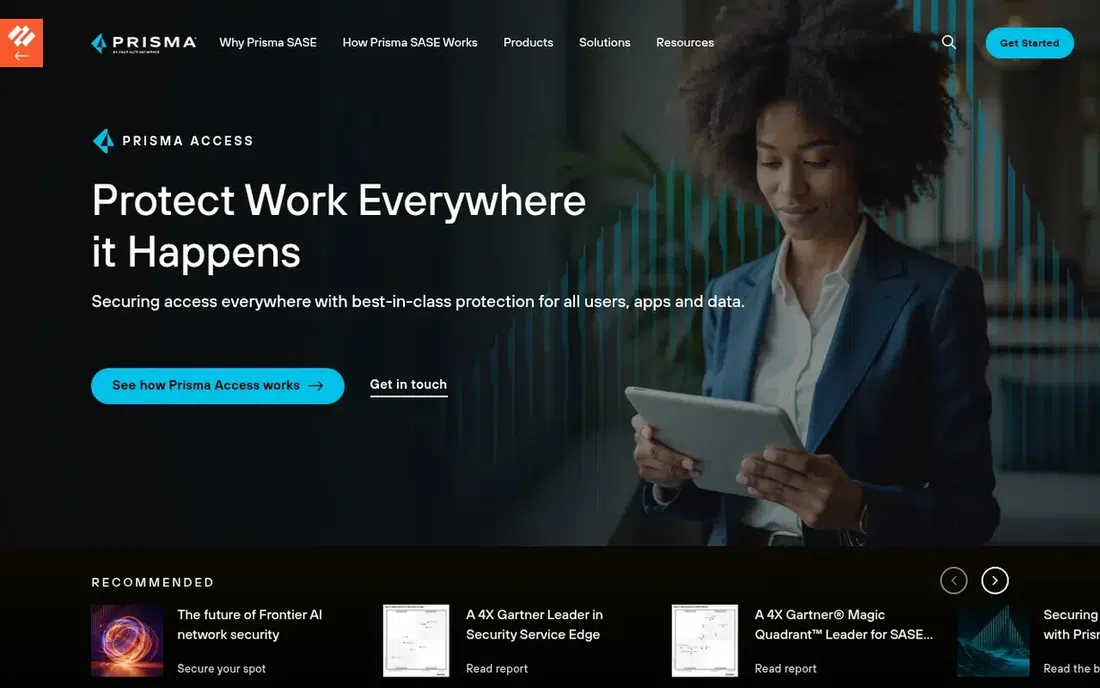
Palo Alto Networks Prisma Access is built with cloud-delivered security for hybrid work in mind. Consider it when remote access is one part of a wider cloud security strategy instead of a standalone connectivity need.
Watch-outs: Best value for bigger deployments.
More specifically, the breadth of the system means configuration and planning can take effort, and smaller teams may prefer a narrower access tool. Prisma Access from Palo Alto Networks is described as a cloud-delivered security platform that supplies secure remote access for the hybrid workforce. Palo Alto Networks Prisma Access does not show a starting price in this comparison, so check the vendor site for current pricing. Free options: Not stated.
- Secure remote access for hybrid teams
- Cloud-delivered security product
- Wide system can be complicated
Cisco Secure Access
Best for: Converged SSE from a network vendor
Pick Cisco Secure Access if this describes you: Converged SSE from a network vendor. Cisco Secure Access is described as a converged, cloud-delivered security service edge option grounded in zero trust, for secure access from anywhere users work.
From a buyer's view, as an enterprise-oriented SSE offering, it can be more than a small team needs for entry-level remote access. Consider it when you want to converge multiple security functions and align with an existing Cisco environment. No starting price is listed for Cisco Secure Access here; confirm pricing on the vendor site. On free options: Not stated.
Where it is weaker: Enterprise-focused deployment.
- Supports access from anywhere users work
- Converged cloud-delivered SSE
- May overlap with existing Cisco tools
Tailscale
Best for: Quick identity-based connectivity for developers
Tailscale serves quick identity-based connectivity for developers. Tailscale describes itself as a connectivity system for developers, IT and security teams, offering zero trust identity-based access that deploys in minutes and scales to every resource. In daily use, pick it when fast, identity-driven links to resources are the priority and simplicity matters more than breadth.
Trade-offs to know: Centred on connectivity, not full SASE.
Also, Tailscale centers on connectivity instead of acting as a full security service edge suite. So teams needing broad traffic inspection may add other tools. Price to start with Tailscale: $8 per user per month. A free plan is available with Tailscale.
- Zero trust identity-based access
- Scales across resources
- Less suited to wide traffic inspection
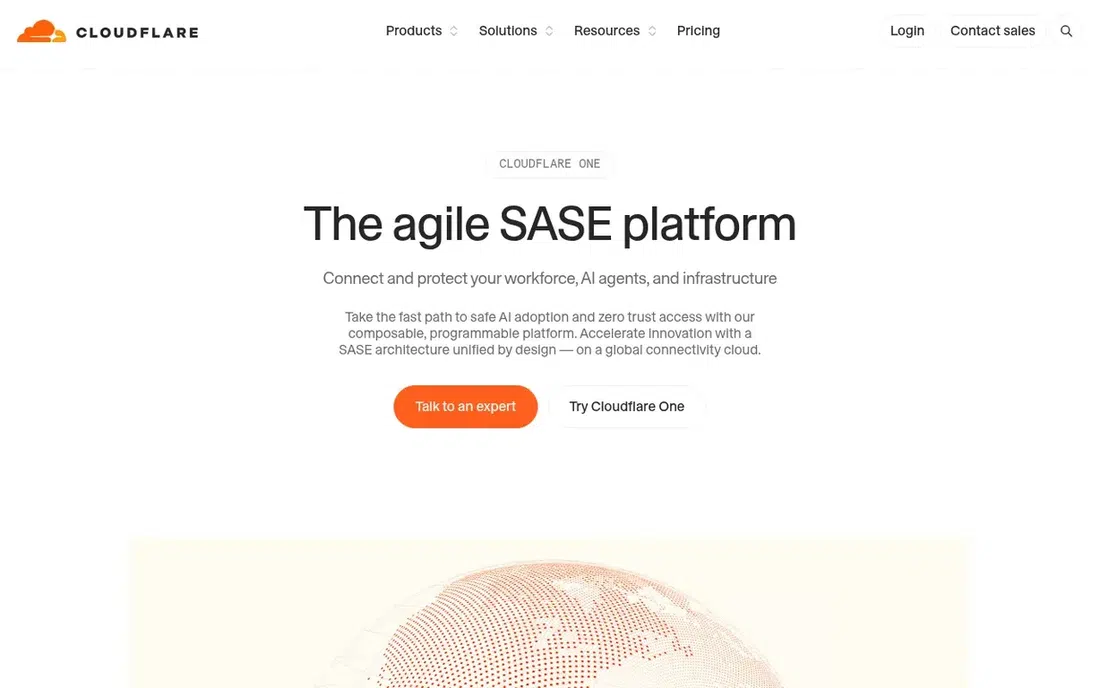
Cloudflare Zero Trust was built for unified SASE with zero trust access. Cloudflare Zero Trust sits within Cloudflare One, which the vendor describes as an agile SASE product for connecting and protecting workforce, AI agents and infrastructure.
Downsides: Policy design needs planning.
The range of capabilities means policy design and rollout need care, and very small teams may not use the full set. Cloudflare Zero Trust does not show a starting price in this comparison, so check the vendor site for current pricing. Trial and free access: Not stated.
- Solid web and network footprint
- Cloudflare One positions as unified SASE
- Numerous features to configure
Netskope One
Best for: Visibility and SASE protection for cloud
Choose Netskope One for visibility and SASE protection for cloud. Evaluate it when visibility into cloud usage and data movement matters as much as access enforcement.
Downsides: Feature depth can overwhelm small teams.
More specifically, Netskope One is presented as modern security and networking for the cloud and AI era, with unified visibility, advanced SASE and SSE protection, and optimized performance. The product handles plenty of ground, so scoping which modules you need takes effort, and lean teams may prefer a more straightforward access product. Netskope One does not show a starting price in this comparison, so check the vendor site for current pricing. Free access: Not stated.
- Unified visibility across cloud and data
- Focus on performance optimization
- Wide product needs planning
Zscaler Private Access
Best for: Hiding private apps from the Internet
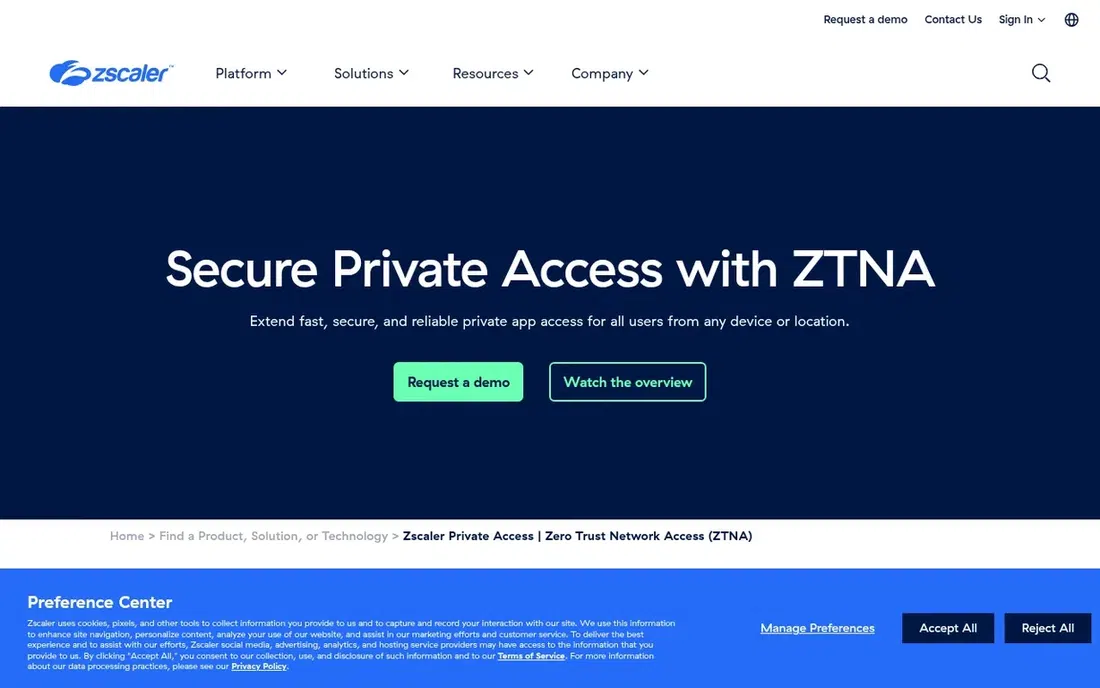
Zscaler Private Access is aimed squarely at hiding private apps from the Internet. Zscaler Private Access, frequently called ZPA, is built around secure access to private applications without placing internal networks on the public Internet.
Its homepage frames it as a modern replacement for traditional remote access models. In practice, evaluate it when private application protection is the core requirement, and compare with broader products if you also need broad Internet security in one stack. No starting price is listed for Zscaler Private Access here; confirm pricing on the vendor site. On free options: Not stated.
Points against: Overlaps with broader SASE suites.
- Cloud-delivered architecture
- Secure access without exposing internal networks
- Enterprise-oriented setup
How we chose
LinkVetted looked at what each vendor publishes: pricing, plan limits, feature coverage for zero trust architecture software for remote teams and stated drawbacks. No hands-on testing is claimed. Treat prices as a snapshot: vendors change plans often, so check the vendor site for the figure that applies today. Tools are placed by general fit for zero trust architecture software for remote teams, with price clarity and free access as tie-breakers. A different team can reasonably rank them differently.
Before you commit
- Ask Palo Alto Networks Prisma Access, Cisco Secure Access, Cloudflare Zero Trust and others for a written quote, since no starting price is shown.
- Test the free plan from Tailscale against your real workload before relying on it.
- Read the limits listed for Palo Alto Networks Prisma Access first: wide product can be complicated.
- Test how quickly Netskope One answers a pre-sales question; it hints at how support will feel later.
- Confirm minimum seats and billing terms with Cloudflare Zero Trust before you commit to an annual plan.
FAQ
What is the difference between zero trust access and a traditional VPN?
A traditional VPN generally links a device to the network and then depends on network-level controls. Numerous remote teams adopt zero trust to cut exposed internal services.
Is Palo Alto Networks Prisma Access the right pick for everyone comparing zero trust architecture software for remote teams?
No single tool suits every team. Palo Alto Networks Prisma Access comes first because it fits cloud-delivered security for hybrid work, while Cisco Secure Access suits Converged SSE from a network vendor and Tailscale suits fast identity-based connectivity for developers. Match the tool to your own size, budget and workflow before deciding.
Which options for zero trust architecture software for remote teams have a free plan?
Tailscale is the only tool in this list with a free plan. Free plans usually cap users, projects or features, so check the limits on the vendor page. For the full picture, the cards above cover all 6 entries of this zero trust architecture software for remote teams list, including price, free plan and limits.
How are the tools for zero trust architecture software for remote teams ordered?
The order follows typical fit for zero trust architecture software for remote teams, with Palo Alto Networks Prisma Access first and Zscaler Private Access last, then price clarity and free access. It is editorial judgement, not a score, so another team could rank the tools differently.
Can I try these tools before paying?
Often, yes. Tailscale has a free plan. Use your own data and a real task during the test, and check what the free tier or trial limits before you rely on it.
Sources
- https://www.paloaltonetworks.com/prisma/access
- https://www.cisco.com/site/us/en/products/security/secure-access/index.html
- https://tailscale.com
- https://www.cloudflare.com/zero-trust
- https://www.netskope.com
- https://www.zscaler.com/products/zscaler-private-access