Best Webhook Testing Tools for API Developers in 2026: Prices, Free Plans and 5 Picks
Best webhook testing tools for API developers in 2026: 5 contenders with entry costs and free tiers. Every pick includes one clear drawback. Start here.
- Editor's choiceWebhook.site
Immediately inspecting incoming webhook requests
Starts at$9 per monthVisit webhook.siteFull review - Great alternativeHookdeck
Dependable webhook infrastructure at scale
Starts at$39 a monthVisit hookdeck.comFull review - Also considerngrok
Exposing local servers for live webhook testing
Starts at$10 monthlyVisit ngrok.comFull review
Direct answer
Start with Webhook.site if you need immediately inspecting incoming webhook requests. Listed starting prices: Webhook.site from $9 per month, Hookdeck from $39 a month and ngrok from $10 monthly. If your case is different, Hookdeck suits dependable webhook infrastructure at scale and ngrok suits exposing local servers for live webhook testing. The full list of 5 tools follows, with prices and free plan facts.
TL;DR:
- The list opens with Webhook.site, aimed at immediately inspecting incoming webhook requests.
- One limit worth knowing about ngrok: needs a running local service to forward to.
- Beeceptor is the one to check for Mocking APIs and webhook endpoints quickly.
- Webhook.site has the lowest monthly starting price in this list: $9 per month.
Last checked November 2026. Prices and plan details were read from the vendors' own pages in November 2026; vendors change plans often, so confirm the current price on the vendor site before you buy.
Quick comparison
| Tool | Best for | Starts at | Free plan? | |
|---|---|---|---|---|
| Webhook.site | Immediately inspecting incoming webhook requests | $9 per month | Not stated | Visit |
| Hookdeck | Dependable webhook infrastructure at scale | $39 a month | Yes | Visit |
| ngrok | Exposing local servers for live webhook testing | $10 monthly | Yes | Visit |
| RequestBin | Collecting and viewing incoming requests | $99 per month | Yes | Visit |
 Beeceptor | Mocking APIs and webhook endpoints rapidly | $10 a month | Yes | Visit |
The full webhook testing tools for API developers list
Short on time? The summary and table above give the quick view of 5 webhook testing tools for API developers, and the profiles that follow give the detail behind each entry.
Webhook.site
Best for: Immediately inspecting incoming webhook requests
Webhook.site serves immediately inspecting incoming webhook requests. Webhook.site immediately creates a unique URL and email address so you can test, inspect, and automate incoming HTTP requests and emails. It is a quick way to see exactly what a provider sends, including headers and payloads, without standing up your own server.
The main drawbacks: Best for inspection instead of production routing.
Worth adding: Webhook.site is oriented toward inspection and light automation instead of durable, high-scale webhook delivery. If you need guaranteed delivery, retries, and observability across many events, a dedicated webhook infrastructure tool is more appropriate. Entry price for Webhook.site: $9 per month. Free plan details: Not stated.
- Produces a unique URL and email address immediately
- Contains a visual workflow editor and scripts
- Not a full webhook delivery infrastructure
Hookdeck
Best for: Dependable webhook infrastructure at scale
Hookdeck was built for dependable webhook infrastructure at scale. Hookdeck is webhook infrastructure for apps and agents that ensures every event is received, processed, and monitored dependably at scale. It hands visibility and control over webhooks and external event streams, which helps when testing needs to reflect production behavior.
For a one-off inspection, that overhead may not be justified. On top of that, if you only have to see a request once, a more straightforward receiver is quicker. Choose Hookdeck when reliability and monitoring matter. What you pay to start with Hookdeck: $39 per month. Free access exists with Hookdeck.
Points against: More infrastructure than a straightforward test receiver.
- Supplies visibility and control over event streams
- Ensures events are received, processed, monitored
- Setup is heavier for one-off checks
ngrok
Best for: Exposing local servers for live webhook testing
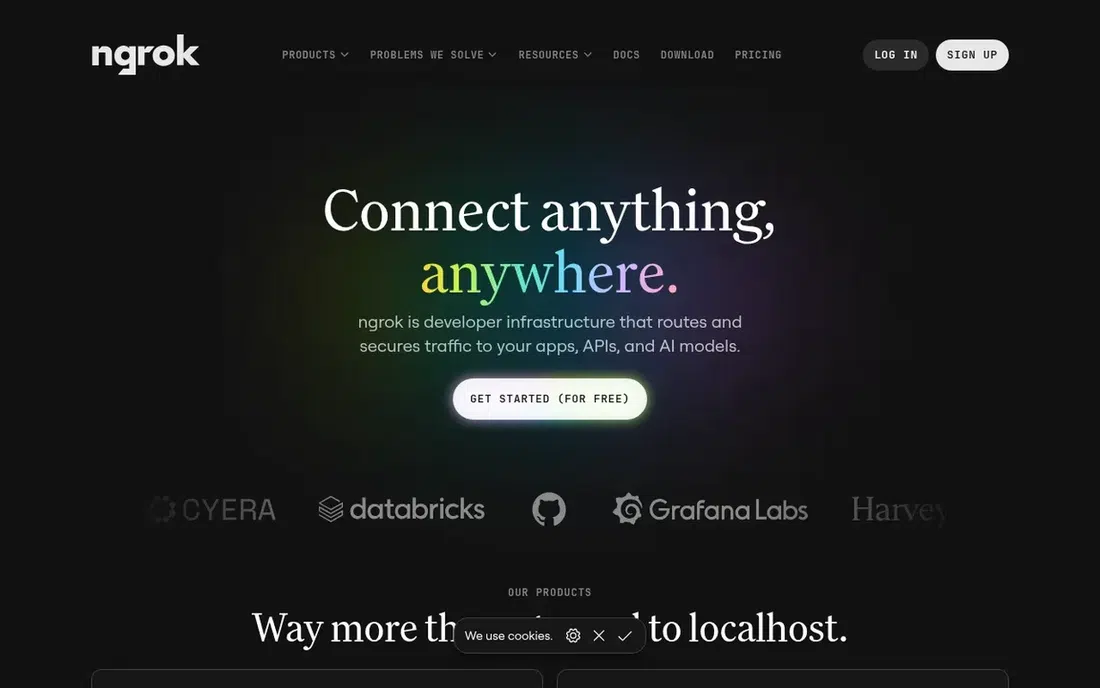
Pick ngrok if this describes you: exposing local servers for live webhook testing. Since ngrok forwards traffic to a service you run, you still need your own endpoint and logging to inspect payloads. It is not a mock server or a request inspector by itself.
What ngrok does well: Works from local development through production.
The main drawbacks: Needs a running local service to forward to. In daily use, ngrok is developer infrastructure that routes and secures traffic to your apps, APIs, and AI models wherever they run. Beyond that, for webhook testing, it lets an external service reach a server running on your machine. So you can observe real callback deliveries rather than simulating them. From a buyer's view, if you only have to capture and view incoming requests without running a local app, a hosted inspection tool may be more straightforward. What you pay to start with ngrok: $10 monthly. ngrok includes a free tier.
- AI models
- Routes traffic to apps on localhost or in production
- Tunnel setup brings a step before testing
RequestBin
Best for: Collecting and viewing incoming requests
Where RequestBin fits: collecting and viewing incoming requests. RequestBin is a well-known way to collect and inspect incoming HTTP requests through a temporary endpoint. If you need reliability and visibility at scale, choose a dedicated webhook infrastructure tool instead.
Trade-offs to know: Not centred on delivery guarantees.
More specifically, for webhook testing, it lets you point a provider at an URL and review what arrives, which is useful during initial integration and debugging. RequestBin is most useful for short-lived inspection instead of durable webhook operations. It does not supply the delivery guarantees, retries, or monitoring that production systems need. Starting cost for RequestBin: $99 per month. Free access exists with RequestBin.
- Straightforward way to collect incoming HTTP requests
- Handy for inspecting payloads during integration
- Restricted as long-term webhook infrastructure
Beeceptor is a good fit for Mocking APIs and webhook endpoints quickly. For webhook testing, it is handy for standing up an endpoint that accepts requests and returns controlled responses so you can test how your sender behaves.
Where it is weaker: Mocking focus instead of delivery infrastructure.
Beeceptor cost at the entry level: $10 per month. Beeceptor has a free plan.
- Builds mock servers in seconds
- Supports REST, SOAP, GraphQL, gRPC
- Advanced scenarios may need custom rules
How we built this list
LinkVetted looked at what each vendor publishes: pricing, plan limits, feature coverage for webhook testing tools for API developers and stated drawbacks. No hands-on testing is claimed. Where a vendor does not publish a price, the entry says quote. Where a price depends on seats or billing term, the entry says so. The order reflects how well each tool fits the most common buying scenario for webhook testing tools for API developers, then price clarity, then free plan access. It is a starting point, not a verdict.
A buyer's checklist
- Confirm the entry price on the vendor page: Webhook.site starts at $9 per month, but seat counts and billing terms change the total.
- Look at free plan limits closely: Hookdeck, ngrok, RequestBin and Beeceptor have one, and the caps decide whether it is usable for real work.
- Read the limits listed for Webhook.site first: not a full webhook delivery infrastructure.
- Ask RequestBin about contract length, onboarding fees and user minimums before you sign.
- Work out what Hookdeck costs with your real seat count, add-ons and usage, not just the entry price.
FAQ
Do I need a mock server for webhook testing?
A mock server helps when you want to simulate responses and test how your sender behaves without a real provider. Tools like Beeceptor support mock endpoints across multiple protocols.
How are the tools for webhook testing tools for API developers ordered?
Webhook.site sits first and Beeceptor last because the order follows typical fit for webhook testing tools for API developers, then price clarity and free access. It is a judgement call, so read each profile for fit and limits.
Which options for webhook testing tools for API developers have a free plan?
On this list, Hookdeck, ngrok, RequestBin and Beeceptor include a free plan. Caps on seats, usage or features are common, so test the free plan against your real workload.
Do these tools publish their prices?
Yes. Every tool from Webhook.site to Beeceptor shows a starting price, though seats, add-ons and billing terms still change the final cost.
Is Webhook.site the right pick for everyone comparing webhook testing tools for API developers?
No single tool suits every team. Webhook.site comes first because it fits instantly inspecting incoming webhook requests, while Hookdeck suits reliable webhook infrastructure at scale and ngrok suits exposing local servers for live webhook testing. Match the tool to your own size, budget and workflow before deciding.
Sources
- https://webhook.site
- https://hookdeck.com
- https://ngrok.com
- https://requestbin.com
- https://beeceptor.com