Unified Data Analytics Platforms in 2026: The 5 Best Options Side by Side
5 products for the best unified data analytics platforms, ranked by fit, with starting costs and free tiers. With pricing notes and limits. Numbers first.
- Editor's choice
 Palantir Foundry
Enterprise ontology and operational AI
Starts atPricing on requestVisit palantir.comFull review - Great alternative
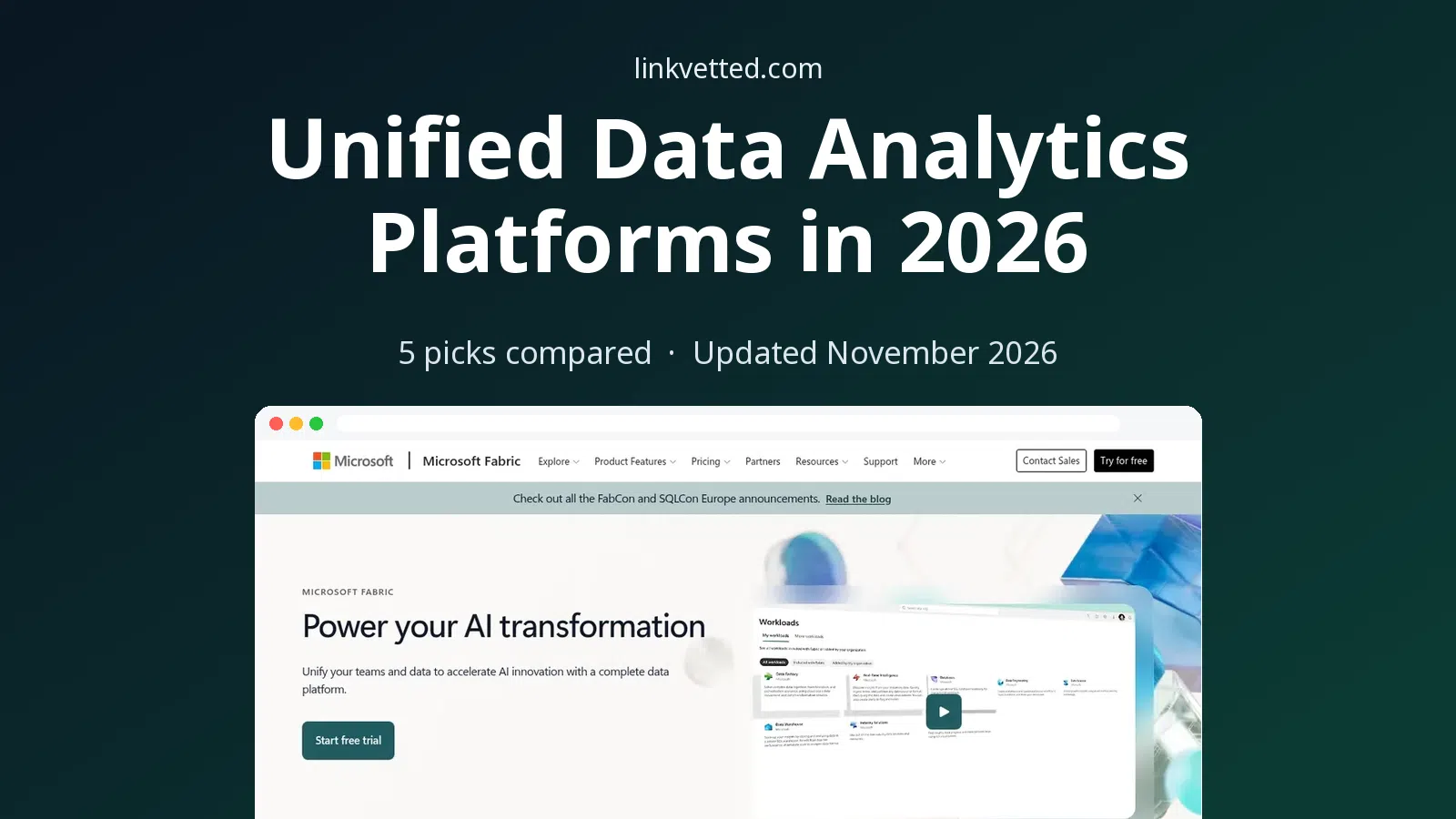
 Microsoft Fabric
Microsoft-centric analytics ecosystems
Starts atPricing on requestVisit microsoft.comFull review - Also considerDatabricks Lakehouse Platform
Unified data, analytics, and AI
Starts atPricing on requestVisit databricks.comFull review
Direct answer
Palantir Foundry is the first pick on this list for enterprise ontology and operational AI. Microsoft Fabric is better for Microsoft-centric analytics ecosystems, and Databricks Lakehouse Platform is better for unified data, analytics, and AI. Details and limits for the rest of the 5 tools are below. None of these vendors publish plan prices, so pricing is on request for every option.
TL;DR:
- This list starts with Palantir Foundry, which is built for enterprise ontology and operational AI.
- The main caution on Microsoft Fabric: best value within Microsoft stack.
- Every tool from Palantir Foundry to Domo works by quote, with no list price shown.
- For business intelligence and data apps, Domo is worth a look.
Last checked November 2026. Pricing on request: vendors did not publish plan prices when this guide was last checked (November 2026), so ask each vendor for a written quote.
Quick comparison
| Tool | Best for | Starts at | Free plan? | |
|---|---|---|---|---|
| Palantir Foundry | Enterprise ontology and operational AI | Pricing on request | Not stated | Visit |
| Microsoft Fabric | Microsoft-centric analytics ecosystems | Pricing on request | Free trial | Visit |
| Databricks Lakehouse Platform | Unified data, analytics, and AI | Pricing on request | Not stated | Visit |
 Amazon Redshift | Completely managed cloud data warehousing | Pricing on request | Not stated | Visit |
 Domo | Business intelligence and data apps | Pricing on request | Free trial | Visit |
The best unified data analytics platforms
Choosing unified data analytics platforms usually comes down to price, fit and limits. This LinkVetted guide sets 5 tools side by side on those three points, with the facts kept short and checkable.
Palantir Foundry targets enterprise ontology and operational AI. Organizations with more straightforward analytics needs may find it overbuilt. Also, Palantir Foundry is described as the Ontology/AI-powered operating system for the modern enterprise, enabling you to run your business as code.
Also, consider Foundry when you need deep integration of data and operations at enterprise scale. For everyday use, Implementing Foundry can be a significant undertaking that demands specialized skills and a clear operational strategy. No starting price is listed for Palantir Foundry here; confirm pricing on the vendor site. Free options: Not stated.
Limits to weigh: May need specialized expertise.
- AI-driven decision support
- Ontology-powered operating system
- Complicated implementation
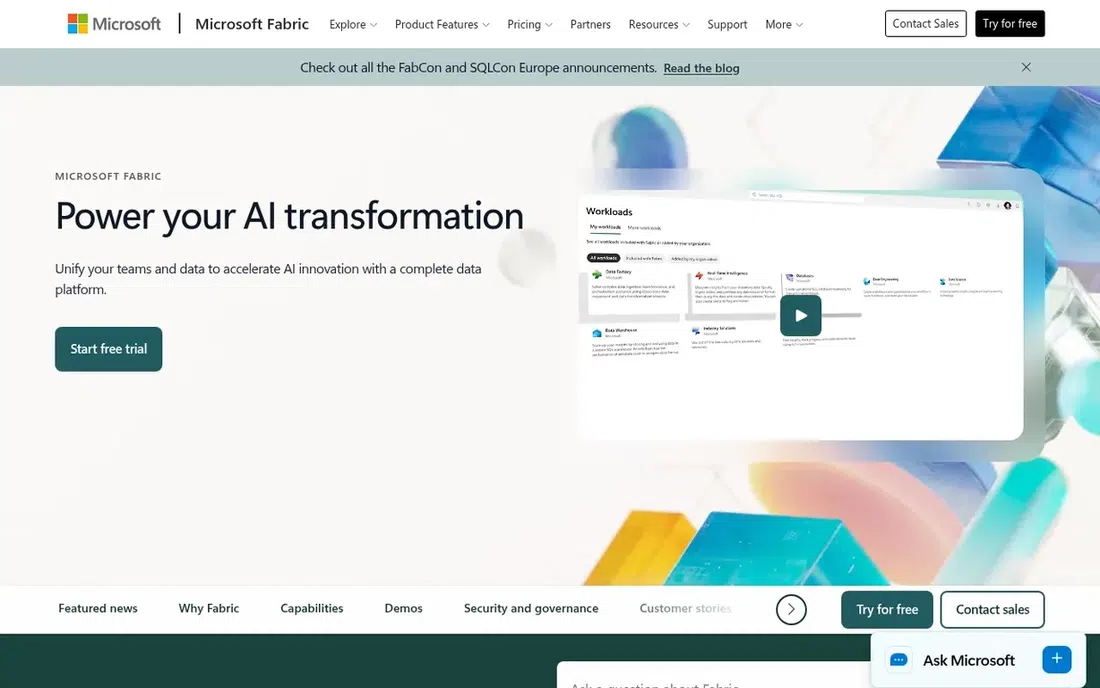
Choose Microsoft Fabric for Microsoft-centric analytics ecosystems. Microsoft Fabric is an AI-powered analytics product that unites your data and services, including data science and data lakes. It is meant to help organizations get more value from their data by supplying a cohesive environment for analytics.
Downsides: Best value within Microsoft stack.
In daily use, if you prefer a cloud-agnostic or non-Microsoft stack, consider alternatives. For everyday use, the system is most advantageous for organizations deeply invested in the Microsoft ecosystem; others may face integration overhead. More specifically, users new to Azure may need time to become familiar with its concepts. Microsoft Fabric does not show a starting price in this comparison, so check the vendor site for current pricing. Free options: Free trial.
- Bundles data science and data lakes
- AI-powered analytics
- May need Azure familiarity
Databricks Lakehouse Platform
Best for: Unified data, analytics, and AI
For unified data, analytics, and AI, Databricks Lakehouse Platform is a natural candidate. Adoption frequently needs specialized skills to configure and run the lakehouse environment.
The product is built for organizations that want a data-centric approach and have to support diverse workloads from business intelligence to machine learning without stitching together separate systems. This comparison lists no price for Databricks Lakehouse Platform; ask the vendor. Free access: Not stated.
Where it falls short: Can be complicated for small teams.
- Data-centric architecture
- Merges ETL, warehousing, AI
- Needs configuration expertise
Amazon Redshift works best for completely managed cloud data warehousing. Amazon Redshift is a fast, completely managed cloud data warehouse that makes it straightforward and economical to analyze all your data. It is a solid choice for organizations that require a steady, scalable warehouse without the operational burden of self-managed systems.
Downsides: Restricted native AI/ML integration.
For everyday use, if your needs are primarily SQL-based analytics, Redshift is a solid fit; otherwise, consider a broader product. For everyday use, Redshift is centred on data warehousing, so teams seeking a unified system that bundles deep AI and data science tooling may have to supplement it with other services. Amazon Redshift shows no starting price here, so confirm the cost on the vendor site. On free options: Not stated.
- Straightforward and economical
- Examines all your data
- Primarily a data warehouse
Where Domo fits: business intelligence and data apps. Choose Domo for approachable analytics and governed data access.
Trade-offs to know: Concentrated on business users.
Worth adding: teams with heavy technical requirements might have to pair it with a dedicated data product. No starting price is listed for Domo here; confirm pricing on the vendor site. Free access: Free trial.
- Prepares and expands data access
- Links data from any source
- May be less suited for heavy data engineering
Selection criteria
The comparison looks at four things: starting price, free access, how well the feature set matches unified data analytics platforms, and the main limit of each tool. Prices and plan limits come from vendor pages and can change, so confirm them on the vendor site before you buy. The ranking is editorial: typical fit first, then clear pricing, then free access. If your needs are unusual, read the profiles rather than relying on position.
What to confirm before you sign up
- Request quotes from Palantir Foundry, Domo and the others; the list shows no fixed prices.
- Run a trial of Microsoft Fabric and Domo with real work before paying for a year; your own workflow is the best test.
- Read the limits listed for Palantir Foundry first: complicated implementation.
- Check the support hours and onboarding help Microsoft Fabric offers; smaller vendors vary a lot here.
- Check whether the features you need in Databricks Lakehouse Platform sit on the entry plan or only on higher tiers.
FAQ
Do these tools publish their prices?
No. None of the tools, from Palantir Foundry to Domo, shows a fixed starting price here, so budget time for quotes.
Does any tool for unified data analytics platforms here have a free plan?
A permanent free plan is not offered by Palantir Foundry, Domo or the other tools here. Microsoft Fabric, Domo offer a trial. Plan a short evaluation period instead.
Is Palantir Foundry the right pick for everyone comparing unified data analytics platforms?
No single tool suits every team. Palantir Foundry comes first because it fits enterprise ontology and operational AI, while Microsoft Fabric suits Microsoft-centric analytics ecosystems and Databricks Lakehouse Platform suits unified data, analytics, and AI. Match the tool to your own size, budget and workflow before deciding.
Can I try these options before paying?
Often, yes. Microsoft Fabric and Domo offer a free trial. Use your own data and a real task during the test, and check what the free tier or trial limits before you rely on it.
What makes a data analytics product unified?
A unified product generally combines data integration, storage, governance, and analytics in one environment. This cuts the have to stitch together separate tools and gives you a consistent experience across data workflows.
Sources
- https://www.palantir.com/platforms/foundry
- https://www.microsoft.com/en-us/microsoft-fabric
- https://www.databricks.com
- https://aws.amazon.com/redshift
- https://www.domo.com