5 Tools for E-Commerce Development Worth Shortlisting in 2026
Weighing the best tools for e-commerce development? We lined up 5 products by cost, free access and fit. Limits and pricing notes included. Numbers first.

- Editor's choice
 PrestaShop
Simple store launch and customization
Starts atSee websiteVisit prestashop.comFull review - Great alternative
 WooCommerce
WordPress-based open-source keeps
Starts at$29 a monthVisit woocommerce.comFull review - Also consider
 Shopify
All-in-one commerce for most firms
Starts at$19 per monthVisit shopify.comFull review
Direct answer
If you need simple store launch and customization, PrestaShop is the first tool to look at here. Listed starting prices: WooCommerce from $29 a month and Shopify from $19 per month. If your case is different, WooCommerce suits WordPress-based open-source keeps and Shopify suits all-in-one commerce for most companies. Prices, free plans and limits for all 5 tools follow.
TL;DR:
- Top of the list is PrestaShop, which targets simple store launch and customization.
- Shopware stands alone as the one tool in this list with a free plan.
- Shopware fits configurable responsive storefronts.
- For the cheapest start, look at Shopify: $19 per month.
Last checked November 2026. Prices and plan details were read from the vendors' own pages in November 2026; vendors change plans often, so confirm the current price on the vendor site before you buy.
Quick comparison
| Tool | Best for | Starts at | Free plan? | |
|---|---|---|---|---|
| PrestaShop | Simple store launch and customization | See website | Not stated | Visit |
| WooCommerce | WordPress-based open-source keeps | $29 a month | Not stated | Visit |
| Shopify | All-in-one commerce for most firms | $19 per month | Free trial | Visit |
 Adobe Commerce | Enterprise B2B and B2C personalization | See website | Not stated | Visit |
 Shopware | Configurable responsive storefronts | See website | Yes | Visit |
The full tools for e-commerce development list
Choosing tools for e-commerce development usually comes down to price, fit and limits. This LinkVetted guide sets 5 tools side by side on those three points, with the facts kept short and checkable.
For simple store launch and customization, PrestaShop is a natural candidate. PrestaShop presents itself as a way to produce an online shop easily, customize the storefront and start selling products.
Watch-outs: Needs self-hosting decisions.
As a self-managed system, PrestaShop puts hosting, maintenance and extension choices on the merchant. On top of that, choose PrestaShop when you want an accessible open product and are prepared to run the technical side or work with a developer. This comparison lists no price for PrestaShop; ask the vendor. Free options: Not stated.
- Open e-commerce system
- Storefront customization choices
- Extensions vary in quality
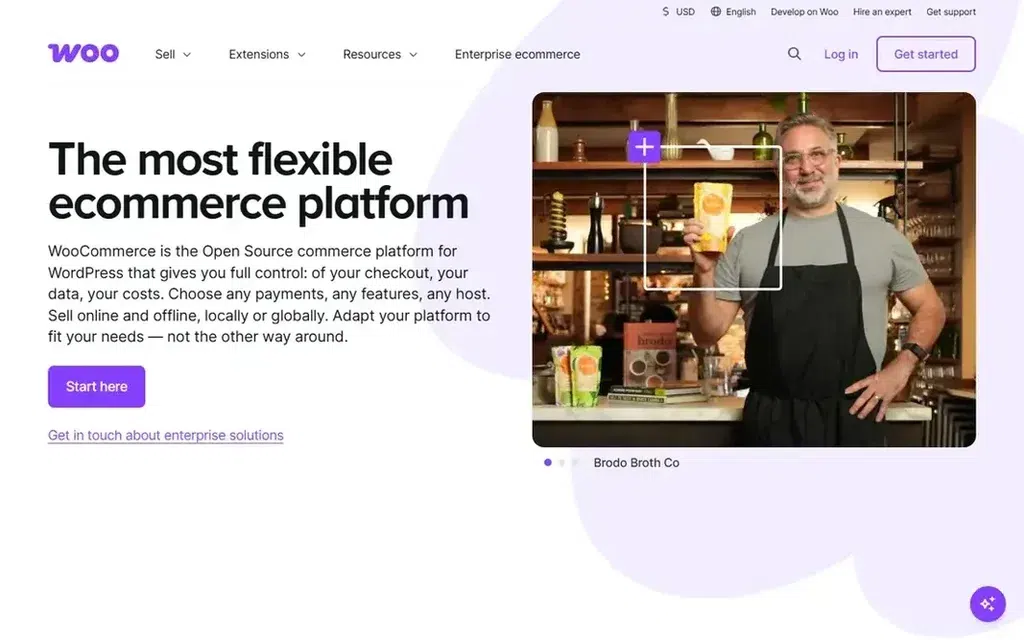
Think of WooCommerce for WordPress-based open-source keeps. Keeps without technical support may find a hosted product simpler. Open source also means more responsibility: hosting, updates and maintenance fall to the merchant or their developer.
In daily use, choose WooCommerce when WordPress experience is in place and long-term control of the codebase matters. From a buyer's view, since it runs on WordPress, it appeals to teams already familiar with that ecosystem and to developers who want to extend a store with custom code. Price to start with WooCommerce: $29 per month. On free options: Not stated.
What to check first: More self-managed than hosted products.
- Designed for long-term business growth
- Open-source e-commerce product
- Needs WordPress knowledge to run well

Shopify is built with all-in-one commerce for most firms in mind. Choose Shopify when speed of setup and integrated business tools matter more than owning the full stack.
Where it falls short: Custom work relies on the product's extension model.
Shopify presents itself as an all-in-one commerce system for companies, with tools that go beyond e-commerce software to handle plenty of parts of a company. Shopify starts at: $19 per month. Free plan details: Free trial.
- Merges storefront and business management tools
- Wide fit from new keeps to expanding brands
- Less control over the underlying stack
Adobe Commerce serves enterprise B2B and B2C personalization. Adobe Commerce, formerly Magento, is presented as an AI-powered composable e-commerce system for B2B and B2C that gives personalized experiences at global scale. It targets large organizations with complicated catalogs, multiple brands or international operations.
Choose Adobe Commerce when global scale, B2B and B2C complexity and personalization are core requirements. Also, the composable approach lets teams assemble services around the commerce core, which suits enterprises with existing integration needs. That enterprise scope brings implementation complexity and a need for specialized technical staff. Check the vendor site for Adobe Commerce pricing; none is listed in this comparison. On free options: Not stated.
What to check first: Needs dedicated technical resources.
- Made for B2B and B2C
- AI-powered composable product
- Enterprise focus means heavier setup
Where Shopware fits: configurable responsive storefronts. Shopware describes itself as a trendsetting e-commerce product for building and customizing a completely responsive online store with a blend of design and functionality. Also, merchants wanting a completely managed, hands-off system may prefer Shopify.
Greater customization generally means more developer involvement during setup and changes. Choose Shopware when a tailored, responsive storefront and design adaptability are central to the brand. The emphasis on customization makes it a candidate for brands with distinct design requirements. No starting price is listed for Shopware here; confirm pricing on the vendor site. Shopware includes a free tier.
Best features of Shopware: Focus on design and functionality blend.
Drawbacks to consider: Less known in some markets.
- Completely responsive store building
- Customization-oriented product
- Custom builds need developer involvement
Our selection method
For each of the 5 tools we noted price, free plan or trial, fit for tools for e-commerce development and the main limit, using vendor pages and documentation. Seat minimums, billing terms and add-ons can move the real cost, so the starting prices here are a guide and not a quote. Tools are placed by general fit for tools for e-commerce development, with price clarity and free access as tie-breakers. A different team can reasonably rank them differently.
Before you commit
- Confirm the entry price on the vendor page. For PrestaShop, Adobe Commerce and Shopware that means a quote rather than a fixed price.
- Test the free plan from Shopware against your real workload before relying on it.
- Run a trial of Shopify with real work before paying for a year; your own workflow is the best test.
- Read the limits listed for PrestaShop first: needs self-hosting decisions.
- Ask whether PrestaShop integrates with your current software, and whether that comes standard or as an add-on.
- Before you load data into Adobe Commerce, check what an export looks like and who can run it.
FAQ
Do these tools publish their prices?
Not all of them. PrestaShop, Adobe Commerce and Shopware publish no starting price, so expect a quote request for those. The rest, WooCommerce included, show a starting price, though seats and billing terms still change the final cost.
Can I try these tools before paying?
Often, yes. Shopware has a free plan and Shopify offers a free trial. Use your own data and a real task during the test, and check what the free tier or trial limits before you rely on it.
When should I choose WooCommerce over a hosted product?
WooCommerce suits teams already using WordPress and developers who want an open-source base they can extend. It provides more control over the codebase but also puts hosting and maintenance on you.
What is the cheapest option for tools for e-commerce development in this list?
On published monthly entry prices, Shopify is the lowest here at $19 per month. Entry price is only part of the cost, because seats, add-ons and billing terms can change the total. For the full picture, the cards above cover all 5 entries of this tools for E-Commerce development list, including price, free plan and limits.
Is PrestaShop the right pick for everyone comparing tools for e-commerce development?
No single tool suits every team. PrestaShop comes first because it fits easy store launch and customization, while WooCommerce suits WordPress-based open-source stores and Shopify suits all-in-one commerce for most businesses. Match the tool to your own size, budget and workflow before deciding.
Sources
- https://www.prestashop.com
- https://woocommerce.com
- https://www.shopify.com
- https://business.adobe.com/products/magento/magento-commerce.html
- https://www.shopware.com