Best Retail IoT Tools for Product Development in 2026: 6 Tools Compared
Searching for the best retail IoT tools for product development? Here are 6 options with prices and free plans. Honest caveats for every entry. See which fits.
- Editor's choiceSamsung SmartThings Pro
Connected environment and device ecosystems
Starts atPricing on requestVisit smartthings.comFull review - Great alternativeSierra Wireless
Cellular connectivity and rugged hardware
Starts atPricing on requestVisit sierrawireless.comFull review - Also considerGoogle Cloud IoT
Architecture planning on Google Cloud
Starts atPricing on requestVisit cloud.google.comFull review
Direct answer
Samsung SmartThings Pro is the first pick on this list for connected environment and device ecosystems. If your case is different, Sierra Wireless suits cellular connectivity and rugged hardware and Google Cloud IoT suits architecture planning on Google Cloud. All 6 tools are compared below on fit, free plan and limits. None of these vendors publish plan prices, so pricing is on request for every option.
TL;DR:
- Number one here is Samsung SmartThings Pro, a fit for connected environment and device ecosystems.
- Pricing across the list, from Samsung SmartThings Pro to Zebra Aurora, is by quote only.
- For store hardware and RFID workflows, Zebra Aurora is worth a look.
- Only AWS IoT Core offers a free plan among these 6 tools.
- Check the limits for Sierra Wireless before you commit: hardware and connectivity focus.
Last checked November 2026. Pricing on request: vendors did not publish plan prices when this guide was last checked (November 2026), so ask each vendor for a written quote.
Quick comparison
| Tool | Best for | Starts at | Free plan? | |
|---|---|---|---|---|
| Samsung SmartThings Pro | Connected environment and device ecosystems | Pricing on request | Not stated | Visit |
| Sierra Wireless | Cellular connectivity and rugged hardware | Pricing on request | Not stated | Visit |
| Google Cloud IoT | Architecture planning on Google Cloud | Pricing on request | Not stated | Visit |
 AWS IoT Core | Secure device-to-cloud integration | Pricing on request | Yes | Visit |
| Cisco Meraki | Cloud-managed retail networking foundation | Pricing on request | Not stated | Visit |
| Zebra Aurora | Store hardware and RFID workflows | Pricing on request | Not stated | Visit |
Retail IoT Tools for Product Development, one by one
LinkVetted put together this guide to retail IoT tools for product development for readers who want a clear shortlist without reading every vendor page. It compares 6 tools on starting price, free plans, who each one suits and where each one falls short.
Samsung SmartThings Pro
Best for: Connected environment and device ecosystems
Choose Samsung SmartThings Pro for connected environment and device ecosystems. For retail IoT product development it can serve as a prototyping environment for connected sensors, lighting and environmental controls, notably where teams want a familiar consumer ecosystem to test interaction patterns before building custom retail systems.
Beyond that, teams needing store-scale device management should look to enterprise IoT systems. As for the details, treat it as a prototyping aid instead of a production retail backbone. Samsung SmartThings Pro does not show a starting price in this comparison, so check the vendor site for current pricing. Trial and free access: Not stated.
The main drawbacks: Restricted retail-specific tooling.
- Consumer-grade smart device ecosystem
- Handy for environment prototyping
- Home-oriented positioning
Sierra Wireless
Best for: Cellular connectivity and rugged hardware
In short, Sierra Wireless is for cellular connectivity and rugged hardware. Sierra Wireless eases IoT with wireless options including cellular modules, rugged routers and global connectivity services.
What to check first: Needs integration with cloud systems.
It offers the connectivity layer that keeps distributed devices reporting dependably. On top of that, connectivity service terms and regional coverage need checking per market. No starting price is listed for Sierra Wireless here; confirm pricing on the vendor site. On free options: Not stated.
- Global connectivity services
- Fits field-deployed retail devices
- Hardware and connectivity focus
Google Cloud IoT
Best for: Architecture planning on Google Cloud
For architecture planning on Google Cloud, Google Cloud IoT is a natural candidate. Google Cloud documents IoT system product architecture, describing entry-level architectural considerations and recommendations for deploying an IoT product on Google Cloud.
More specifically, teams wanting a ready-made device gateway may prefer a dedicated managed IoT service. Google Cloud IoT does not show a starting price in this comparison, so check the vendor site for current pricing. As for free access: Not stated.
Honest limits: Guidance-oriented instead of turnkey.
- Handy reference for design decisions
- Suits Google Cloud data tooling
- Needs Google Cloud expertise
AWS IoT Core serves secure device-to-cloud integration. AWS IoT Core is a secure IoT gateway that makes it possible for two-way communication between internet-connected devices and AWS services, with device gateway and SDK capabilities.
Worth adding: getting started demands cloud and security configuration knowledge, and costs scale with usage in ways teams must model carefully. It supplies connectivity and messaging instead of retail applications. AWS IoT Core does not show a starting price in this comparison, so check the vendor site for current pricing. AWS IoT Core includes a free tier.
Limits to weigh: Configuration-heavy for beginners.
- Device gateway and SDK support
- Links up with AWS services
- Needs cloud engineering skills
Cisco Meraki
Best for: Cloud-managed retail networking foundation
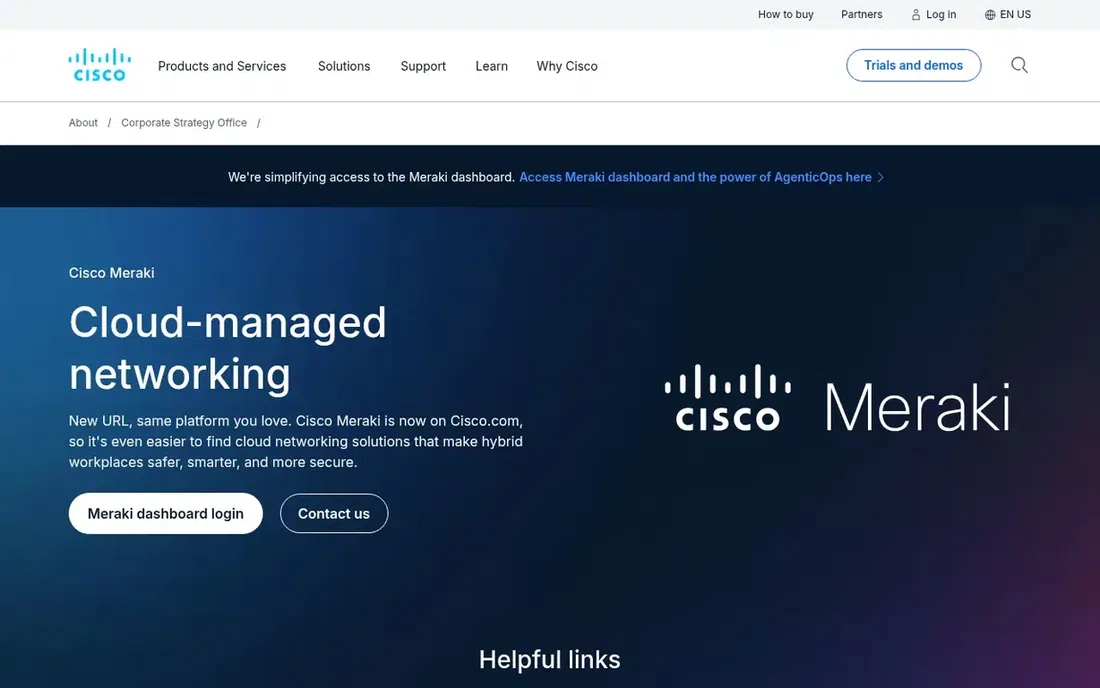
Think of Cisco Meraki for Cloud-managed retail networking foundation. Cisco Meraki is a cloud-managed networking system now hosted on Cisco.com, positioned around making hybrid workplaces safer, smarter and more secure.
Beyond that, pick a dedicated IoT system instead if your primary need is device management instead of network management. For retail IoT product development it serves as the connectivity and security layer that links in-store devices, sensors and back-office systems across plenty of locations. Pricing for Cisco Meraki is not stated here, so ask the vendor for current figures. Free plan details: Not stated.
The main drawbacks: Networking focus, not device firmware.
- Cloud-managed networking across sites
- Fits distributed store footprints
- Needs Cisco ecosystem familiarity
Zebra Aurora
Best for: Store hardware and RFID workflows

For store hardware and RFID workflows, Zebra Aurora is a natural candidate. In retail IoT product development it is a solid fit when your product touches physical store workflows for example inventory capture, labeling or handheld data collection.
Points against: Integration work still required.
For everyday use, choose a cloud product first if your product is primarily software and only lightly touches hardware. Pricing for Zebra Aurora is not stated here, so ask the vendor for current figures. Free options: Not stated.
- RFID and printing capabilities
- Designed for operational digitization
- Hardware-centric instead of software-first
How we built this list
Each tool was reviewed on what its vendor publishes: price, plan limits, core features and stated drawbacks. We did not run hands-on tests. Figures are shown as the vendors publish them. Billing terms, seat minimums and add-ons can change the real cost. Tools are placed by general fit for retail IoT tools for product development, with price clarity and free access as tie-breakers. A different team can reasonably rank them differently.
Pre-purchase checklist
- Request quotes from Samsung SmartThings Pro, Zebra Aurora and the others; the list shows no fixed prices.
- Test the free plan from AWS IoT Core against your real workload before relying on it.
- Read the limits listed for Samsung SmartThings Pro first: home-oriented positioning.
- Make sure Sierra Wireless lets you export your data in a format another tool can read.
- Confirm the exact Cisco Meraki plan that includes your must-have features.
FAQ
Which options for retail IoT tools for product development have a free plan?
AWS IoT Core is the only tool in this list with a free plan. Free plans usually cap users, projects or features, so check the limits on the vendor page. For the full picture, the cards above cover all 6 entries of this retail IoT tools for product development list, including price, free plan and limits.
Do these tools publish their prices?
No. None of the tools, from Samsung SmartThings Pro to Zebra Aurora, shows a fixed starting price here, so budget time for quotes.
Is Samsung SmartThings Pro the right pick for everyone comparing retail IoT tools for product development?
No single tool suits every team. Samsung SmartThings Pro comes first because it fits connected environment and device ecosystems, while Sierra Wireless suits cellular connectivity and rugged hardware and Google Cloud IoT suits architecture planning on Google Cloud. Match the tool to your own size, budget and workflow before deciding.
How are the tools for retail IoT tools for product development ordered?
The order follows typical fit for retail IoT tools for product development, with Samsung SmartThings Pro first and Zebra Aurora last, then price clarity and free access. It is editorial judgement, not a score, so another team could rank the tools differently.
Which retail IoT tool is a good match for a first product build?
Samsung SmartThings Pro is the pick this page puts first, mainly for connected environment and device ecosystems. If your situation differs, Sierra Wireless suits cellular connectivity and rugged hardware, and Google Cloud IoT suits architecture planning on Google Cloud. Compare price and limits before you decide.
Sources
- https://www.smartthings.com
- https://www.sierrawireless.com
- https://cloud.google.com/solutions/iot
- https://aws.amazon.com/iot-core
- https://meraki.cisco.com
- https://www.zebra.com