The 5 Best Tools for API Error Prevention in 2026, Ranked
5 options for the best tools for API error prevention, with entry costs, free tiers and the buyer each one serves. Real limits included. Jump to the table.
- Editor's choice
 Stoplight
OpenAPI design with mock servers
Starts at$44 per monthVisit stoplight.ioFull review - Great alternative
 Apigee
Managed API management at scale
Starts atSee websiteVisit cloud.google.comFull review - Also consider
 Postman
Testing and validating requests early
Starts at$9 per monthVisit postman.comFull review
Direct answer
If you need OpenAPI design with mock servers, Stoplight is the first tool to look at here. Listed starting prices: Stoplight from $44 per month, Postman from $9 per month and Kong from $25 per month plus usage. Apigee is the stronger choice for managed API management at scale, while Postman suits testing and validating requests early. The other 2 tools in the list cover narrower or pricier cases.
TL;DR:
- Stoplight sits first on this list: OpenAPI design with mock servers.
- Postman is the lowest-priced starter here at $9 per month.
- MuleSoft Anypoint Platform fits enterprise integration and governance.
- What to know about Kong first: configuration effort grows with scale.
Last checked November 2026. Prices and plan details were read from the vendors' own pages in November 2026; vendors change plans often, so confirm the current price on the vendor site before you buy.
Quick comparison
| Tool | Best for | Starts at | Free plan? | |
|---|---|---|---|---|
| Stoplight | OpenAPI design with mock servers | $44 per month | Free trial | Visit |
| Apigee | Managed API management at scale | See website | Not stated | Visit |
| Postman | Testing and validating requests early | $9 per month | Yes | Visit |
 Kong | Centralized API and AI connectivity | $25 per month plus usage | Free trial | Visit |
 MuleSoft Anypoint Platform | Enterprise integration and governance | $2,000 a month | Yes | Visit |
The 5 tools in detail
If you are comparing tools for API error prevention, this page covers 5 tools in one place: what each is best for, what it costs to start, whether it has a free plan, and the main limit to know about.
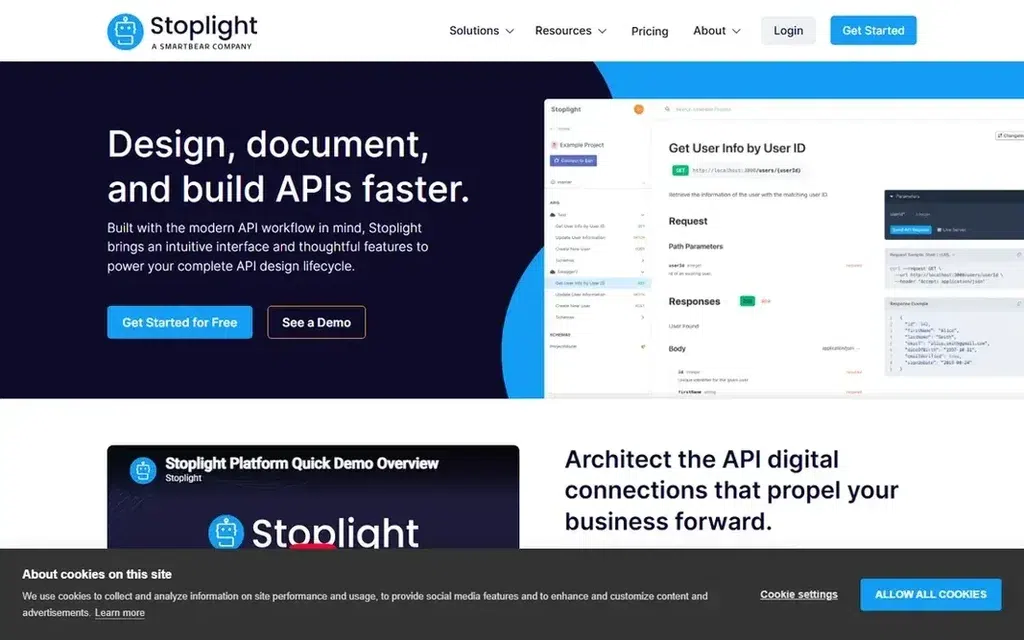
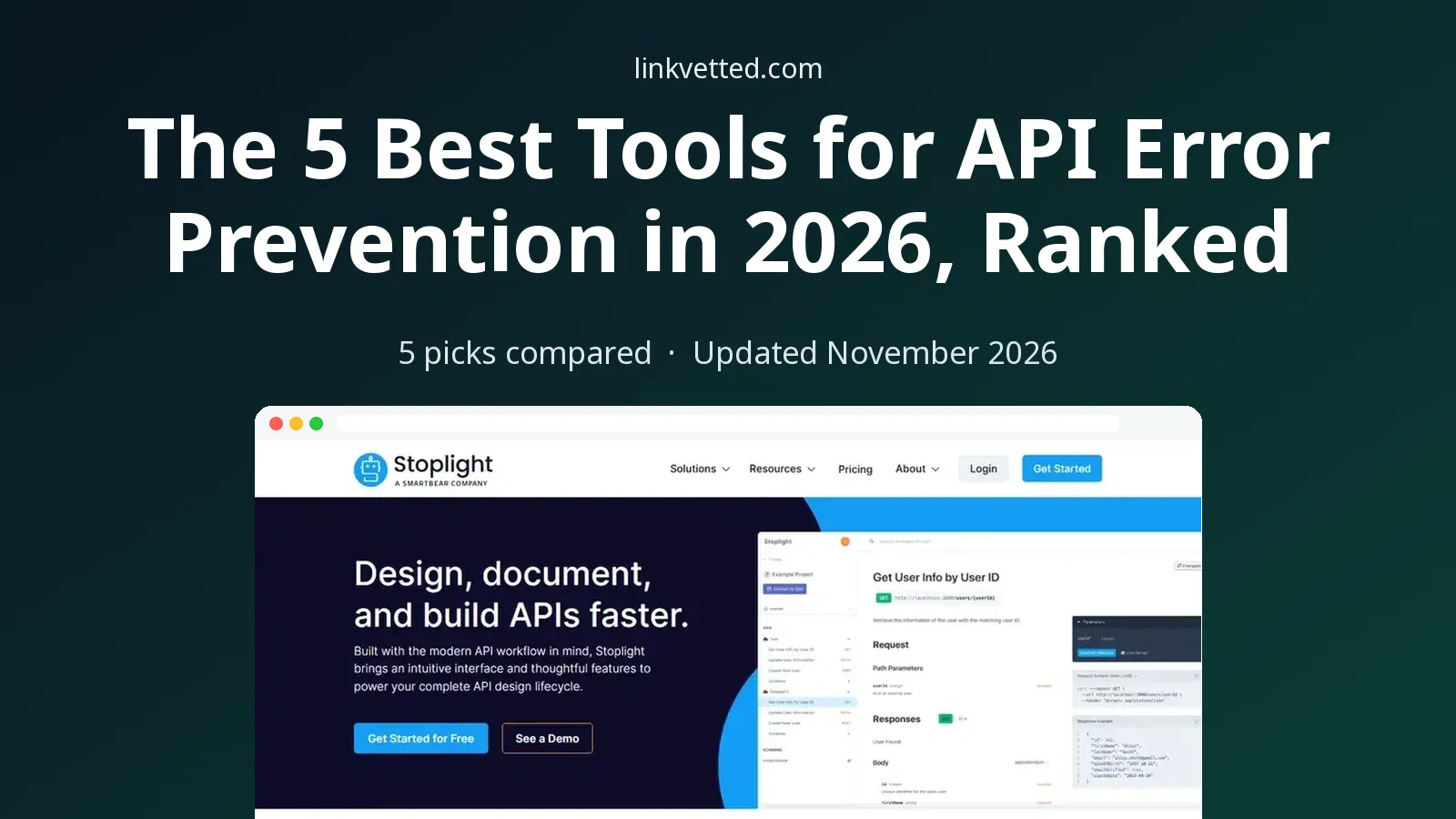
Stoplight was built for OpenAPI design with mock servers. Teams needing runtime enforcement should add a gateway, and teams needing continuing observability should add a monitoring service.
Downsides: Less suited to runtime traffic control.
Stoplight concentrates on design and documentation, so it does not govern live traffic or provide production monitoring. Stoplight is an OpenAPI design and documentation management tool that lets teams build descriptions, documentation and mock servers faster, with no specialized knowledge required, all in one centralized system. On cost, Stoplight starts like this: $44 per month. On free options: Free trial.
- Mock servers accelerate early testing
- Centralized system for design and docs
- Needs discipline to keep specs current
Apigee is designed for managed API management at scale. Apigee is a management system instead of a design or testing tool, so teams still need contract design and request testing elsewhere.
From a buyer's view, confirm environment-specific details on the vendor site before committing to an architecture. Check the vendor site for Apigee pricing; none is listed in this comparison. On free options: Not stated.
Drawbacks to consider: Management layer.
- Run and secure APIs
- Build
- Not a design editor
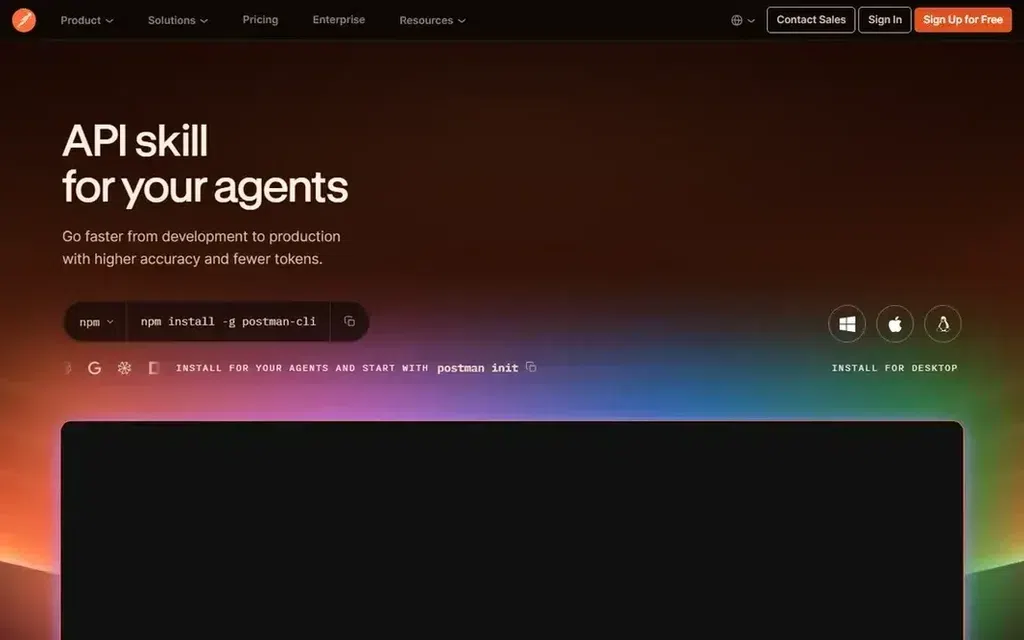
Where Postman fits: testing and validating requests early. Postman is most solid at development and testing time, so it does not replace a gateway or runtime monitor for live traffic protection.
Trade-offs to know: Runtime protection relies on other layers.
Also, teams that require centralized traffic policy or continuous production observability should pair it with a gateway or monitoring tool instead of depend on it alone. Postman pricing: $9 per month. Postman offers a free plan.
- Emphasizes accuracy and efficiency in workflows
- Supports API engineering from development to production
- Wide feature set can take time to learn
Kong works best for centralized API and AI connectivity. Smaller teams with straightforward needs may find a lighter approach sufficient, and in-depth policy behavior should be confirmed on the vendor site.
More specifically, Kong positions itself as an AI connectivity company, describing a fabric of modern connectivity that centralizes LLM access, automates API workflows and secures digital ecosystems at scale. Kong is a connectivity and gateway layer, so it complements instead of replaces design tools and monitoring. Entry price for Kong: $25 per month plus usage. Free options: Free trial.
Points against: Configuration effort grows with scale.
- Automates API workflows
- Centralizes access and connectivity
- Overlaps with other gateway choices
Choose MuleSoft Anypoint Platform for enterprise integration and governance. MuleSoft Anypoint Platform is presented as a single cross-platform control plane with one registry to find, govern, orchestrate and control AI agents and costs across the enterprise.
It suits organizations that require consistent governance across plenty of integrations, where inconsistent contracts are a typical source of errors. MuleSoft Anypoint Platform cost at the entry level: $2,000 per month. You can start on MuleSoft Anypoint Platform without paying.
The main drawbacks: Wide system with a ramp-up time.
- Registry to find and govern agents
- Single control plane across platforms
- Integration focus may exceed straightforward needs
How we compared the tools
What to confirm before you sign up
- Ask Apigee for a written quote, since no starting price is shown.
- Read the fine print on the free plans from Postman and MuleSoft Anypoint Platform; seat, project and feature caps differ.
- Use real work to test the free trial from Stoplight and Kong, rather than a demo project.
- Before choosing Stoplight, weigh its main limit: needs discipline to keep specs current.
- Ask Kong which support channels and response times come with the plan you would buy.
- Find out whether the entry plan of Postman covers your must-haves or only a trimmed-down version.
FAQ
Where does monitoring fit into an error prevention strategy?
Monitoring catches issues that design and testing miss, for example failing endpoints or error spikes in production. It closes the feedback loop so problems are found rapidly.
What is the difference between design-time and runtime API error prevention?
Design-time prevention means catching contract problems before code ships, using descriptions, mock servers and request testing. Most teams need both, which is why design tools and gateways are frequently paired.
Do these tools publish their prices?
Not all of them. Apigee publishes no starting price, so expect a quote request for it. The rest, Stoplight included, show a starting price, though seats and billing terms still change the final cost.
How should a small team choose among these tools?
Start with the stage where errors most commonly appear in your workflow, like unclear contracts or untested requests. Pick the tool that addresses that stage first, then add layers as needs grow.
What is the cheapest option for tools for API error prevention in this list?
On published monthly entry prices, Postman is the lowest here at $9 per month. Entry price is only part of the cost, because seats, add-ons and billing terms can change the total. Prices, free plan details and limits for all 5 tools in this tools for API error prevention roundup sit on the individual cards above.
Which options for tools for API error prevention have a free plan?
On this list, Postman and MuleSoft Anypoint Platform include a free plan. Caps on seats, usage or features are common, so test the free plan against your real workload. Several others offer a trial instead. Each of the 5 options in this tools for API error prevention guide has its own card above with the price, free plan and limits.
Sources
- https://stoplight.io
- https://cloud.google.com/apigee
- https://www.postman.com
- https://konghq.com
- https://www.mulesoft.com