Best Telemedicine Software Providers for 2026: Our 6 Vetted Picks
Compare 6 best telemedicine software providers, with prices, free plans and who each fits. Price notes and drawbacks come with each one. Reviewed this month.

- Editor's choice
 Mend
Behavioral health operations and engagement
Starts atPricing on requestVisit mendfamily.comFull review - Great alternative
 Zoom for Healthcare
Video collaboration in clinical settings
Starts atPricing on requestVisit zoom.comFull review - Also considerTeladoc Health
Wide virtual care for organizations
Starts atPricing on requestVisit teladochealth.comFull review
Direct answer
Mend leads the list, best for behavioral health operations and engagement. For a different need, Zoom for Healthcare covers video collaboration in clinical settings and Teladoc Health covers wide virtual care for organizations. The other 3 tools in the list cover narrower or pricier cases. None of these vendors publish plan prices, so pricing is on request for every option.
TL;DR:
- Mend is the opening pick, best for behavioral health operations and engagement.
- Mend, MDLive and the 4 others all sell by quote; expect sales conversations before you see a price.
- Neither Mend nor MDLive, nor any of the other 4 tools, has a permanent free plan; trials and quotes are the norm.
- MDLive fits on-demand doctor and therapist visits.
- What to know about Mend first: narrow focus outside behavioral health.
Last checked November 2026. Pricing on request: vendors did not publish plan prices when this guide was last checked (November 2026), so ask each vendor for a written quote.
Quick comparison
| Tool | Best for | Starts at | Free plan? | |
|---|---|---|---|---|
| Mend | Behavioral health operations and engagement | Pricing on request | Not stated | Visit |
| Zoom for Healthcare | Video collaboration in clinical settings | Pricing on request | Not stated | Visit |
| Teladoc Health | Wide virtual care for organizations | Pricing on request | Free trial | Visit |
| Epic Telehealth | Health systems already on Epic | Pricing on request | Not stated | Visit |
 Doxy.me | Straightforward browser-based video visits | Pricing on request | Not stated | Visit |
 MDLive | On-demand doctor and therapist visits | Pricing on request | Not stated | Visit |
Our 6 telemedicine software providers
Short on time? The summary and table above give the quick view of 6 telemedicine software providers, and the profiles that follow give the detail behind each entry.
Mend targets behavioral health operations and engagement. Teams seeking a straightforward video visit tool may prefer a more straightforward product. Behavioral health organizations should confirm which workflows are supported for their model.
On top of that, the product is built around behavioral health operations instead of general medical telemedicine, so primary care and specialty groups may find it a partial fit. Mend describes itself as AI-powered operations software for behavioral health, pitched at community and outpatient organizations. Its stated goals contain reducing no-shows, filling schedules, activating patients and demonstrating operational value, which makes it relevant for behavioral health groups whose primary challenge is keeping appointments and engagement on track. No starting price is listed for Mend here; confirm pricing on the vendor site. As for free access: Not stated.
Where it shines: Centred on behavioral health organizations. What to check first: Narrow focus outside behavioral health.
- Targets no-shows and schedule gaps
- Emphasizes patient activation
- Operational tooling rather than general medical visits

Zoom for Healthcare targets video collaboration in clinical settings. Organizations wanting an all-in-one virtual care product may have to pair it with other tools. For clinics and hospitals that want a recognizable, easy-to-join video experience, it can serve as the communication layer for virtual visits alongside internal meetings and staff coordination.
Upsides: Supports chat.
Trade-offs to know: Clinical workflow features rely on extras. It is a collaboration system instead of a full telemedicine service, so clinical documentation, patient intake and care delivery rely on the surrounding systems. On top of that, confirm healthcare-specific configuration choices with the vendor. Zoom for Healthcare builds on the collaboration system numerous organizations already use, handling video meetings, chat, phone, webinars, whiteboard and events. Zoom for Healthcare does not show a starting price in this comparison, so check the vendor site for current pricing. Trial and free access: Not stated.
- Part of a wider collaboration product
- Familiar meeting interface for staff and patients
- Not a dedicated clinical care service
Teladoc Health
Best for: Wide virtual care for organizations

Think of Teladoc Health for wide virtual care for organizations. Teladoc Health presents itself as a virtual care and telehealth provider offering access to doctors, mental health support and specialty care.
Limits to weigh: Less focused on deep EHR customization.
Teladoc Health does not show a starting price in this comparison, so check the vendor site for current pricing. Free options: Free trial. Strengths: mental health and specialty care.
- Spans general medical
- Positioned for both individuals and organizations
- Wide scope may be more than small practices need
Epic Telehealth
Best for: Health systems already on Epic
Where Epic Telehealth fits: Health systems already on Epic. Epic develops software for health systems, and its telehealth capabilities sit within that broader clinical product.
Also, smaller clinics without a large IT footprint may prefer a standalone telehealth product. Epic Telehealth shows no starting price here, so confirm the cost on the vendor site. On free options: Not stated.
- Keeps visits close to existing workflows
- Suits within the Epic clinical record
- Tied to the Epic ecosystem
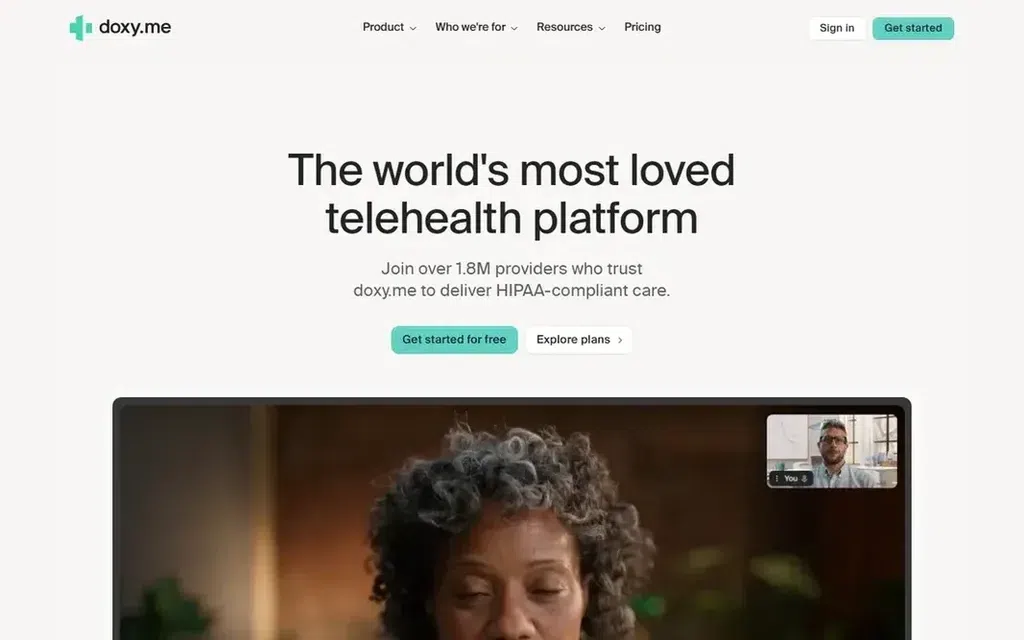
Doxy.me serves straightforward browser-based video visits. Bigger health systems with complicated workflow and integration requirements may need a more customizable product.
Downsides: Restricted to core telehealth instead of full care services.
Also, small teams that value speed of setup over depth of features are the clearest fit here. Doxy.me shows no starting price here, so confirm the cost on the vendor site. On free options: Not stated.
- Works for individual providers
- Straightforward setup described on the site
- Fewer operational features for large systems
MDLive is aimed squarely at on-demand doctor and therapist visits. Organizations needing workflow control, branding or EHR integration should look at platform-style providers instead.
Pricing for MDLive is not stated here, so ask the vendor for current figures. Free access: Not stated.
What to check first: Restricted customization for clinical workflows.
- Care available by phone or video
- Positioned for around-the-clock access
- Consumer-style care instead of practice software
Selection criteria
LinkVetted looked at what each vendor publishes: pricing, plan limits, feature coverage for telemedicine software providers and stated drawbacks. No hands-on testing is claimed. Figures are shown as the vendors publish them. Billing terms, seat minimums and add-ons can change the real cost. Order on the page follows fit for the typical buyer first, then price transparency and free access. Your own requirements should decide the final pick.
What to confirm before you sign up
- Ask each vendor, from Mend to MDLive, for a written quote; none of them publishes a starting price.
- Run a trial of Teladoc Health with real work before paying for a year; your own workflow is the best test.
- Before choosing Mend, weigh its main limit: narrow focus outside behavioral health.
- Compare total cost, not headline price: for Teladoc Health, add extra seats, add-ons and any usage-based charges.
- Map your must-have features to a specific Mend plan before you compare prices.
FAQ
What should a small practice look for in telemedicine software?
Small practices normally benefit from fast setup, a straightforward patient joining experience and minimal hardware requirements. For everyday use, Doxy.me emphasizes simplicity, whereas broader systems may add features a small team will not use.
How are the tools for telemedicine software providers ordered?
Mend sits first and MDLive last because the order follows typical fit for telemedicine software providers, then price clarity and free access. It is a judgement call, so read each profile for fit and limits.
Is Mend the right pick for everyone comparing telemedicine software providers?
No single tool suits every team. Mend comes first because it fits behavioral health operations and engagement, while Zoom for Healthcare suits video collaboration in clinical settings and Teladoc Health suits broad virtual care for organizations. Match the tool to your own size, budget and workflow before deciding.
Can I try these tools before paying?
Often, yes. Teladoc Health offers a free trial. Use your own data and a real task during the test, and check what the free tier or trial limits before you rely on it. All 6 picks in this Telemedicine software providers comparison list a starting price, free plan details and the main limits on their cards above.
Does any tool for telemedicine software providers here have a free plan?
No tool in this list, Mend and MDLive included, has a permanent free plan. Teladoc Health offer a trial. Trials and quotes are the usual route, so plan a short evaluation period.
Sources
- https://www.mendfamily.com
- https://www.zoom.com
- https://www.teladochealth.com
- https://www.epic.com
- https://doxy.me
- https://www.mdlive.com