Best Service Mesh Tools for Platform Engineers in 2026: Prices, Free Plans and 6 Picks
Best service Mesh tools for platform engineers in 2026: 6 contenders with entry costs and free tiers. With pricing notes and limits. Built for quick decisions.
- Editor's choiceCilium
EBPF-based networking and security
Starts atPricing on requestVisit cilium.ioFull review - Great alternativeLinkerd
Light and straightforward Kubernetes service mesh
Starts atPricing on requestVisit linkerd.ioFull review - Also considerOpen Service Mesh
Light and extensible service mesh
Starts atPricing on requestVisit openservicemesh.ioFull review
Direct answer
Cilium leads the list, best for eBPF-based networking and security. If your case is different, Linkerd suits light and straightforward Kubernetes service mesh and Open Service Mesh suits light and extensible service mesh. The full list of 6 tools follows, with free plan facts. None of these vendors publish plan prices, so pricing is on request for every option.
TL;DR:
- The list opens with Cilium, aimed at eBPF-based networking and security.
- Cilium, Istio and the 4 others all need a premium plan or a trial, since no free plan is listed.
- Istio is the one to check for full service mesh with advanced traffic management.
- Kuma comes with a trade-off: smaller community than Istio.
Last checked November 2026. Pricing on request: vendors did not publish plan prices when this guide was last checked (November 2026), so ask each vendor for a written quote.
Quick comparison
| Tool | Best for | Starts at | Free plan? | |
|---|---|---|---|---|
| Cilium | EBPF-based networking and security | Pricing on request | Not stated | Visit |
| Linkerd | Light and straightforward Kubernetes service mesh | Pricing on request | Not stated | Visit |
| Open Service Mesh | Light and extensible service mesh | Pricing on request | Not stated | Visit |
| Kuma | Multi-cluster and multi-zone service mesh | Pricing on request | Not stated | Visit |
| NGINX Service Mesh | NGINX-based environments with API governance | Pricing on request | Not stated | Visit |
| Istio | Thorough service mesh with advanced traffic management | Pricing on request | Not stated | Visit |
Tool-by-tool breakdown
LinkVetted put together this guide to service Mesh tools for platform engineers for readers who want a clear shortlist without reading every vendor page. It compares 6 tools on starting price, free plans, who each one suits and where each one falls short.
Cilium
Best for: EBPF-based networking and security
Cilium was built for eBPF-based networking and security. Cilium is a cloud-native networking, observability, and security option powered by eBPF.
Drawbacks to consider: Complicated troubleshooting.
It is well-suited for system engineers who require high-performance networking and fine-grained security policies. For a more traditional service mesh, consider Istio or Linkerd. No starting price is listed for Cilium here; confirm pricing on the vendor site. As for free access: Not stated.
- Advanced network security
- Deep observability
- Needs eBPF knowledge
Linkerd
Best for: Light and straightforward Kubernetes service mesh
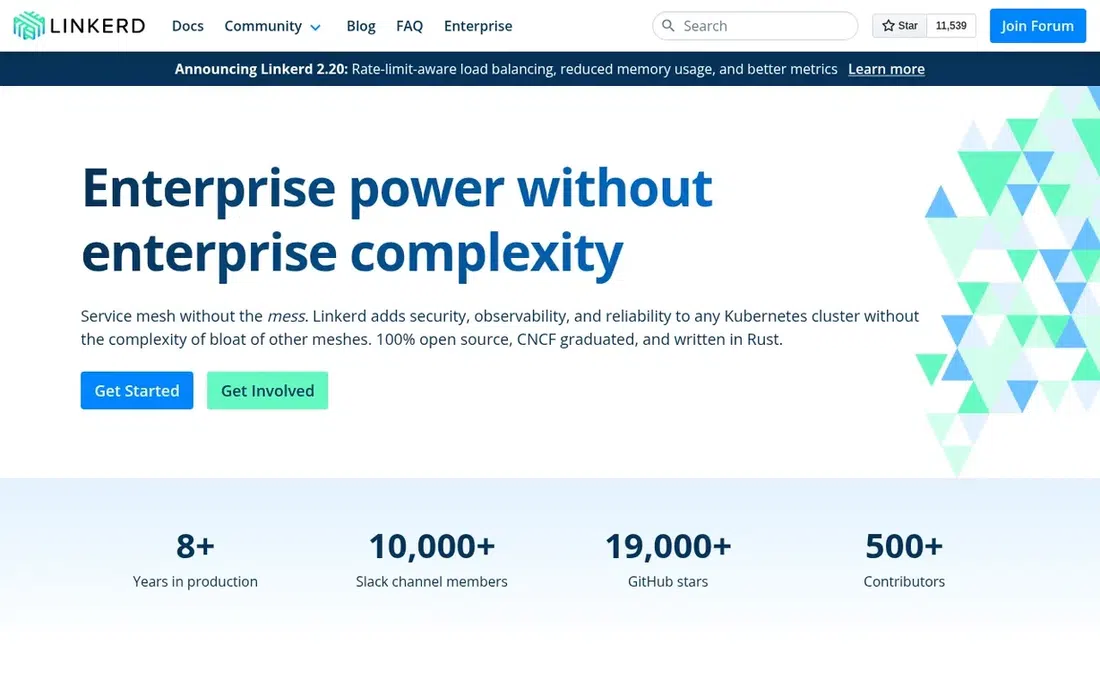
Linkerd targets light and straightforward Kubernetes service mesh. Linkerd brings critical security, observability, and reliability to your Kubernetes stack without code changes.
Drawbacks to consider: Fewer advanced traffic features.
Whereas Linkerd handles core mesh functionality, it may lack some advanced traffic management features found in Istio. Worth adding: Linkerd is a solid fit for teams that prioritize simplicity and low operational burden. Check the vendor site for Linkerd pricing; none is listed in this comparison. Free plan details: Not stated.
- Low resource overhead
- No code changes required
- Primarily focused on Kubernetes
Open Service Mesh
Best for: Light and extensible service mesh
Where Open Service Mesh fits: light and extensible service mesh. It is a good match for system engineers who require entry-level mesh functionality with minimal complexity and are comfortable with the Service Mesh Interface (SMI).
It is a good match for straightforward use cases or experimentation. Check the vendor site for Open Service Mesh pricing; none is listed in this comparison. Free options: Not stated.
Downsides: Uncertain long-term support.
- Extensible via SMI
- Light and simple to install
- Less feature-rich
Kuma
Best for: Multi-cluster and multi-zone service mesh
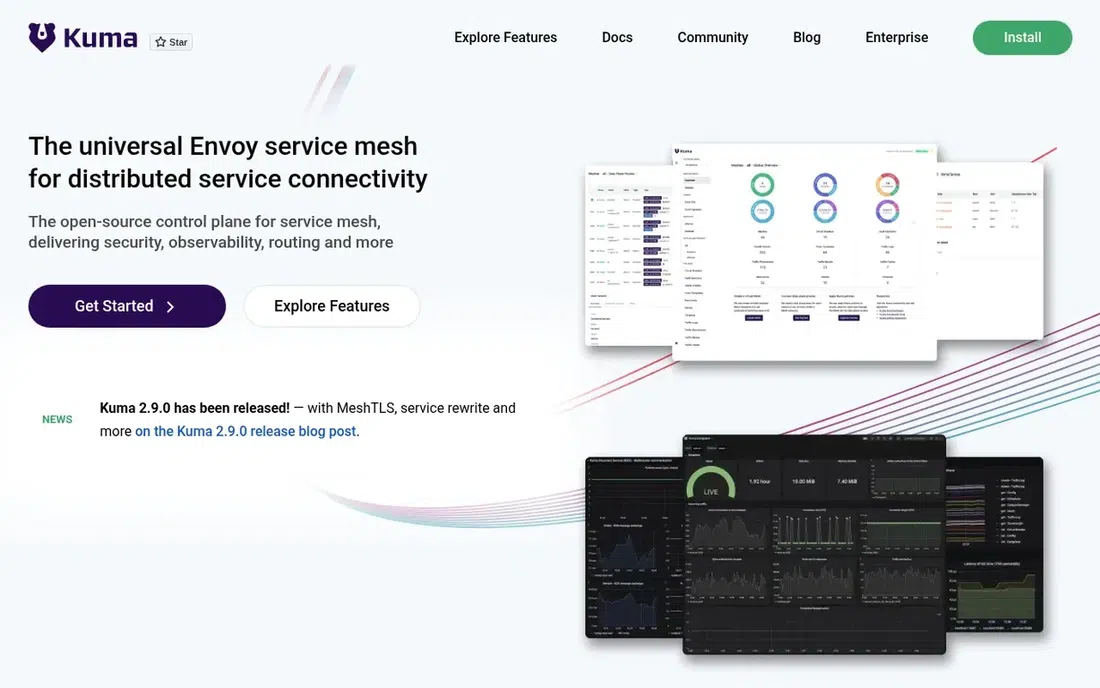
Where Kuma fits: multi-cluster and multi-zone service mesh. Kuma gives you a balance between features and usability. It is a solid choice for multi-cluster scenarios, but for single-cluster simplicity, Linkerd might be preferable.
Drawbacks to consider: Smaller community than Istio.
In practice, Kuma is a service mesh that helps you build, secure, and observe your modern service mesh across several clusters and zones. It is a strong match for system engineers managing distributed environments who require a consistent mesh without excessive complexity. Kuma shows no starting price here, so confirm the cost on the vendor site. Free options: Not stated.
- Built on Envoy
- Straightforward to deploy and handle
- Less mature ecosystem
NGINX Service Mesh
Best for: NGINX-based environments with API governance
Pick NGINX Service Mesh if this describes you: NGINX-based environments with API governance. For broader mesh capabilities, evaluate Istio or Linkerd.
Honest limits: Restricted standalone features.
As for the details, as a newer offering, NGINX Service Mesh may have fewer features compared with established meshes like Istio. NGINX Service Mesh shows no starting price here, so confirm the cost on the vendor site. On free options: Not stated.
- Uses NGINX familiarity
- Focus on security and connectivity
- Evolving product
Istio
Best for: Thorough service mesh with advanced traffic management
Istio is a good fit for full service mesh with advanced traffic management. Istio is a full-featured service mesh that gives you observability, security in depth, and management to speed deployment cycles.
Honest limits: Steep ramp-up time.
It is well suited to product engineers who require advanced traffic routing, mutual TLS, and deep telemetry across Kubernetes and other environments. Worth adding: if you prefer a lighter, more automatic approach, consider Linkerd or Kuma instead. Check the vendor site for Istio pricing; none is listed in this comparison. On free options: Not stated.
- Rich traffic management features
- Capable security and observability
- Complicated to operate at scale
How the list was put together
LinkVetted looked at what each vendor publishes: pricing, plan limits, feature coverage for service Mesh tools for platform engineers and stated drawbacks. No hands-on testing is claimed. Treat prices as a snapshot: vendors change plans often, so check the vendor site for the figure that applies today. We ordered the tools by general fit, then by how clearly pricing is shown, then by free access. A buyer with unusual needs may reorder them.
Questions to settle before buying
- Request quotes from Cilium, Istio and the others; the list shows no fixed prices.
- Before choosing Cilium, weigh its main limit: needs eBPF knowledge.
- Check the support hours and onboarding help Kuma offers; smaller vendors vary a lot here.
- Confirm minimum seats and billing terms with NGINX Service Mesh before you commit to an annual plan.
- Work out what Istio costs with your real seat count, add-ons and usage, not just the entry price.
FAQ
Is Cilium the right pick for everyone comparing service Mesh tools for platform engineers?
No single tool suits every team. Cilium comes first because it fits eBPF-based networking and security, while Linkerd suits lightweight and simple Kubernetes service mesh and Open Service Mesh suits lightweight and extensible service mesh. Match the tool to your own size, budget and workflow before deciding.
What is a service mesh and why do system engineers need one?
A service mesh is a dedicated infrastructure layer that handles service-to-service communication, supplying traffic management, security, and observability. Product engineers use it to ease microservices operations and enforce policies consistently.
Does any tool for service Mesh tools for platform engineers here have a free plan?
No tool in this list, Cilium and Istio included, has a permanent free plan. Trials and quotes are the usual route, so plan a short evaluation period.
Do these tools publish their prices?
No. None of the tools, from Cilium to Istio, shows a fixed starting price here, so budget time for quotes.
Can I try these tools before paying?
Not by default. None of the tools, from Cilium to Istio, lists a free plan or a free trial here, so ask each vendor for a demo before committing.
Sources
- https://cilium.io
- https://linkerd.io
- https://openservicemesh.io
- https://kuma.io
- https://www.nginx.com/products/nginx-service-mesh
- https://istio.io