5 Best Self-Healing Platforms for Programmers for 2026, Vetted and Compared
5 best Self-Healing platforms for programmers, with entry costs, free tiers and the buyer each one serves. Strengths and weak spots are spelled out. Facts only.
- Editor's choiceMoogsoft
AIOps noise reduction and anomaly detection
Starts atSee websiteVisit moogsoft.comFull review - Great alternative
 Datadog
Cloud monitoring with unified metrics
Starts at$8 per committer a monthVisit datadoghq.comFull review - Also consider
 New Relic
AI-powered observability and root-cause isolation
Starts at$10 per user a monthVisit newrelic.comFull review
Direct answer
If you need AIOps noise reduction and anomaly detection, Moogsoft is the first tool to look at here. Listed starting prices: Datadog from $8 per committer a month, New Relic from $10 per user a month and PagerDuty from $21 per user per month. Datadog fits cloud monitoring with unified metrics; New Relic fits AI-powered observability and root-cause isolation. Details, prices and limits for the rest of the 5 tools are below.
TL;DR:
- Number one here is Moogsoft, a fit for AIOps noise reduction and anomaly detection.
- A free plan is available from 3 of the 5 tools: New Relic, Harness, PagerDuty.
- The main caution on Datadog: self-healing relies on configured automations.
- PagerDuty suits incident-driven automation and resolution.
- For the cheapest start, look at Datadog: $8 per committer per month.
Last checked November 2026. Prices and plan details were read from the vendors' own pages in November 2026; vendors change plans often, so confirm the current price on the vendor site before you buy.
Quick comparison
| Tool | Best for | Starts at | Free plan? | |
|---|---|---|---|---|
| Moogsoft | AIOps noise reduction and anomaly detection | See website | Not stated | Visit |
| Datadog | Cloud monitoring with unified metrics | $8 per committer a month | Free trial | Visit |
| New Relic | AI-powered observability and root-cause isolation | $10 per user a month | Yes | Visit |
 Harness | Self-healing across the software delivery lifecycle | See website | Yes | Visit |
 PagerDuty | Incident-driven automation and resolution | $21 per user per month | Yes | Visit |
The full Self-Healing platforms for programmers list
Short on time? The summary and table above give the quick view of 5 Self-Healing platforms for programmers, and the profiles that follow give the detail behind each entry.
Moogsoft
Best for: AIOps noise reduction and anomaly detection
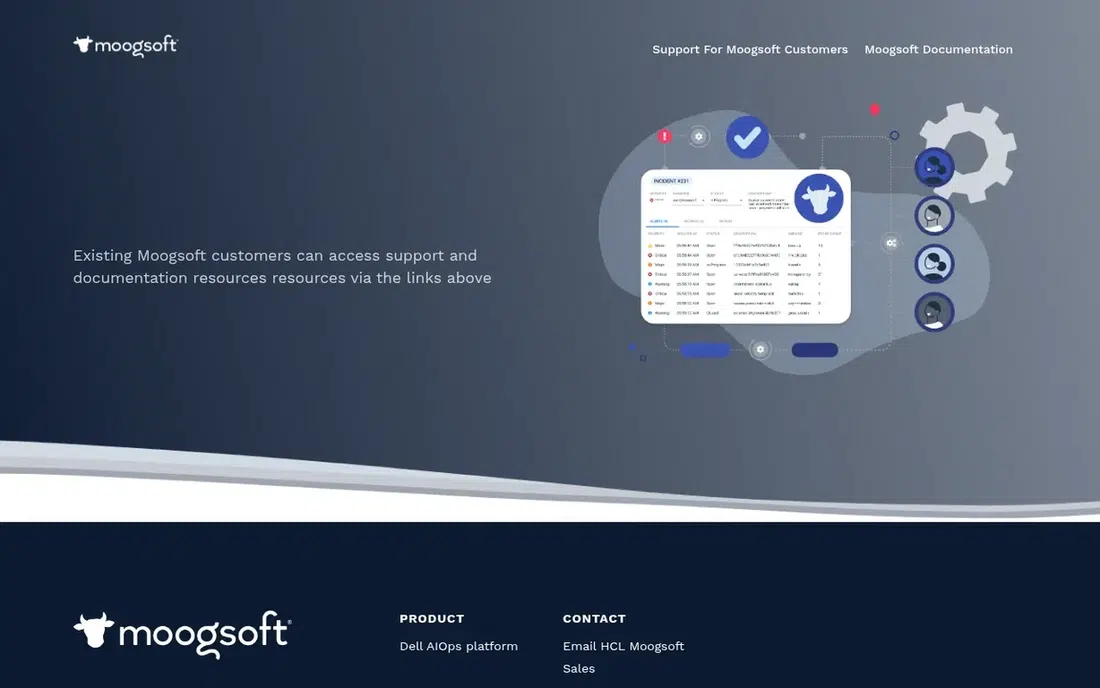
Think of Moogsoft for AIOps noise reduction and anomaly detection. Moogsoft is an AIOps product for IT operations that emphasizes continuous availability through automatic noise reduction and anomaly detection. For programmers, it can help surface the signals that matter when many alerts compete for attention, supporting quicker triage.
Honest limits: Less emphasis on developer delivery workflows.
Its effectiveness relies on the quality of the data and integrations feeding it. In practice, if your priority is self-healing inside the development lifecycle, a product aimed at software delivery may suit you better. No starting price is listed for Moogsoft here; confirm pricing on the vendor site. Free access: Not stated.
- Aims at continuous availability
- Anomaly detection algorithms
- Concentrated on IT operations
Pick Datadog if this describes you: cloud monitoring with unified metrics. Costs can rise as monitoring scope expands.
Points against: Costs can grow with scale.
From a buyer's view, if you need out-of-the-box remediation workflows, a product centered on operations automation may be a better fit. On top of that, Datadog is primarily a monitoring system, so self-healing behavior comes from the automations and integrations you set up instead of being completely turnkey. What you pay to start with Datadog: $8 per committer per month. Free plan details: Free trial. Where Datadog stands out: Metrics from apps, tools.
- Wide integration ecosystem
- Cloud monitoring as a service
- Self-healing relies on configured automations
Pick New Relic if this describes you: AI-powered observability and root-cause isolation. New Relic is an AI-powered observability system that correlates telemetry across your whole stack so you can isolate root causes and cut MTTR.
As for the details, for programmers, quicker root-cause isolation is a key input to self-healing, since automatic fixes rely on accurate diagnosis. The starting price for New Relic: $10 per user per month. New Relic has a free plan.
Points against: Telemetry volume affects usefulness.
- Correlates telemetry across the stack
- Aims to cut MTTR
- Remediation needs extra automation
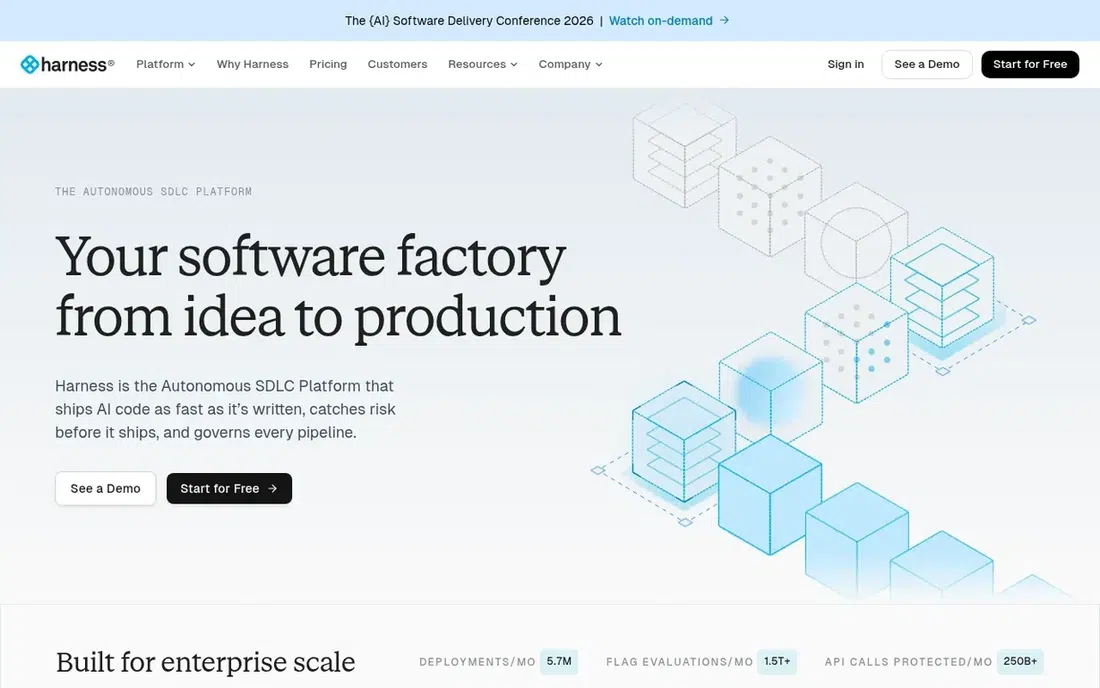
For self-healing across the software delivery lifecycle, Harness is a natural candidate. Consider Harness when you want AI-driven automation tied straight to how software is delivered.
Worth adding: teams looking only for incident response automation may find a narrower tool quicker to start with. Harness is described as a unified AI software delivery product that runs the SDLC using purpose-built AI agents. This comparison lists no price for Harness; ask the vendor. Free access exists with Harness.
What to check first: Self-healing depth varies by module.
- Purpose-built AI agents for SDLC management
- Automation focus across delivery stages
- Broad product may need onboarding effort
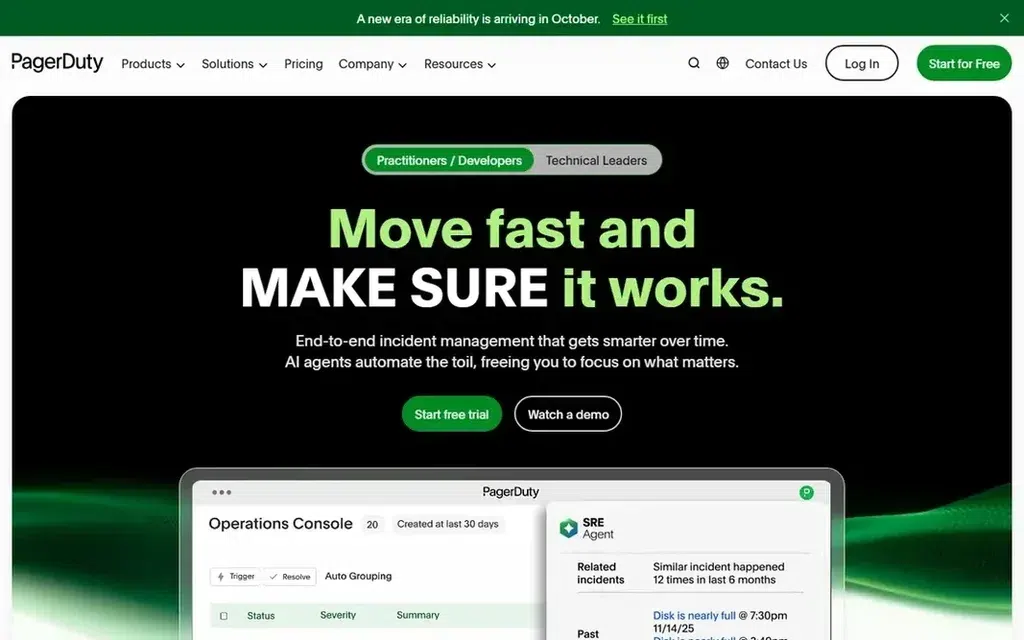
Think of PagerDuty for incident-driven automation and resolution. PagerDuty presents an AI-first operations system that aims to turn incidents into intelligence, helping teams automate, resolve, and prevent critical issues from detection to resolution.
Points against: Primarily incident-focused.
Its automation benefits rely on how well it connects with your existing monitoring and tooling. On top of that, if you need self-healing deeply integrated into build and deploy stages, a delivery-focused system may be a better primary choice. Price to start with PagerDuty: $21 per user per month. PagerDuty includes a free tier.
- AI-first operations product
- Automates detection through resolution
- Value relies on integration coverage
How we chose
Pricing pages, product documentation and feature lists were the main sources, and every entry carries at least one honest drawback. Figures are shown as the vendors publish them. Billing terms, seat minimums and add-ons can change the real cost. The order reflects how well each tool fits the most common buying scenario for Self-Healing platforms for programmers, then price clarity, then free plan access. It is a starting point, not a verdict.
What to confirm before you sign up
- Confirm the entry price on the vendor page. For Moogsoft and Harness that means a quote rather than a fixed price.
- Check what the free option really includes: New Relic, Harness and PagerDuty offer a free plan, and usage caps differ.
- Take the trial from Datadog and push a live task through it before you pay.
- Read the limits listed for Moogsoft first: centred on IT operations.
- Ask New Relic whether prices are locked for the first term and what happens at renewal.
- Ask Harness which support channels and response times come with the plan you would buy.
FAQ
Do these tools publish their prices?
Not all of them. Moogsoft and Harness publish no starting price, so expect a quote request for those. The rest, Datadog included, show a starting price, though seats and billing terms still change the final cost.
Can I try these tools before paying?
Often, yes. New Relic, Harness and PagerDuty have a free plan and Datadog offers a free trial. Use your own data and a real task during the test, and check what the free tier or trial limits before you rely on it.
How are the tools for Self-Healing platforms for programmers ordered?
The order follows typical fit for Self-Healing platforms for programmers, with Moogsoft first and PagerDuty last, then price clarity and free access. It is editorial judgement, not a score, so another team could rank the tools differently.
Which options for Self-Healing platforms for programmers have a free plan?
On this list, New Relic, Harness and PagerDuty include a free plan. Caps on seats, usage or features are common, so test the free plan against your real workload. One other tool offers a trial instead.
Sources
- https://www.moogsoft.com
- https://www.datadoghq.com
- https://newrelic.com
- https://www.harness.io
- https://www.pagerduty.com