Best Apps for Self Improvement in 2026: 9 Apps Compared
Compare the best apps for self improvement in 2026, from Headspace and Duolingo to habits, reading, and journaling, with pricing and honest limits included.
- Editor's choice
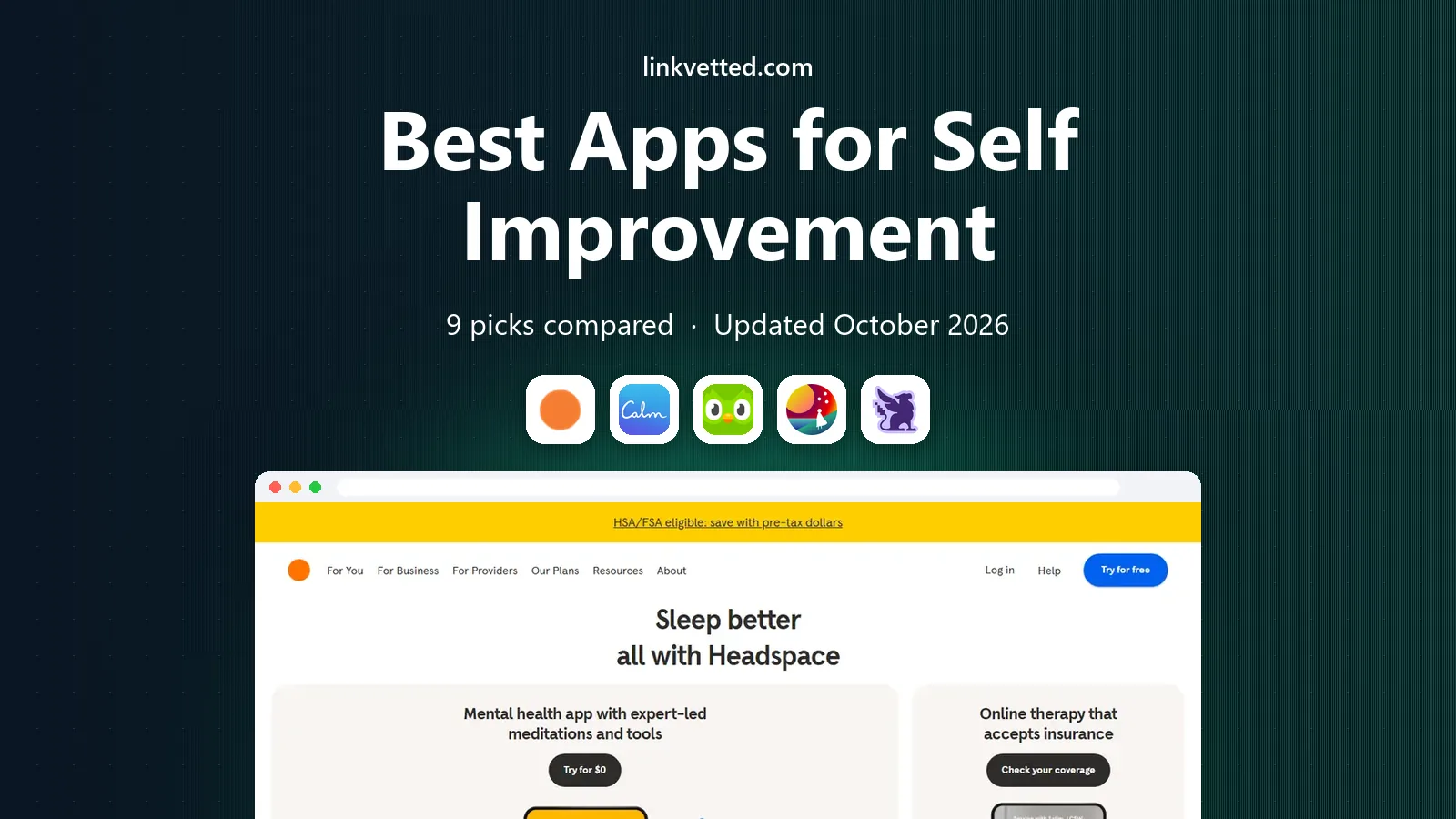
 Headspace
Learning meditation
Starts at$12.99 per monthVisit headspace.comFull review - Great alternative
 Calm
Sleep and relaxation
Starts at$14.99 per monthVisit calm.comFull review - Also consider
 Duolingo
Daily language learning
Starts atFreeVisit duolingo.comFull review
TL;DR:
- Headspace is our pick for building a meditation habit, thanks to structured courses that teach skills step by step.
- Duolingo is the best free habit builder here, because short daily lessons make it easy to show up every day.
- Habitica and Forest turn habits into a game or a focus session, which helps if plain checklists have failed you before.
- No single app covers meditation, learning, habits, and journaling well, so pick one goal first and add a second app later.
- Most of these apps are for general wellbeing and learning, not a substitute for professional help when you need it.
Quick comparison
| Tool | Best for | Starts at | Free plan? | |
|---|---|---|---|---|
| Headspace | Learning meditation | $12.99 per month | Free trial | Visit |
| Calm | Sleep and relaxation | $14.99 per month | Free trial | Visit |
| Duolingo | Daily language learning | Free | Yes | Visit |
 Fabulous | Building morning routines | See website | Free trial | Visit |
 Habitica | Gamified habits | Free | Yes | Visit |
 Day One | Journaling and reflection | See website | Free trial | Visit |
 Blinkist | Short book summaries | See website | Free trial | Visit |
 Forest | Staying focused | See website | No | Visit |
 Finch | Gentle daily self care | Free | Yes | Visit |
The best apps for self improvement
Self improvement is a broad goal, so the best app depends on the habit you actually want to build. We compared official feature pages, pricing pages, and app store listings for apps covering meditation, sleep, language learning, routines, habits, journaling, reading, focus, and daily self care. We favored apps with a clear daily loop, a usable free or trial tier, and honest limits.
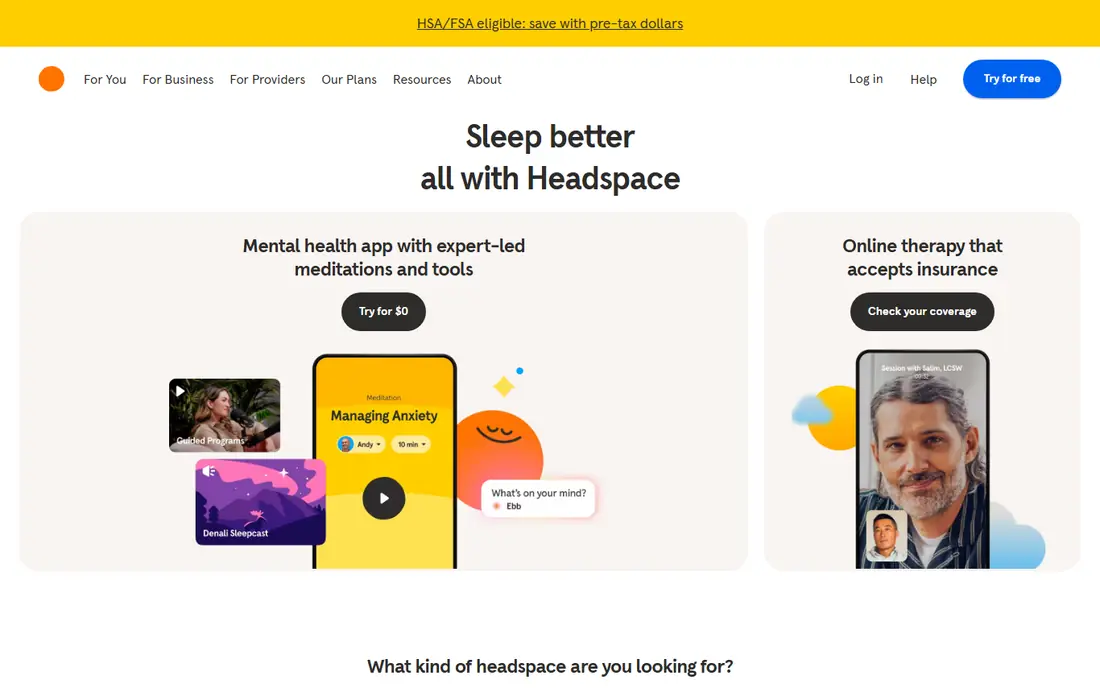
Headspace is the best starting point if you want to learn meditation rather than just play relaxing sounds. Its courses build skills in order, starting with basics such as noticing breath and wandering attention, then moving to topics such as stress, focus, and sleep. That structure helps beginners who open a large library and do not know where to start.
The monthly plan is $12.99, and the annual plan is $69.99, with a trial that varies by plan. Once the trial ends, most of the library sits behind the subscription, so the value depends on whether you use it several times a week. Short SOS sessions are a useful bonus for a tense moment, and the app also offers sleepcasts and movement content. If you mainly want sleep stories, Calm may suit you better.
- Structured courses for beginners
- Short SOS sessions for stressful moments
- Sleepcasts and focus music included
- Most content needs a subscription after the trial
- Coaching and therapy options vary by plan

Calm is the strongest app here for winding down at night. Its Sleep Stories, read by a range of narrators, plus sleep music and nature sounds, give you a clear bedtime routine that does not feel like homework. Daily Calm sessions offer a short guided practice each day, and the app covers breathing, stretching, and short mindfulness programs as well.
The trade-off is structure. Calm is better for relaxation and exploration than for a step by step meditation course, so beginners who want a taught path may prefer Headspace. Pricing is $14.99 per month or $69.99 per year, with a trial on signup, and some free content remains available without Premium. If sleep is your main goal, Calm is our pick in this list.
- Large library of Sleep Stories
- Good music and nature sounds
- Daily Calm sessions for a short routine
- Meditation learning is less structured than Headspace
- Most content needs Premium

Duolingo is the best example in this list of a habit that sticks because the daily ask is small. Lessons take a few minutes, cover reading, listening, and typing, and use streaks, points, and leaderboards to keep you coming back. The free tier gives access to full courses across many languages, which is rare for a learning app of this size.
The limit is depth. Grammar is often learned by trial and error rather than clear explanation, and speaking practice does not replace real conversation. Super, at about $12.99 per month or a lower annual equivalent, removes ads and practice limits and adds offline access and extra review tools. Treat Duolingo as a strong daily base for vocabulary and basics, and pair it with conversation or a structured course if fluency is the goal.
- Free access to full language courses
- Short lessons that fit a busy day
- Streaks and points that support daily use
- Grammar explanations are thin
- Speaking practice is limited without real conversation
Fabulous takes a different approach from a simple habit checklist. It guides you through journeys that build a morning routine, an evening routine, or a focus habit step by step, with short lessons and prompts along the way. That structure helps if you know you want a better routine but keep starting with too many habits at once and dropping them all.
The app works best when you commit to one journey at a time and let it set the pace. A trial lets you test the style, but full journeys need a subscription, so check current pricing in the app before you commit. If you prefer a plain checklist with no coaching voice, Habitica or a simple task app may fit better. If you want guidance and encouragement built in, Fabulous is a good match.
- Guided journeys for routines and habits
- Gentle coaching style
- Combines habits, focus, and reflection prompts
- Subscription needed for full journeys
- Some users find the coaching tone too chatty
Habitica is our pick if plain checklists have never held your attention. It turns habits, daily tasks, and to do items into a role playing game, where completing a habit earns experience and gold for your character, and missing a daily task costs health. You can join a party, take on challenges, and buy gear for your avatar, which adds a social layer that a solo checklist lacks.
That game layer is both the strength and the risk. Some users love the motivation it adds, while others find the quests, pets, and shop distracting from the habits themselves. The core app is free, with optional purchases for gems and a subscription for extra features. If you enjoy games and want accountability from a group, Habitica is worth a try. If you want a quiet tracker, look at Forest or a task app instead.
- Turns habits and tasks into a role playing game
- Free core features
- Parties and challenges add social accountability
- Game systems can distract from the habits
- Interface feels busy to some users
Day One is the best journaling app in this list for people who want reflection to become a regular habit. It offers a calm writing space, photo entries, tags, and templates, plus prompts that help you start when a blank page feels hard. You can look back over entries by date, tag, or location, which turns journaling into a record of how your habits and mood change over time.
The free tier covers basic journaling, while sync, unlimited journals, and extra features sit behind a subscription, so check current pricing on the vendor site. The app has long been strongest on Apple devices, though it also works elsewhere. If you want to track a habit with words rather than checkmarks, Day One pairs well with Headspace, Habitica, or Duolingo.
- Clean writing experience with photos and tags
- Prompts and templates for reflection
- Syncs across Apple and other devices
- Full features need a subscription
- Best experience is on Apple devices
Blinkist condenses nonfiction books into short summaries, called Blinks, that you can read or listen to in about 15 minutes. That format suits a commute or a lunch break, and it helps you sample ideas from books on habits, psychology, business, and health before you commit to a full book. The app also offers guides and collections that group related titles by theme.
The honest limit is depth. A summary gives you the main ideas, but it cannot carry the examples, nuance, and argument of a full book, so treat it as a starting point rather than a replacement. A trial lets you test the format, and the full library needs a subscription, so check current pricing on the vendor site. If your goal is to read more ideas, not just more pages, Blinkist is a useful tool.
- Book ideas in about 15 minutes
- Audio and text versions
- Good for deciding which full books to read
- Summaries cannot replace a full book
- Subscription needed for the full library
Forest is the simplest focus app here, and that simplicity is the point. You plant a virtual tree, set a timer, and stay off your phone while it grows. If you leave the app to scroll, the tree withers, which gives a small, visible cost to distraction. Over days and weeks, your forest becomes a record of focused time that is more motivating than a plain timer.
Forest does not try to be a task manager, a habit tracker, or a meditation app, so pair it with one of those if you need more structure. Pricing varies by platform and has changed over time, so check the app store listing before you buy. If your main self improvement goal is to spend less time on your phone and more time on deep work, Forest is a charming and effective choice.
- Simple focus timer with a growing tree
- Visual record of focused time
- Encourages phone free work sessions
- No free plan on most platforms
- Limited features beyond the timer
Finch is the gentlest app on this list, built around a virtual pet that grows as you complete small daily goals. You check in, set a few goals, do breathing exercises, and write short reflections, and your pet responds with encouragement. That low pressure design suits people who find other self improvement apps stern or overwhelming, and it works well for building a small daily self care routine.
The cute style is not for everyone, and adults who want a plain tracker may prefer Day One or Habitica. The core app is free, with a Plus subscription for extra features, so check current pricing in the app. Finch is not a medical app and does not replace professional support, but as a daily nudge toward sleep, movement, reflection, and kindness to yourself, it is a thoughtful pick.
- Friendly pet companion that grows with your goals
- Gentle check ins and breathing exercises
- Free core features
- Style may feel too cute for some adults
- Deeper features need a subscription
How we picked these
We compared official feature pages, pricing pages, and app store listings, and favored apps that are actively maintained, available in the United States, and built around a clear daily habit rather than a vague promise. We included meditation, sleep, learning, routines, habits, journaling, reading, focus, and self care, so the list covers different goals rather than repeating one type of app. We did not claim hands on testing, and prices reflect vendor pages and recent pricing guides checked in October 2026, so confirm the checkout page before you pay.
How to pick one goal and stick with it
Start with a single outcome you can name in one sentence, such as sleeping better, learning Spanish, or journaling three times a week. Then pick the app that serves that outcome directly, and ignore the rest of this list for at least a month. Adding three apps at once usually ends with none of them being used, because each one asks for a different daily habit.
Set the smallest version of the habit that still counts. Five minutes of meditation, one Duolingo lesson, or one journal entry is enough to keep a streak alive on a busy day, and a streak you keep is more useful than a perfect week followed by a month off. Review after 30 days, keep what helped, and only then add a second app for a different goal.
A note on wellbeing apps
These apps can support general wellbeing, learning, and routine building, but they are not medical treatment. If you are dealing with persistent low mood, anxiety, sleep problems, or another health concern, talk to a clinician or a trusted health professional rather than relying on an app alone. The best use of a wellbeing app is as a daily support beside proper care, not as a replacement for it.
FAQ
What is the best app for self improvement overall?
There is no single winner, because self improvement covers different goals. Headspace is our pick for meditation, Duolingo for language learning, and Habitica for gamified habits. Start with the goal that matters most to you, then pick the app that serves that goal directly.
Are self improvement apps free?
Several have useful free tiers, including Duolingo, Habitica, and Finch, while Headspace, Calm, and others rely on trials and subscriptions. Free tiers often cover core features with ads or limits, so test the free version for a week before you pay for a subscription.
How long does it take to build a habit with an app?
Most people need several weeks of regular use before a habit feels automatic, and missing a day does not erase progress. Apps help mainly by lowering friction, sending reminders, and showing a streak, but the habit itself still needs a small, repeatable action you can do on a busy day.
Can an app replace therapy or medical care?
No. Meditation, journaling, and habit apps can support general wellbeing, but they are not a substitute for professional help. If you are struggling with your mental health, reach out to a clinician, a crisis service in your country, or a trusted health professional.
What is the best self improvement app for beginners?
Headspace is a good beginner pick for meditation because it teaches skills in order, and Duolingo is a good beginner pick for learning because lessons are short and free. If you want a gentler start, Finch offers small daily goals with a friendly, low pressure design.