6 Scientific Data Management Systems Worth Shortlisting in 2026
Need the best scientific data management systems? We compare 6 tools on cost, free access and who each suits. With pricing notes and limits. Numbers first.
- Editor's choice
 LabArchives
Organizing and sharing research data
Starts at$25 per student per termVisit labarchives.comFull review - Great alternativeScifeon
Unified ELN and LIMS for biotech
Starts atSee websiteVisit scifeon.comFull review - Also considerDotmatics
Wide R&D software suite
Starts atSee websiteVisit dotmatics.comFull review
Direct answer
LabArchives is the first pick on this list for organizing and sharing research data. Listed starting prices: LabArchives from $25 per student per term. If your case is different, Scifeon suits unified ELN and LIMS for biotech and Dotmatics suits wide R&D software suite. All 6 tools are compared below on price, free plan and limits.
TL;DR:
- Number one here is LabArchives, a fit for organizing and sharing research data.
- No starting price is published for Scifeon, Dotmatics, Thermo Fisher Scientific SampleManager LIMS and others; expect a quote.
- A permanent free plan is missing from all 6 tools, LabArchives and Benchling included; plan for a trial or a premium start.
- Benchling fits biotech R&D data and collaboration.
Last checked November 2026. Prices and plan details were read from the vendors' own pages in November 2026; vendors change plans often, so confirm the current price on the vendor site before you buy.
Quick comparison
| Tool | Best for | Starts at | Free plan? | |
|---|---|---|---|---|
| LabArchives | Organizing and sharing research data | $25 per student per term | Free trial | Visit |
| Scifeon | Unified ELN and LIMS for biotech | See website | Not stated | Visit |
| Dotmatics | Wide R&D software suite | See website | Not stated | Visit |
| Thermo Fisher Scientific SampleManager LIMS | Laboratory sample and workflow management | See website | Not stated | Visit |
 LabVantage LIMS | End-to-end lab informatics | See website | Not stated | Visit |
 Benchling | Biotech R&D data and collaboration | See website | Not stated | Visit |
The best scientific data management systems
LinkVetted compared 6 scientific data management systems. The goal is a practical shortlist: published prices, free plan facts, best-fit use cases and honest limits for every entry.
LabArchives makes the most sense for organizing and sharing research data. LabArchives is an electronic laboratory notebook that helps users organize, search, and share scientific data.
Points against: May need integration for sample tracking.
From a buyer's view, LabArchives is not positioned as a complete LIMS, so labs with sample-centric or quality workflows may need additional tools. On top of that, pick LabArchives when notebook documentation and data sharing are the primary goals. LabArchives starts at: $25 per student per term. As for free access: Free trial.
- Feature-rich electronic laboratory notebook
- Used by research organizations
- Not a full LIMS replacement
Scifeon
Best for: Unified ELN and LIMS for biotech
In short, Scifeon is for unified ELN and LIMS for biotech. Scifeon is a unified ELN and LIMS product for biotech and regulated labs. It links with existing systems and makes it possible for compliant, adaptable workflows.
Drawbacks to consider: Unified scope may need onboarding effort.
Upsides: Supports compliant. In daily use, consider Scifeon when a single system for compliant workflows and system connections is valuable. Labs with very specialized needs might prefer dedicated tools for each function. This comparison lists no price for Scifeon; ask the vendor. Free plan details: Not stated.
- Adaptable workflows
- Merges ELN and LIMS in one platform
- May be less known in some regions
Dotmatics
Best for: Wide R&D software suite
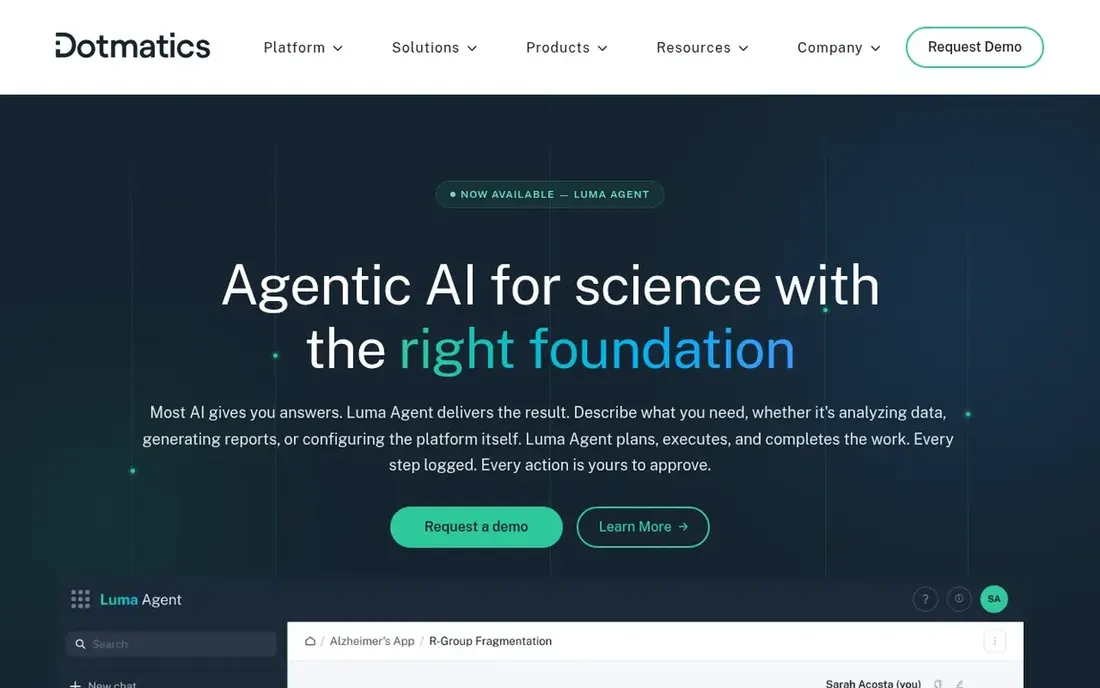
Dotmatics works best for wide R&D software suite. Dotmatics supplies R&D software options that aim to unify science and data insights through a set of best-of-breed applications.
Watch-outs: Integration effort can vary by lab.
A multi-application suite can involve more configuration and governance than a single-purpose system. In daily use, labs with straightforward needs may find a focused ELN or LIMS simpler to adopt. Check the vendor site for Dotmatics pricing; none is listed in this comparison. Free access: Not stated.
- Focus on unifying science and data
- Best-of-breed application portfolio
- Suite complexity may need planning
Thermo Fisher Scientific SampleManager LIMS
Best for: Laboratory sample and workflow management
Thermo Fisher Scientific SampleManager LIMS was built for laboratory sample and workflow management. Smaller labs or those focused primarily on electronic notebooks may find a lighter tool more appropriate.
Drawbacks to consider: Full suite may exceed small lab needs.
This comparison lists no price for Thermo Fisher Scientific SampleManager LIMS; ask the vendor. As for free access: Not stated.
- Supports laboratory informatics needs
- Part of a wide scientific technology portfolio
- Implementation may need specialist support
LabVantage LIMS makes the most sense for end-to-end lab informatics. Labs seeking a straightforward electronic notebook may prefer a narrower tool. In practice, choose LabVantage when you need an informatics product that links operational and management views of laboratory work.
On top of that, a product spanning plenty of roles can involve significant setup and change management. LabVantage LIMS is part of an end-to-end laboratory informatics product that the vendor describes as working for everyone from operators to the QC lab to the C-suite. LabVantage LIMS shows no starting price here, so confirm the cost on the vendor site. Trial and free access: Not stated.
Drawbacks to consider: Wide scope may need phased rollout.
- Made for operators and QC labs
- End-to-end informatics product
- Configuration can take time
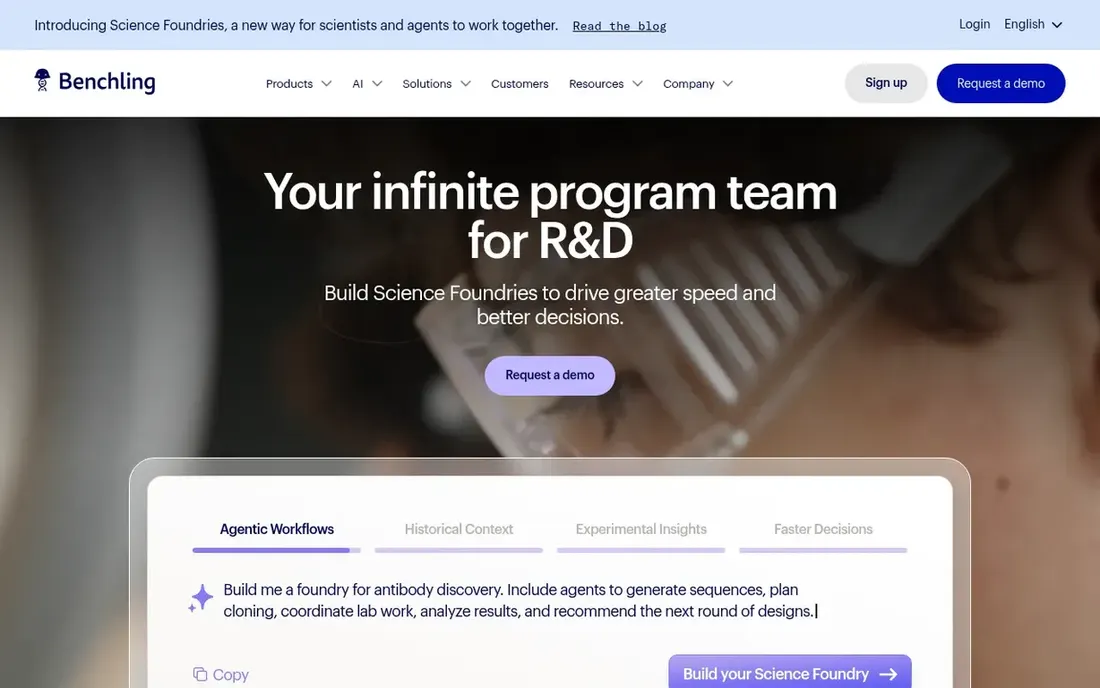
Benchling is aimed squarely at biotech R&D data and collaboration. Because it is oriented toward biology, labs in chemistry or materials science may find other systems more aligned with their data models. Teams that primarily need sample tracking or quality control may prefer a dedicated LIMS.
Beyond that, consider Benchling when biology-centric data and collaboration are the core requirement. On top of that, Benchling is a cloud-based system for biotechnology research and development. Its vendor describes it as a biology-first system for scientific data, collaboration, and insights. Benchling does not show a starting price in this comparison, so check the vendor site for current pricing. Trial and free access: Not stated.
Where it falls short: May be less suited to non-biology fields.
- Biology-first product design
- Supports scientific data insights
- Needs internet access for cloud use
How we built this list
We compared the tools on published pricing, free plan or trial availability, feature coverage for scientific data management systems, and the limits each vendor documents. Prices and plan limits come from vendor pages and can change, so confirm them on the vendor site before you buy. We ordered the tools by general fit, then by how clearly pricing is shown, then by free access. A buyer with unusual needs may reorder them.
Things to verify first
- Confirm the entry price on the vendor page. For Scifeon, Dotmatics, Thermo Fisher Scientific SampleManager LIMS and others that means a quote rather than a fixed price.
- Use real work to test the free trial from LabArchives, rather than a demo project.
- Before choosing LabArchives, weigh its main limit: not a full LIMS replacement.
- Confirm the exact Scifeon plan that includes your must-have features.
- Confirm minimum seats and billing terms with Thermo Fisher Scientific SampleManager LIMS before you commit to an annual plan.
FAQ
What is the difference between a LIMS and an ELN?
A LIMS concentrates on managing samples, tests, and laboratory workflows, whereas an ELN centers on documenting experiments and research notes. Some systems combine both functions, and the right choice relies on whether your priority is sample tracking or experiment documentation.
How are the tools for scientific data management systems ordered?
LabArchives sits first and Benchling last because the order follows typical fit for scientific data management systems, then price clarity and free access. It is a judgement call, so read each profile for fit and limits.
Can these systems link with existing laboratory instruments?
Numerous laboratory informatics systems, including Scifeon and Dotmatics, describe connections with existing systems. Integration support varies by vendor and product, so confirm the specific instruments and software you use with each vendor before deciding.
Does any tool for scientific data management systems here have a free plan?
No tool in this list, LabArchives and Benchling included, has a permanent free plan. LabArchives offer a trial. Trials and quotes are the usual route, so plan a short evaluation period.
Do these tools publish their prices?
Not all of them. Scifeon, Dotmatics, Thermo Fisher Scientific SampleManager LIMS and others publish no starting price, so expect a quote request for those. The rest, LabArchives included, show a starting price, though seats and billing terms still change the final cost.
Can I try these options before paying?
Often, yes. LabArchives offers a free trial. Use your own data and a real task during the test, and check what the free tier or trial limits before you rely on it. For the full picture, the cards above cover all 6 entries of this scientific data management systems list, including price, free plan and limits.
Sources
- https://www.labarchives.com
- https://www.scifeon.com
- https://www.dotmatics.com
- https://www.thermofisher.com
- https://www.labvantage.com
- https://www.benchling.com