Best Runbook Automation Software for Enterprise for 2026: Our 5 Vetted Picks
5 products for the best runbook automation software for enterprise, ranked by fit, with starting costs and free tiers. Weaknesses are named for every tool.
- Editor's choiceRed Hat Ansible Automation Platform
Agentless automation across mixed IT estates
Starts atSee websiteVisit redhat.comFull review - Great alternativeTines
Security and operations workflow automation
Starts atSee websiteVisit tines.comFull review - Also considerServiceNow Orchestration
Enterprises standardized on ServiceNow workflows
Starts atSee websiteVisit servicenow.comFull review
Direct answer
For Agentless automation across mixed IT estates, Red Hat Ansible Automation Platform is where this list starts. Listed starting prices: Chef Automate from $59 per node per year. Tines fits security and operations workflow automation; ServiceNow Orchestration fits enterprises standardized on ServiceNow workflows. All 5 tools are compared below on price, free plan and limits.
TL;DR:
- The list opens with Red Hat Ansible Automation Platform, aimed at Agentless automation across mixed IT estates.
- Puppet Enterprise fits configuration management and compliance at scale.
- No starting price is published for Red Hat Ansible Automation Platform, Tines, ServiceNow Orchestration and Puppet Enterprise; expect a quote.
- None of the 5 tools, from Red Hat Ansible Automation Platform to Puppet Enterprise, has a free plan, so budget for a subscription or use a trial.
Last checked November 2026. Prices and plan details were read from the vendors' own pages in November 2026; vendors change plans often, so confirm the current price on the vendor site before you buy.
Quick comparison
| Tool | Best for | Starts at | Free plan? | |
|---|---|---|---|---|
| Red Hat Ansible Automation Platform | Agentless automation across mixed IT estates | See website | Not stated | Visit |
| Tines | Security and operations workflow automation | See website | Not stated | Visit |
| ServiceNow Orchestration | Enterprises standardized on ServiceNow workflows | See website | Not stated | Visit |
| Chef Automate | Policy-as-Code driven DevOps automation | $59 per node per year | Free trial | Visit |
| Puppet Enterprise | Configuration management and compliance at scale | See website | Not stated | Visit |
The full runbook automation software for enterprise list
This LinkVetted guide covers 5 options for runbook automation software for enterprise. Each profile lists a starting price, free plan details, strengths and drawbacks, so you can drop poor fits quickly.
Red Hat Ansible Automation Platform
Best for: Agentless automation across mixed IT estates
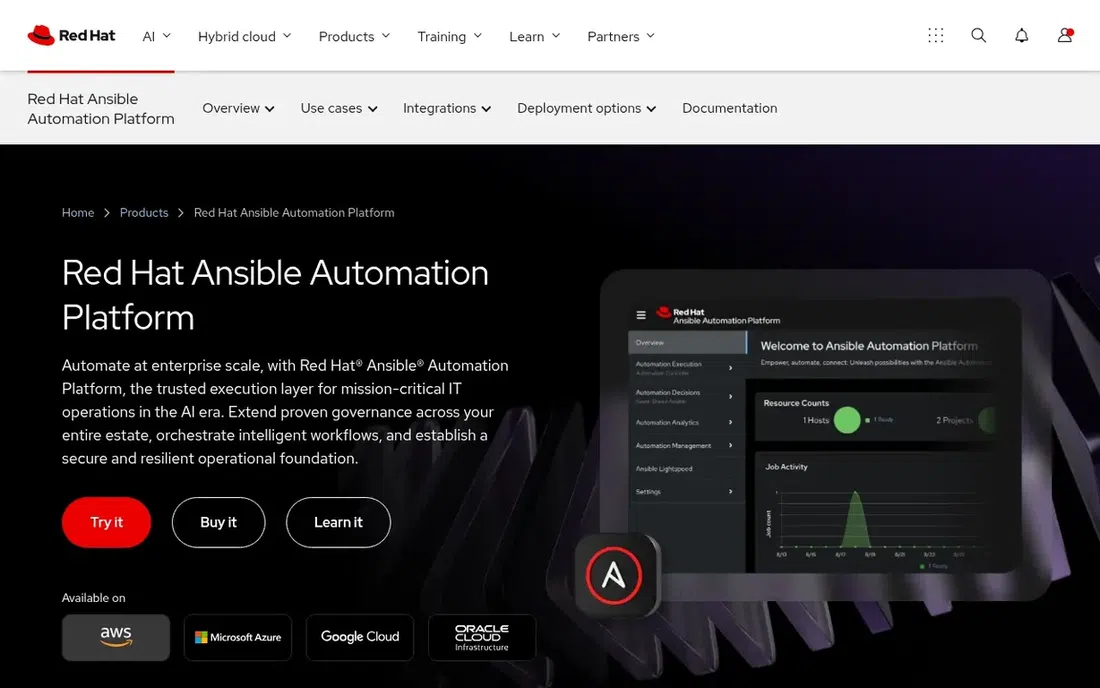
In short, Red Hat Ansible Automation Platform is for Agentless automation across mixed IT estates. Red Hat Ansible Automation Platform is described by the vendor as the trusted execution layer for mission-critical IT operations in the AI era. It is widely known for agentless automation built around playbooks, which makes it a natural fit for enterprises that want one execution layer spanning servers, network devices and cloud environments whereas keeping runbook logic in versioned, reviewable files.
For everyday use, the honest limits are skill and scale. As for the details, writing and maintaining playbooks takes practice, and large estates need clear structure and governance to stay manageable. Check the vendor site for Red Hat Ansible Automation Platform pricing; none is listed in this comparison. On free options: Not stated.
Drawbacks to consider: Needs governance as automation grows.
- Positioned as a trusted execution layer
- Suits wide infrastructure automation
- Playbook authoring has a ramp-up time
Tines
Best for: Security and operations workflow automation
Tines is built with security and operations workflow automation in mind. Teams use it to assemble automations from connected apps and agents, which makes it a practical fit for security operations and cross-team runbooks where the work is a chain of lookups, enrichments and notifications instead of server configuration. Its strength in workflow assembly is less of a match for deep infrastructure configuration management, where state-based tools do more.
Drawbacks to consider: Less suited to deep infrastructure config.
Beyond that, if your runbooks are largely infrastructure execution, compare Ansible or Puppet before committing. Tines describes itself as the secure environment for AI agents, apps and automation, positioning a complete environment for enterprise AI. Tines shows no starting price here, so confirm the cost on the vendor site. As for free access: Not stated.
- Suits security team use cases
- Secure environment for AI agents and apps
- Workflow sprawl needs governance
ServiceNow Orchestration
Best for: Enterprises standardized on ServiceNow workflows
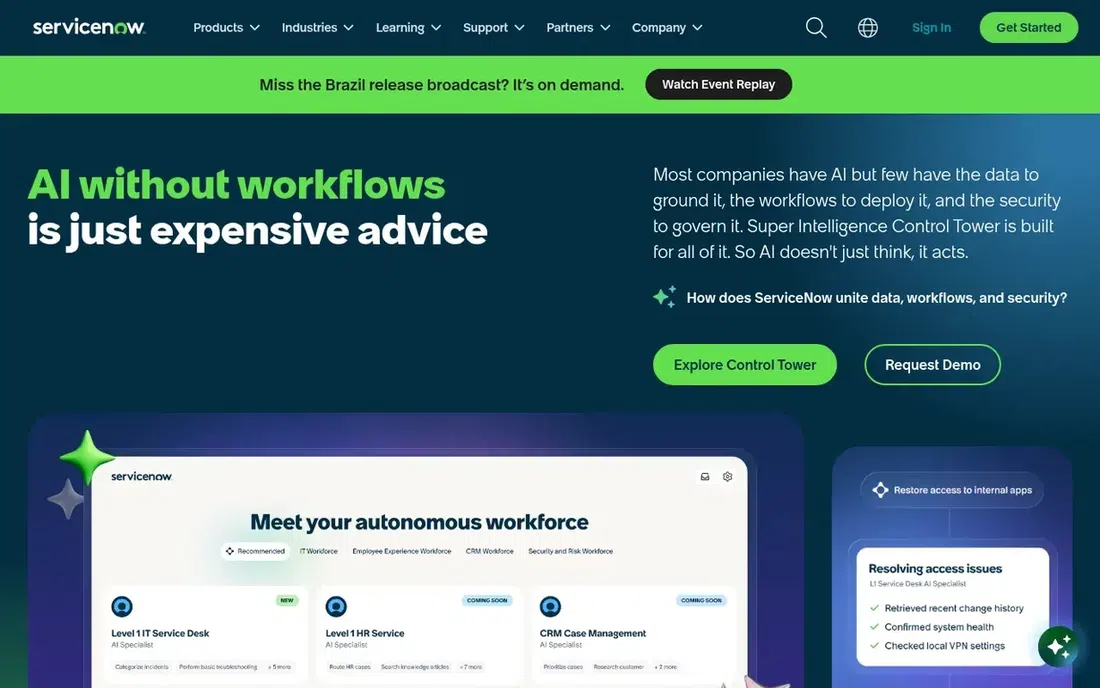
ServiceNow Orchestration is a good fit for enterprises standardized on ServiceNow workflows. For organizations already running IT service management on ServiceNow, it keeps runbook automation close to the ticketing, change and workflow data the system already holds, which cuts the have to stitch separate tools together.
In daily use, ServiceNow Orchestration extends the ServiceNow AI Platform, which the vendor describes as a way to simplify enterprise workflows and enable customers and employees across the business. Pricing for ServiceNow Orchestration is not stated here, so ask the vendor for current figures. Free plan details: Not stated.
The main drawbacks: Value relies on ServiceNow adoption.
- Automates enterprise workflows across teams
- Serves both customers and employees
- Wide system scope can add complexity
Chef Automate
Best for: Policy-as-Code driven DevOps automation
Think of Chef Automate for policy-as-Code driven DevOps automation. Policy-as-Code is capable but demands expertise to write and maintain, and the breadth of the system means teams should assign clear ownership.
Trade-offs to know: Policy authoring needs expertise.
If you want automation built around visual workflows and fast assembly instead of policy definitions, a system like Tines may be simpler to adopt. Entry price for Chef Automate: $59 per node per year. Free access: Free trial.
- Policy-as-Code approach
- Includes infrastructure management
- Wide scope needs clear ownership
Puppet Enterprise
Best for: Configuration management and compliance at scale
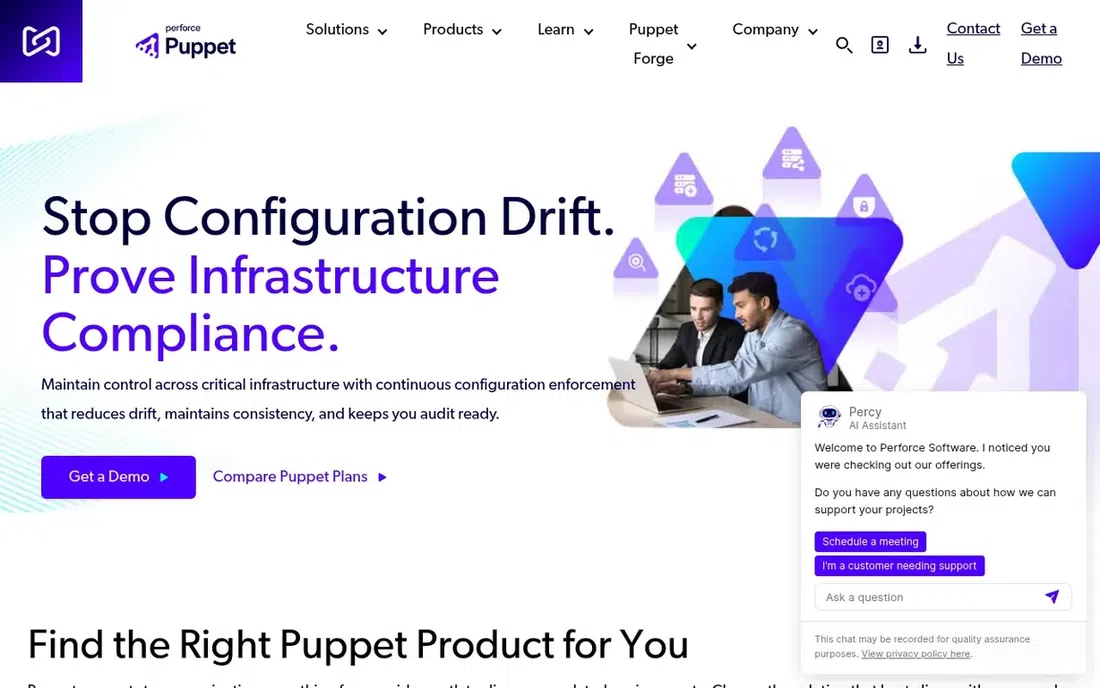
Puppet Enterprise serves configuration management and compliance at scale. Perforce Puppet is presented as a modern infrastructure ops system handling automation, configuration management, DevSecOps, compliance, CI/CD and patching.
Limits to weigh: Needs continuing model maintenance.
More specifically, maintaining the underlying model takes sustained effort. Pricing for Puppet Enterprise is not stated here, so ask the vendor for current figures. Free options: Not stated.
- Supports DevSecOps and CI/CD
- Includes compliance and patching
- Configuration-centric instead of task-centric
How these tools were picked
For each of the 5 tools we noted price, free plan or trial, fit for runbook automation software for enterprise and the main limit, using vendor pages and documentation. Where a price is missing, the vendor does not list one publicly or ties it to a quote. Always confirm before budgeting. The order reflects how well each tool fits the most common buying scenario for runbook automation software for enterprise, then price clarity, then free plan access. It is a starting point, not a verdict.
What to check before you buy
- Ask Red Hat Ansible Automation Platform, Tines, ServiceNow Orchestration and Puppet Enterprise for a written quote, since no starting price is shown.
- Take the trial from Chef Automate and push a live task through it before you pay.
- Read the limits listed for Red Hat Ansible Automation Platform first: playbook authoring has a ramp-up time.
- Work out what Puppet Enterprise costs with your real seat count, add-ons and usage, not just the entry price.
- Pick one real project and run it in Red Hat Ansible Automation Platform first; a small pilot shows fit faster than a checklist.
FAQ
Does any tool for runbook automation software for enterprise here have a free plan?
No tool in this list, Red Hat Ansible Automation Platform and Puppet Enterprise included, has a permanent free plan. Chef Automate offer a trial. Trials and quotes are the usual route, so plan a short evaluation period.
Do these tools publish their prices?
Not all of them. Red Hat Ansible Automation Platform, Tines, ServiceNow Orchestration and Puppet Enterprise publish no starting price, so expect a quote request for those. The rest, Chef Automate included, show a starting price, though seats and billing terms still change the final cost.
How are the tools for runbook automation software for enterprise ordered?
The order follows typical fit for runbook automation software for enterprise, with Red Hat Ansible Automation Platform first and Puppet Enterprise last, then price clarity and free access. It is editorial judgement, not a score, so another team could rank the tools differently.
Can I try these tools before paying?
Often, yes. Chef Automate offers a free trial. Use your own data and a real task during the test, and check what the free tier or trial limits before you rely on it.
What should we check before committing to a system?
Confirm how runbooks are versioned, who can execute them, and what logging exists for each run. Also verify integrations with your current systems and how automations are tested before production, since these factors shape long-term maintainability more than feature lists.
Sources
- https://www.redhat.com/en/technologies/management/ansible
- https://www.tines.com
- https://www.servicenow.com
- https://www.chef.io
- https://www.puppet.com