Choosing Reporting Software for Board-Level Metrics in 2026: 6 Options Compared
Compare 6 best reporting software for Board-Level metrics, with prices, free plans and who each fits. Strengths and weak spots are spelled out. No filler.
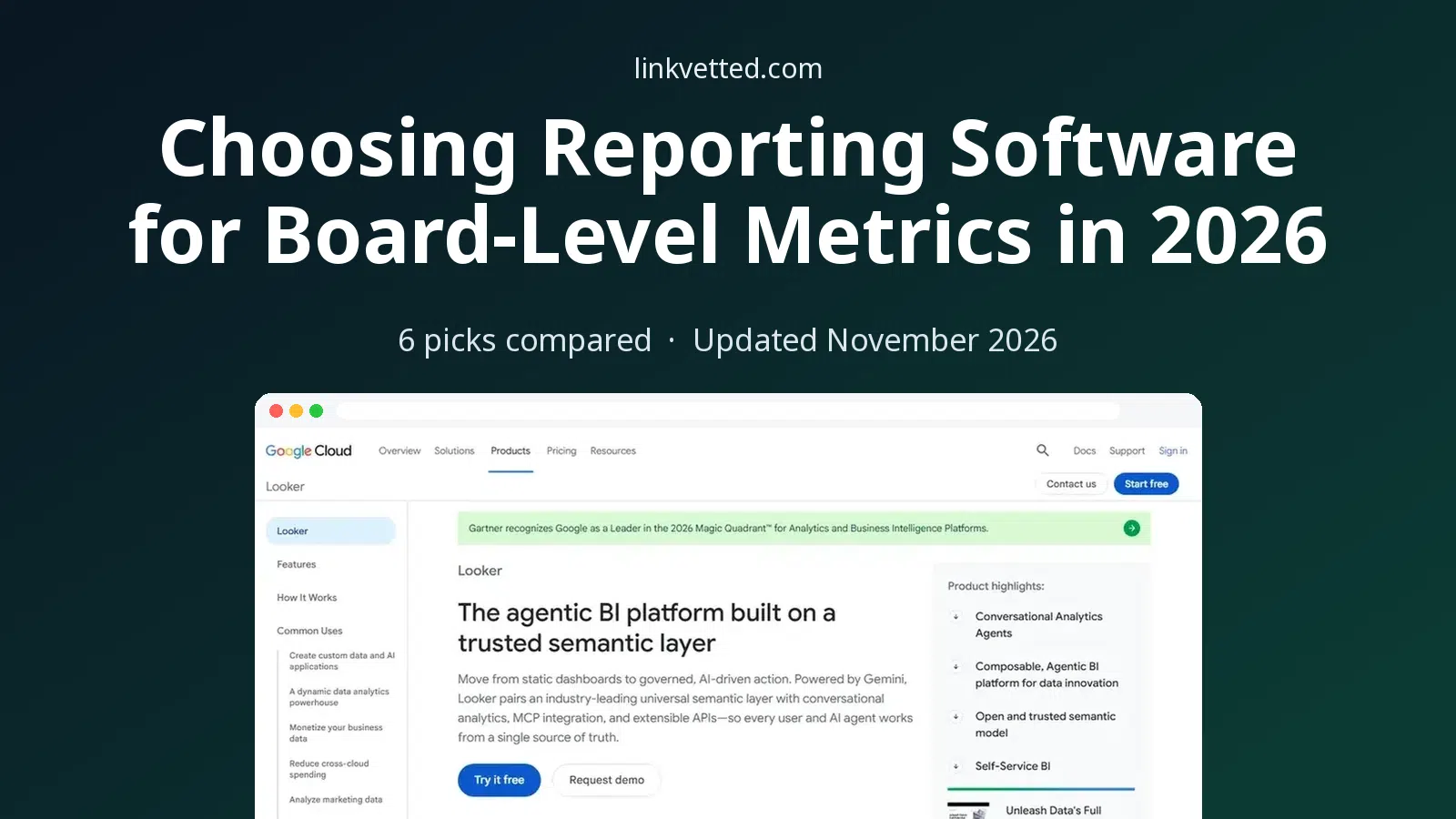
- Editor's choice
 Sisense
Embedded analytics with adaptable development choices
Starts atSee websiteVisit sisense.comFull review - Great alternative
 Looker
Unified metric definitions with a semantic layer
Starts atSee websiteVisit looker.comFull review - Also consider
 Domo
Governed data and wide source connectivity
Starts atSee websiteVisit domo.comFull review
Direct answer
For embedded analytics with flexible development choices, Sisense is where this list starts. Listed starting prices: Tableau from $15 per user per month and ThoughtSpot from $25 per user a month. Look at Looker for unified metric definitions with a semantic layer, and at Domo for governed data and wide source connectivity. The remaining 3 options are covered below with prices and limits.
TL;DR:
- Top of the list is Sisense, which targets embedded analytics with adaptable development choices.
- ThoughtSpot is the one to check for AI agents and automated insight discovery.
- Check the limits for Looker before you commit: semantic modeling needs upfront work.
- Tableau is the lowest-priced starter here at $15 per user per month.
- Just one of the 6 tools, Tableau, has a free plan.
Last checked November 2026. Prices and plan details were read from the vendors' own pages in November 2026; vendors change plans often, so confirm the current price on the vendor site before you buy.
Quick comparison
| Tool | Best for | Starts at | Free plan? | |
|---|---|---|---|---|
| Sisense | Embedded analytics with adaptable development choices | See website | Free trial | Visit |
| Looker | Unified metric definitions with a semantic layer | See website | Not stated | Visit |
| Domo | Governed data and wide source connectivity | See website | Free trial | Visit |
 Tableau | Visual board dashboards and data storytelling | $15 per user per month | Yes | Visit |
 Qlik Sense | End-to-end data integration and analytics | See website | Not stated | Visit |
 ThoughtSpot | AI agents and automatic insight discovery | $25 per user a month | Free trial | Visit |
The 6 tools in detail
This LinkVetted guide covers 6 reporting software for Board-Level metrics. Each profile lists a starting price, free plan details, strengths and drawbacks, so you can drop poor fits quickly.
Sisense was built for embedded analytics with adaptable development choices. Sisense gives AI-powered embedded analytics targeted at turning data into revenue, with pro-code, low-code and no-code adaptability. That range matters for board-level metrics when leadership reporting is delivered inside another application or portal.
What to check first: Embedded focus may not fit internal-only needs.
In practice, the emphasis on embedding means internal-only reporting programs may not use much of the product's value. Teams wanting a standalone analytics workspace may prefer Tableau or Looker. No starting price is listed for Sisense here; confirm pricing on the vendor site. On free options: Free trial.
- AI-powered embedded analytics focus
- Fits product-embedded reporting
- Custom builds need developer input
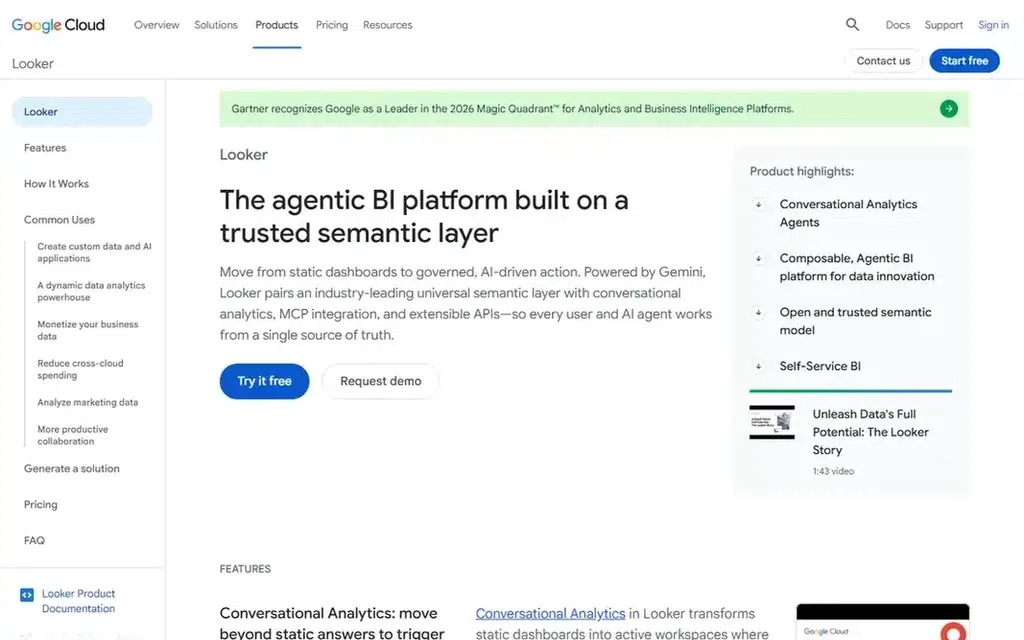
Looker is a good fit for unified metric definitions with a semantic layer. Its core promise is unifying metrics with a trusted semantic layer alongside Gemini agents. Where visual exploration is the central need, a drag-and-drop tool for example Tableau may be a better fit.
Beyond that, teams without centralized data ownership may find the approach heavy. In practice, for board-level metrics, that central definition model is valuable since one approved number can flow into every leadership view. No starting price is listed for Looker here; confirm pricing on the vendor site. Free options: Not stated.
What to check first: Best value with governed data sources.
- Embedded analytics for wider delivery
- Gemini agents support analysis
- Semantic modeling needs upfront work
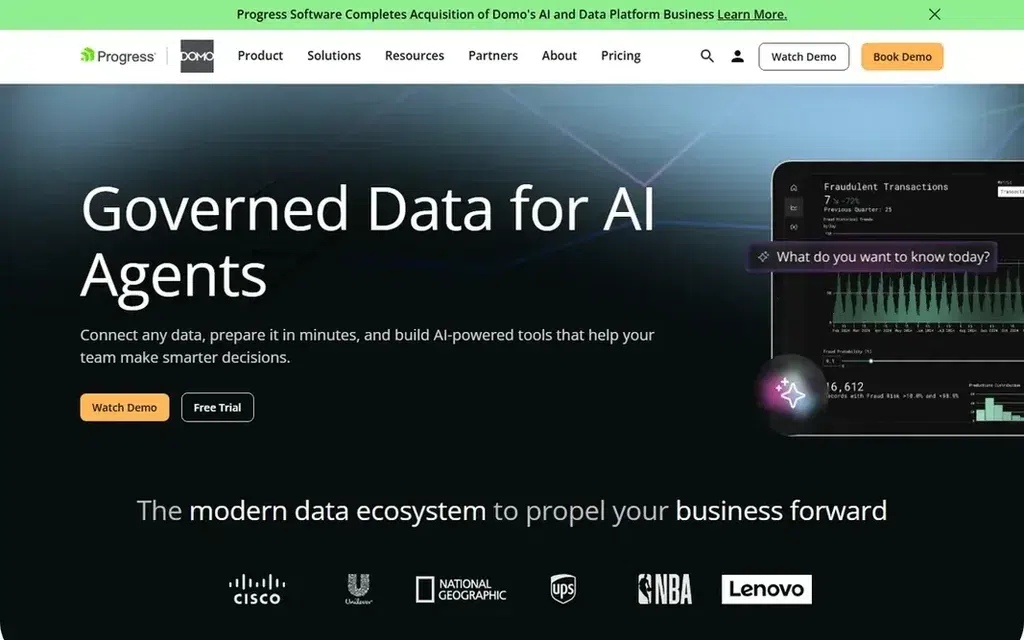
Domo targets governed data and wide source connectivity. It suits organizations that want one governed environment spanning data preparation, exploration and insight delivery instead of separate tools stitched together.
Drawbacks to consider: Governance features need configuration.
More specifically, organizations with a narrow, single-source reporting need may prefer a simpler visualization tool. Domo shows no starting price here, so confirm the cost on the vendor site. Free options: Free trial.
- Supports exploration and business-critical insights
- Emphasizes governed data for AI and reporting
- Wide product can need setup effort
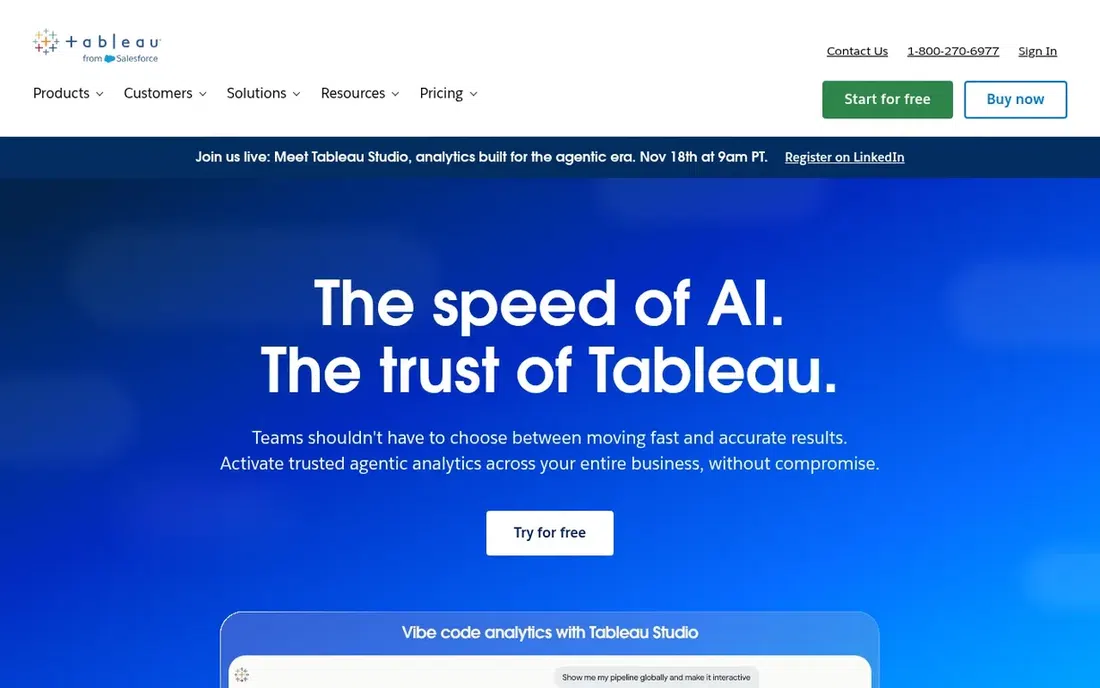
For visual board dashboards and data storytelling, Tableau is a natural candidate. Tableau is business intelligence and analytics software built so anyone can see and understand data. That makes it a good fit for board packs that depend on clear charts and narrative, and for teams that want analysts to shape leadership views rapidly.
Teams wanting a single enforced semantic layer may look at Looker instead. Very straightforward recurring board reports may also be handled with lighter tools. What you pay to start with Tableau: $15 per user per month. Tableau offers a free plan.
Where it is weaker: Governance relies on how sources are curated.
- Drag-and-drop visualization building
- Share dashboards with a click
- Complicated dashboards take design skill
Qlik Sense is aimed squarely at end-to-end data integration and analytics. Qlik, now with Talend, describes a data fabric with end-to-end data integration, data quality and analytics options. Since the offering spans integration, quality and analytics, implementation involves several disciplines and can take time to mature.
On top of that, smaller teams may prefer a focused visualization or semantic-layer tool. Consider alternatives when data integration is already handled elsewhere. No starting price is listed for Qlik Sense here; confirm pricing on the vendor site. On free options: Not stated.
Trade-offs to know: Product breadth brings complexity.
- Analytics paired with integration tooling
- Data fabric spanning integration and quality
- Setup spans several data disciplines
For AI agents and automatic insight discovery, ThoughtSpot is a natural candidate. It suits organizations exploring conversational and agent-driven analysis alongside conventional reporting, and those wanting to embed intelligence into other tools.
Static, highly formatted board packs are better served by traditional visualization tools. What you pay to start with ThoughtSpot: $25 per user per month. Trial and free access: Free trial.
Points against: Search-led workflows need user adoption.
- Automatic insights surface patterns
- Agentic analytics with AI agents
- Less suited to static board packs
What went into this list
LinkVetted looked at what each vendor publishes: pricing, plan limits, feature coverage for reporting software for Board-Level metrics and stated drawbacks. No hands-on testing is claimed. Prices and plan limits come from vendor pages and can change, so confirm them on the vendor site before you buy. The sequence is a judgement call: typical use case first, then pricing transparency, then free access. Use the profiles to check fit.
What to confirm before you sign up
- Ask Sisense, Looker, Domo and Qlik Sense for a written quote, since no starting price is shown.
- Test the free plan from Tableau against your real workload before relying on it.
- Run a trial of Sisense, Domo and ThoughtSpot with real work before paying for a year; your own workflow is the best test.
- Before choosing Sisense, weigh its main limit: embedded focus may not fit internal-only needs.
- Verify that exporting from ThoughtSpot is possible on your plan and covers all your records.
- Look at the renewal terms for Domo: auto-renewal, notice periods and price changes can matter more than the first-year price.
FAQ
Can I try these tools before paying?
Often, yes. Tableau has a free plan and Sisense, Domo and ThoughtSpot offer a free trial. Use your own data and a real task during the test, and check what the free tier or trial limits before you rely on it. For the full picture, the cards above cover all 6 entries of this reporting software for Board-Level metrics list, including price, free plan and limits.
Is Sisense the right pick for everyone comparing reporting software for Board-Level metrics?
No single tool suits every team. Sisense comes first because it fits embedded analytics with flexible development options, while Looker suits unified metric definitions with a semantic layer and Domo suits governed data and broad source connectivity. Match the tool to your own size, budget and workflow before deciding.
Which options for reporting software for Board-Level metrics have a free plan?
Tableau is the only tool in this list with a free plan. Free plans usually cap users, projects or features, so check the limits on the vendor page. Several others offer a trial instead. Prices, free plan details and limits for all 6 tools in this reporting software for Board-Level metrics roundup sit on the individual cards above.
Should board reporting use a semantic layer?
A semantic layer centralizes metric definitions so every dashboard displays the same approved number. Other products can approximate it through curated data sources, but the discipline sits outside the visualization tool.
How are the tools for reporting software for Board-Level metrics ordered?
The order follows typical fit for reporting software for Board-Level metrics, with Sisense first and ThoughtSpot last, then price clarity and free access. It is editorial judgement, not a score, so another team could rank the tools differently.
Sources
- https://www.sisense.com
- https://looker.com
- https://www.domo.com
- https://www.tableau.com
- https://www.qlik.com
- https://www.thoughtspot.com