Top 6 Remote IoT Platform for 2026 (Prices and Free Plans)
Need the best remote IoT platform? We compare 6 tools on cost, free access and who each suits. Strengths and weak spots are spelled out. See the full list.
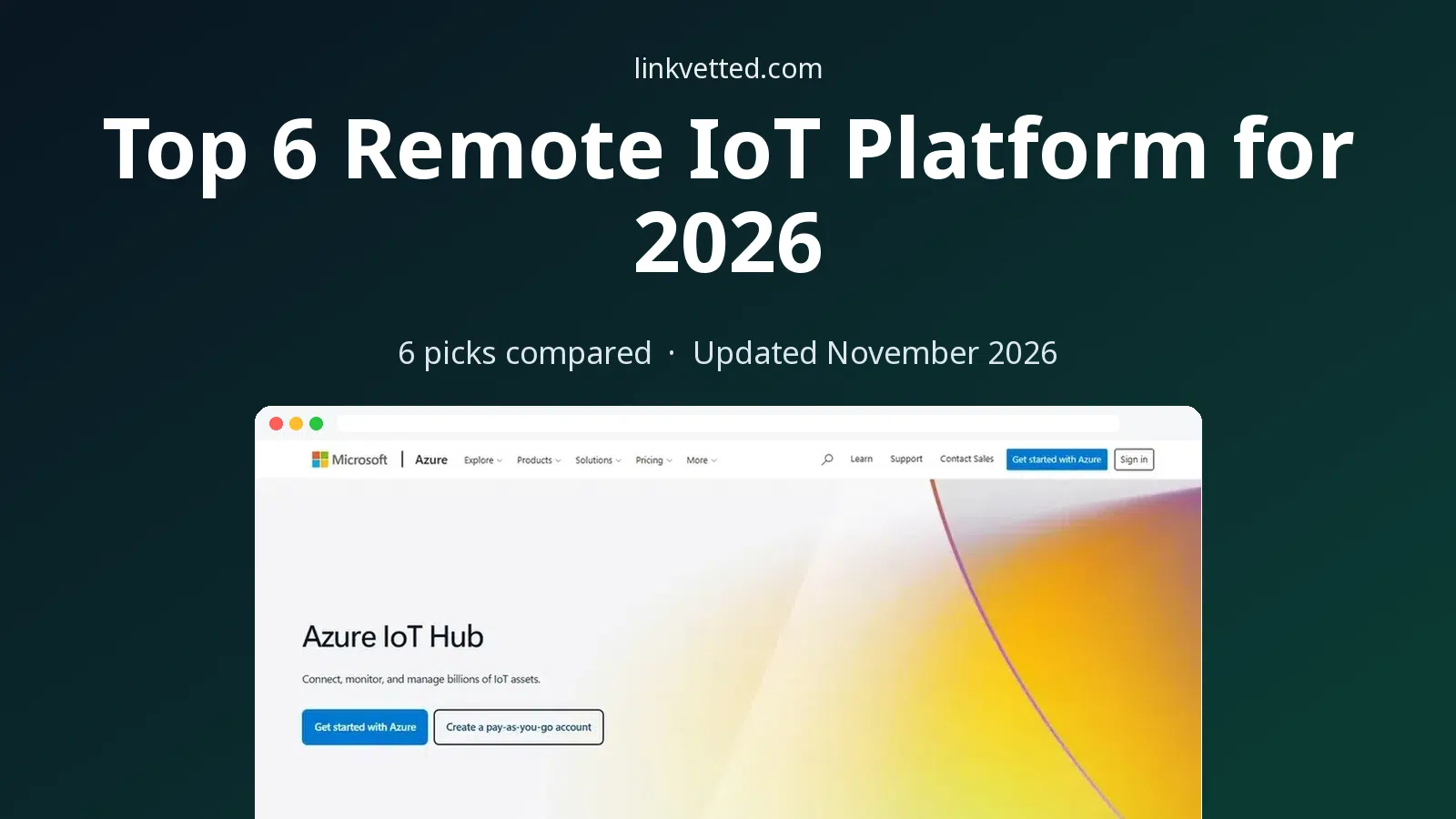
- Editor's choice
 Azure IoT Hub
Microsoft-centric IoT device management
Starts atSee websiteVisit azure.microsoft.comFull review - Great alternative
 Ubidots
Industrial IoT with AI agents
Starts at$99 a monthVisit ubidots.comFull review - Also consider
 AWS IoT Core
Secure AWS-integrated device communication
Starts atSee websiteVisit aws.amazon.comFull review
Direct answer
If you need Microsoft-centric IoT device management, Azure IoT Hub is the first tool to look at here. Listed starting prices: Ubidots from $99 a month, Particle from $299 a month per block and Blynk from $29 per month. If your case is different, Ubidots suits industrial IoT with AI agents and AWS IoT Core suits secure AWS-integrated device communication. The remaining 3 options are covered below with prices and limits.
TL;DR:
- Azure IoT Hub is the opening pick, best for Microsoft-centric IoT device management.
- A fair warning about Ubidots: industrial focus may limit general use.
- For low-code IoT app and device management, Blynk is worth a look.
- For the cheapest start, look at Blynk: $29 per month.
- A free plan is available from 3 of the 6 tools: AWS IoT Core, Particle, Blynk.
Last checked November 2026. Prices and plan details were read from the vendors' own pages in November 2026; vendors change plans often, so confirm the current price on the vendor site before you buy.
Quick comparison
| Tool | Best for | Starts at | Free plan? | |
|---|---|---|---|---|
| Azure IoT Hub | Microsoft-centric IoT device management | See website | Free trial | Visit |
| Ubidots | Industrial IoT with AI agents | $99 a month | Free trial | Visit |
| AWS IoT Core | Secure AWS-integrated device communication | See website | Yes | Visit |
 Particle | Integrated hardware and software IoT options | $299 a month per block | Yes | Visit |
 Losant | Enterprise live connected options | See website | Not stated | Visit |
 Blynk | Low-code IoT app and device management | $29 per month | Yes | Visit |
Tool-by-tool breakdown
Choosing remote IoT platform usually comes down to price, fit and limits. This LinkVetted guide sets 6 tools side by side on those three points, with the facts kept short and checkable.
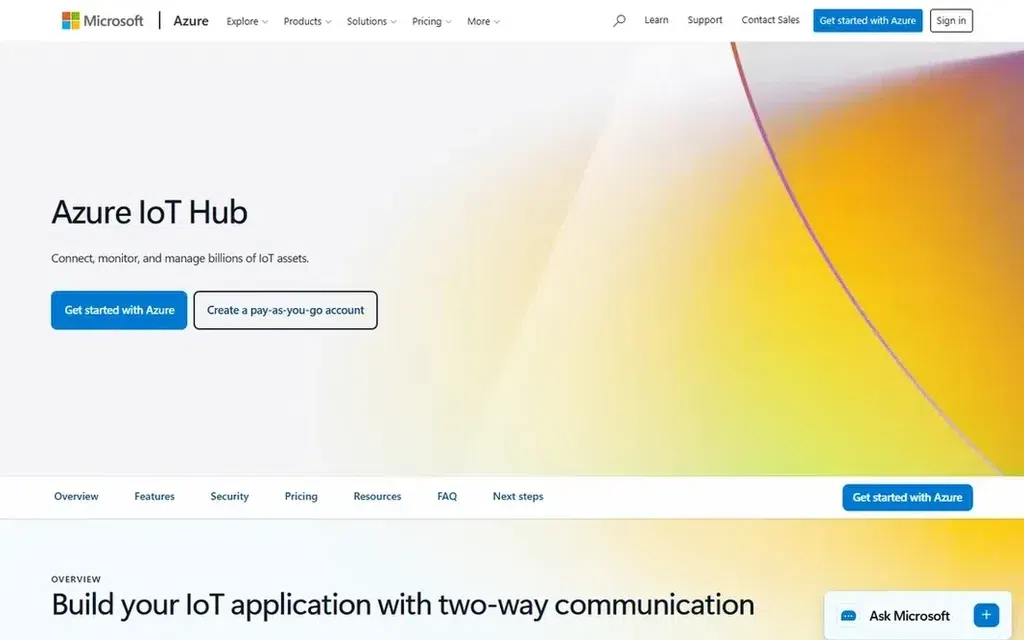
For Microsoft-centric IoT device management, Azure IoT Hub is a natural candidate. Azure IoT Hub is a cloud system from Microsoft that lets you link, monitor, provision, and configure IoT devices. It is meant to handle large device fleets and links up with Azure services for analytics and storage.
Where it falls short: Steeper ramp-up time.
In daily use, pricing is tiered and based on usage, so costs can grow with device count and message volume. Also, getting started can be challenging for those new to Azure, and the service may be more than needed for small projects. Azure IoT Hub does not show a starting price in this comparison, so check the vendor site for current pricing. As for free access: Free trial.
- Configure devices
- Integration with Azure services
- Azure account required
Ubidots is a good fit for industrial IoT with AI agents. The product's industrial specialization means it may be overkill for straightforward IoT projects or consumer applications. For general-purpose IoT needs, products like AWS IoT Core or Azure IoT Hub might be more appropriate.
Setting up AI agents and integrations may need technical expertise. On top of that, Ubidots is an AI-native industrial IoT system for condition monitoring, smart manufacturing, cloud SCADA, and vibration analysis. It is made for industrial settings where live data analysis and automatic responses are critical. Ubidots pricing: $99 per month. Free access: Free trial.
Where it is weaker: AI features may need configuration.
- Condition monitoring and smart manufacturing
- AI-native industrial system
- Industrial focus may limit general use
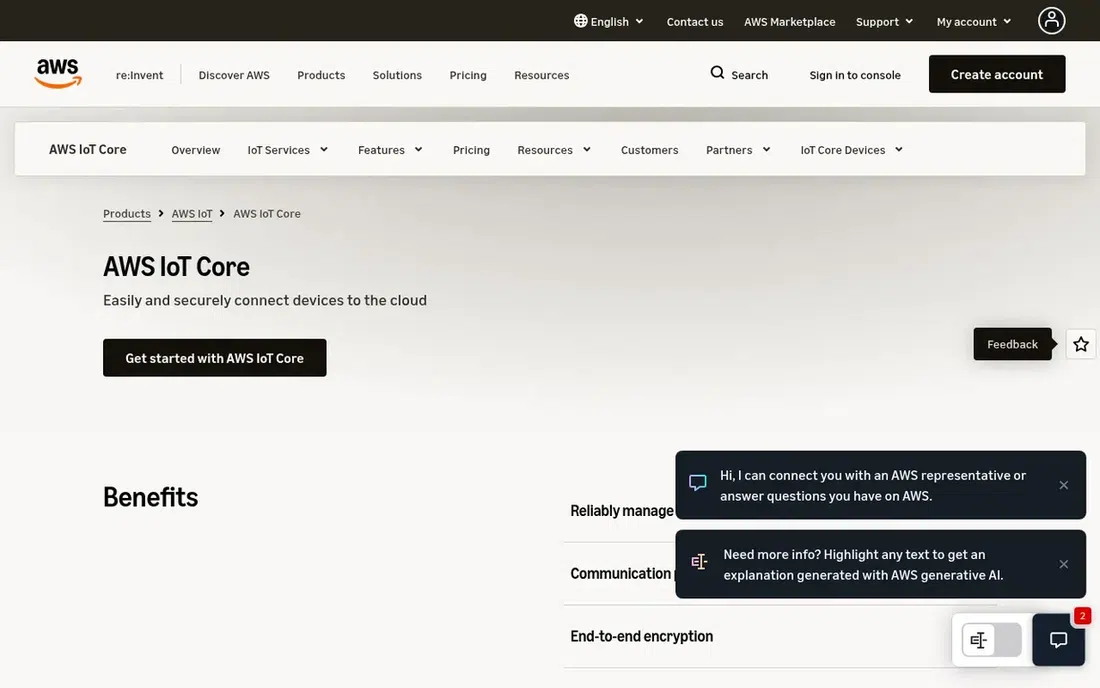
AWS IoT Core serves secure AWS-integrated device communication. AWS IoT Core is a managed cloud service that makes it possible for secure two-way communication between internet-connected devices and AWS services. It contains device gateway and device SDK capabilities, making it a good match for teams already using AWS or planning to connect with its broader service catalog.
Pricing is usage-based, which can be unpredictable for high-volume projects. The product can be complicated to set up and may overwhelm teams without AWS experience. No starting price is listed for AWS IoT Core here; confirm pricing on the vendor site. AWS IoT Core offers a free plan.
Where it is weaker: Needs AWS ecosystem familiarity.
- Two-way communication with AWS services
- Scalable cloud infrastructure
- Complicated setup for beginners
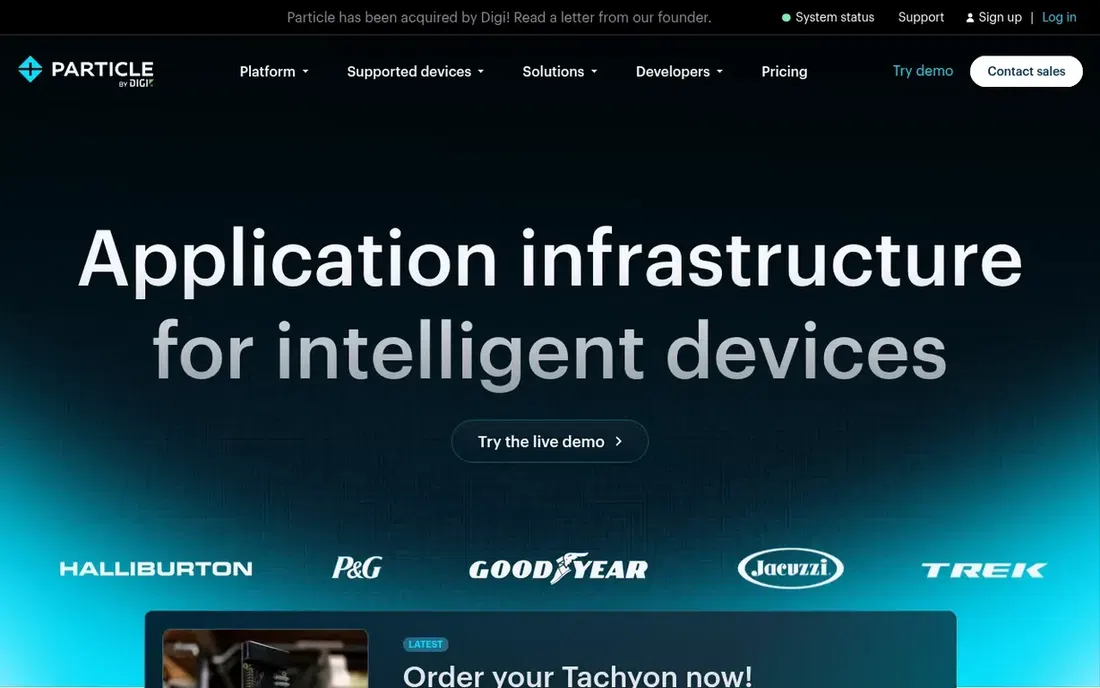
Particle makes the most sense for integrated hardware and software IoT options. Consider AWS IoT Core or Azure IoT Hub for more adaptable cloud integration. In daily use, Particle's integrated approach may tie you to its hardware and ecosystem, which can be a limitation if you already have devices or prefer a cloud-only product.
The main drawbacks: Hardware dependency.
It may not be well suited to teams that require broad customization at the cloud level. From a buyer's view, Particle offers an integrated IoT platform-as-a-service that helps businesses power connected machines, vehicles, and products. It is often chosen by teams that require to prototype and scale IoT products rapidly without building infrastructure from scratch. On cost, Particle starts like this: $299 per month per block. Particle includes a free tier.
- Integrated platform-as-a-service
- Focus on innovation
- Less right for pure software teams
Losant makes the most sense for enterprise live connected options. Losant is an enterprise IoT platform meant to help teams rapidly build live connected options.
Limits to weigh: Needs contact for details.
It emphasizes simplicity and power, making it right for firms that require to develop and deploy IoT applications without broad custom development. Check the vendor site for Losant pricing; none is listed in this comparison. As for free access: Not stated.
- Made for teams
- Fast building of live options
- Enterprise focus may not suit small projects
Blynk is built with low-code IoT app and device management in mind. Blynk is a low-code IoT platform that lets you launch apps, run devices, and scale fleets without backend complexity. It is built for teams that want to rapidly build and deploy IoT applications with minimal coding, making it accessible to many different users.
As for the details, Whereas Blynk eases development, it may not offer the depth of customization or advanced analytics available in products like AWS IoT Core or Ubidots. For everyday use, consider Losant or Azure IoT Hub for more complicated enterprise requirements. Entry price for Blynk: $29 per month. Free access exists with Blynk.
The main drawbacks: May be less adaptable for custom needs.
- Launch apps and run devices
- Scale fleets without backend complexity
- Restricted advanced analytics
How we compared the tools
What to confirm before you sign up
- Get a written quote from Azure IoT Hub, AWS IoT Core and Losant; the list shows no starting price for them.
- Look at free plan limits closely: AWS IoT Core, Particle and Blynk have one, and the caps decide whether it is usable for real work.
- Take the trial from Azure IoT Hub and Ubidots and push a live task through it before you pay.
- Read the limits listed for Azure IoT Hub first: steeper ramp-up time.
- Compare total cost, not headline price: for Azure IoT Hub, add extra seats, add-ons and any usage-based charges.
- Ask Blynk how an export works before you move any records in; an easy exit lowers the risk.
FAQ
Can I try these tools before paying?
Often, yes. AWS IoT Core, Particle and Blynk have a free plan and Azure IoT Hub and Ubidots offer a free trial. Use your own data and a real task during the test, and check what the free tier or trial limits before you rely on it.
Which options for remote IoT platform have a free plan?
On this list, AWS IoT Core, Particle and Blynk include a free plan. Caps on seats, usage or features are common, so test the free plan against your real workload. Several others offer a trial instead.
Is Azure IoT Hub the right pick for everyone comparing remote IoT platform?
No single tool suits every team. Azure IoT Hub comes first because it fits Microsoft-centric IoT device management, while Ubidots suits industrial IoT with AI agents and AWS IoT Core suits secure AWS-integrated device communication. Match the tool to your own size, budget and workflow before deciding.
How are the tools for remote IoT platform ordered?
Azure IoT Hub sits first and Blynk last because the order follows typical fit for remote IoT platform, then price clarity and free access. It is a judgement call, so read each profile for fit and limits.
How do AWS IoT Core and Azure IoT Hub differ?
AWS IoT Core is tightly integrated with AWS services and supplies a device gateway and SDKs, whereas Azure IoT Hub supplies device provisioning and monitoring within the Microsoft Azure ecosystem. From a buyer's view, the choice frequently relies on which cloud provider you already use.
Sources
- https://azure.microsoft.com/en-us/products/iot-hub
- https://ubidots.com
- https://aws.amazon.com/iot-core
- https://www.particle.io
- https://www.losant.com
- https://blynk.io