Top 6 Real-Time Alert Platform Comparisons for 2026 (Prices and Free Plans)
Weighing the best real-time alert platform comparisons? We lined up 6 products by cost, free access and fit. Each pick lists its main limit. No filler.
- Editor's choiceGrafana OnCall
Straightforward on-call inside Grafana Cloud
Starts atSee websiteVisit grafana.comFull review - Great alternativeOpsgenie
Teams standardizing on Atlassian tooling
Starts atSee websiteVisit atlassian.comFull review - Also consider
 PagerDuty
AI-first operations from detection to resolution
Starts at$21 per user a monthVisit pagerduty.comFull review
Direct answer
Grafana OnCall comes first here, mainly for simple on-call inside Grafana Cloud. Listed starting prices: PagerDuty from $21 per user a month, incident.io from $15 per user a month and Rootly from $20 per user a month. Opsgenie is better for teams standardizing on Atlassian tooling, and PagerDuty is better for AI-first operations from detection to resolution. The full list of 6 tools follows, with prices and free plan facts.
TL;DR:
- This list starts with Grafana OnCall, which is built for straightforward on-call inside Grafana Cloud.
- incident.io comes with a trade-off: wide feature set needs onboarding.
- Only 4 of the 6 tools have a free plan (Grafana OnCall, PagerDuty, incident.io, xMatters), so check the caps.
- For the cheapest start, look at incident.io: $15 per user per month.
- xMatters is the one to check for automatic workflows for DevOps and SRE.
Last checked November 2026. Prices and plan details were read from the vendors' own pages in November 2026; vendors change plans often, so confirm the current price on the vendor site before you buy.
Quick comparison
| Tool | Best for | Starts at | Free plan? | |
|---|---|---|---|---|
| Grafana OnCall | Straightforward on-call inside Grafana Cloud | See website | Yes | Visit |
| Opsgenie | Teams standardizing on Atlassian tooling | See website | Not stated | Visit |
| PagerDuty | AI-first operations from detection to resolution | $21 per user a month | Yes | Visit |
 incident.io | Unified on-call, response and status pages | $15 per user a month | Yes | Visit |
 Rootly | AI-native incident management for quick teams | $20 per user a month | Not stated | Visit |
 xMatters | Automatic workflows for DevOps and SRE | $15 per user per month | Yes | Visit |
Real-Time Alert Platform Comparisons profiles
If you are comparing real-time alert platform comparisons, this page covers 6 tools in one place: what each is best for, what it costs to start, whether it has a free plan, and the main limit to know about.
Grafana OnCall
Best for: Straightforward on-call inside Grafana Cloud
Choose Grafana OnCall for straightforward on-call inside Grafana Cloud. Grafana OnCall is an on-call management tool within Grafana Cloud, described as easy to use and designed to cut toil through more straightforward workflows and interfaces tailored for developers.
In daily use, confirm current feature coverage and system requirements on the vendor site. Check the vendor site for Grafana OnCall pricing; none is listed in this comparison. Free access exists with Grafana OnCall.
Limits to weigh: Narrower than full incident systems.
- Tailored for developer workflows
- More straightforward interfaces and workflows
- Tied to the Grafana Cloud context
Opsgenie
Best for: Teams standardizing on Atlassian tooling
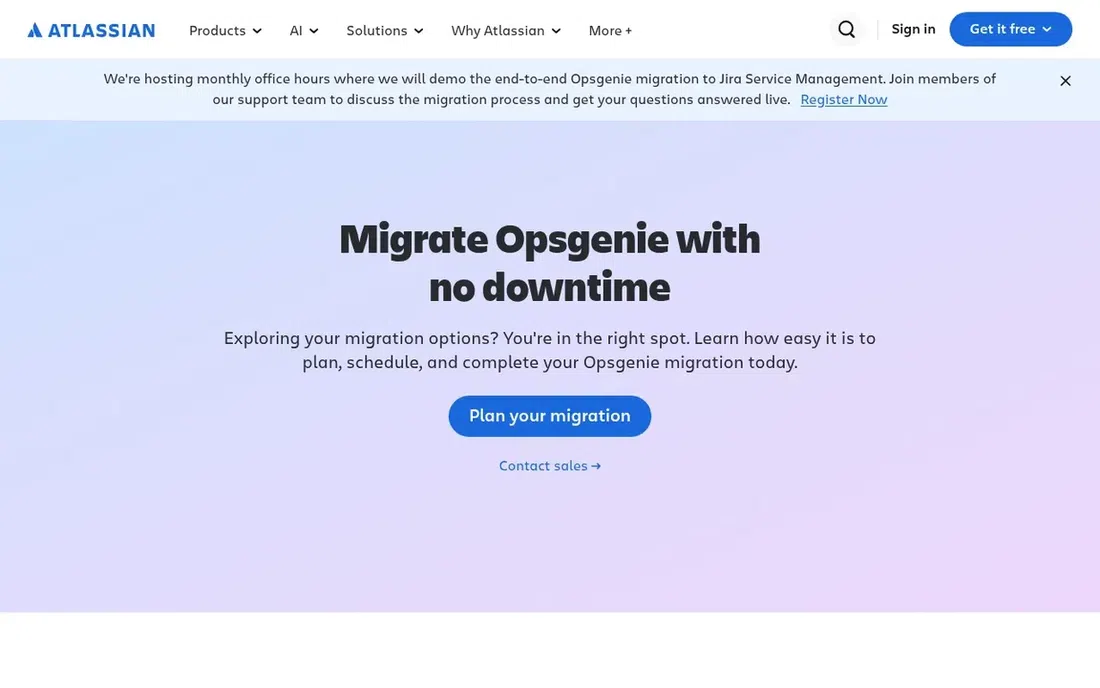
Opsgenie was built for teams standardizing on Atlassian tooling. Opsgenie is Atlassian's alerting and on-call product, and its vendor page centers on migrating to Jira Service Management with no downtime, including planning, scheduling and completing the migration with an automatic tool.
Teams without Atlassian investments, or those wanting a standalone alerting system, may be better served by PagerDuty or incident.io. Also, the migration emphasis means new buyers should understand the long-term direction before adopting it fresh. Opsgenie shows no starting price here, so confirm the cost on the vendor site. Free plan details: Not stated.
Trade-offs to know: Migration focus may signal shifting direction.
- Automatic migration tooling
- Atlassian ecosystem alignment
- Less appealing outside Atlassian stacks
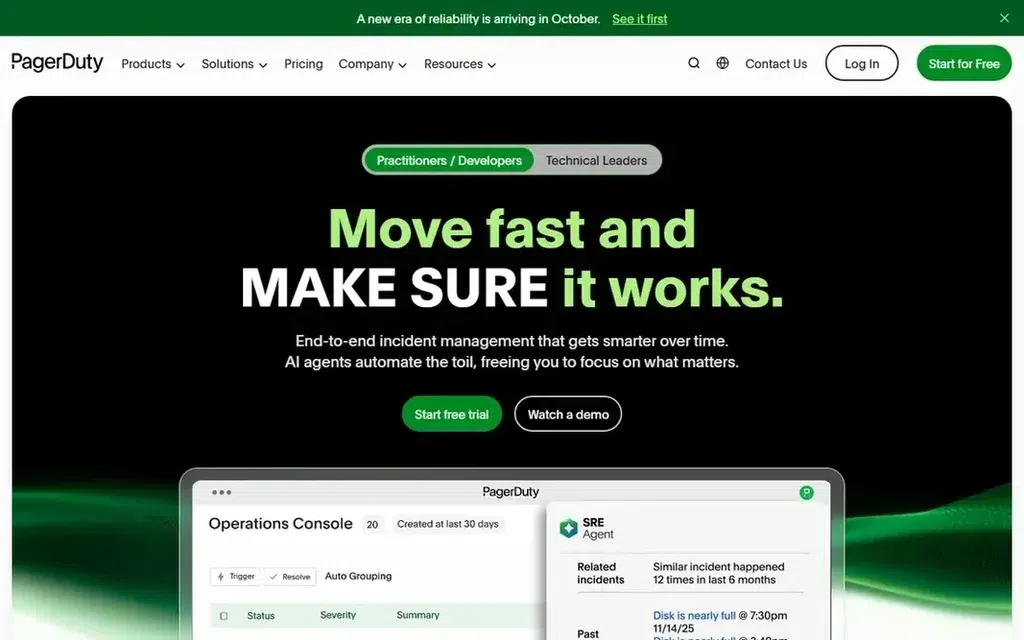
Choose PagerDuty for AI-first operations from detection to resolution. It suits organizations that want a single system including the full incident lifecycle instead of a narrow paging tool, particularly teams with complicated, multi-service environments and a need for automation across response workflows.
What to check first: Setup needs planning.
Teams wanting a tightly unified on-call and status page experience may prefer a dedicated reliability product. PagerDuty pricing: $21 per user per month. You can start on PagerDuty without paying.
- Wide operations system scope
- Spans detection through resolution
- Wide scope may feel heavy for small teams
incident.io works best for unified on-call, response and status pages. incident.io is a software reliability system that brings together on-call, agentic root cause analysis, incident response and status pages to help teams resolve issues quicker.
Where it is weaker: Wide feature set needs onboarding.
A unified product can overlap with tools you already run, so consolidation planning matters. On cost, incident.io starts like this: $15 per user per month. Free access exists with incident.io.
- Agentic root cause analysis
- Brings together on-call and incident response
- May overlap with existing tools
For AI-native incident management for quick teams, Rootly is a natural candidate. Rootly is described as an AI-native incident management product for fast-moving engineering teams to detect, handle, resolve and learn from incidents quicker.
Where it falls short: Fit relies on team maturity.
On top of that, organizations needing only entry-level alert routing may find a more straightforward on-call tool adequate. On cost, Rootly starts like this: $20 per user per month. On free options: Not stated.
- Geared toward fast-moving engineering teams
- AI-native incident management
- Newer category positioning
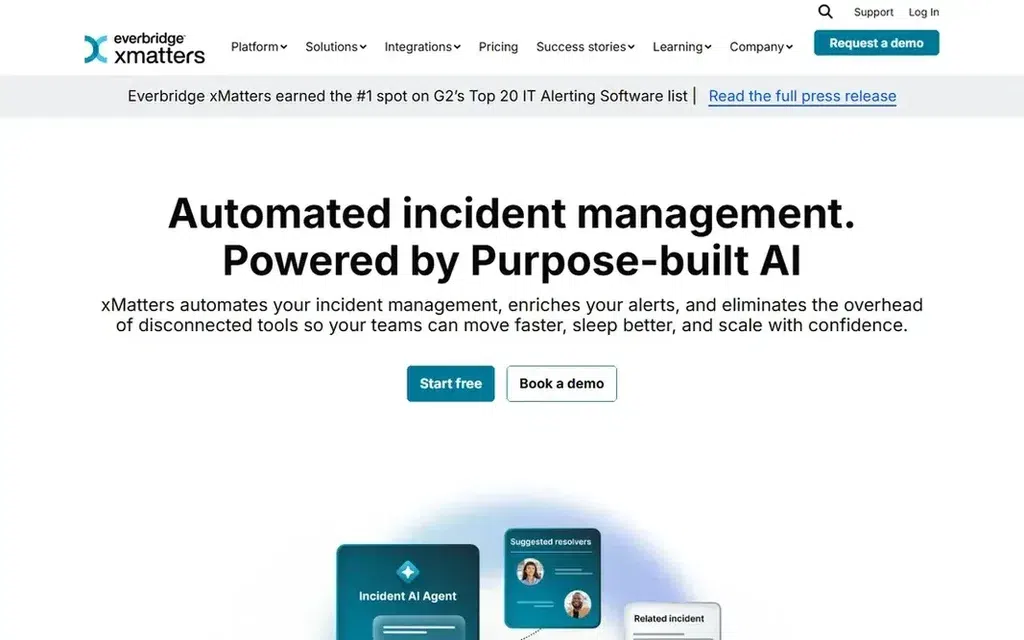
For automatic workflows for DevOps and SRE, xMatters is a natural candidate. Workflow-driven products reward teams willing to invest in configuration, and lighter on-call needs may not justify that effort.
Trade-offs to know: Less suited to non-technical teams.
Price to start with xMatters: $15 per user per month. You can start on xMatters without paying.
- Workflow automation emphasis
- Targeted at DevOps and SRE teams
- Workflow setup can be involved
How we compared the tools
The comparison looks at four things: starting price, free access, how well the feature set matches real-time alert platform comparisons, and the main limit of each tool. Prices and plan limits come from vendor pages and can change, so confirm them on the vendor site before you buy. The ranking is editorial: typical fit first, then clear pricing, then free access. If your needs are unusual, read the profiles rather than relying on position.
Before you commit
- Ask Grafana OnCall and Opsgenie for a written quote, since no starting price is shown.
- Check what the free option really includes: Grafana OnCall, PagerDuty, incident.io and xMatters offer a free plan, and usage caps differ.
- Before choosing Grafana OnCall, weigh its main limit: tied to the Grafana Cloud context.
- Before you load data into Rootly, check what an export looks like and who can run it.
- Ask Opsgenie whether prices are locked for the first term and what happens at renewal.
FAQ
Is Grafana OnCall the right pick for everyone comparing real-time alert platform comparisons?
No single tool suits every team. Grafana OnCall comes first because it fits simple on-call inside Grafana Cloud, while Opsgenie suits teams standardizing on Atlassian tooling and PagerDuty suits AI-first operations from detection to resolution. Match the tool to your own size, budget and workflow before deciding.
What is the cheapest option for real-time alert platform comparisons in this list?
On published monthly entry prices, incident.io is the lowest here at $15 per user per month. Entry price is only part of the cost, because seats, add-ons and billing terms can change the total. Prices, free plan details and limits for all 6 tools in this Real-Time alert platform comparisons roundup sit on the individual cards above.
What should a live alert product include?
Look for dependable alert routing, on-call scheduling with escalations, and clear incident response workflows. Numerous products now add automation and AI assistance, so decide how much of that you need before comparing choices.
Can I try these tools before paying?
Often, yes. Grafana OnCall, PagerDuty, incident.io and xMatters have a free plan. Use your own data and a real task during the test, and check what the free tier or trial limits before you rely on it.
Which real-time alert platform comparisons have a free plan?
Grafana OnCall, PagerDuty, incident.io and xMatters offer a free plan in this list. Free plans usually cap users, projects or features, so check the limits on the vendor page.
Sources
- https://grafana.com/products/cloud/oncall
- https://www.atlassian.com/software/opsgenie
- https://www.pagerduty.com
- https://incident.io
- https://rootly.com
- https://www.xmatters.com