5 Best Practice Medical Software for 2026, Vetted and Compared
Shortlisting the best practice medical software? 5 products compared on cost, free access and ideal buyer. Limits and pricing notes included. Easy to scan.
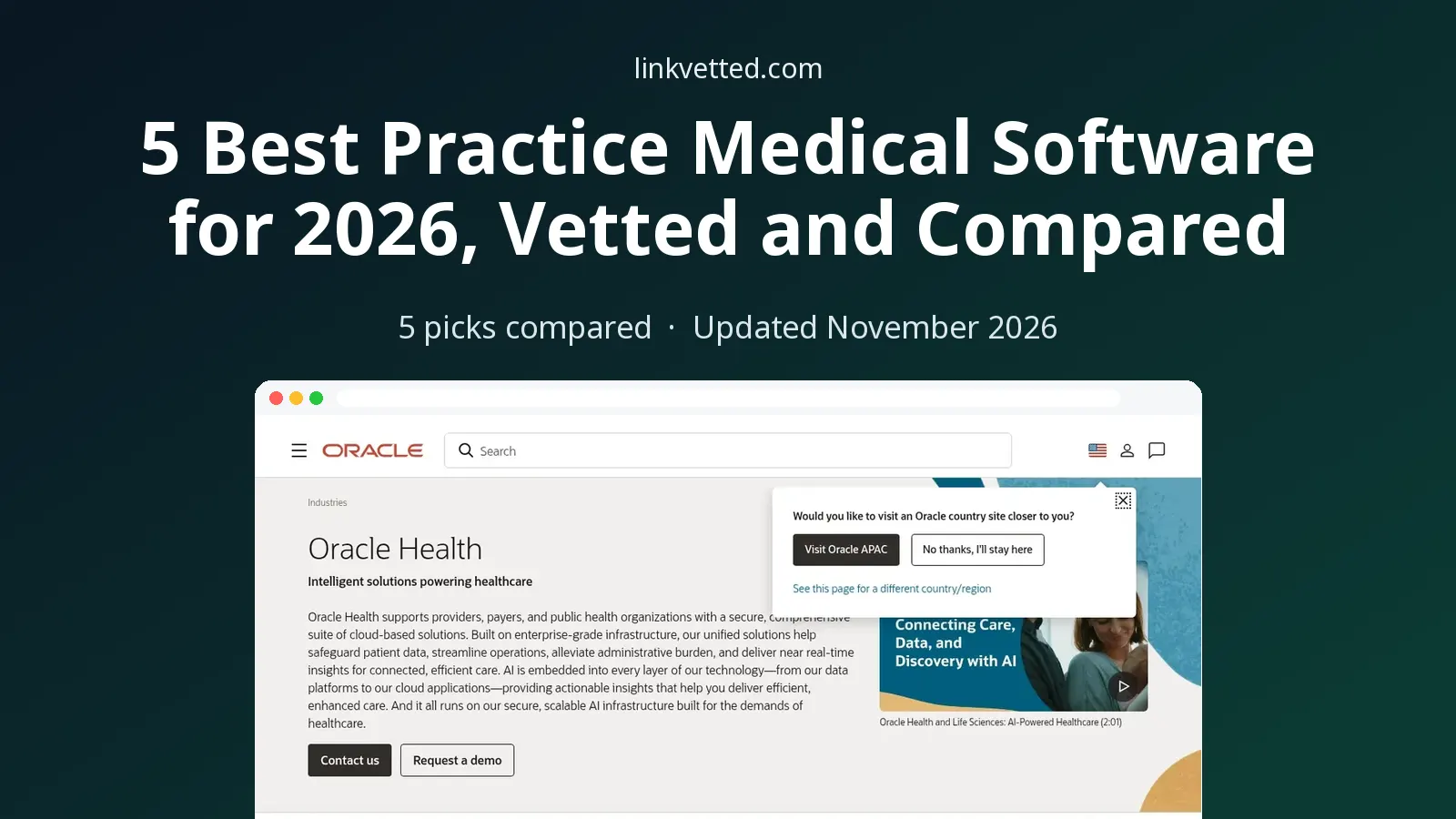
- Editor's choice
 Oracle Health
Secure, dependable cloud health options
Starts atSee websiteVisit oracle.comFull review - Great alternative
 eClinicalWorks
Diverse practices needing EHR and PM
Starts atSee websiteVisit eclinicalworks.comFull review - Also consider
 AdvancedMD
Unified cloud-based practice management
Starts at$130 per provider a monthVisit advancedmd.comFull review
Direct answer
For secure, dependable cloud health options, Oracle Health is where this list starts. Listed starting prices: AdvancedMD from $130 per provider a month. If your case is different, eClinicalWorks suits diverse practices needing EHR and PM and AdvancedMD suits unified cloud-based practice management. The other 2 tools in the list cover narrower or pricier cases.
TL;DR:
- This list starts with Oracle Health, which is built for secure, steady cloud health solutions.
- AdvancedMD is the lowest-priced starter here at $130 per provider per month.
- Check the limits for Oracle Health before you commit: restricted public details on specific features.
- A permanent free plan is missing from all 5 tools, Oracle Health and Epic included; plan for a trial or a premium start.
Last checked November 2026. Prices and plan details were read from the vendors' own pages in November 2026; vendors change plans often, so confirm the current price on the vendor site before you buy.
Quick comparison
| Tool | Best for | Starts at | Free plan? | |
|---|---|---|---|---|
| Oracle Health | Secure, dependable cloud health options | See website | Not stated | Visit |
| eClinicalWorks | Diverse practices needing EHR and PM | See website | Not stated | Visit |
| AdvancedMD | Unified cloud-based practice management | $130 per provider a month | Not stated | Visit |
 Kareo | Private practices needing connected tools | See website | Not stated | Visit |
 Epic | Large health systems and integrated care | See website | Not stated | Visit |
5 options for practice medical software in detail
LinkVetted compared 5 tools for practice medical software. The goal is a practical shortlist: published prices, free plan facts, best-fit use cases and honest limits for every entry.
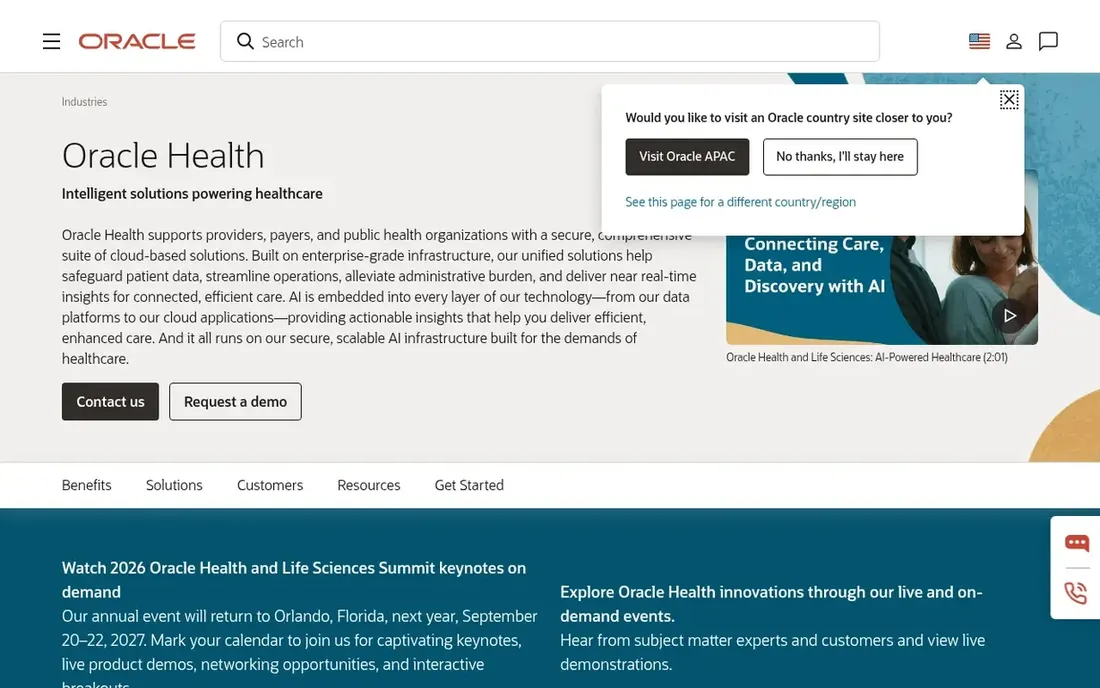
Oracle Health is built with secure, dependable cloud health options in mind. Oracle Health gives you secure and steady options geared toward advancing how health happens, with a focus on delivering better healthcare insights and people-centric experiences.
Points against: Restricted public details on specific features.
Worth adding: if you need a highly specialized option with broad customization, Oracle Health could be a fit, but smaller practices might prefer more turnkey options. The product is made for healthcare organizations looking to use cloud technology for improved data management and patient engagement. This comparison lists no price for Oracle Health; ask the vendor. Free access: Not stated.
- People-centric experiences
- Advanced healthcare insights
- May need significant setup
Choose eClinicalWorks for diverse practices needing EHR and PM. eClinicalWorks offers electronic health records and practice management software used by a variety of practices. It is recognised for offering a set of tools to help run clinical and administrative tasks, making it suitable for small to mid-size practices along with larger groups.
What to check first: User experience can vary.
The system aims to support efficient workflows and patient care. For everyday use, some users report variability in user experience and support, so it is wise to request a demo and check references. This comparison lists no price for eClinicalWorks; ask the vendor. Free options: Not stated.
- Practice management integration
- Widely used EHR
- Support experiences differ
AdvancedMD is a good fit for unified cloud-based practice management. AdvancedMD supplies a single cloud-based option that brings together practice management, patient engagement, and EHR needs. Choose AdvancedMD if you want a unified cloud system; otherwise, consider best-of-breed components.
What AdvancedMD does well: Full single option.
Points against: Feature depth varies by module.
For everyday use, the system is meant to be comprehensive and scalable, helping practices ease operations and boost patient interactions. As for the details, whereas thorough, some modules may not be as deep as standalone options, and training is frequently needed to use all features effectively. Practices with very specific needs should verify module capabilities. AdvancedMD pricing: $130 per provider per month. Free options: Not stated.
- Scalable for expanding practices
- Integrates PM, engagement, EHR
- May need training
Kareo is designed for private practices needing connected tools. Kareo, now part of Tebra, supplies practice management software that links EHR, billing, scheduling, and reputation tools in one smart system made for patient care. Worth adding: if you run a private practice and want connected tools, Kareo is a solid choice; otherwise, explore systems for bigger groups.
Trade-offs to know: May lack advanced features for large groups.
In daily use, Kareo is tailored to private practices, so bigger organizations may find it lacks some advanced features. Practices should confirm the current product roadmap given the Tebra branding. As for the details, the product emphasizes simplicity and connectivity for smaller practices. Pricing for Kareo is not stated here, so ask the vendor for current figures. Trial and free access: Not stated.
- Aimed at private practices
- Integrates EHR, billing, scheduling
- Restricted to private practice focus
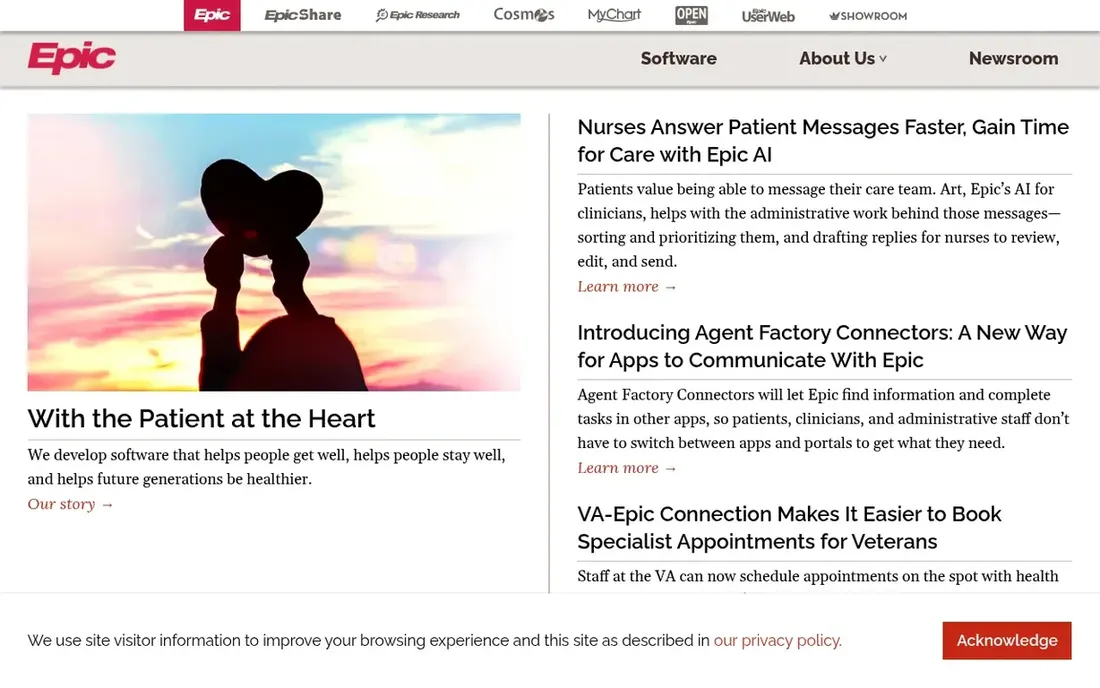
Epic is a good fit for large health systems and integrated care. Its homepage emphasizes putting the patient at the heart of care. As for the details, the system is often used by large hospitals and health systems that require a unified electronic health record and coordinated care across departments.
In daily use, Epic's broad capabilities can make it complicated to implement and run, requiring significant IT resources. Smaller practices may find it overkill and better suited to bigger budgets. Check the vendor site for Epic pricing; none is listed in this comparison. Trial and free access: Not stated.
Watch-outs: Complicated implementation.
- Full integrated system
- Widely used in large organizations
- May be expensive for small practices
How we chose
The comparison looks at four things: starting price, free access, how well the feature set matches practice medical software, and the main limit of each tool. Prices and plan limits come from vendor pages and can change, so confirm them on the vendor site before you buy. The order reflects how well each tool fits the most common buying scenario for practice medical software, then price clarity, then free plan access. It is a starting point, not a verdict.
Questions to settle before buying
- Confirm the entry price on the vendor page. For Oracle Health, eClinicalWorks, Kareo and Epic that means a quote rather than a fixed price.
- Before choosing Oracle Health, weigh its main limit: restricted public details on specific features.
- Ask eClinicalWorks which support channels and response times come with the plan you would buy.
- Check how data leaves Epic: formats, limits and whether exports are available on every plan.
- Get the contract term, renewal terms and any onboarding fees from AdvancedMD in writing.
FAQ
What are the key differences between cloud-based and on-premise systems?
Cloud-based systems offer remote access, automatic updates, and potentially lower upfront costs, whereas on-premise systems supply more control over data and customization.
What should small practices look for in medical software?
Small practices should prioritize simplicity, integrated billing and scheduling, and scalable pricing. Options like Kareo and AdvancedMD are built for smaller teams, but always confirm the feature set matches your specialty.
Does any tool for practice medical software here have a free plan?
A permanent free plan is not offered by Oracle Health, Epic or the other tools here. Plan a short evaluation period instead.
What is the cheapest option for practice medical software in this list?
On published monthly entry prices, AdvancedMD is the lowest here at $130 per provider per month. Entry price is only part of the cost, because seats, add-ons and billing terms can change the total. All 5 picks in this practice medical software comparison list a starting price, free plan details and the main limits on their cards above.
How are the tools for practice medical software ordered?
Oracle Health sits first and Epic last because the order follows typical fit for practice medical software, then price clarity and free access. It is a judgement call, so read each profile for fit and limits.
Is Oracle Health the right pick for everyone comparing practice medical software?
No single tool suits every team. Oracle Health comes first because it fits secure, reliable cloud health solutions, while eClinicalWorks suits diverse practices needing EHR and PM and AdvancedMD suits unified cloud-based practice management. Match the tool to your own size, budget and workflow before deciding.
Sources
- https://www.oracle.com/health
- https://www.eclinicalworks.com
- https://www.advancedmd.com
- https://www.kareo.com
- https://www.epic.com