5 Patient Relationship Management Software Worth Shortlisting in 2026
Best patient relationship management software: 5 tools compared on price, free plans and fit. Hidden costs and gaps are flagged. Narrow your shortlist.
- Editor's choice
 Zoho CRM
Agentic sales-style relationship tracking
Starts atPricing on requestVisit zoho.comFull review - Great alternative
 athenahealth
Ambulatory care connectivity and services
Starts atPricing on requestVisit athenahealth.comFull review - Also consider
 Salesforce Health Cloud
Data-driven healthcare relationship management
Starts atPricing on requestVisit salesforce.comFull review
Direct answer
Zoho CRM comes first here, mainly for agentic sales-style relationship tracking. For a different need, athenahealth covers ambulatory care connectivity and services and Salesforce Health Cloud covers data-driven healthcare relationship management. The other 2 tools in the list cover narrower or pricier cases. None of these vendors publish plan prices, so pricing is on request for every option.
TL;DR:
- Top of the list is Zoho CRM, which targets agentic sales-style relationship tracking.
- What to know about Zoho CRM first: not made for clinical care.
- A permanent free plan is missing from all 5 tools, Zoho CRM and Microsoft Cloud for Healthcare included; plan for a trial or a premium start.
- Microsoft Cloud for Healthcare suits engagement plus team collaboration.
- Pricing across the list, from Zoho CRM to Microsoft Cloud for Healthcare, is by quote only.
Last checked November 2026. Pricing on request: vendors did not publish plan prices when this guide was last checked (November 2026), so ask each vendor for a written quote.
Quick comparison
| Tool | Best for | Starts at | Free plan? | |
|---|---|---|---|---|
| Zoho CRM | Agentic sales-style relationship tracking | Pricing on request | Not stated | Visit |
| athenahealth | Ambulatory care connectivity and services | Pricing on request | Not stated | Visit |
| Salesforce Health Cloud | Data-driven healthcare relationship management | Pricing on request | Free trial | Visit |
 NextGen Healthcare | Specialty practices needing EHR and PM | Pricing on request | Not stated | Visit |
| Microsoft Cloud for Healthcare | Engagement plus team collaboration | Pricing on request | Not stated | Visit |
The 5 tools in detail
If you are comparing patient relationship management software, this page covers 5 tools in one place: what each is best for, what it costs to start, whether it has a free plan, and the main limit to know about.
Zoho CRM works best for agentic sales-style relationship tracking. Like other general CRMs, it lacks native clinical workflows and healthcare data context, so patient-specific needs need customization.
The main drawbacks: Not designed for clinical care.
If your requirements contain EHR integration or care team collaboration, a healthcare-focused system is the safer pick. Zoho CRM does not show a starting price in this comparison, so check the vendor site for current pricing. Free options: Not stated.
- Agentic CRM product
- Handles sales operations
- Needs customization for health use
Where athenahealth fits: ambulatory care connectivity and services. Patient relationships are supported within the broader care workflow rather than as a separate CRM exercise. In practice, the focus on ambulatory care means other settings may need different tools, and the value of connectivity grows with participation across the network.
Downsides: Oriented to ambulatory settings.
Upsides: Clinical and operational services.
As for the details, if you need a dedicated relationship product for outreach campaigns, a healthcare cloud or CRM may complement it better. Worth adding: athenahealth provides healthcare products and services for ambulatory care, with a stated mission to cure complexity and link the healthcare ecosystem. Check the vendor site for athenahealth pricing; none is listed in this comparison. On free options: Not stated.
- Ambulatory care product range
- Connected network emphasis
- Network benefits rely on adoption
Salesforce Health Cloud
Best for: Data-driven healthcare relationship management
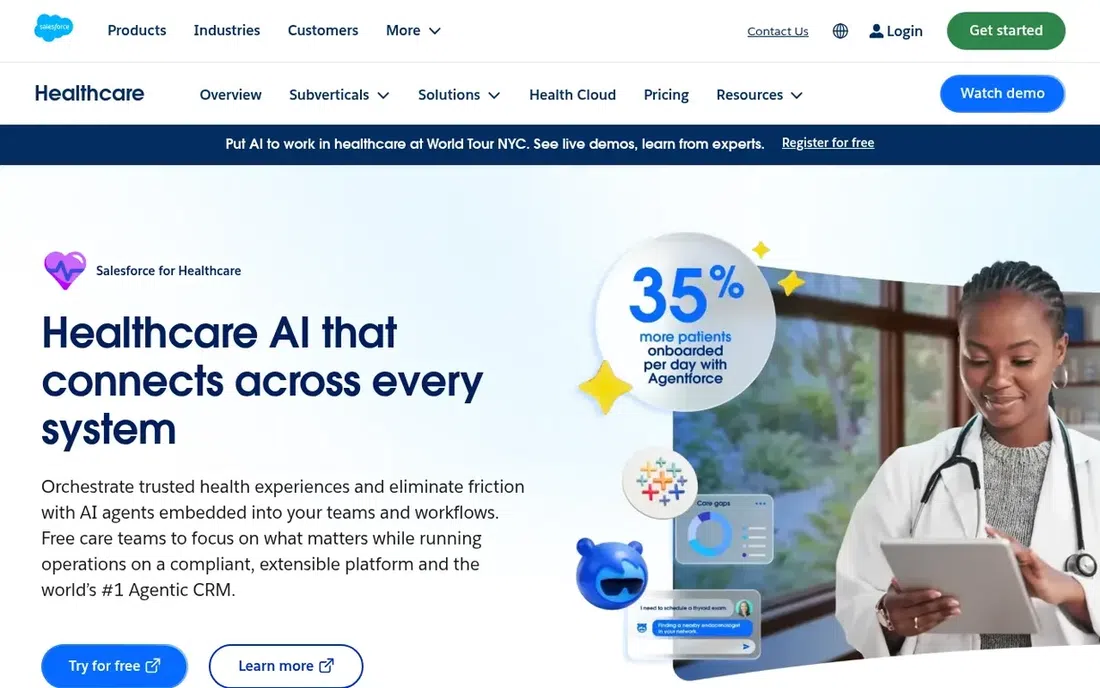
Salesforce Health Cloud is built with data-driven healthcare relationship management in mind. The system is wide, so implementation and configuration effort can be substantial, and smaller practices may find it heavier than needed.
In practice, if your priority is straightforward contact and deal tracking instead of healthcare-specific data context, a general CRM like HubSpot or Zoho may be a lighter choice. In daily use, teams already comfortable with CRM-style data models will find the structure familiar, and healthcare-specific teams can use it to coordinate outreach and service. No starting price is listed for Salesforce Health Cloud here; confirm pricing on the vendor site. Free plan details: Free trial.
What to check first: Healthcare setup can be complicated.
- Live actionable intelligence
- Automates healthcare processes
- Wide product may need configuration
NextGen Healthcare is built with specialty practices needing EHR and PM in mind. If relationship building outside clinical workflows is the primary goal, pairing a general CRM with your EHR may work better.
NextGen Healthcare does not show a starting price in this comparison, so check the vendor site for current pricing. Free plan details: Not stated.
Trade-offs to know: Relationship tools tied to clinical use.
- Cloud EHR and practice management
- Specialty-specific services
- Concentrated on practice operations
Microsoft Cloud for Healthcare
Best for: Engagement plus team collaboration
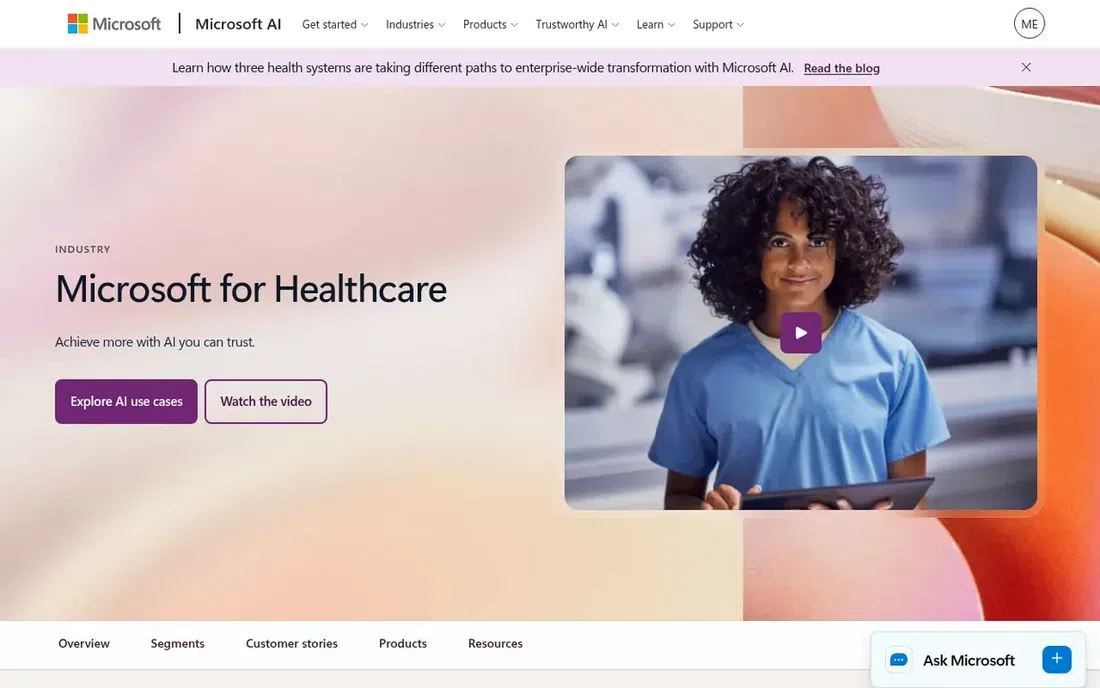
Pick Microsoft Cloud for Healthcare if this describes you: engagement plus team collaboration. Microsoft Cloud for Healthcare is meant to enhance patient engagement, enable health team collaboration, and boost clinical and operational insights, with Nuance capabilities included. Care teams and operational staff can work from shared tools instead of separate systems.
What to check first: Spans plenty of services to configure.
Also, if you primarily need a focused CRM for outreach, a dedicated CRM tool may be more straightforward to adopt and run. More specifically, since it spans several services, setup needs coordination across IT and clinical teams. The breadth can be more than a small practice needs. Check the vendor site for Microsoft Cloud for Healthcare pricing; none is listed in this comparison. As for free access: Not stated.
- Health team collaboration tools
- Patient engagement features
- Needs planning across teams
Selection criteria
Questions to settle before buying
- Confirm the entry price with every vendor: no tool from Zoho CRM to Microsoft Cloud for Healthcare shows a fixed starting price.
- Take the trial from Salesforce Health Cloud and push a live task through it before you pay.
- Read the limits listed for Zoho CRM first: not made for clinical care.
- Before you load data into Microsoft Cloud for Healthcare, check what an export looks like and who can run it.
- Confirm that athenahealth connects to the apps your team already uses, on the plan you would actually buy.
FAQ
Does any tool for patient relationship management software here have a free plan?
A permanent free plan is not offered by Zoho CRM, Microsoft Cloud for Healthcare or the other tools here. Salesforce Health Cloud offer a trial. Plan a short evaluation period instead.
Should a small practice choose an EHR-based choice?
If patient relationships are managed alongside clinical and administrative work, an EHR and practice management product for example NextGen Healthcare or athenahealth can keep everything in one place. A standalone CRM may suit outreach that sits outside clinical workflows.
How are the tools for patient relationship management software ordered?
Zoho CRM sits first and Microsoft Cloud for Healthcare last because the order follows typical fit for patient relationship management software, then price clarity and free access. It is a judgement call, so read each profile for fit and limits.
Do these tools publish their prices?
No. None of the tools, from Zoho CRM to Microsoft Cloud for Healthcare, shows a fixed starting price here, so budget time for quotes.
Can I try these options before paying?
Often, yes. Salesforce Health Cloud offers a free trial. Use your own data and a real task during the test, and check what the free tier or trial limits before you rely on it. For the full picture, the cards above cover all 5 entries of this patient relationship management software list, including price, free plan and limits.
Sources
- https://www.zoho.com/crm
- https://www.athenahealth.com
- https://www.salesforce.com/healthcare-life-sciences
- https://www.nextgen.com
- https://www.microsoft.com/en-us/industry/health/microsoft-cloud-for-healthcare