Other Patient Experience Software in 2026: The 6 Best Options Side by Side
Best other patient experience software in 2026: 6 contenders with entry costs and free tiers. Where a tool struggles is spelled out. Budget notes included.
- Editor's choiceVitals
Doctor discovery and patient reviews
Starts atPricing on requestVisit vitals.comFull review - Great alternative
 Phreesia
Patient intake and front-desk efficiency
Starts atPricing on requestVisit phreesia.comFull review - Also considerQualtrics XM for Healthcare
Wide experience management with AI support
Starts atPricing on requestVisit qualtrics.comFull review
Direct answer
This list puts Vitals first for Doctor discovery and patient reviews. Look at Phreesia for patient intake and front-desk efficiency, and at Qualtrics XM for Healthcare for wide experience management with AI support. The full list of 6 tools follows, with free plan facts. None of these vendors publish plan prices, so pricing is on request for every option.
TL;DR:
- This list starts with Vitals, which is built for Doctor discovery and patient reviews.
- One limit worth knowing about Qualtrics XM for Healthcare: general system needs healthcare configuration.
- A permanent free plan is missing from all 6 tools, Vitals and Luma Health included; plan for a trial or a premium start.
- Every tool from Vitals to Luma Health works by quote, with no list price shown.
- For patient communication and access workflows, Luma Health is worth a look.
Last checked November 2026. Pricing on request: vendors did not publish plan prices when this guide was last checked (November 2026), so ask each vendor for a written quote.
Quick comparison
| Tool | Best for | Starts at | Free plan? | |
|---|---|---|---|---|
| Vitals | Doctor discovery and patient reviews | Pricing on request | Not stated | Visit |
| Phreesia | Patient intake and front-desk efficiency | Pricing on request | Not stated | Visit |
| Qualtrics XM for Healthcare | Wide experience management with AI support | Pricing on request | Not stated | Visit |
| Artera | AI-driven patient communication across EHRs | Pricing on request | Not stated | Visit |
| Press Ganey | Healthcare experience measurement and guidance | Pricing on request | Not stated | Visit |
 Luma Health | Patient communication and access workflows | Pricing on request | Not stated | Visit |
Other Patient Experience Software compared in detail
LinkVetted put together this guide to other patient experience software for readers who want a clear shortlist without reading every vendor page. It compares 6 tools on starting price, free plans, who each one suits and where each one falls short.
Vitals
Best for: Doctor discovery and patient reviews
In short, Vitals is for Doctor discovery and patient reviews. It suits practices that want visibility and appointment discovery on a patient-facing directory instead of an internal experience management suite.
Downsides: Restricted operational tooling.
No starting price is listed for Vitals here; confirm pricing on the vendor site. Free options: Not stated.
Upsides: Ratings and reviews from patients.
- Patient-facing doctor search
- Location details
- Not an internal experience platform
Phreesia works best for patient intake and front-desk efficiency. The emphasis is intake and revenue-related workflows instead of organization-wide experience measurement.
Where it falls short: Intake-centric instead of full experience suite.
Also, if your priority is surveying patients, benchmarking experience, or running a wide feedback program, a dedicated experience system is the better fit. Phreesia does not show a starting price in this comparison, so check the vendor site for current pricing. Free access: Not stated.
- Targets front-desk workload
- Patient intake software focus
- Integration planning required
Qualtrics XM for Healthcare
Best for: Wide experience management with AI support
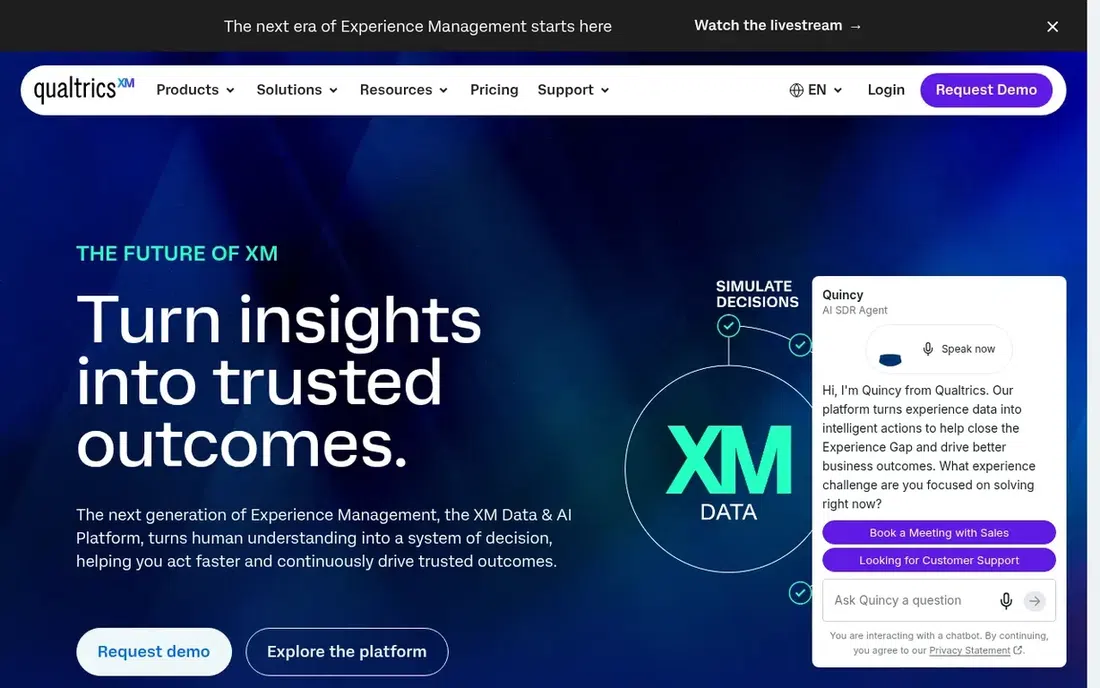
Pick Qualtrics XM for Healthcare if this describes you: wide experience management with AI support. It suits organizations that want patient and employee experience handled within one wider experience program.
In practice, the system is general-purpose at its core, so healthcare-specific workflows rely on how it is set up and staffed. This comparison lists no price for Qualtrics XM for Healthcare; ask the vendor. As for free access: Not stated.
Where it falls short: General system needs healthcare configuration.
- Experience management across audiences
- Action-oriented insight workflow
- Wide scope can overwhelm small teams
Artera
Best for: AI-driven patient communication across EHRs
Artera is a good fit for AI-driven patient communication across EHRs. Artera provides a patient communication system with AI agents that automate calls, intake, scheduling, and payments across EHR systems.
Teams that require structured feedback and improvement guidance should look to a dedicated experience product and treat Artera as a communication layer. Artera's strength is communication and automation, not experience measurement or benchmarking. This comparison lists no price for Artera; ask the vendor. Free access: Not stated.
Drawbacks to consider: Needs EHR integration effort.
- Automates calls, intake, scheduling, payments
- Works across EHR systems
- Communication focus instead of surveys
Press Ganey
Best for: Healthcare experience measurement and guidance
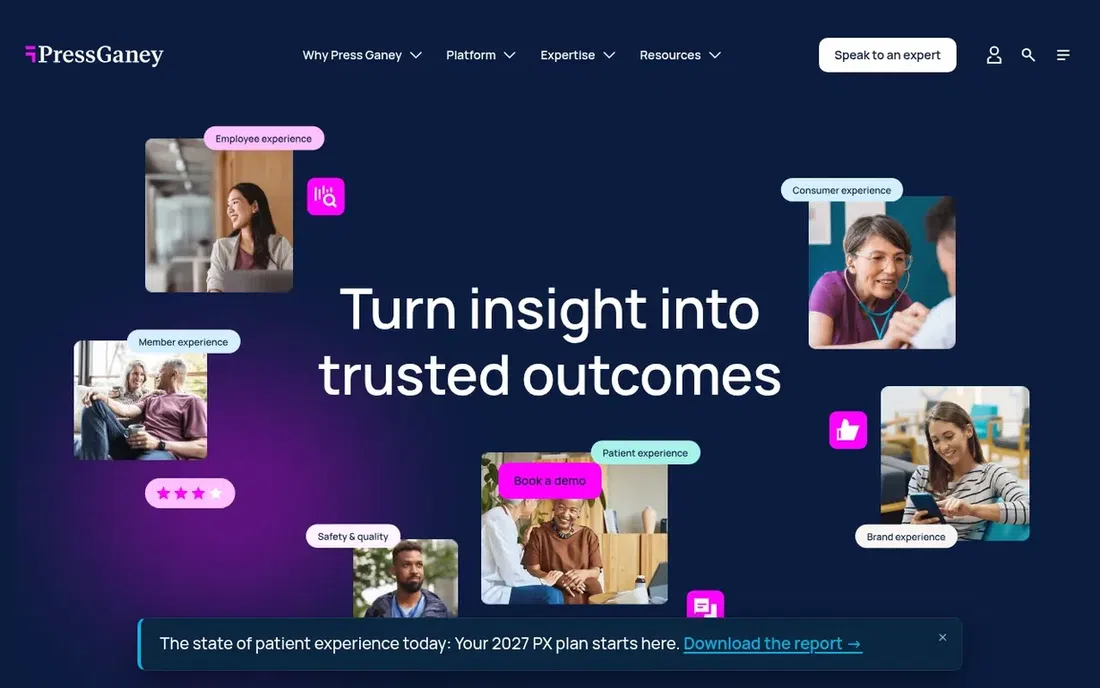
Press Ganey is a good fit for Healthcare experience measurement and guidance. Since the focus is healthcare experience, teams wanting a single system for broader customer, employee, and market research may find it less expansive than general experience suites.
Where it falls short: Narrower outside healthcare.
For everyday use, consider it when healthcare-specific insight and guidance matter more than breadth across other industries. Press Ganey does not show a starting price in this comparison, so check the vendor site for current pricing. On free options: Not stated.
- Healthcare-specific expertise
- Merges data, technology, guidance
- Needs data readiness to use well
Luma Health is designed for patient communication and access workflows. Its homepage excerpt centers on health insurance for global residents and businesses in Asia, so buyers should confirm the exact product line and regional fit on the vendor site.
The main drawbacks: Overlaps with communication suites.
No starting price is listed for Luma Health here; confirm pricing on the vendor site. Trial and free access: Not stated.
- Designed around healthcare workflows
- Patient communication focus
- Fit relies on existing systems
Selection criteria
LinkVetted looked at what each vendor publishes: pricing, plan limits, feature coverage for other patient experience software and stated drawbacks. No hands-on testing is claimed. Figures are shown as the vendors publish them. Billing terms, seat minimums and add-ons can change the real cost. We ordered the tools by general fit, then by how clearly pricing is shown, then by free access. A buyer with unusual needs may reorder them.
What to confirm before you sign up
- Confirm the entry price with every vendor: no tool from Vitals to Luma Health shows a fixed starting price.
- Before choosing Vitals, weigh its main limit: not an internal experience platform.
- Total up the real monthly cost of Vitals, including add-ons, extra users and usage-based fees.
- Test how quickly Press Ganey answers a pre-sales question; it hints at how support will feel later.
- Read the plan comparison for Phreesia carefully; key features often start on a higher tier.
FAQ
How are the tools for other patient experience software ordered?
Vitals sits first and Luma Health last because the order follows typical fit for other patient experience software, then price clarity and free access. It is a judgement call, so read each profile for fit and limits.
Do these tools publish their prices?
No. None of the tools, from Vitals to Luma Health, shows a fixed starting price here, so budget time for quotes.
How do intake and communication tools affect patient experience?
Check-in, registration, reminders, and outreach shape the patient's first and most frequent impressions. Tools like Phreesia and Artera target those steps straight, which can complement a broader feedback program instead of replace it.
Does any tool for other patient experience software here have a free plan?
No tool in this list, Vitals and Luma Health included, has a permanent free plan. Trials and quotes are the usual route, so plan a short evaluation period.
What counts as patient experience software?
The right category relies on whether you have to measure experience or boost the operational steps patients go through.
Should I choose a healthcare-specific tool or a general experience platform?
Healthcare-specific tools tend to fit clinical workflows more straight, whereas general products offer breadth across customer and employee experience. Bigger organizations commonly combine both approaches, using one for measurement and others for intake and communication.
Sources
- https://www.vitals.com
- https://www.phreesia.com
- https://www.qualtrics.com
- https://www.artera.io
- https://www.pressganey.com
- https://www.lumahealth.com