Top 6 Online Shopping Cart Software to Use for 2026 (Prices and Free Plans)
Best online shopping cart software to use in 2026: 6 contenders with entry costs and free tiers. Plus the drawbacks of each tool. Pricing and limits included.
- Editor's choice
 Squarespace Commerce
Design-focused online keeps
Starts atSee websiteVisit squarespace.comFull review - Great alternative
 Wix eCommerce
All-in-one ecommerce with simple setup
Starts atSee websiteVisit wix.comFull review - Also consider
 WooCommerce
Open-source adaptability for developers
Starts at$29 a monthVisit woocommerce.comFull review
Direct answer
Start with Squarespace Commerce if you need design-focused online keeps. Listed starting prices: WooCommerce from $29 a month and Shopify from $19 a month. If your case is different, Wix eCommerce suits all-in-one ecommerce with simple setup and WooCommerce suits open-source flexibility for developers. Details, prices and limits for the rest of the 6 tools are below.
TL;DR:
- Squarespace Commerce is the opening pick, best for design-focused online stores.
- What to know about Wix eCommerce first: less adaptable for complicated customizations.
- Shopify is the one to check for all-in-one commerce system.
- The cheapest monthly starting price in the list is $19 per month, offered by Shopify.
Last checked November 2026. Prices and plan details were read from the vendors' own pages in November 2026; vendors change plans often, so confirm the current price on the vendor site before you buy.
Quick comparison
| Tool | Best for | Starts at | Free plan? | |
|---|---|---|---|---|
| Squarespace Commerce | Design-focused online keeps | See website | Not stated | Visit |
| Wix eCommerce | All-in-one ecommerce with simple setup | See website | Not stated | Visit |
| WooCommerce | Open-source adaptability for developers | $29 a month | Not stated | Visit |
 Salesforce Commerce Cloud | Enterprise commerce integration | See website | Not stated | Visit |
 BigCommerce | Scalable commerce for expanding brands | See website | Not stated | Visit |
 Shopify | All-in-one commerce product | $19 a month | Free trial | Visit |
Tool-by-tool breakdown
This LinkVetted guide covers 6 options for online shopping cart software to use. Each profile lists a starting price, free plan details, strengths and drawbacks, so you can drop poor fits quickly.
Choose Squarespace Commerce for design-focused online stores. With a focus on design, it provides templates that help you build an attractive online store rapidly. For everyday use, customization is usually restricted to what the templates and built-in settings allow.
Watch-outs: Fewer advanced ecommerce features.
Worth adding: Squarespace Commerce may lack some of the advanced ecommerce functionalities found in dedicated systems, like broad multi-channel selling or complicated product configurations. Consider other options if you need deep ecommerce features or high adaptability. Pricing for Squarespace Commerce is not stated here, so ask the vendor for current figures. Free plan details: Not stated.
- Solid design templates
- Integrated system
- Restricted customization beyond templates
Where Wix eCommerce fits: all-in-one ecommerce with simple setup. It is built for simplicity, making it accessible to beginners who want to launch a store rapidly.
Points against: Restricted control over hosting.
For everyday use, the product comes with tools to handle products and sales across different channels. Wix eCommerce shows no starting price here, so confirm the cost on the vendor site. On free options: Not stated.
- All-in-one ecommerce tools
- Sell across several channels
- Less adaptable for complicated customizations
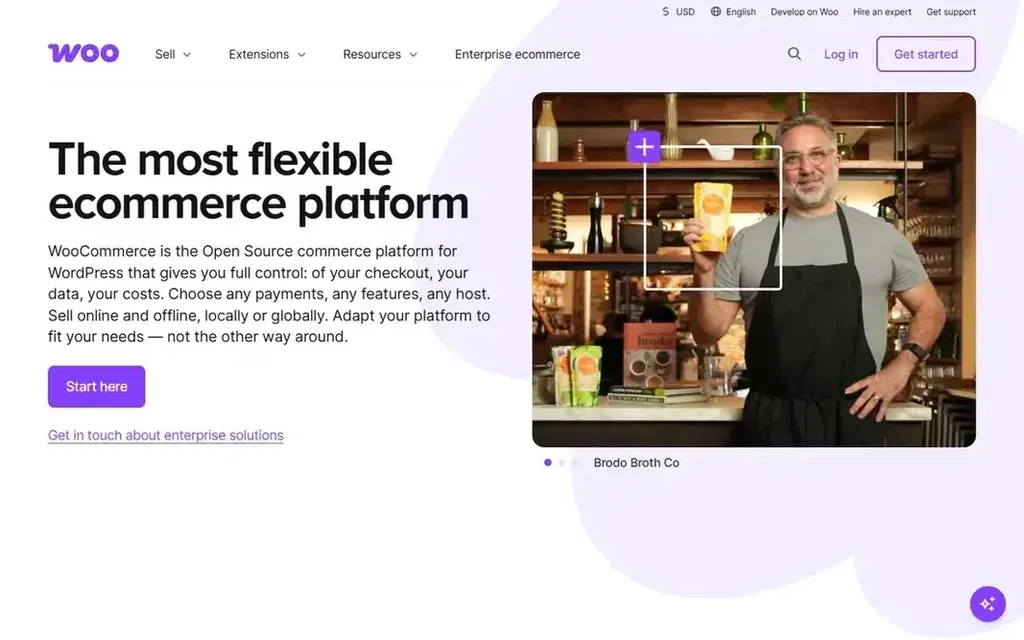
WooCommerce is aimed squarely at open-source adaptability for developers. As an open-source solution, WooCommerce usually needs you to handle hosting, security, and updates yourself, which can be demanding without technical skills. From a buyer's view, consider a hosted product if you prefer to avoid continuing maintenance responsibilities.
WooCommerce is the open-source ecommerce system that helps merchants and developers build successful firms for the long term. It supplies broad adaptability, allowing users to customize their store deeply. This makes it a solid fit for those with development resources who want full control over their ecommerce setup. On cost, WooCommerce starts like this: $29 per month. On free options: Not stated.
Honest limits: Needs technical knowledge.
- Solid for long-term development
- Highly configurable
- Self-hosted maintenance needed
Salesforce Commerce Cloud targets enterprise commerce integration. Salesforce Commerce Cloud is an enterprise commerce option that connects with the broader Salesforce product. It is aimed at large organizations that require a solid, scalable system to handle complicated buying experiences.
The main drawbacks: Needs significant resources.
Implementation and continuing management usually need specialized resources and a significant investment of time and effort. The system supplies tools for B2B and B2C commerce, frequently using AI and customer data. From a buyer's view, if you need a more straightforward, more turnkey option, consider other systems. Salesforce Commerce Cloud does not show a starting price in this comparison, so check the vendor site for current pricing. As for free access: Not stated.
- Scalable for large operations
- Full commerce features
- Complicated to implement

Pick BigCommerce if this describes you: scalable commerce for expanding brands. BigCommerce is positioned as commerce aimed at momentum, powering modern buying experiences across brands, regions, and channels from a single, scalable foundation.
Where it is weaker: May be overwhelming for beginners.
If you have a restricted catalog and do not anticipate rapid growth, a more straightforward choice might be more appropriate. For everyday use, the product's focus on scalability and multi-brand support can introduce complexity for small or straightforward keeps. BigCommerce shows no starting price here, so confirm the cost on the vendor site. Free options: Not stated.
- Single scalable foundation
- Supports several brands and regions
- Less right for very straightforward keeps

Shopify was built for all-in-one commerce system. This makes it a solid fit for merchants who want a single, integrated system without piecing together separate tools. Since Shopify is a hosted system, you have less control over the underlying infrastructure compared with open-source options.
Points against: Less control over hosting.
It may also be more than needed for a very small or straightforward store. Beyond that, consider alternatives if you require deep customization of the server environment or prefer a self-hosted approach. Entry price for Shopify: $19 per month. Free plan details: Free trial.
- Solid ecosystem for selling
- Thorough tools for managing a business
- Can be complicated for very small catalogs
How we built this list
The comparison looks at four things: starting price, free access, how well the feature set matches online shopping cart software to use, and the main limit of each tool. Seat minimums, billing terms and add-ons can move the real cost, so the starting prices here are a guide and not a quote. Position on the page reflects fit for a typical buyer first, with price clarity and free access breaking ties. Treat it as a guide, not a ruling.
What to check before you buy
- Get a written quote from Squarespace Commerce, Wix eCommerce, Salesforce Commerce Cloud and BigCommerce; the list shows no starting price for them.
- Use real work to test the free trial from Shopify, rather than a demo project.
- Read the limits listed for Squarespace Commerce first: fewer advanced ecommerce features.
- Verify that exporting from BigCommerce is possible on your plan and covers all your records.
- List the apps you already depend on and check that Squarespace Commerce supports each one on the plan you would buy.
FAQ
What is the cheapest option for online shopping cart software to use in this list?
On published monthly entry prices, Shopify is the lowest here at $19 per month. Entry price is only part of the cost, because seats, add-ons and billing terms can change the total. Prices, free plan details and limits for all 6 tools in this online shopping cart software to use roundup sit on the individual cards above.
Can I try these tools before paying?
Often, yes. Shopify offers a free trial. Use your own data and a real task during the test, and check what the free tier or trial limits before you rely on it. Each of the 6 options in this online shopping cart software to use guide has its own card above with the price, free plan and limits.
Do these tools publish their prices?
Not all of them. Squarespace Commerce, Wix eCommerce, Salesforce Commerce Cloud and BigCommerce publish no starting price, so expect a quote request for those. The rest, WooCommerce included, show a starting price, though seats and billing terms still change the final cost.
Does any tool for online shopping cart software to use here have a free plan?
No tool in this list, Squarespace Commerce and Shopify included, has a permanent free plan. Shopify offer a trial. Trials and quotes are the usual route, so plan a short evaluation period.
What is the best online shopping cart software for beginners?
This list starts with Squarespace Commerce, which fits design-focused online keeps. For other needs, Wix eCommerce is aimed at all-in-one ecommerce with simple setup, and WooCommerce at open-source flexibility for developers. Check each tool's price and main limit first.
Sources
- https://www.squarespace.com/ecommerce
- https://www.wix.com/ecommerce
- https://woocommerce.com
- https://www.salesforce.com/commerce
- https://www.bigcommerce.com
- https://www.shopify.com