E-Commerce Shopping Cart Software in 2026: The 5 Best Options Side by Side
Shortlisting the best E-commerce shopping cart software? 5 products compared on cost, free access and ideal buyer. Each pick lists its main limit. Easy to scan.
- Editor's choice
 Salesforce Commerce Cloud
Commerce within the Salesforce ecosystem
Starts atSee websiteVisit salesforce.comFull review - Great alternative
 WooCommerce
WordPress-based open-source keeps
Starts at$29 per monthVisit woocommerce.comFull review - Also consider
 Adobe Commerce
Enterprise B2B and B2C personalization
Starts atSee websiteVisit business.adobe.comFull review
Direct answer
Start with Salesforce Commerce Cloud if you need Commerce within the Salesforce ecosystem. Listed starting prices: WooCommerce from $29 per month and Shopify from $19 per month. WooCommerce is the stronger choice for WordPress-based open-source keeps, while Adobe Commerce suits enterprise B2B and B2C personalization. Details, prices and limits for the rest of the 5 tools are below.
TL;DR:
- Salesforce Commerce Cloud takes the first slot, best suited to Commerce within the Salesforce ecosystem.
- Neither Salesforce Commerce Cloud nor Shopify, nor any of the other 3 tools, has a permanent free plan; trials and quotes are the norm.
- Shopify is the lowest-priced starter here at $19 per month.
- Shopify fits all-in-one commerce for most firms.
- A fair warning about Wix eCommerce: less suited to very large catalogs.
Last checked November 2026. Prices and plan details were read from the vendors' own pages in November 2026; vendors change plans often, so confirm the current price on the vendor site before you buy.
Quick comparison
| Tool | Best for | Starts at | Free plan? | |
|---|---|---|---|---|
| Salesforce Commerce Cloud | Commerce within the Salesforce ecosystem | See website | Not stated | Visit |
| WooCommerce | WordPress-based open-source keeps | $29 per month | Not stated | Visit |
| Adobe Commerce | Enterprise B2B and B2C personalization | See website | Not stated | Visit |
 Wix eCommerce | All-in-one site and store building | See website | Not stated | Visit |
 Shopify | All-in-one commerce for most firms | $19 per month | Free trial | Visit |
Tool-by-tool breakdown
Choosing E-commerce shopping cart software usually comes down to price, fit and limits. This LinkVetted guide sets 5 tools side by side on those three points, with the facts kept short and checkable.
Salesforce Commerce Cloud makes the most sense for Commerce within the Salesforce ecosystem. Beyond that, the homepage presents it as a commerce option, and its primary appeal is integration with a wider customer product.
What to check first: Implementation can need specialist help.
In daily use, implementation commonly calls for specialist support. Check the vendor site for Salesforce Commerce Cloud pricing; none is listed in this comparison. Free options: Not stated.
- Suits organizations already using Salesforce
- Supports connected commerce experiences
- Best value for existing Salesforce users
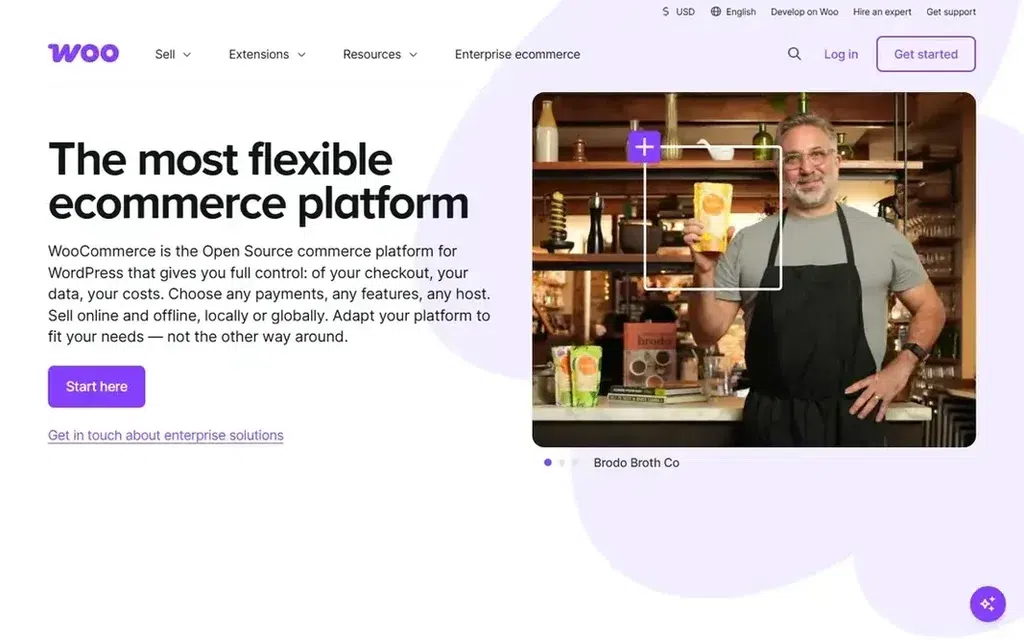
Where WooCommerce fits: WordPress-based open-source keeps. Developers frequently choose it for the adaptability to tailor the store to specific needs.
What to check first: Needs WordPress knowledge or help.
More specifically, WooCommerce is the open-source ecommerce product that helps merchants and developers build successful companies for the long term. In practice, open source means you deal with hosting, updates, and technical upkeep, which can add complexity compared to hosted systems. WooCommerce starts at: $29 per month. Free access: Not stated.
- Open-source ecommerce product
- Designed for long-term business growth
- Hosting and maintenance are your responsibility
Adobe Commerce was built for enterprise B2B and B2C personalization. Adobe Commerce, also known as Magento, is described as an AI-powered composable ecommerce system for B2B and B2C that gives personalized experiences at global scale.
Drawbacks to consider: Enterprise focus can mean complicated setup.
Worth adding: the enterprise orientation means implementation and continuing management can demand significant technical resources. Adobe Commerce does not show a starting price in this comparison, so check the vendor site for current pricing. Trial and free access: Not stated.
- AI-powered composable system
- Made for B2B and B2C
- Needs dedicated technical resources
Wix eCommerce targets all-in-one site and store building. Choose Wix eCommerce when ease of building and a unified site and store matter most.
Also, firms expecting rapid, complicated growth might outgrow it. Wix eCommerce is presented as an all-in-one ecommerce system for creating a completely customizable website and selling in several places. This comparison lists no price for Wix eCommerce; ask the vendor. Trial and free access: Not stated.
The main drawbacks: Less suited to very large catalogs.
- Sell across several channels
- Configurable website builder
- Platform-specific customization limits

Shopify makes the most sense for all-in-one commerce for most firms. Its homepage flags AI-assisted building and growth, plus tools that go beyond entry-level ecommerce to run various parts of a business.
From a buyer's view, since it is a hosted product, deep customization may rely on apps or theme changes instead of direct code access. Entry price for Shopify: $19 per month. On free options: Free trial.
The main drawbacks: Can need app extras for advanced needs.
- AI features for building and growth
- Broad range of business management tools
- Less control over core code than open-source choices
How the list was put together
LinkVetted looked at what each vendor publishes: pricing, plan limits, feature coverage for E-commerce shopping cart software and stated drawbacks. No hands-on testing is claimed. Where a price is missing, the vendor does not list one publicly or ties it to a quote. Always confirm before budgeting. The ranking is editorial: typical fit first, then clear pricing, then free access. If your needs are unusual, read the profiles rather than relying on position.
What to check before you buy
- Ask Salesforce Commerce Cloud, Adobe Commerce and Wix eCommerce for a written quote, since no starting price is shown.
- Take the trial from Shopify and push a live task through it before you pay.
- Read the limits listed for Salesforce Commerce Cloud first: best value for existing Salesforce users.
- Look at the help docs and support options for Shopify before you commit.
- Ask Salesforce Commerce Cloud how an export works before you move any records in; an easy exit lowers the risk.
FAQ
Do these tools publish their prices?
Not all of them. Salesforce Commerce Cloud, Adobe Commerce and Wix eCommerce publish no starting price, so expect a quote request for those. The rest, WooCommerce included, show a starting price, though seats and billing terms still change the final cost.
Does any tool for E-commerce shopping cart software here have a free plan?
A permanent free plan is not offered by Salesforce Commerce Cloud, Shopify or the other tools here. Shopify offer a trial. Plan a short evaluation period instead. For the full picture, the cards above cover all 5 entries of this E-Commerce shopping cart software list, including price, free plan and limits.
When should I choose WooCommerce over a hosted product?
WooCommerce suits firms already using WordPress that want open-source control over hosting and code. It needs more technical upkeep than hosted choices.
Is Salesforce Commerce Cloud the right pick for everyone comparing E-commerce shopping cart software?
No single tool suits every team. Salesforce Commerce Cloud comes first because it fits Commerce within the Salesforce ecosystem, while WooCommerce suits WordPress-based open-source stores and Adobe Commerce suits enterprise B2B and B2C personalization. Match the tool to your own size, budget and workflow before deciding.
How are the tools for E-commerce shopping cart software ordered?
The order follows typical fit for E-commerce shopping cart software, with Salesforce Commerce Cloud first and Shopify last, then price clarity and free access. It is editorial judgement, not a score, so another team could rank the tools differently.
Sources
- https://www.salesforce.com/commerce
- https://woocommerce.com
- https://business.adobe.com/products/magento/magento-commerce.html
- https://www.wix.com/ecommerce/website
- https://www.shopify.com