Choosing Language Lab Software for University Programs in 2026: 6 Options Compared
6 best language lab software for university programs, with entry costs, free tiers and the buyer each one serves. Pros and cons for every tool. Quick to scan.
- Editor's choice
 Rosetta Stone
Immersive self-study language practice
Starts atPricing on requestVisit rosettastone.comFull review - Great alternative
 Moodle
Configurable open learning environments
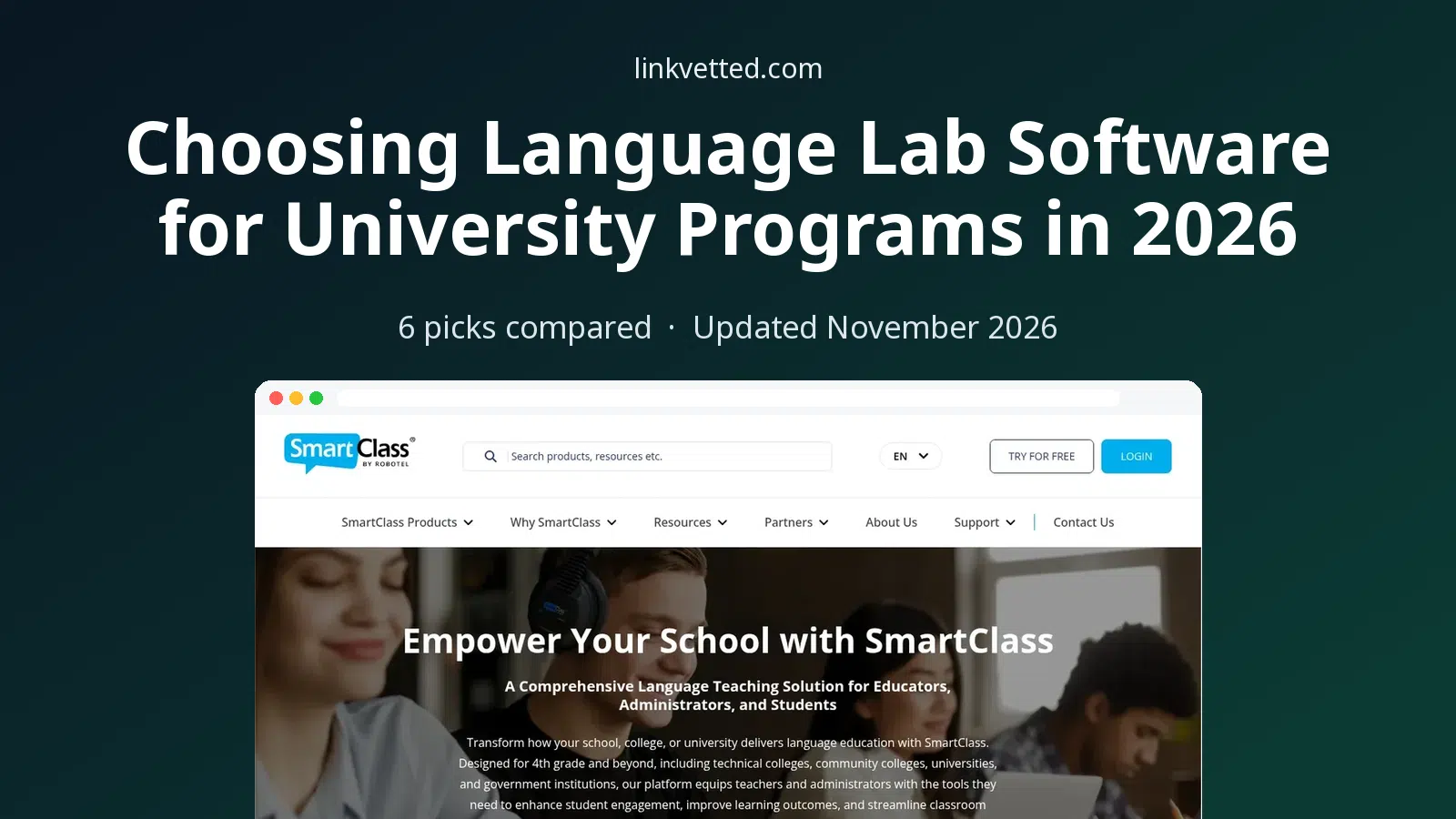
Starts atPricing on requestVisit moodle.comFull review - Also considerRobotel SmartClass
Dedicated school language teaching and engagement
Starts atPricing on requestVisit robotel.comFull review
Direct answer
For Immersive self-study language practice, Rosetta Stone is where this list starts. Moodle is the stronger choice for customizable open learning environments, while Robotel SmartClass suits dedicated school language teaching and engagement. The full list of 6 tools follows, with free plan facts. None of these vendors publish plan prices, so pricing is on request for every option.
TL;DR:
- Number one here is Rosetta Stone, a fit for Immersive self-study language practice.
- For structured English language learning curricula, DynEd is worth a look.
- No starting price is shown for any of the 6 tools, Rosetta Stone and DynEd included, so plan time for sales calls.
- One limit worth knowing about Sony Virtuoso: documentation on the language lab line is restricted.
Last checked November 2026. Pricing on request: vendors did not publish plan prices when this guide was last checked (November 2026), so ask each vendor for a written quote.
Quick comparison
| Tool | Best for | Starts at | Free plan? | |
|---|---|---|---|---|
| Rosetta Stone | Immersive self-study language practice | Pricing on request | Not stated | Visit |
| Moodle | Configurable open learning environments | Pricing on request | Not stated | Visit |
| Robotel SmartClass | Dedicated school language teaching and engagement | Pricing on request | Not stated | Visit |
| Sony Virtuoso | Multimedia language classrooms with Sony hardware | Pricing on request | Not stated | Visit |
| Tell Me More | Teams comparing choices in this category | Pricing on request | Not stated | Visit |
| DynEd | Structured English language learning curricula | Pricing on request | Not stated | Visit |
The full language lab software for university programs list
LinkVetted compared 6 language lab software for university programs. The goal is a practical shortlist: published prices, free plan facts, best-fit use cases and honest limits for every entry.
In short, Rosetta Stone is for Immersive self-study language practice. Rosetta Stone is a well-known language learning product built around an immersive method, realistic conversation practice, and speech tools.
Where it falls short: Instructor oversight features are not its core.
Its strength is individual practice instead of managing a live lab session. Rosetta Stone shows no starting price here, so confirm the cost on the vendor site. Trial and free access: Not stated.
- Immersive method with speech practice
- Self-study focus instead of lab management
Moodle is a good fit for configurable open learning environments. Moodle is an open learning management system known for customization, used by universities and other organizations to build their own teaching environment.
Moodle's adaptability includes administration effort, and language lab capabilities rely on which plugins and tools are added. For everyday use, programs wanting an out-of-the-box language teaching workflow should weigh a dedicated product against the setup work Moodle needs. This comparison lists no price for Moodle; ask the vendor. Trial and free access: Not stated.
Points against: Needs technical administration.
- Widely used across education sectors
- Highly configurable learning system
- Language lab features rely on plugins
Robotel SmartClass
Best for: Dedicated school language teaching and engagement
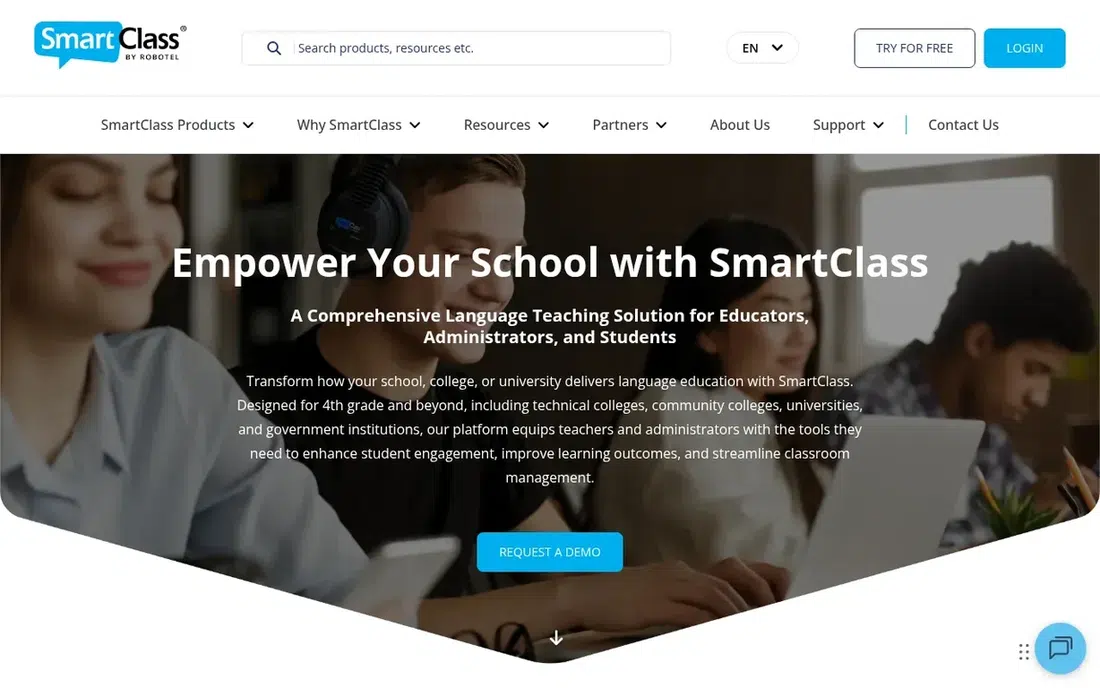
Pick Robotel SmartClass if this describes you: dedicated school language teaching and engagement. Robotel SmartClass is a language teaching option made for schools, with tools intended to help educators run interactive language lessons and keep students engaged. Since the vendor positions SmartClass broadly across school levels, universities with complicated credit, roster, and research requirements should verify integration choices before committing.
What to check first: Positioned broadly at schools instead of only universities.
Instructors who run frequent oral practice and lab-style sessions are the natural audience for this kind of tool. For everyday use, programs that primarily need assignment distribution and grading may find a full LMS sufficient instead. Pricing for Robotel SmartClass is not stated here, so ask the vendor for current figures. Free access: Not stated.
- Purpose-built for language teaching in schools
- Focus on engaging students with interactive tools
- Details vary by deployment, so confirm with the vendor
Sony Virtuoso
Best for: Multimedia language classrooms with Sony hardware
Sony Virtuoso is a good fit for multimedia language classrooms with Sony hardware. Departments planning a traditional lab with teacher consoles and student stations usually evaluate it alongside other dedicated lab products.
This comparison lists no price for Sony Virtuoso; ask the vendor. Free plan details: Not stated.
Drawbacks to consider: Best fit assumes compatible classroom equipment.
- Supports audio and multimedia lesson delivery
- Designed around language lab classroom workflows
- Documentation on the language lab line is restricted
Tell Me More
Best for: Teams comparing choices in this category
Tell Me More is aimed squarely at teams comparing choices in this category. Tell Me More is a language learning product often associated with structured self-study practice. It is frequently considered for supplementary work in blended university courses.
What to check first: Vendor page mirrors the Rosetta Stone site.
For everyday use, the vendor page currently mirrors the Rosetta Stone site, so current availability and feature details should be confirmed straight with the vendor before planning a rollout. Programs that require integrated lab control, assessment, and gradebook linkage should lean toward a dedicated system or LMS. Beyond that, buyers should treat it as a practice resource instead of a lab management system. Pricing for Tell Me More is not stated here, so ask the vendor for current figures. Free plan details: Not stated.
- Recognizable language learning brand
- Fits supplementary practice assignments
- Current product details need direct confirmation
DynEd
Best for: Structured English language learning curricula
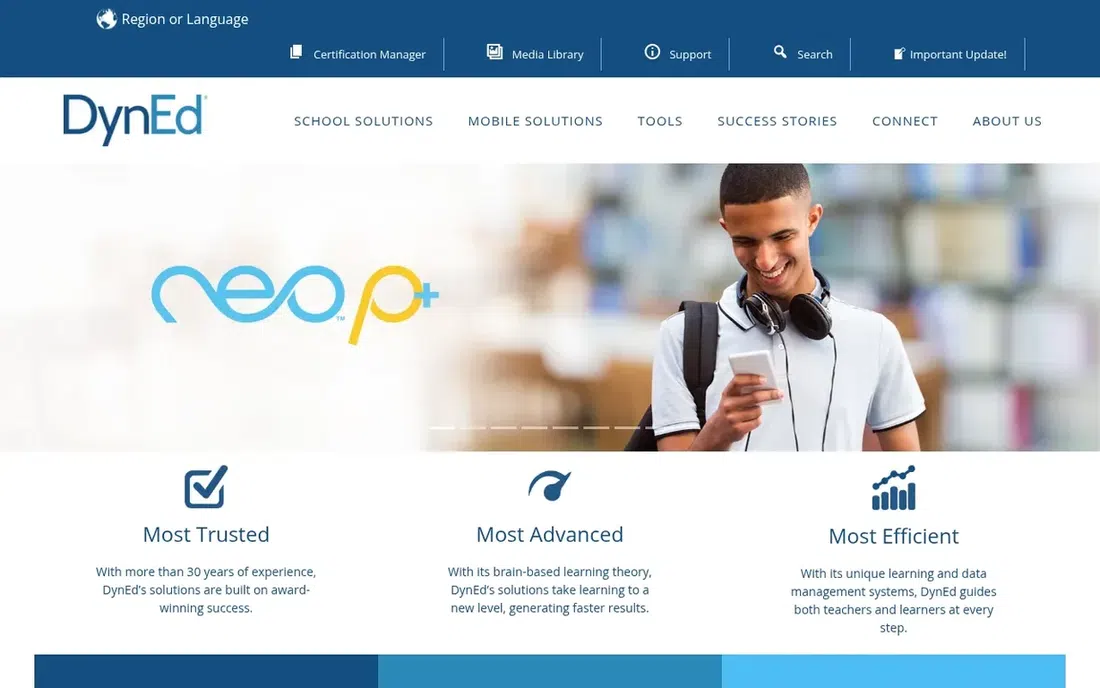
DynEd serves structured English language learning curricula. Departments running intensive English or foundation-year courses commonly look at this category of tool when they need consistent content across numerous sections.
Points against: Emphasis on English instead of other languages.
The product centers on English, so modern language departments teaching other languages will need extra tools. DynEd shows no starting price here, so confirm the cost on the vendor site. Free options: Not stated.
- Long-standing focus on English language learning
- Blended lesson and practice model
- Curriculum fit should be checked against your syllabus
How we chose
The comparison looks at four things: starting price, free access, how well the feature set matches language lab software for university programs, and the main limit of each tool. Where a price is missing, the vendor does not list one publicly or ties it to a quote. Always confirm before budgeting. Order on the page follows fit for the typical buyer first, then price transparency and free access. Your own requirements should decide the final pick.
Questions to settle before buying
- Ask each vendor, from Rosetta Stone to DynEd, for a written quote; none of them publishes a starting price.
- Read the limits listed for Rosetta Stone first: self-study focus instead of lab management.
- Ask the daily users to test Rosetta Stone on a live task before you roll it out to everyone.
- List the apps you already depend on and check that Sony Virtuoso supports each one on the plan you would buy.
- Ask DynEd about contract length, onboarding fees and user minimums before you sign.
FAQ
Can I try these tools before paying?
Not by default. None of the tools, from Rosetta Stone to DynEd, lists a free plan or a free trial here, so ask each vendor for a demo before committing.
What is the best way to evaluate these tools before buying?
The first pick on this list is Rosetta Stone, because it suits Immersive self-study language practice. Moodle is better for configurable open learning environments, and Robotel SmartClass for dedicated school language teaching and engagement. Check price and limits against your own needs before choosing.
How are the tools for language lab software for university programs ordered?
Rosetta Stone sits first and DynEd last because the order follows typical fit for language lab software for university programs, then price clarity and free access. It is a judgement call, so read each profile for fit and limits.
How do self-study products fit into a university program?
They do not replace instructor-led lab management, so pair them with a teaching-centered product when oral assessment matters.
Do these tools publish their prices?
No. None of the tools, from Rosetta Stone to DynEd, shows a fixed starting price here, so budget time for quotes.
Does any tool for language lab software for university programs here have a free plan?
No tool in this list, Rosetta Stone and DynEd included, has a permanent free plan. Trials and quotes are the usual route, so plan a short evaluation period.
Sources
- https://www.rosettastone.com
- https://moodle.com
- https://www.robotel.com
- https://www.sony.com
- https://www.tellmemore.com
- https://www.dyned.com