Best Key-Value Stores Software (2026): 6 Picks Checked on Vendor Pages
Need the best Key-Value stores software? We compare 6 tools on cost, free access and who each suits. With pricing notes and limits. Read before you buy.
- Editor's choice
 MongoDB
Adaptable document data alongside key-value access
Starts atSee websiteVisit mongodb.comFull review - Great alternativeAerospike
Predictable live latency at scale
Starts atSee websiteVisit aerospike.comFull review - Also considerCouchbase
Operational data product with edge sync
Starts at$0.15 per hour per nodeVisit couchbase.comFull review
Direct answer
Start with MongoDB if you need adaptable document data alongside key-value access. Listed starting prices: Couchbase from $0.15 per hour per node and Redis from $5 per month. Aerospike is better for predictable live latency at scale, and Couchbase is better for operational data platform with edge sync. The full list of 6 tools follows, with prices and free plan facts.
TL;DR:
- MongoDB sits first on this list: adaptable document data alongside key-value access.
- Redis is the lowest-priced starter here at $5 per month.
- 3 of 6 tools offer a free plan: MongoDB, Couchbase, Redis.
- For enterprise NoSQL with limitless scale on Google Cloud, Google Cloud Bigtable is worth a look.
- A fair warning about Couchbase: broader system than a straightforward store.
Last checked November 2026. Prices and plan details were read from the vendors' own pages in November 2026; vendors change plans often, so confirm the current price on the vendor site before you buy.
Quick comparison
| Tool | Best for | Starts at | Free plan? | |
|---|---|---|---|---|
| MongoDB | Adaptable document data alongside key-value access | See website | Yes | Visit |
| Aerospike | Predictable live latency at scale | See website | Not stated | Visit |
| Couchbase | Operational data product with edge sync | $0.15 per hour per node | Yes | Visit |
 Apache Cassandra | Massive open source distributed datasets | See website | Not stated | Visit |
 Redis | In-memory speed with adaptable data structures | $5 per month | Yes | Visit |
| Google Cloud Bigtable | Enterprise NoSQL with limitless scale on Google Cloud | See website | Not stated | Visit |
6 options for Key-Value stores software in detail
If you are comparing Key-Value stores software, this page covers 6 tools in one place: what each is best for, what it costs to start, whether it has a free plan, and the main limit to know about.
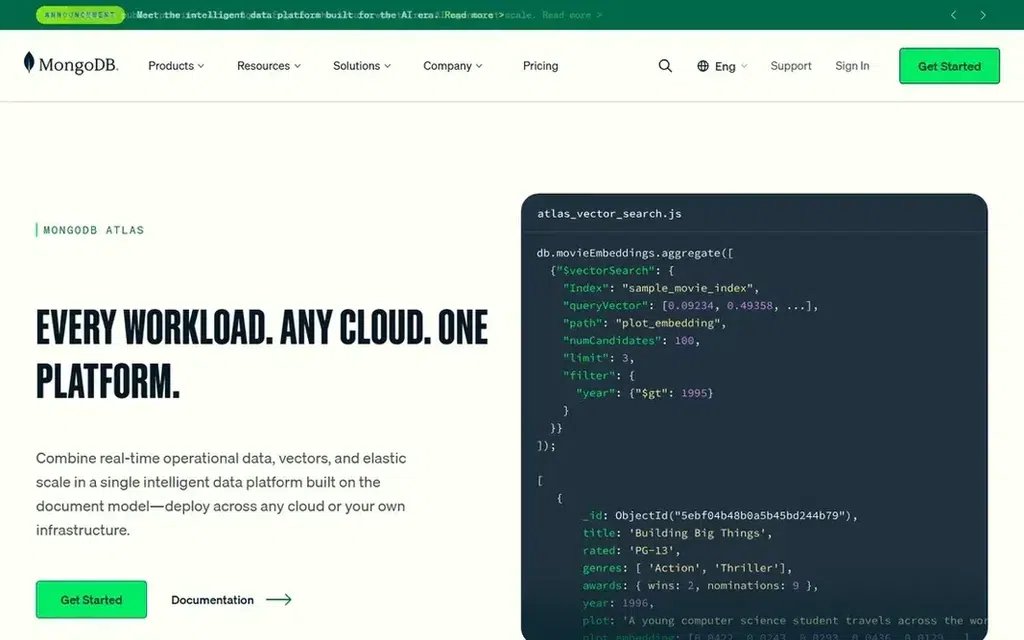
MongoDB serves adaptable document data alongside key-value access. MongoDB describes itself as an intelligent data system for the AI era, emphasizing adaptable, live data that scales across any cloud.
Document adaptability can also invite inconsistent data if schema conventions are not enforced by the team. MongoDB does not show a starting price in this comparison, so check the vendor site for current pricing. You can start on MongoDB without paying.
The main drawbacks: Schema discipline still needed.
- Live data across any cloud
- Adaptable document model
- Document model, not pure key-value
Aerospike
Best for: Predictable live latency at scale
Choose Aerospike for predictable live latency at scale. Aerospike describes itself as the live database for AI, trusted in the world, and its positioning centers on delivering predictable performance for demanding workloads. That specialization means Aerospike is less of a general-purpose choice for straightforward caching or small projects, where Redis is normally simpler to adopt.
Also, teams should confirm that their access patterns match its strengths before committing. Pick it when latency consistency is the deciding factor and more straightforward keeps have already been ruled out. Aerospike does not show a starting price in this comparison, so check the vendor site for current pricing. Free options: Not stated.
Downsides: Fewer general-purpose uses.
- Made for live workloads
- Capable focus on low latency
- Specialized fit
Couchbase
Best for: Operational data product with edge sync
Couchbase makes the most sense for operational data system with edge sync. Couchbase presents itself as an operational data product for AI, emphasizing sub-millisecond performance, cloud-to-edge sync and support for production AI agents. It merges key-value access with a document model and synchronization features, which fits applications that must serve users across regions and edge locations from one data layer.
What to check first: Broader product than a straightforward store.
In practice, evaluate Couchbase when synchronization across cloud and edge is a core requirement instead of an afterthought. In daily use, teams wanting a single system for operational workloads frequently shortlist it. Entry price for Couchbase: $0.15 per hour per node. A free plan is available with Couchbase.
- Sub-millisecond performance claims
- Supports production AI agents
- More moving parts to learn
Apache Cassandra is a good fit for massive open source distributed datasets. Apache Cassandra is an open source NoSQL database built to run massive amounts of data rapidly across distributed clusters.
Running Cassandra well needs real operational expertise in tuning, repair and capacity planning. Teams that want open source control over their data layer, and have the engineering capacity to run it, often evaluate Cassandra for large-scale key-value and wide-column use cases. No starting price is listed for Apache Cassandra here; confirm pricing on the vendor site. On free options: Not stated.
Where it falls short: Operationally demanding.
- Takes care of very large data volumes
- Open source and widely documented
- Restricted ad hoc query adaptability
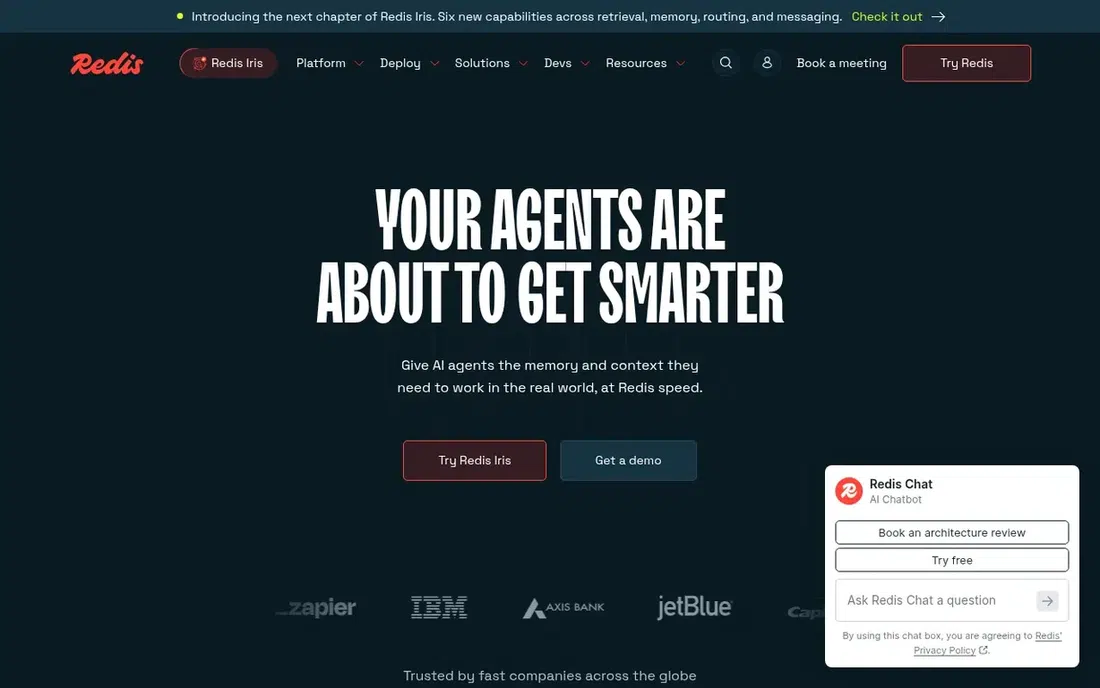
Redis serves in-memory speed with adaptable data structures. Redis is a widely used in-memory data store that developers reach for when response time matters. Persistence choices exist but should be designed deliberately instead of assumed.
Where it falls short: Persistence needs planning.
Worth adding: because data primarily lives in memory, capacity planning and cost control take attention as datasets grow. The vendor also gives you Redis Enterprise for teams that require a supported commercial deployment. Price to start with Redis: $5 per month. Redis offers a free plan.
- Very quick in-memory access
- Wide set of data structures
- Memory-bound data sizing
Google Cloud Bigtable
Best for: Enterprise NoSQL with limitless scale on Google Cloud
Google Cloud Bigtable is built with enterprise NoSQL with limitless scale on Google Cloud in mind. Bigtable is Google Cloud's enterprise-grade NoSQL database, described as HBase and Cassandra compatible with sub-millisecond latency and limitless scale.
Adoption ties you to Google Cloud, so multi-cloud strategies need a different answer. No starting price is listed for Google Cloud Bigtable here; confirm pricing on the vendor site. Free access: Not stated.
What to check first: Needs row-key design care.
- Made for very large scale
- HBase and Cassandra compatible
- Tied to Google Cloud
How these tools were picked
What to check before you buy
- Confirm the entry price on the vendor page. For MongoDB, Aerospike, Apache Cassandra and Google Cloud Bigtable that means a quote rather than a fixed price.
- Look at free plan limits closely: MongoDB, Couchbase and Redis have one, and the caps decide whether it is usable for real work.
- Read the limits listed for MongoDB first: document model, not pure key-value.
- Ask Redis about contract length, onboarding fees and user minimums before you sign.
- Find out whether the entry plan of Apache Cassandra covers your must-haves or only a trimmed-down version.
FAQ
Which options for Key-Value stores software have a free plan?
MongoDB, Couchbase and Redis offer a free plan in this list. Free plans usually cap users, projects or features, so check the limits on the vendor page.
What is the cheapest option for Key-Value stores software in this list?
On published monthly entry prices, Redis is the lowest here at $5 per month. Entry price is only part of the cost, because seats, add-ons and billing terms can change the total. Each of the 6 options in this Key-Value stores software guide has its own card above with the price, free plan and limits.
Do these tools publish their prices?
Not all of them. MongoDB, Aerospike, Apache Cassandra and Google Cloud Bigtable publish no starting price, so expect a quote request for those. The rest, Couchbase included, show a starting price, though seats and billing terms still change the final cost.
Which key-value store fits real-time applications?
Redis is a typical starting point since it keeps data in memory for quick access across plenty of structures. Confirm latency behavior under your own traffic patterns instead of relying on vendor claims alone.
Is MongoDB the right pick for everyone comparing Key-Value stores software?
No single tool suits every team. MongoDB comes first because it fits flexible document data alongside key-value access, while Aerospike suits predictable real-time latency at scale and Couchbase suits operational data platform with edge sync. Match the tool to your own size, budget and workflow before deciding.
Can I migrate between these key-value stores later?
Google Cloud Bigtable notes HBase and Cassandra compatibility, which can ease moves from those systems. Pure key-value data is usually more straightforward to port than document structures, so design with export and re-modeling in mind from the start.
Sources
- https://www.mongodb.com
- https://aerospike.com
- https://www.couchbase.com
- https://cassandra.apache.org
- https://redis.io
- https://cloud.google.com/bigtable