5 IT Financial Management Software for Startups Worth Shortlisting in 2026
Compare 5 best IT financial management software for startups, with prices, free plans and who each fits. Every pick includes one clear drawback. Decide faster.

- Editor's choice
 Microsoft Dynamics 365 Finance
Teams already working in Microsoft tools
Starts atPricing on requestVisit microsoft.comFull review - Great alternative
 SAP S/4HANA Cloud
Fast-growth startups standardizing core processes
Starts atPricing on requestVisit sap.comFull review - Also considerAcumatica Cloud ERP
Startups wanting adaptable cloud ERP access
Starts atPricing on requestVisit acumatica.comFull review
Direct answer
For teams already working in Microsoft tools, Microsoft Dynamics 365 Finance is where this list starts. Alternatives: SAP S/4HANA Cloud for fast-growth startups standardizing core processes, and Acumatica Cloud ERP for startups wanting adaptable cloud ERP access. The remaining 2 options are covered below with prices and limits. None of these vendors publish plan prices, so pricing is on request for every option.
TL;DR:
- The list opens with Microsoft Dynamics 365 Finance, aimed at teams already working in Microsoft tools.
- Check the limits for SAP S/4HANA Cloud before you commit: modular design needs careful scoping.
- NetSuite is the one to check for startups wanting one connected cloud ERP.
- Pricing across the list, from Microsoft Dynamics 365 Finance to NetSuite, is by quote only.
- A permanent free plan is missing from all 5 tools, Microsoft Dynamics 365 Finance and NetSuite included; plan for a trial or a premium start.
Last checked November 2026. Pricing on request: vendors did not publish plan prices when this guide was last checked (November 2026), so ask each vendor for a written quote.
Quick comparison
| Tool | Best for | Starts at | Free plan? | |
|---|---|---|---|---|
| Microsoft Dynamics 365 Finance | Teams already working in Microsoft tools | Pricing on request | Not stated | Visit |
| SAP S/4HANA Cloud | Fast-growth startups standardizing core processes | Pricing on request | Not stated | Visit |
| Acumatica Cloud ERP | Startups wanting adaptable cloud ERP access | Pricing on request | Not stated | Visit |
 Workday Financial Management | Startups prioritizing insight and transactional control | Pricing on request | Not stated | Visit |
 NetSuite | Startups wanting one connected cloud ERP | Pricing on request | Not stated | Visit |
The 5 tools in detail
LinkVetted compared 5 IT financial management software for startups. The goal is a practical shortlist: published prices, free plan facts, best-fit use cases and honest limits for every entry.
Microsoft Dynamics 365 Finance
Best for: Teams already working in Microsoft tools
Microsoft Dynamics 365 Finance makes the most sense for teams already working in Microsoft tools. Configuration depth can slow a quick rollout for a very small team. More specifically, Microsoft Dynamics 365 Finance centres on boosting profitability through financial reporting, embedded analytics, and AI-driven insights.
Points against: Finance module is one part of a wider suite.
On top of that, Dynamics 365 Finance is a finance module within a bigger product family. So teams frequently have to plan which surrounding capabilities they need. This comparison lists no price for Microsoft Dynamics 365 Finance; ask the vendor. Trial and free access: Not stated.
- Suits Microsoft-centered workplaces
- Financial reporting and embedded analytics
- Configuration depth can slow early rollout

Where SAP S/4HANA Cloud fits: fast-growth startups standardizing core processes. For startups, the modular approach means you can start with the finance-related capabilities you need and extend coverage as operations mature, which fits fast-growth firms standardizing processes early. Startups without dedicated finance systems staff may find the setup demanding.
Honest limits: Enterprise ERP calls for dedicated admin.
As for the details, pick SAP S/4HANA Cloud when you expect to standardize core processes early and want a system made for scale. Modularity only helps if someone owns the scoping, and enterprise ERP administration is a real workload for a small team. Pricing for SAP S/4HANA Cloud is not stated here, so ask the vendor for current figures. As for free access: Not stated.
- Positioned for scaling without limits
- Built-in AI for core business processes
- Modular design needs careful scoping
Acumatica Cloud ERP
Best for: Startups wanting adaptable cloud ERP access
Acumatica Cloud ERP serves startups wanting adaptable cloud ERP access. Choose Acumatica when adaptable cloud access and a live view across the business are central requirements. For everyday use, Acumatica describes itself as a cloud ERP business management system offering cloud and mobile technology with a customer-centric licensing model and a complete, real-time view of the business anytime, anywhere.
Beyond that, since licensing is customer-centric, buyers should map their expected usage carefully before committing. The wide ERP scope still needs implementation planning. Check the vendor site for Acumatica Cloud ERP pricing; none is listed in this comparison. Trial and free access: Not stated.
Downsides: Wide ERP scope needs planning.
- Cloud and mobile access
- Customer-centric licensing model
- Licensing model needs careful comparison
Workday Financial Management
Best for: Startups prioritizing insight and transactional control
Workday Financial Management is aimed squarely at startups prioritizing insight and transactional control. The product is finance-focused, so startups with heavy inventory, production, or supply chain needs may need extra systems alongside it. Its enterprise positioning can also exceed what a very early team needs.
Honest limits: Enterprise positioning may exceed early needs.
Consider Workday when control and insight are the priority and your operations are not manufacturing-centric. From a buyer's view, Workday Financial Management is presented as giving insight and an innovative foundation for transactional efficiency and control. That makes it relevant to startups whose finance leaders want capable controls and visibility as transaction volume grows, especially service-oriented companies where financial management, instead of inventory or manufacturing, is the center of gravity. Workday Financial Management shows no starting price here, so confirm the cost on the vendor site. Trial and free access: Not stated.
- Emphasis on insight and control
- Foundation for transactional efficiency
- Less suited to inventory-heavy operations
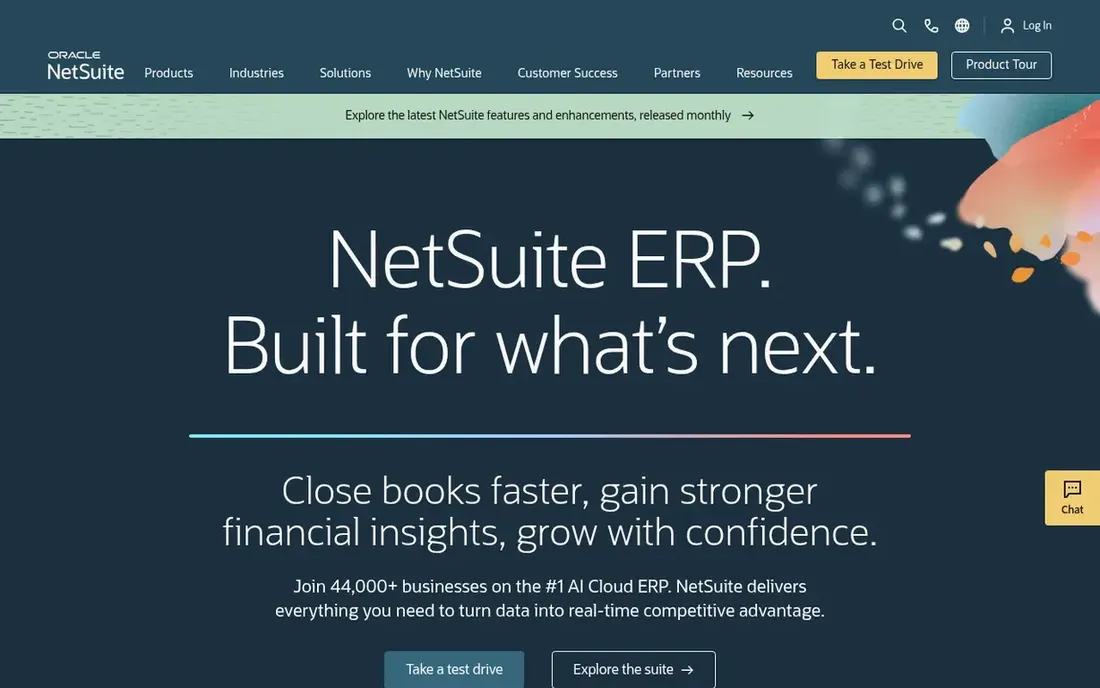
NetSuite is built with startups wanting one connected cloud ERP in mind. If your needs are restricted to entry-level accounting, a narrower finance tool may be more straightforward.
What to check first: Full-suite setup takes planning.
The breadth of the suite is also its central caution: a small team may not need inventory or CRM features on day one, and configuring everything takes time and internal ownership. NetSuite does not show a starting price in this comparison, so check the vendor site for current pricing. Free access: Not stated.
- Merges financials, CRM, accounting, inventory
- Single cloud system for core operations
- Wide scope can feel heavy for very early teams
How these tools were picked
For each of the 5 tools we noted price, free plan or trial, fit for IT financial management software for startups and the main limit, using vendor pages and documentation. Seat minimums, billing terms and add-ons can move the real cost, so the starting prices here are a guide and not a quote. Tools are placed by general fit for IT financial management software for startups, with price clarity and free access as tie-breakers. A different team can reasonably rank them differently.
Questions to settle before buying
- Confirm the entry price with every vendor: no tool from Microsoft Dynamics 365 Finance to NetSuite shows a fixed starting price.
- Before choosing Microsoft Dynamics 365 Finance, weigh its main limit: Finance module is one part of a wider suite.
- Get the contract term, renewal terms and any onboarding fees from NetSuite in writing.
- Ask Microsoft Dynamics 365 Finance how an export works before you move any records in; an easy exit lowers the risk.
- Map your must-have features to a specific Acumatica Cloud ERP plan before you compare prices.
FAQ
How are the tools for IT financial management software for startups ordered?
Microsoft Dynamics 365 Finance sits first and NetSuite last because the order follows typical fit for IT financial management software for startups, then price clarity and free access. It is a judgement call, so read each profile for fit and limits.
Can I try these tools before paying?
Not by default. None of the tools, from Microsoft Dynamics 365 Finance to NetSuite, lists a free plan or a free trial here, so ask each vendor for a demo before committing.
Does any tool for IT financial management software for startups here have a free plan?
A permanent free plan is not offered by Microsoft Dynamics 365 Finance, NetSuite or the other tools here. Plan a short evaluation period instead.
Do these tools publish their prices?
No. None of the tools, from Microsoft Dynamics 365 Finance to NetSuite, shows a fixed starting price here, so budget time for quotes.
Sources
- https://www.microsoft.com/en-us/dynamics-365/products/finance
- https://www.sap.com/products/erp/s4hana.html
- https://www.acumatica.com
- https://www.workday.com/en-us/products/financial-management/overview.html
- https://www.netsuite.com