Best Healthcare Analytics Software for Enterprise for 2026: Our 5 Vetted Picks
Best healthcare analytics software for enterprise, compared. 5 tools with published prices, free plans and limits. Short verdicts, no fluff. Updated for 2026.
- Editor's choiceGoogle Cloud BigQuery
Large-scale data and AI processing
Starts atSee websiteVisit cloud.google.comFull review - Great alternative
 Tableau
Adaptable visualization on healthcare data
Starts at$15 per user per monthVisit tableau.comFull review - Also consider
 Oracle Health
Secure, dependable healthcare data infrastructure
Starts atSee websiteVisit oracle.comFull review
Direct answer
Google Cloud BigQuery leads the list, best for large-scale data and AI processing. Listed starting prices: Tableau from $15 per user per month. If your case is different, Tableau suits adaptable visualization on healthcare data and Oracle Health suits secure, dependable healthcare data infrastructure. All 5 tools are compared below on price, free plan and limits.
TL;DR:
- Google Cloud BigQuery takes the first slot, best suited to large-scale data and AI processing.
- Only Tableau offers a free plan among these 5 tools.
- Google Cloud BigQuery comes with a trade-off: needs cloud and SQL skills.
- Domo is the one to check for governed data for AI-driven insights.
- The lowest published monthly entry price here is $15 per user per month, from Tableau.
Last checked November 2026. Prices and plan details were read from the vendors' own pages in November 2026; vendors change plans often, so confirm the current price on the vendor site before you buy.
Quick comparison
| Tool | Best for | Starts at | Free plan? | |
|---|---|---|---|---|
| Google Cloud BigQuery | Large-scale data and AI processing | See website | Not stated | Visit |
| Tableau | Adaptable visualization on healthcare data | $15 per user per month | Yes | Visit |
| Oracle Health | Secure, dependable healthcare data infrastructure | See website | Not stated | Visit |
| Epic Systems | Analytics inside a clinical record | See website | Not stated | Visit |
 Domo | Governed data for AI-driven insights | See website | Free trial | Visit |
5 options for healthcare analytics software for enterprise in detail
LinkVetted compared 5 tools for healthcare analytics software for enterprise. The goal is a practical shortlist: published prices, free plan facts, best-fit use cases and honest limits for every entry.
Google Cloud BigQuery
Best for: Large-scale data and AI processing
In short, Google Cloud BigQuery is for large-scale data and AI processing. BigQuery is described as an autonomous data and AI product that automates the whole data life cycle so organizations can move from data to AI to action quicker.
Limits to weigh: Needs cloud and SQL skills.
Pricing for Google Cloud BigQuery is not stated here, so ask the vendor for current figures. As for free access: Not stated.
- Deals with very large datasets
- Automates the data life cycle
- No built-in clinical content
Tableau targets flexible visualization on healthcare data. Tableau states that it helps anyone see and understand their data, connecting to almost any database, supporting drag-and-drop visualization creation, and sharing results with a click.
Limits to weigh: Healthcare logic must be built in.
Choose a healthcare-focused system instead if you need prebuilt clinical analytics and improvement workflows more than open-ended visualization freedom. For enterprise healthcare teams, that adaptability is valuable when clinical, financial, and operational data live in numerous systems and analysts have to explore them rapidly. The starting price for Tableau: $15 per user per month. Tableau has a free plan.
- Simple sharing of dashboards
- Links to almost any database
- Governance needs deliberate design
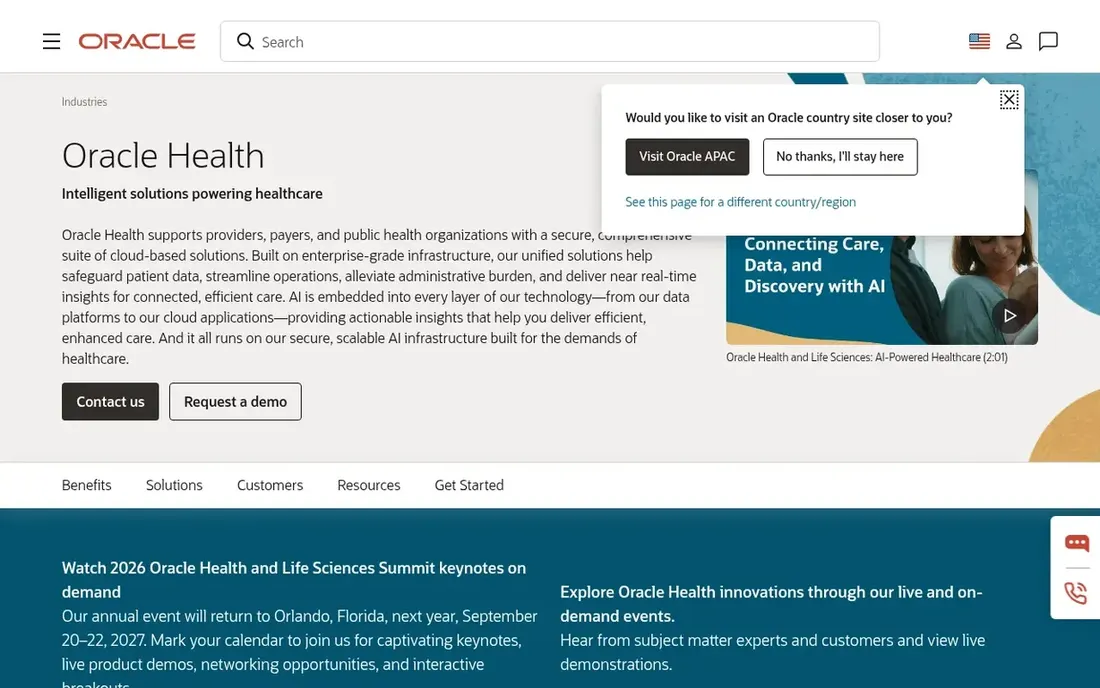
Pick Oracle Health if this describes you: secure, steady healthcare data infrastructure. Since the portfolio spans plenty of options, the analytics depth you get relies on which components you adopt, so scope the specific modules carefully before committing.
Upsides: steady options.
Downsides: Healthcare depth varies by module.
Beyond that, teams wanting a single purpose-built healthcare analytics product, or those outside the Oracle ecosystem, may find a more focused choice simpler to evaluate and operate. In daily use, Oracle Health describes its work as advancing how health happens by supplying secure and dependable solutions that help deliver better healthcare insights and people-centric experiences. Check the vendor site for Oracle Health pricing; none is listed in this comparison. As for free access: Not stated.
- People-centric experience design
- Emphasis on secure
- Needs planning around existing systems
Epic Systems
Best for: Analytics inside a clinical record
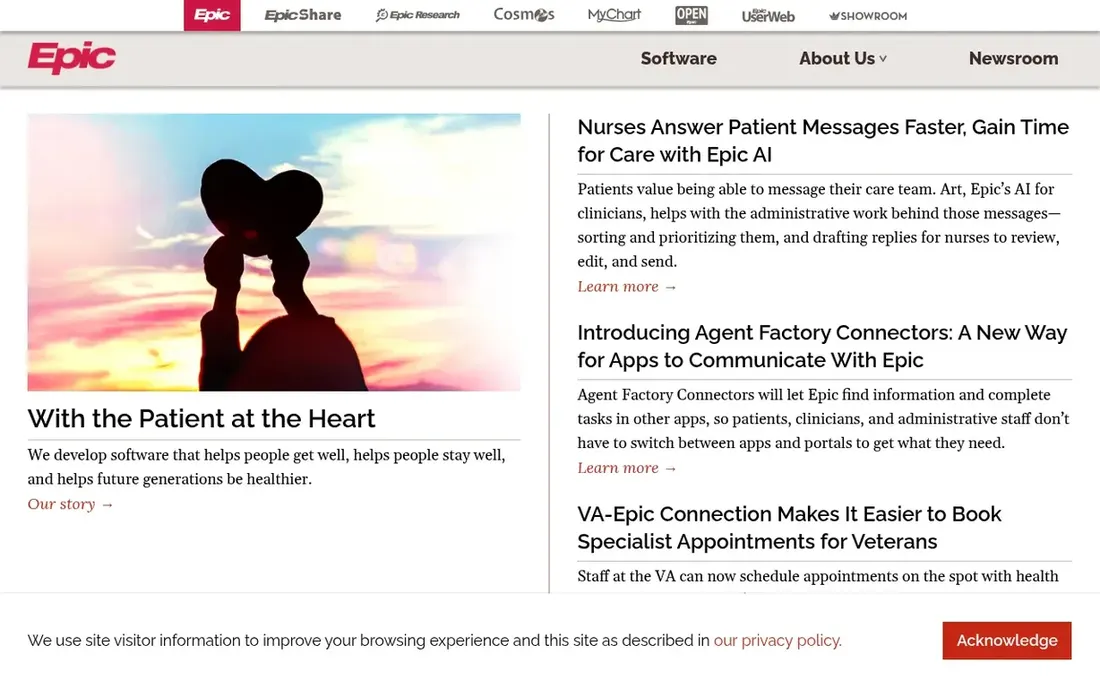
Where Epic Systems fits: analytics inside a clinical record. The central limitation is scope: organizations not running the Epic system will find less to gain.
What to check first: Best value within its own ecosystem.
Teams that chiefly analyze non-clinical or cross-industry data may prefer a standalone analytics tool. From a buyer's view, pick something else if your priority is open-ended visualization over a broad set of external sources instead of analytics embedded in a clinical system. Check the vendor site for Epic Systems pricing; none is listed in this comparison. Free options: Not stated.
- Wide coverage of care settings
- Analytics tied to clinical workflows
- Less suited to non-clinical data teams
Domo is built with governed data for AI-driven insights in mind. Domo positions its system around governed data for AI agents, with AI and data products that link and move data from any source, prepare and expand access for exploration, and accelerate business-critical insights.
Trade-offs to know: Healthcare specificity is restricted.
Domo is not healthcare-specific, so clinical definitions, quality measures, and compliance context must come from your own teams. No starting price is listed for Domo here; confirm pricing on the vendor site. Free access: Free trial.
- AI-oriented data products
- Links and moves data from many sources
- Wide system needs clear ownership
How these tools were picked
A buyer's checklist
- Confirm the entry price on the vendor page. For Google Cloud BigQuery, Oracle Health, Epic Systems and Domo that means a quote rather than a fixed price.
- Look at the free plan from Tableau closely: its caps decide whether it is usable for real work.
- Use real work to test the free trial from Domo, rather than a demo project.
- Before choosing Google Cloud BigQuery, weigh its main limit: needs cloud and SQL skills.
- Pick one real project and run it in Google Cloud BigQuery first; a small pilot shows fit faster than a checklist.
- Work out what Tableau costs with your real seat count, add-ons and usage, not just the entry price.
FAQ
What is the cheapest option for healthcare analytics software for enterprise in this list?
On published monthly entry prices, Tableau is the lowest here at $15 per user per month. Entry price is only part of the cost, because seats, add-ons and billing terms can change the total. For the full picture, the cards above cover all 5 entries of this healthcare analytics software for enterprise list, including price, free plan and limits.
Can these products work together instead of as replacements?
Yes. A typical pattern pairs a scalable data system like BigQuery with a visualization layer like Tableau, whereas a healthcare-focused system supplies clinical context.
How long should an enterprise expect an analytics rollout to take?
Timelines rely on data source complexity, governance review, and how much content the vendor gives you from day one. Beyond that, purpose-built healthcare systems commonly shorten early phases, whereas general products trade upfront setup for long-term adaptability.
What matters most when evaluating enterprise healthcare analytics vendors?
Data connectivity, governance and security for patient information, and the fit between the vendor's content and your improvement goals. Also weigh internal skills, since general-purpose products assume more solid data engineering capacity than sector-specific ones.
Which options for healthcare analytics software for enterprise have a free plan?
Tableau is the only tool in this list with a free plan. Free plans usually cap users, projects or features, so check the limits on the vendor page. One other tool offers a trial instead. Prices, free plan details and limits for all 5 tools in this healthcare analytics software for enterprise roundup sit on the individual cards above.
Can I try these tools before paying?
Often, yes. Tableau has a free plan and Domo offers a free trial. Use your own data and a real task during the test, and check what the free tier or trial limits before you rely on it. Each of the 5 options in this healthcare analytics software for enterprise guide has its own card above with the price, free plan and limits.
Sources
- https://cloud.google.com/bigquery
- https://www.tableau.com
- https://www.oracle.com/health
- https://www.epic.com
- https://www.domo.com