Best Flashcard Apps for Medical Students (2026): 6 Picks Checked on Vendor Pages
Best flashcard apps for medical students in 2026: 6 contenders with entry costs and free tiers. Includes honest limits for each tool. Skim the table first.
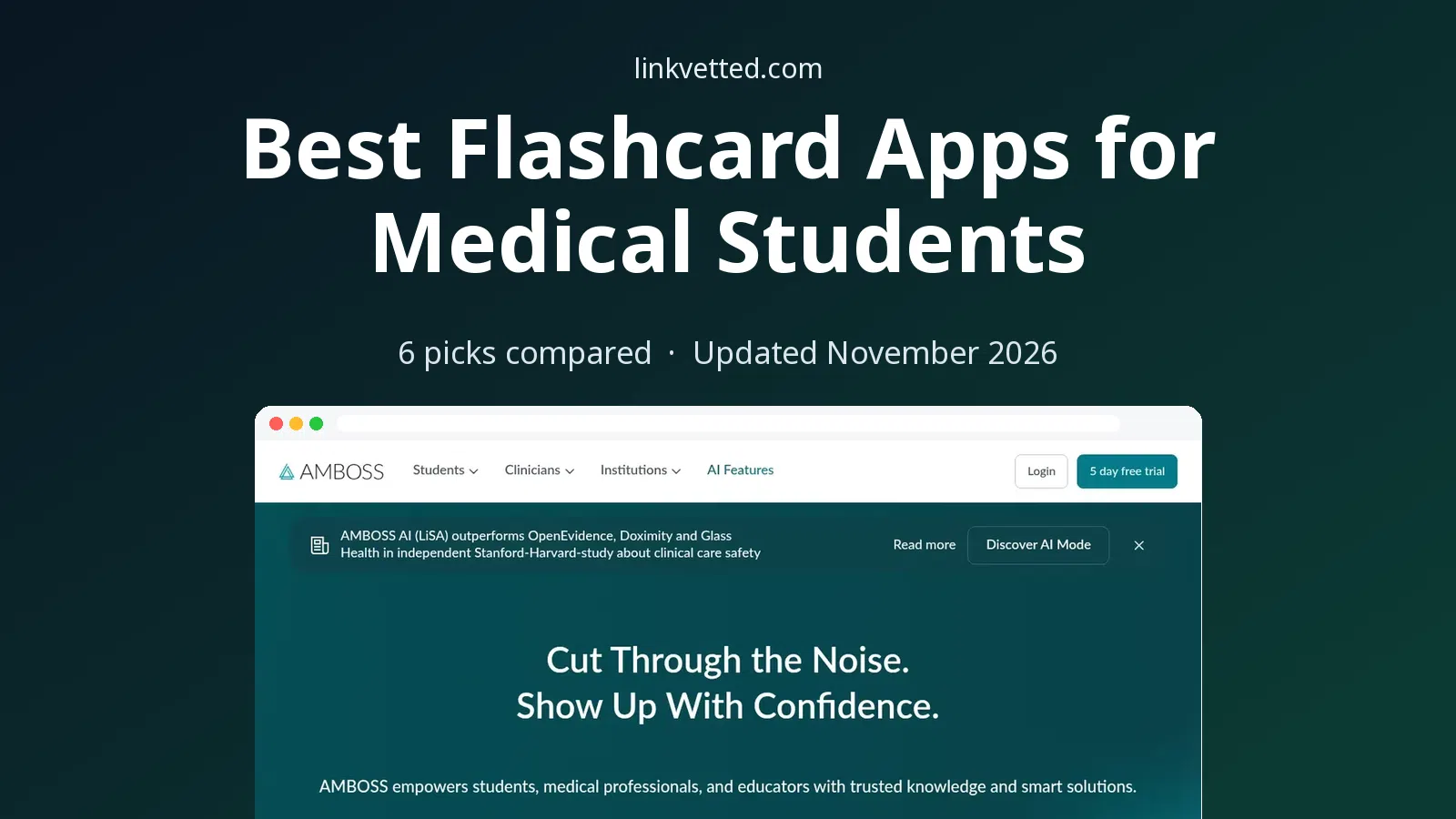
- Editor's choiceSketchy
Visual learning for medical topics
Starts at$9.99 a monthVisit sketchy.comFull review - Great alternativeUWorld
High-stakes exam question practice
Starts atSee websiteVisit uworld.comFull review - Also consider
 Memrise
Language learning with flashcards
Starts atSee websiteVisit memrise.comFull review
Direct answer
Sketchy is the first pick on this list for visual learning for medical topics. Listed starting prices: Sketchy from $9.99 a month, Amboss from $12.50 per month and Brainscape from $7.99 a month. Alternatives: UWorld for high-stakes exam question practice, and Memrise for language learning with flashcards. Prices, free plans and limits for all 6 tools follow.
TL;DR:
- This list starts with Sketchy, which is built for visual learning for medical topics.
- For configurable spaced repetition, Anki is worth a look.
- For the cheapest start, look at Brainscape: $7.99 per month.
- Brainscape is the only tool of the 6 with a free plan.
Last checked November 2026. Prices and plan details were read from the vendors' own pages in November 2026; vendors change plans often, so confirm the current price on the vendor site before you buy.
Quick comparison
| Tool | Best for | Starts at | Free plan? | |
|---|---|---|---|---|
| Sketchy | Visual learning for medical topics | $9.99 a month | Free trial | Visit |
| UWorld | High-stakes exam question practice | See website | Not stated | Visit |
| Memrise | Language learning with flashcards | See website | Not stated | Visit |
| Amboss | Integrated medical library and QBank | $12.50 per month | Free trial | Visit |
 Brainscape | Confidence-based spaced repetition | $7.99 a month | Yes | Visit |
 Anki | Configurable spaced repetition | See website | Not stated | Visit |
6 flashcard apps for medical students in detail
Choosing flashcard apps for medical students usually comes down to price, fit and limits. This LinkVetted guide sets 6 tools side by side on those three points, with the facts kept short and checkable.
Sketchy
Best for: Visual learning for medical topics
Sketchy is a good fit for visual learning for medical topics. Consider pairing it with Anki for full coverage. Sketchy is not a traditional flashcard app and may not handle every subject in a medical curriculum.
Beyond that, Sketchy is a visual learning product that uses sketches and interactive cases to help students master challenging medical topics. Its visual techniques are built to boost recall and exam performance. What you pay to start with Sketchy: $9.99 per month. As for free access: Free trial.
Points against: Subscription required.
- Interactive cases
- Spans challenging topics
- Restricted to visual subjects
UWorld
Best for: High-stakes exam question practice
Where UWorld fits: high-stakes exam question practice. UWorld is not a flashcard app, so it does not offer spaced repetition or card creation.
What to check first: Not a flashcard app.
More specifically, access needs a subscription, and the focus is on question practice instead of memorization. This comparison lists no price for UWorld; ask the vendor. As for free access: Not stated.
- In-depth answer explanations
- Widely used for board prep
- Subscription-based access
Memrise is designed for language learning with flashcards. Memrise is a language learning app that uses flashcards and personalized courses to help users learn languages for specific goals, like exams or workplace communication.
Watch-outs: Restricted free content.
Medical students should choose a dedicated medical flashcard app for core study needs. Memrise is not tailored to medical education and lacks content for medical subjects. Memrise does not show a starting price in this comparison, so check the vendor site for current pricing. Trial and free access: Not stated.
- Focus on authentic language
- Mobile-friendly
- Not medical-specific
Amboss
Best for: Integrated medical library and QBank
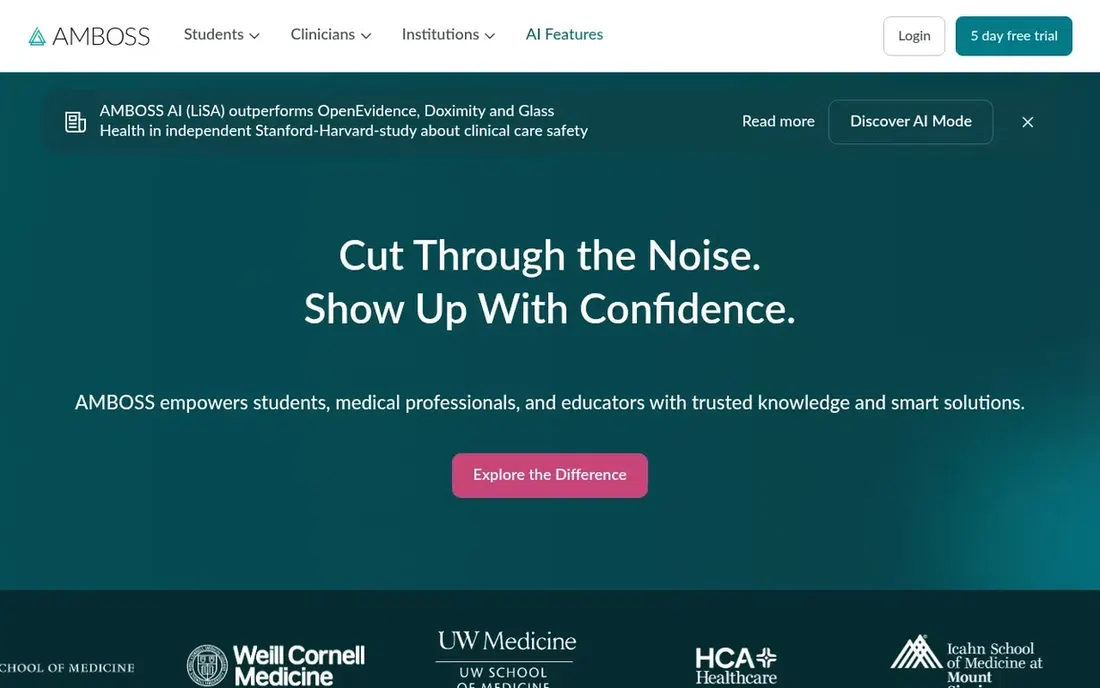
Pick Amboss if this describes you: integrated medical library and QBank. Amboss is not designed as a standalone flashcard tool, so students who depend on spaced repetition may need a separate app like Anki. Worth adding: Amboss is a medical learning product that merges a medical library, question banks, and AI-powered clinical reference for students, residents, and attendings.
More specifically, whereas it is not a traditional flashcard app, its integrated resources support active recall and clinical reasoning. In practice, consider it as a complement to a dedicated flashcard app. Starting cost for Amboss: $12.50 per month. Trial and free access: Free trial.
Where it is weaker: Subscription required for full access.
- AI-powered clinical reference
- Integrated question bank
- Not a dedicated flashcard app
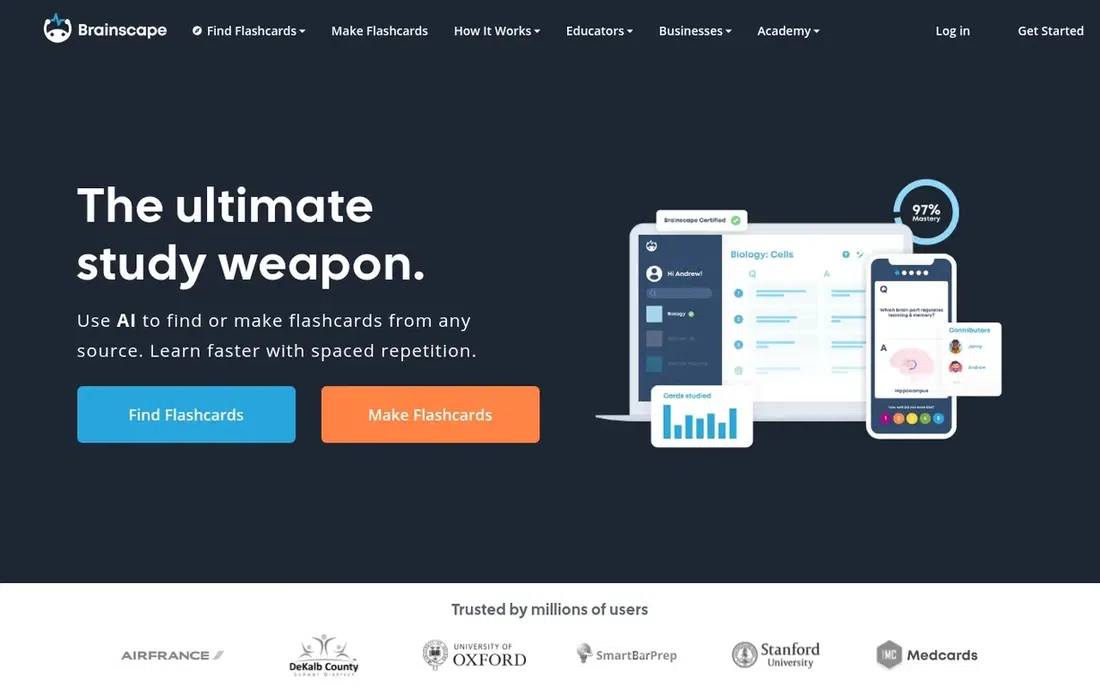
Where Brainscape fits: confidence-based spaced repetition. Brainscape is a flashcard app that uses a confidence-based spaced repetition system, asking users to rate how well they know each card to adjust future reviews.
Points against: Some features need subscription.
It provides both a web product and mobile apps, and users can build their own flashcards or study from existing sets. In daily use, consider Anki if you want to fine-tune every aspect of your review schedule. Price to start with Brainscape: $7.99 per month. Brainscape offers a free plan.
- Structured review system
- Web and mobile access
- Restricted free content
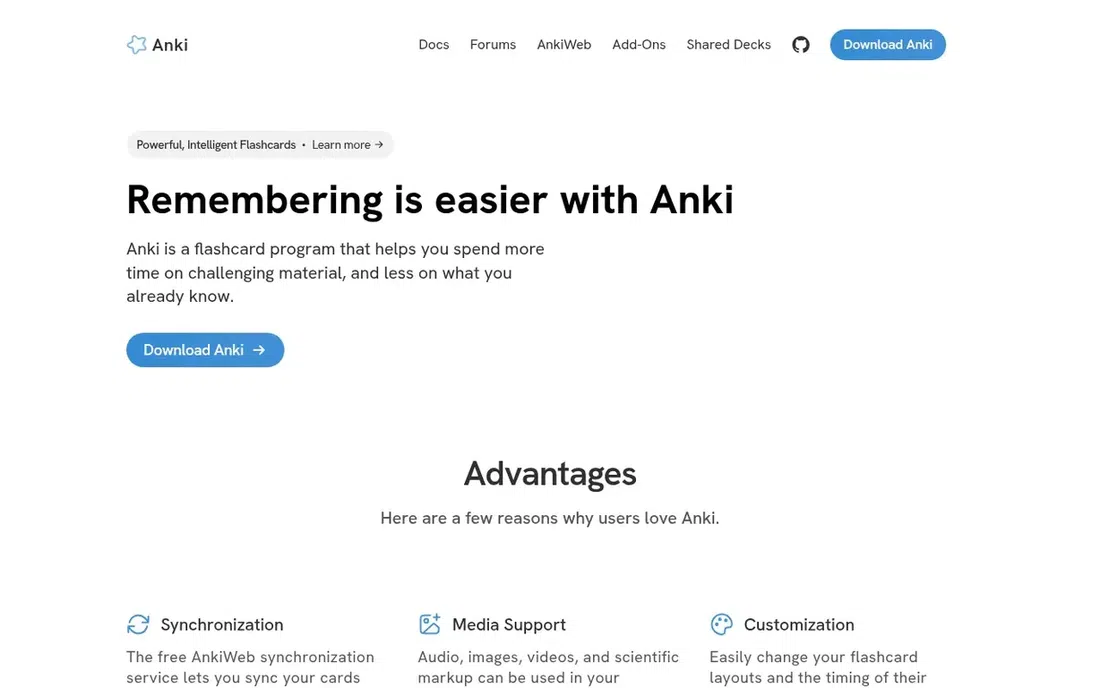
Pick Anki if this describes you: configurable spaced repetition. Anki is a flashcard program built around spaced repetition, a method that schedules reviews to make remembering simpler.
Where it falls short: Mobile app sold separately.
It suits students who want full control over their cards and are comfortable adjusting settings to match their study routine. Pricing for Anki is not stated here, so ask the vendor for current figures. Trial and free access: Not stated.
- Free desktop version
- Highly configurable
- Steep ramp-up time
How the list was put together
Selection started from tools commonly considered for flashcard apps for medical students, then narrowed to 6 that have clear pricing information or a clear quote process. Figures are shown as the vendors publish them. Billing terms, seat minimums and add-ons can change the real cost. We ordered the tools by general fit, then by how clearly pricing is shown, then by free access. A buyer with unusual needs may reorder them.
What to check before you buy
- Get a written quote from UWorld, Memrise and Anki; the list shows no starting price for them.
- Look at the free plan from Brainscape closely: its caps decide whether it is usable for real work.
- Use real work to test the free trial from Sketchy and Amboss, rather than a demo project.
- Before choosing Sketchy, weigh its main limit: restricted to visual subjects.
- Ask Memrise whether prices are locked for the first term and what happens at renewal.
- Read the plan comparison for Sketchy carefully; key features often start on a higher tier.
FAQ
How are the tools for flashcard apps for medical students ordered?
The order follows typical fit for flashcard apps for medical students, with Sketchy first and Anki last, then price clarity and free access. It is editorial judgement, not a score, so another team could rank the tools differently.
What is the best flashcard app for medical students?
Start with Sketchy if you need visual learning for medical topics. UWorld is the better match for high-stakes exam question practice, and Memrise for language learning with flashcards. The best choice depends on budget, team size and workflow.
What is the cheapest option for flashcard apps for medical students in this list?
On published monthly entry prices, Brainscape is the lowest here at $7.99 per month. Entry price is only part of the cost, because seats, add-ons and billing terms can change the total.
Can I try these tools before paying?
Often, yes. Brainscape has a free plan and Sketchy and Amboss offer a free trial. Use your own data and a real task during the test, and check what the free tier or trial limits before you rely on it.
Is Anki free for medical students?
Anki provides a free desktop version, but the mobile app is sold separately. Some students may find the cost worthwhile for the adaptability and control it supplies. Always check the official site for current details.
Which options for flashcard apps for medical students have a free plan?
Brainscape is the only tool in this list with a free plan. Free plans usually cap users, projects or features, so check the limits on the vendor page. Several others offer a trial instead.
Sources
- https://www.sketchy.com
- https://www.uworld.com
- https://www.memrise.com
- https://www.amboss.com
- https://www.brainscape.com
- https://apps.ankiweb.net