Best Financial Automation for Lending Companies: 9 Tools Compared
We compared the best financial automation for lending companies on origination, documents and underwriting, so lenders can cut manual work and stay in control.
- Editor's choice
 nCino
Banks on Salesforce
Starts atSee websiteVisit ncino.comFull review - Great alternative
 Blend
Mortgage borrower experience
Starts atSee websiteVisit blend.comFull review - Also consider
 Encompass by ICE
Mortgage origination at scale
Starts atSee websiteVisit icemortgagetechnology.comFull review
TL;DR:
- nCino, Blend and Encompass cover different lending types, so start from mortgage, consumer or commercial lending rather than from a generic automation label.
- Document automation alone is not a full loan system. Decide whether you need extraction, a full origination system or both.
- Core banking integration decides many purchases, because a tool that fits your core saves months of integration work.
- Lenders stay responsible for credit decisions and compliance, even when software agents draft documents or check files.
- Pricing is mostly quote based, so compare implementation, data and support costs alongside license fees.
Quick comparison
| Tool | Best for | Starts at | Free plan? | |
|---|---|---|---|---|
| nCino | Banks on Salesforce | See website | No | Visit |
| Blend | Mortgage borrower experience | See website | No | Visit |
| Encompass by ICE | Mortgage origination at scale | See website | No | Visit |
 MeridianLink | Credit union consumer lending | See website | No | Visit |
 Finastra | Large multi product lenders | See website | No | Visit |
 Jack Henry LoanVantage | Jack Henry core banks | See website | No | Visit |
 Fiserv | Fiserv core institutions | See website | No | Visit |
 Temenos | Global digital lending | See website | No | Visit |
 Mambu | Cloud native loan launch | See website | No | Visit |
The best financial automation for lending companies
We compared platforms on loan type coverage, document handling, workflow automation, core integration and compliance support. All nine serve lenders in October 2026, but they fit different institution sizes and loan types.
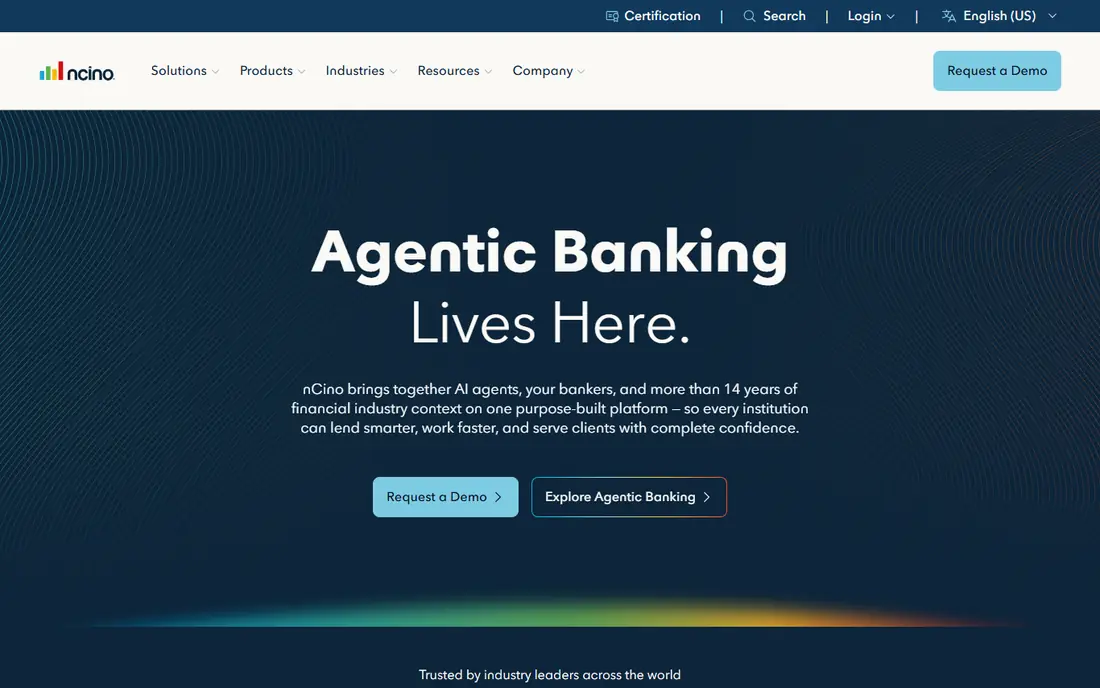
nCino Bank Operating System is built on Salesforce and covers origination, underwriting workflows, document management and portfolio views for banks and credit unions. That breadth suits institutions that want one platform across commercial, small business and retail lending, rather than separate tools per product. Recent mortgage tools, including automated preapproval and disclosure features, extend its reach into home lending as well.
The commitment is the catch. nCino works best for institutions ready to standardize on Salesforce, with the staff and partner help to run it. Smaller lenders may find the scope and cost heavier than they need. For a bank already on Salesforce, nCino is the natural first system to evaluate.
- Full lending lifecycle on Salesforce
- Commercial and retail coverage
- Strong workflow tools
- Platform commitment is large
- Implementation can be long for smaller banks
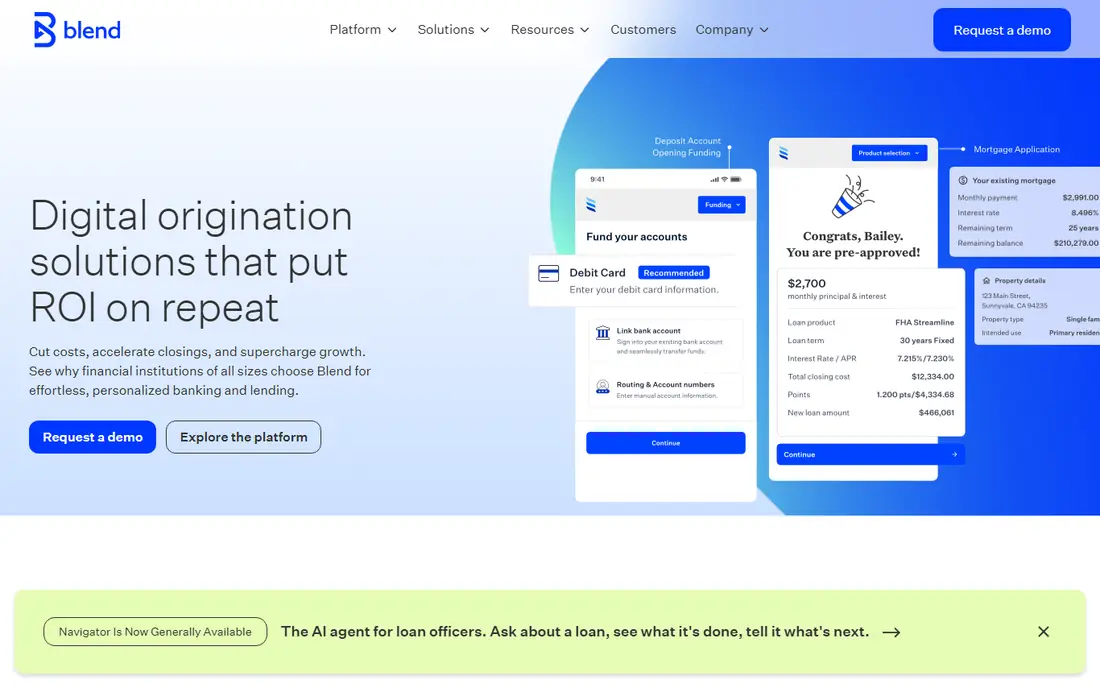
Blend is best known for a clean borrower application experience in mortgage lending, with digital intake, document collection and verification steps that reduce back and forth. Its automation tools help staff follow up on missing items, review income documents and move files toward underwriting with less manual chasing. That front end quality matters, because a confusing application loses borrowers before underwriting even starts.
Blend is less of a fit for pure commercial lending, where nCino or Finastra may cover more workflow types. Lenders should also test how Blend fits their existing loan origination system, because many use it as an intake layer rather than a full replacement. For mortgage lenders who want a better borrower journey, Blend is a strong pick.
- Strong borrower facing application flow
- Document and verification automation
- Mortgage AI tools
- Mortgage focused, so commercial lenders need other tools
- Pricing is quote based
Encompass by ICE Mortgage Technology is a widely used mortgage loan origination system, covering application through closing, compliance checks and investor delivery. Its depth suits high volume mortgage lenders who need consistent workflows, document controls and secondary market connections. Scale is its strength, because processes built for thousands of loans a month behave differently from tools built for dozens.
Small mortgage shops may find Encompass heavier than they need, and its mortgage only scope means consumer or commercial lenders need separate systems. For a mortgage lender planning growth, though, Encompass offers a proven, deep platform. Compare its total cost with Blend plus a lighter origination system before you decide.
- Deep mortgage origination coverage
- Large lender adoption
- Compliance and investor tools
- Mortgage only focus
- Complexity for small lenders
MeridianLink serves banks and credit unions across consumer, mortgage and indirect lending, with application intake, decisioning and account opening workflows. That breadth suits credit unions that want one vendor for several retail products, rather than stitching together separate point tools. Its partner and core integrations also help smaller institutions that lack large IT teams.
Large commercial lenders may need a deeper commercial platform alongside MeridianLink. Pricing also varies by module and volume, so a scoped quote matters. For credit unions and community banks focused on retail lending, MeridianLink is a practical and well matched choice.
- Strong credit union consumer and mortgage coverage
- Application and decision workflows
- Partner integrations
- Less suited to large commercial banking
- Enterprise pricing varies by module
Finastra offers lending, core banking and treasury products used by large institutions worldwide, which suits lenders that run many products across many regions. Its origination and servicing tools can consolidate work that smaller point tools handle separately, and its partner ecosystem adds document, risk and payment options. For a large bank replacing several legacy systems, that breadth is valuable.
Complexity is the downside. Choosing the right Finastra modules, planning migration and training staff takes time and senior sponsorship. Smaller lenders will usually do better with a focused tool such as MeridianLink or Blend. Large multi product lenders should include Finastra in a formal tender.
- Broad lending and core banking portfolio
- Multi product coverage
- Global scale
- Product range is complex
- Implementation needs strong project management
Jack Henry LoanVantage is designed for banks and credit unions running a Jack Henry core, which gives it a natural integration advantage for those institutions. Loan workflows, decisioning and servicing data flow more cleanly when the origination tool and core share a vendor ecosystem. Community banks that value that fit often choose LoanVantage over a generic platform.
Outside Jack Henry, that advantage fades, and a platform such as nCino or MeridianLink may fit better. Even inside the ecosystem, lenders should compare module coverage for their loan types. For Jack Henry banks, LoanVantage deserves a shortlist place on integration grounds alone.
- Tight fit with Jack Henry cores
- Consumer and commercial lending workflows
- Community bank focus
- Best value only inside Jack Henry ecosystem
- Less fit outside that core
Fiserv serves many banks and credit unions with core processing, payments and lending tools, so institutions already on Fiserv often look to it first for automation. Using one vendor for core and lending can simplify data flow, support and vendor management, especially for mid size institutions without a large integration team. Its lending tools cover origination and related workflows across retail products.
The portfolio is wide, so lenders must be precise about which Fiserv lending product fits their loan types and core version. A vague Fiserv quote can hide module gaps. For Fiserv core institutions, a scoped conversation with Fiserv is essential, and a comparison with nCino or MeridianLink will show whether the core advantage outweighs any feature gap.
- Broad financial technology portfolio
- Core integration for Fiserv banks
- Lending and payments coverage
- Portfolio breadth can confuse product choice
- Implementation scope varies widely
Temenos provides core banking and digital lending software used by banks worldwide, with cloud options that suit institutions modernizing legacy systems. Its composable approach lets lenders adopt lending components alongside core, payments and data tools, rather than replacing everything at once. That flexibility appeals to banks planning a phased modernization.
Enterprise scope brings enterprise cost and project length, so Temenos fits large and mid size banks better than small credit unions. Local partner capacity also matters, because implementation quality varies by region. For a global or regional bank planning digital lending at scale, Temenos is a credible contender.
- Cloud and digital banking focus
- Global lender base
- Composable product options
- Enterprise scope and cost
- Needs local implementation partners in many markets
Mambu is a cloud native banking platform that helps fintech lenders and smaller banks launch loan products quickly, with API first design and configurable lending workflows. That speed suits new lenders, digital brands and institutions testing a new product without a legacy core project. Integration with payments, decisioning and document partners is central to the model.
Mambu is not a deep mortgage origination system, so mortgage heavy lenders should look at Encompass or Blend instead. It also relies on partner tools for parts of a full lending stack, which adds vendor management work. For a fintech lender launching consumer or small business loans fast, Mambu is one of the most agile options.
- Cloud native core and lending
- Fast product launch for fintech lenders
- API first design
- Less depth for complex mortgage origination
- Needs partner tools for full stack
How we picked these
We compared official product pages, loan type coverage, core integration claims and public lender adoption notes. We favored platforms with real lender customers, clear origination or automation workflows and a fit for a distinct lender type. We did not test systems with live loan files, and we did not rank by vendor marketing claims about time savings, because those figures depend on lender volume and process maturity.
How to choose lending automation that actually helps
Automation fails when lenders buy software before fixing the bottleneck. Use the steps below to buy for your real problem, not for a demo.
Name the bottleneck first
Decide whether your delay sits in borrower intake, document collection, underwriting queues, disclosures or servicing handoffs. An intake tool such as Blend will not fix an underwriting queue problem, and a full origination replacement will not fix a document extraction gap alone. Map one loan journey end to end, time each stage and buy for the slowest stage first.
Check core and data integration
Ask each vendor to show data flowing to and from your core, CRM and document system, with error handling when a record fails. Integration work often costs more than licenses, and a tool that needs manual rekeying will not save time. Get integration scope, timeline and support ownership in writing before you sign.
Keep humans in credit and compliance decisions
Automation can draft, check and route, but lenders remain responsible for credit decisions, fair lending compliance and vendor oversight. Ask how the system logs decisions, shows reasons for conditions and handles exceptions. A tool that cannot explain its checks will create audit risk, however fast it moves files.
Pilot on one product and one team
Pilot with one loan product, one team and real files, and measure cycle time, touch count, error rate and staff feedback. A pilot that only tests happy path files will miss the messy documents and edge cases that dominate real work. Expand only when the pilot beats your current process on those measures.
FAQ
What is the best financial automation for lending companies?
There is no single best tool, because mortgage, consumer and commercial lenders need different systems. nCino suits Salesforce based banks, Blend suits mortgage borrower experience, Encompass suits mortgage scale, and MeridianLink suits credit union retail lending. Start from loan type and core system, then shortlist two or three vendors for a pilot.
Is nCino better than Encompass?
They serve different strengths. nCino covers a broad bank lending lifecycle on Salesforce, while Encompass is a deep mortgage origination system from ICE Mortgage Technology. A mortgage only lender will usually get more from Encompass, while a bank with commercial and retail lending may get more from nCino. Compare them only if your institution runs both mortgage and wider bank lending.
Do lenders still need staff if they automate?
Yes. Automation reduces manual document chasing and data entry, but staff still handle credit judgment, exceptions, compliance checks and borrower communication. The best result is fewer repetitive tasks per file, not an empty processing team. Budget for training and for staff who can handle exceptions the system cannot resolve.
How long does lending automation implementation take?
Timelines range from weeks for a single intake or document tool to many months for a full origination replacement, depending on loan types, core integration and data migration. Ask vendors for a phased plan with milestones, and check reference customers of similar size. A vendor that promises a full replacement in weeks for a complex bank should be treated with caution.
What compliance risks come with lending automation?
Risks include biased or unexplained decision rules, missing audit trails, poor document handling and weak vendor oversight. Lenders should test decision logic, keep human review for exceptions, log system actions and review vendor controls regularly. Regulators hold the lender responsible even when software performs a step, so governance must stay inside the institution.
Should small lenders buy a full origination system?
Not always. A small lender with one product may do better with an intake tool, a document tool and a simpler origination system, rather than an enterprise platform built for large banks. Compare total cost, staff time and implementation risk across both paths. The right choice is the smallest system that reliably covers your loan types and compliance needs.