Best Enterprise AI Platforms in 2026: 8 Platforms Compared
We compared the best enterprise AI platforms for building, deploying, and governing AI, including Azure AI, Bedrock, Vertex AI, and Databricks for large teams.
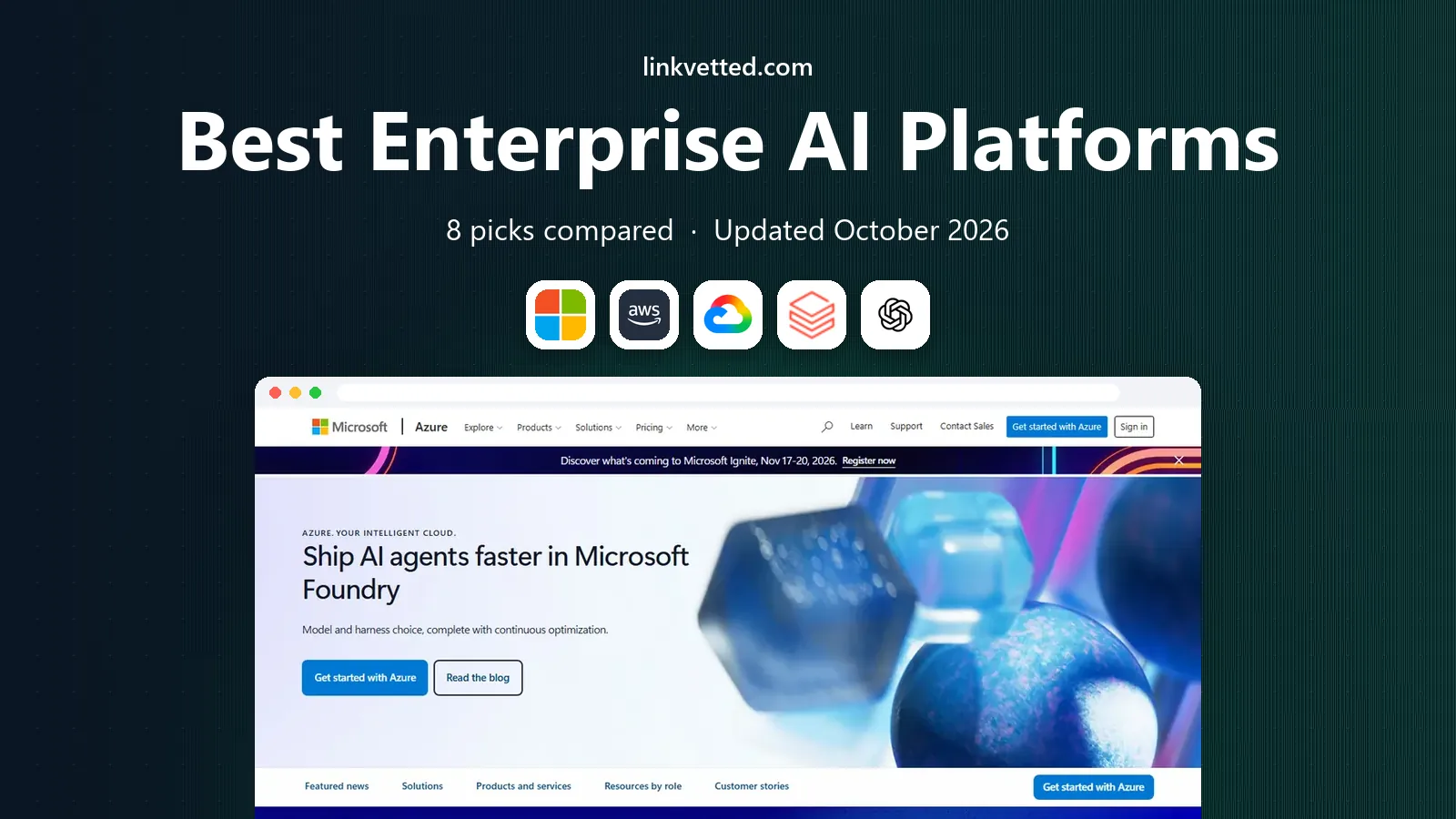
- Editor's choice
 Microsoft Azure AI Foundry
Microsoft-centric enterprises
Starts atSee websiteVisit azure.microsoft.comFull review - Great alternative
 Amazon Bedrock
AWS teams who want many foundation models
Starts atSee websiteVisit aws.amazon.comFull review - Also consider
 Google Vertex AI
Google Cloud teams with data-heavy workloads
Starts atSee websiteVisit cloud.google.comFull review
TL;DR:
- Microsoft Azure AI Foundry suits Microsoft-centric firms that want OpenAI models under Azure controls.
- Amazon Bedrock suits AWS teams that want many foundation models with private data handling.
- Google Vertex AI suits data-heavy teams that already use Google Cloud and BigQuery.
- Databricks suits teams that need AI beside large-scale data engineering and machine learning.
Quick comparison
| Tool | Best for | Starts at | Free plan? | |
|---|---|---|---|---|
| Microsoft Azure AI Foundry | Microsoft-centric enterprises | See website | No | Visit |
| Amazon Bedrock | AWS teams who want many foundation models | See website | No | Visit |
| Google Vertex AI | Google Cloud teams with data-heavy workloads | See website | No | Visit |
 Databricks | Data teams who need AI beside data engineering | See website | No | Visit |
 OpenAI Platform | Teams who want frontier models via API | See website | No | Visit |
 IBM watsonx | Regulated firms that want governed AI | See website | No | Visit |
 Anthropic Claude | Teams who want Claude models for enterprise work | See website | No | Visit |
 Mistral AI | European firms and teams who want open models | See website | No | Visit |
The best enterprise AI platforms
An enterprise AI platform should help teams build, deploy, and govern AI with security, cost control, and audit trails. The platforms below differ on cloud fit, model choice, data tools, and governance controls.
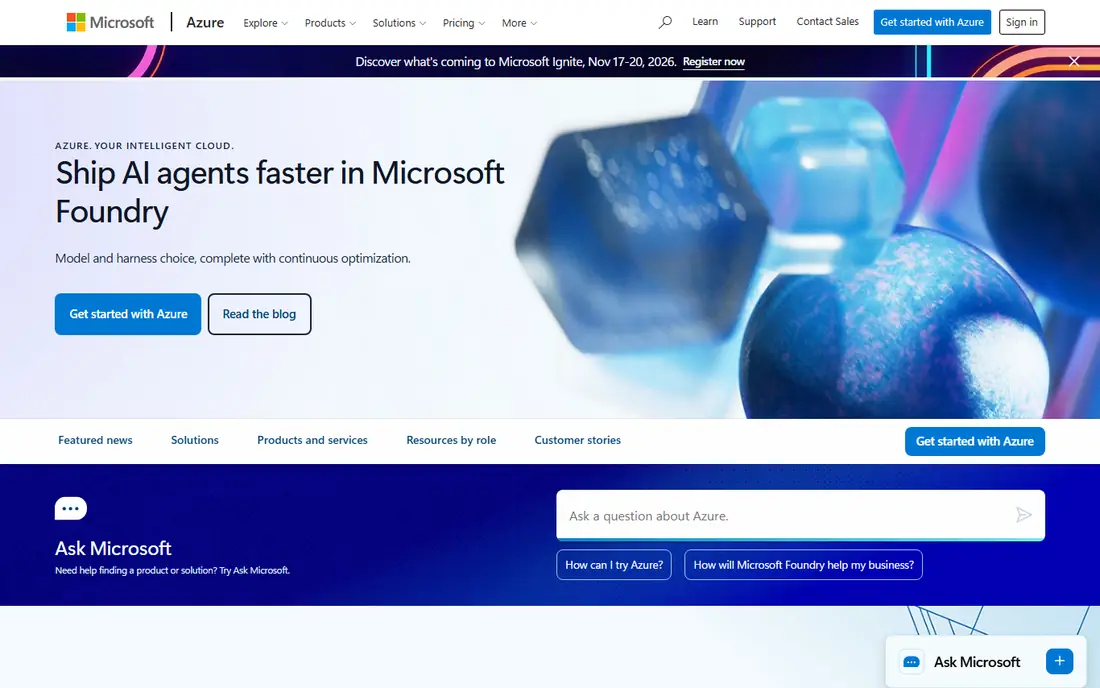
Microsoft Azure AI Foundry, formerly Azure AI Foundry, is the platform for firms that already trust Azure with identity, networking, and compliance. It hosts OpenAI models inside Azure, offers a wide catalog of other models, and provides deployment controls, data residency options, and provisioned capacity for predictable latency. For Microsoft-centric buyers, procurement and security review are often simpler here than elsewhere.
The complexity is cost and Azure depth. Token pricing varies by model and deployment type, and provisioned capacity needs careful forecasting. Teams without Azure skills may face a learning curve. If your firm runs on Microsoft, though, Foundry is a strong default to evaluate first.
- OpenAI models under Azure controls
- Wide model catalog
- Entra ID and private networking
- Costs depend on token and provisioned capacity
- Best fit needs Azure skills
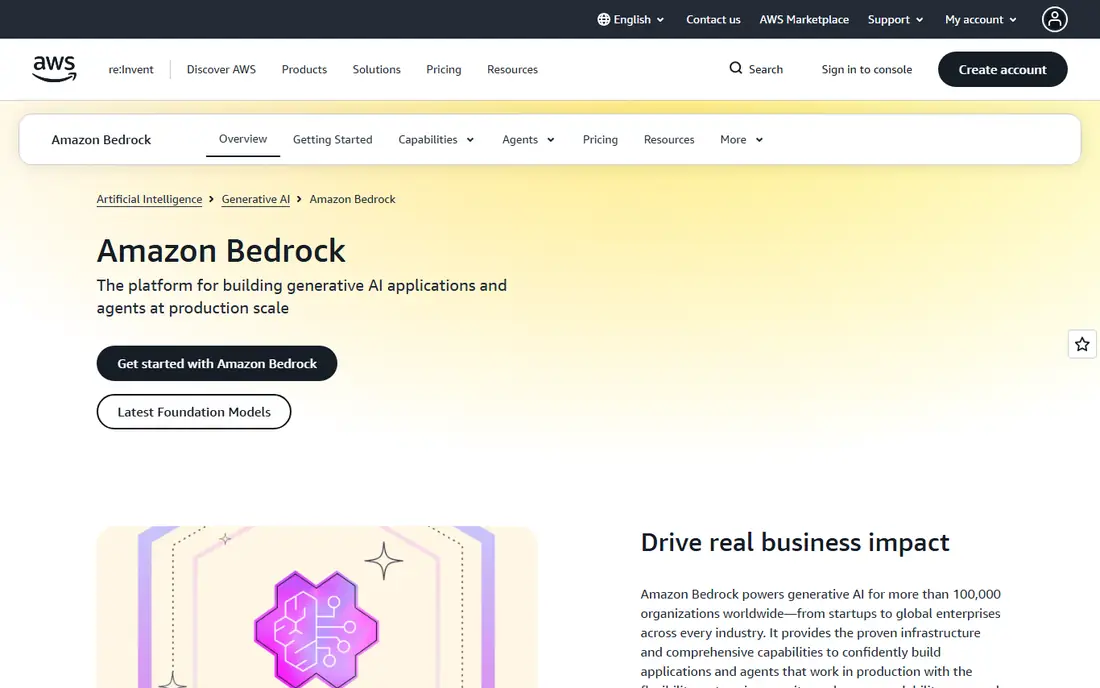
Amazon Bedrock gives AWS teams access to many foundation models through one API, with private data handling, IAM controls, and integration with AWS storage, databases, and security tools. It suits firms that want to compare models from different providers without managing separate infrastructure for each one, and it fits AWS governance patterns well. Knowledge base and agent tools extend it beyond simple chat.
Model availability varies by region, and costs depend on the model, token volume, and any provisioned throughput. Teams outside AWS may find the AWS learning curve steep. For AWS firms, Bedrock is a practical, well-integrated enterprise choice.
- Many foundation models
- Private data handling
- AWS security and IAM controls
- Model choice varies by region
- Costs depend on model and usage
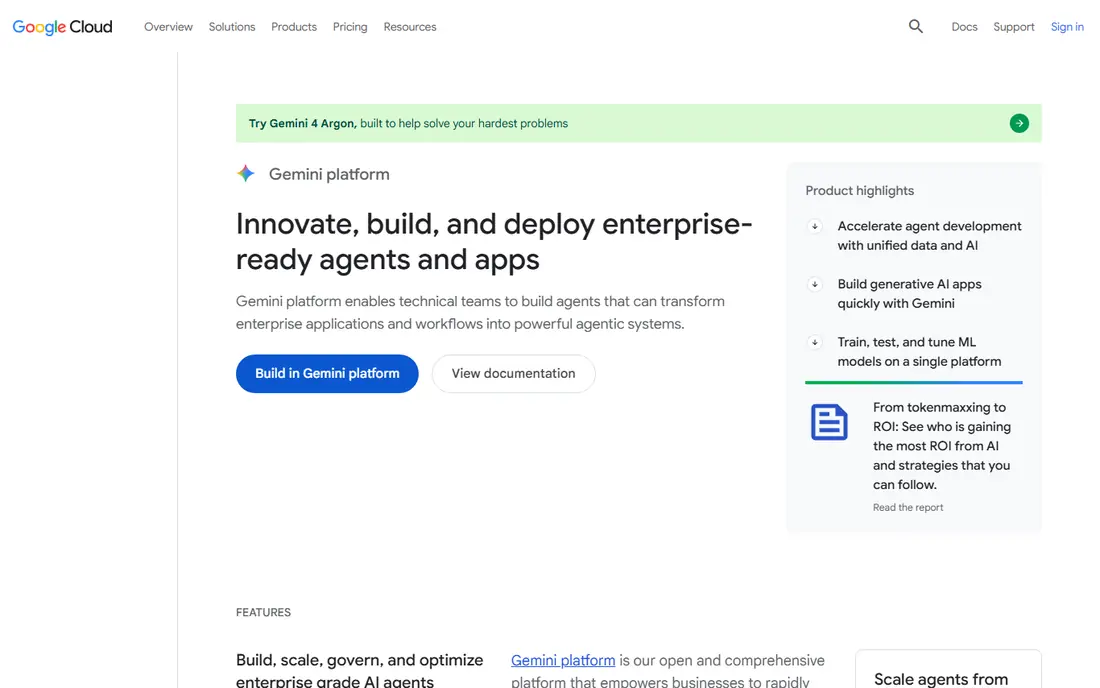
Google Vertex AI suits teams that already use Google Cloud, with Gemini models, BigQuery integration, and tools for tuning, serving, and governing models. It handles multimodal work, document intelligence, and data-heavy pipelines well, and its agent tools cover retrieval, tool calling, and workflow automation. For firms with large Google Cloud data estates, the integration is a real advantage.
The platform is most compelling inside Google Cloud, so firms on Azure or AWS may face extra integration work. Pricing varies by model, compute, and data use, so model a pilot workload before you commit. For Google Cloud teams, Vertex AI is a strong enterprise platform.
- Gemini models
- BigQuery and data integration
- Model tuning and serving tools
- Best fit needs Google Cloud skills
- Pricing varies by model and compute
Databricks combines a lakehouse data platform with AI tools for training, serving, and governing models, which suits teams that need AI beside large-scale data engineering. Mosaic AI covers model training and serving, while Unity Catalog governs data and models in one place. For firms with heavy Spark and machine learning workloads, Databricks can be the system of record for both data and AI.
The breadth is also a limit. For a single chatbot, Databricks is more platform than the job needs, and costs depend on compute units that vary by workload. If your AI work starts from large data pipelines, Databricks is a leading choice. If it starts from a single model API, a simpler platform may be faster.
- Lakehouse data platform
- Mosaic AI tools
- Model training and serving
- Costs depend on compute units
- Platform is broad for a single AI project
The OpenAI Platform gives developers direct access to frontier OpenAI models through APIs, with agent tools, batch processing, fine-tuning, and a wide developer ecosystem. It suits product teams that want the latest model quality and a simple API, without managing cloud infrastructure for model serving. Documentation and community examples are extensive, which speeds up prototyping.
Enterprise governance, data residency, and private networking need extra setup compared with Azure Foundry, and token costs vary sharply by model. Firms with strict Azure or AWS controls may prefer a cloud platform. For model quality and developer speed, the OpenAI Platform remains a benchmark.
- Frontier OpenAI models
- API and agent tools
- Batch and fine-tuning options
- Enterprise governance needs extra setup
- Token costs vary by model
IBM watsonx targets regulated firms that need governed AI, with a studio for building models, governance tools for data and models, and deployment options that include on-premises setups. That focus suits banks, insurers, and public sector teams that need audit trails, model risk controls, and clear data lineage. IBM services and partners can also help with deployment in complex estates.
The ecosystem is smaller than the hyperscale clouds, and pricing is custom for many enterprise deals, which can slow evaluation. If governance and on-premises deployment are your top needs, watsonx deserves a serious look. If you want the widest model catalog, a cloud platform may suit you better.
- Governed AI studio
- Data and model governance
- On-premises options
- Ecosystem is smaller than hyperscale clouds
- Pricing is custom for many deals
Anthropic Claude offers enterprise teams a model family known for long-document reasoning, careful safety design, and strong performance on analysis and coding tasks. The API and enterprise plans cover business use, with controls for access, data handling, and usage, and Claude is also available through cloud platforms such as Bedrock and Vertex AI for firms that prefer that route. For document-heavy work, Claude is a strong model choice.
The model catalog is narrower than a full cloud platform, since you get Claude models rather than many providers in one place. Enterprise terms and pricing vary by plan and channel. If Claude fits your workloads, direct or cloud access both work, and a pilot on real documents will show the value quickly.
- Claude models for long documents
- Safety-focused design
- API and enterprise plans
- Model choice is narrower than cloud catalogs
- Enterprise terms vary by plan
Mistral AI appeals to European firms and teams that want open-weight models, with a European base, deployment options that include on-premises setups, and models that can run inside a private cloud. That openness suits firms that need control over model weights, data residency, and long-term independence from a single cloud provider. Its models cover chat, coding, and document work at competitive quality for their size.
The ecosystem is smaller than Azure, AWS, or Google Cloud, and enterprise support varies by deal, so integration help may be more limited. If sovereignty, openness, and private deployment matter most, Mistral AI is a compelling enterprise option. If you need the widest managed services, a hyperscale platform may fit better.
- Open-weight models
- European base
- On-premises and cloud deployment
- Smaller ecosystem than hyperscale platforms
- Enterprise support varies by deal
How we picked these
We compared official feature pages, pricing pages, app store listings, and privacy and support pages for each product, and we checked that each product exists, works today, and truly fits the topic. We favoured products with clear pricing, a working free tier or trial where claimed, and honest limits, and we left out products that did not fit the topic or lacked a clear official homepage.
We also weighed who each product suits best, rather than ranking on features alone. A product that is excellent for one user can be a poor fit for another, so the write-ups note the trade-off for each pick. Prices change often, so check the vendor pricing page before you buy, and treat any price here as a snapshot from October 2026.
How to choose an enterprise AI platform
Start with your existing cloud and data stack. A platform that fits your identity, networking, and data warehouse will deploy faster and pass security review more easily than a best-in-class tool that needs a new stack. Next, compare model choice, data residency, and governance, including access controls, audit logs, prompt and output logging, and whether your data is used for training. For cost, model token pricing, compute, and data movement separately, and run a pilot with real workloads before you commit to reserved capacity. Finally, check agent and workflow tools, since many enterprise projects now need agents that call tools, retrieve documents, and act inside business systems, not just a single chat model.
FAQ
What is the best AI platform for enterprise?
There is no single winner. Azure AI Foundry suits Microsoft firms, Amazon Bedrock suits AWS firms, Google Vertex AI suits Google Cloud firms, and Databricks suits data-heavy teams. Choose the platform that passes your security review and fits your existing stack.
What is the best enterprise AI tool for data-heavy work?
Databricks and Google Vertex AI suit data-heavy work, with Databricks leading on lakehouse data engineering and Vertex AI leading on Google Cloud data integration. Compare data governance, model serving, and cost for your exact workloads before you choose.
How much do enterprise AI platforms cost?
Costs vary from per-token API pricing to per-seat assistant pricing and custom enterprise contracts. Token costs depend on model choice and volume, while compute, storage, and data movement add to the total. Model the full cost for a pilot workload, not just the headline token price.
Can enterprise AI platforms keep my data private?
Major platforms offer private networking, access controls, and contractual commitments that customer data is not used for model training in enterprise plans, but terms vary by product and plan. Check the data processing terms, residency options, and audit controls for your chosen platform.
Do I need an enterprise platform for a simple chatbot?
Not always. A simple chatbot can run on a single model API with basic retrieval, while an enterprise platform adds value for governance, scale, agents, and integration with business systems. Start small, prove value, then move to a platform when governance or scale demands it.