Best Enterprise AI Agent Platforms in 2026: 8 Platforms Compared
Compare the best enterprise AI agent platforms for 2026, including Copilot Studio, Agentforce, and ServiceNow, on governance, cost, and team fit for teams.
- Editor's choice
 Microsoft Copilot Studio
Microsoft 365 enterprises
Starts atSee websiteVisit microsoft.comFull review - Great alternative
 Salesforce Agentforce
Salesforce sales and service
Starts atSee websiteVisit salesforce.comFull review - Also consider
 ServiceNow AI Agents
IT, HR, and service workflows
Starts atSee websiteVisit servicenow.comFull review
TL;DR:
- The best platform usually matches where your work already lives, such as Microsoft 365, Salesforce, ServiceNow, or a major cloud provider.
- Pricing models differ widely, with per-user, per-conversation, credit, and consumption models, so model your expected volume before comparing prices.
- Governance, audit trails, and human review matter as much as agent capability, especially for customer, finance, and HR work.
- Start with one narrow, measurable workflow, prove value, then expand to more agents and departments.
Quick comparison
| Tool | Best for | Starts at | Free plan? | |
|---|---|---|---|---|
| Microsoft Copilot Studio | Microsoft 365 enterprises | See website | Free trial | Visit |
| Salesforce Agentforce | Salesforce sales and service | See website | Free trial | Visit |
| ServiceNow AI Agents | IT, HR, and service workflows | See website | No | Visit |
 UiPath | RPA estates moving to agents | See website | Free trial | Visit |
 Google Vertex AI Agent Builder | Google Cloud developers | See website | Free trial | Visit |
 AWS Bedrock Agents | AWS engineering teams | See website | Free trial | Visit |
 IBM watsonx Orchestrate | Regulated enterprises | See website | Free trial | Visit |
 Workato | Cross-system governed agents | See website | Free trial | Visit |
The best enterprise AI agent platforms
An AI agent platform lets a business build agents that can read data, follow rules, use tools, and complete multi-step tasks with human oversight. Enterprise platforms add governance, security, audit trails, and integration with existing systems, which matter when agents touch customer data, money, or internal records. The platforms below suit different starting points.
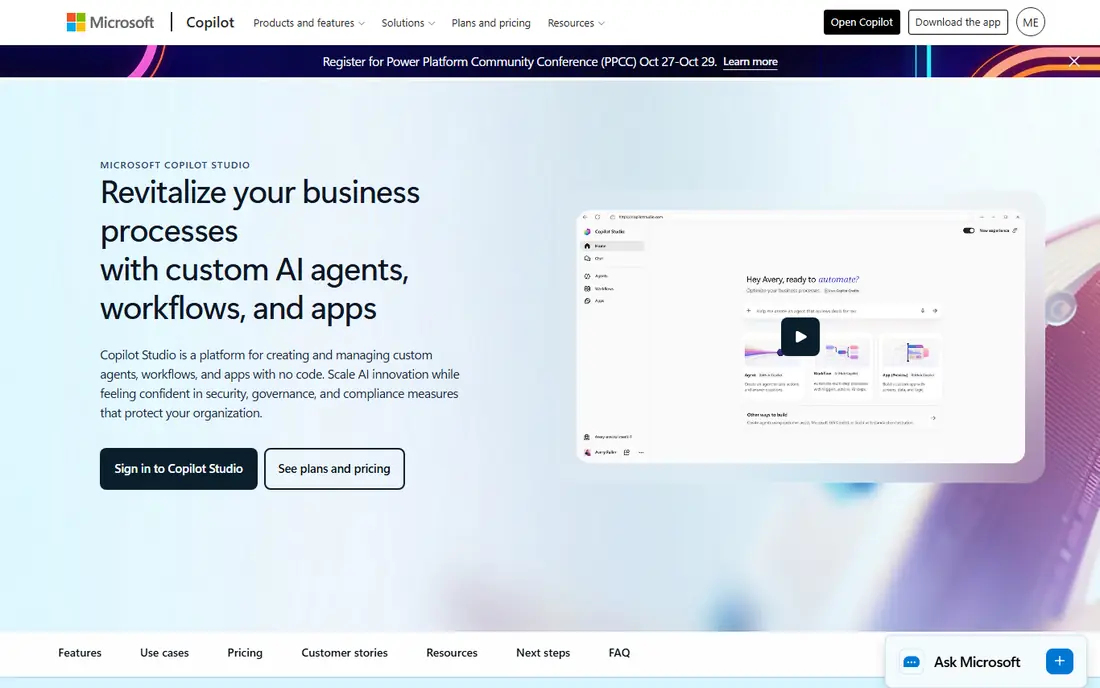
Microsoft Copilot Studio lets teams build agents that work inside Microsoft 365, Teams, and Dataverse, using data and tools those systems already hold. A visual builder helps non-developers create agents for common tasks, such as answering policy questions, triaging requests, or drafting summaries, while developers can extend agents with code and connectors. Governance through Entra ID helps control who can build and use agents.
The main difficulty is cost forecasting. Copilot Studio uses credit packs and pay-as-you-go credits, and consumption depends on agent actions and model calls, which can vary by workflow. For a Microsoft-centered company, the integration and governance benefits are strong. For a company with little Microsoft 365 use, another platform may fit better.
- Native Microsoft 365 and Teams integration
- Entra governance
- Visual agent builder
- Credit consumption can be hard to forecast
- Value drops outside Microsoft tools
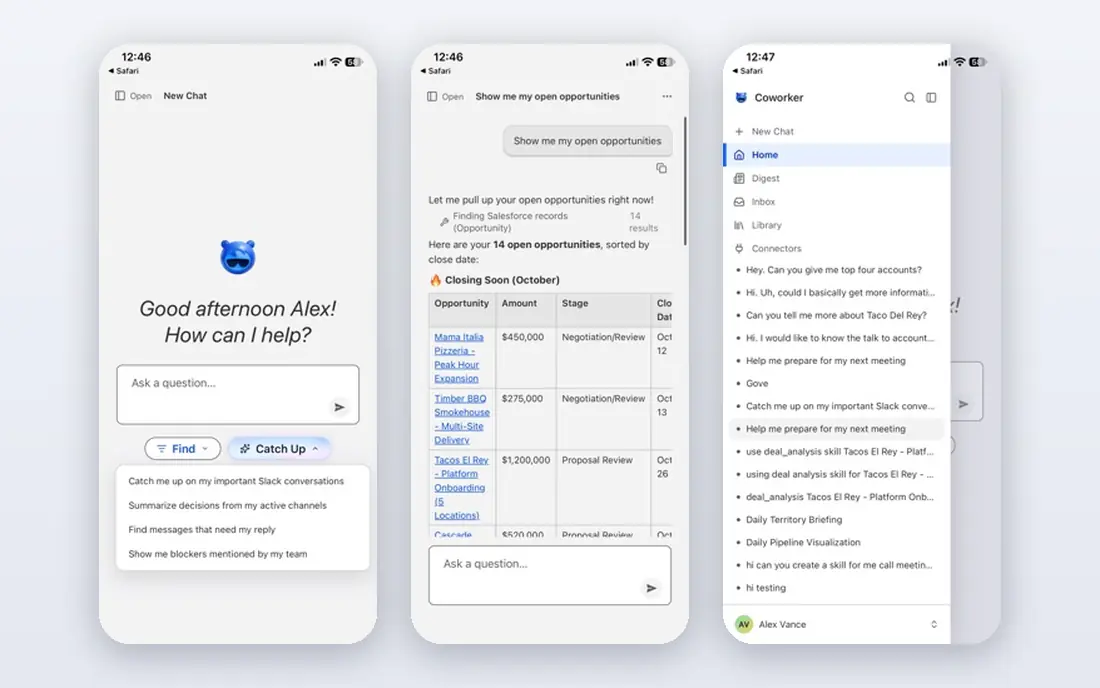
Salesforce Agentforce builds agents that work directly on Salesforce data, which suits sales and service teams that already live in Salesforce. Agents can answer customer questions, summarize cases, draft follow-ups, and help qualify leads, using CRM records and Data Cloud as grounding. Templates for common service and sales tasks speed up the first deployment.
Pricing uses Flex Credits, per-conversation, or per-user options, so total cost depends on volume and agent design. A team should model expected conversations and actions before committing, since a busy service agent can consume credits quickly. For a Salesforce-centered company, Agentforce offers the deepest CRM grounding. Outside Salesforce, its value is much lower.
- Deep CRM and Data Cloud grounding
- Service and sales agent templates
- Flex Credits options
- Value drops fast outside Salesforce
- Conversation and credit costs need modeling
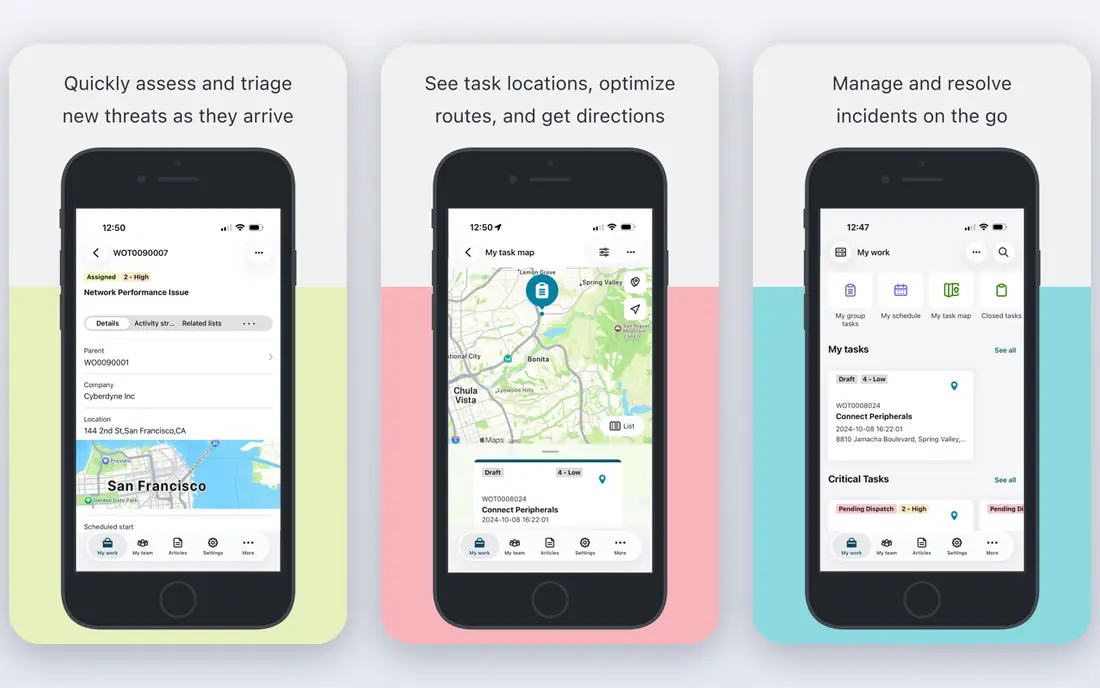
ServiceNow AI Agents suit companies that already run IT service management, HR service delivery, or customer service on ServiceNow. Agents can triage tickets, route requests, summarize cases, and trigger workflows that already exist in the platform, using the configuration and service catalog as grounding. That link to real workflows is the main strength, since agents act on systems staff already use.
Pricing is enterprise and quote-based, often bundled into ServiceNow tiers, and implementation needs workflow cleanup and ownership. It is not a quick tool for a small team without ServiceNow. For a ServiceNow customer with a clear service workflow to automate, it offers governed agents with audit trails and human review built into the platform.
- Strong workflow grounding
- IT, HR, and customer service coverage
- Governance controls
- Quote-based enterprise pricing
- Implementation takes planning
UiPath is a natural step for enterprises that already use robotic process automation to handle repetitive tasks. Its agentic platform lets agents orchestrate existing robots, so an agent can decide what to do and a robot can carry out the system steps. That reuse protects past automation investment and speeds up deployment for processes that already have robot support.
For a company without an RPA estate, UiPath offers less immediate value than a suite-native platform, and full platform pricing is enterprise-level. A free trial and lower self-serve tiers help with testing, but serious use needs a quote. If your processes already run on UiPath robots, adding agents on top is a logical next step.
- Agents can orchestrate existing robots
- Strong automation governance
- Multi-model support
- Weak value without an RPA footprint
- Enterprise pricing for full platform
Google Vertex AI Agent Builder suits engineering teams that build agents on Google Cloud. It supports search-grounded agents that can answer from enterprise documents and data, plus agents that use tools and APIs to complete tasks. Model choice and Google Cloud security controls give teams flexibility, and connectors link to common enterprise systems.
The trade-off is that setup is developer-led. There is no simple visual builder for every business user, and costs depend on token usage, grounding, and tool calls. For a Google Workspace or Google Cloud company with engineering capacity, Vertex AI offers a flexible agent foundation. For a business team without developers, a suite-native platform will be faster.
- Search-grounded agents
- Many connectors
- Model choice within Google Cloud
- Developer-led setup
- Pricing is consumption-based and needs modeling
AWS Bedrock Agents suit teams that already build on AWS and want model choice without managing model infrastructure. Bedrock supports models from several providers, plus tools, knowledge bases, and action groups that let agents retrieve data and call APIs. AWS identity and access controls help govern which agents can touch which systems and data.
As with Vertex AI, this is an engineering platform, not a business-user builder. Teams need developers to design prompts, tools, guardrails, and evaluation, and costs depend on model and tool usage. For an AWS-centered enterprise with engineering capacity, Bedrock offers control and flexibility. For a team that wants ready-made agents, a suite platform will deliver faster results.
- Wide model choice
- Deep AWS identity controls
- No separate agent fee in many cases
- No visual builder for business users
- Engineering investment required
IBM watsonx Orchestrate suits large, regulated enterprises that need governed agents across HR, procurement, sales, and other business functions. It offers a catalog of prebuilt agents and skills, plus tools to build custom agents that use enterprise apps and data. Governance, audit, and model flexibility are central to the platform, which matters for industries with strict compliance needs.
The main limits are pricing transparency above entry tiers and implementation time, which can run into months for a broad rollout. A trial helps test a narrow use case, but a full deployment needs planning, data access, and change management. For a regulated enterprise that wants a governed, multi-model agent platform, watsonx Orchestrate is a serious candidate.
- Prebuilt agent catalog for HR, procurement, and sales
- Strong governance
- Multi-model support
- Pricing above entry tiers is often opaque
- Implementation can be long
Workato suits enterprises that need agents to work across many systems, not just one suite. Its integration platform connects hundreds of apps, and its agent tools let agents use those connections under governance rules, with human review where needed. That cross-system reach helps for processes that span CRM, finance, HR, and support tools.
Pricing is quote-based for enterprise use, and value is highest for teams that already need integration and workflow automation. A company with only one main system may get faster value from that system's native agent platform. For a company with a mixed stack and a need for governed cross-system agents, Workato offers a strong, integration-first option.
- Broad integration library
- Governed agent actions
- Workflow automation heritage
- Quote-based enterprise pricing
- Best value for teams already using integration platforms
How we picked these
We compared official product pages, pricing pages where published, and public reviews for Microsoft Copilot Studio, Salesforce Agentforce, ServiceNow AI Agents, UiPath, Google Vertex AI Agent Builder, AWS Bedrock Agents, IBM watsonx Orchestrate, and Workato. We favored platforms that exist and work in October 2026, offer enterprise governance and integration, and suit different starting stacks. We did not claim hands-on testing, and quote-based pricing should be confirmed in writing.
How to choose an enterprise AI agent platform
Start with where the work already lives. If data and processes sit in Microsoft 365, Salesforce, or ServiceNow, the native platform usually wins on grounding and governance alone. If work spans many systems, an integration-first or cloud-native platform may fit better. If you have strong engineering capacity, a developer platform offers more control. If you do not, a suite platform with templates will deliver faster.
Next, model pricing against your volume. Per-conversation, per-action, credit, and consumption models can differ by a large amount at scale, and the sticker price rarely shows the real cost. Run a pilot with a realistic volume, track consumption per task, and project that to monthly and yearly totals before signing a broad contract.
Governance before scale
Define who can build agents, which data an agent can read, which actions need human approval, and how every agent action is logged. Start with read-only or draft-only agents for sensitive work, then add actions once review processes work well. Also plan for evaluation, since agent quality can drift as data and prompts change, and regular checks catch errors before they affect customers.
Pick one workflow to prove value
Choose a workflow with clear volume, clear success criteria, and a human review step, such as ticket triage, case summarization, or lead qualification. Measure time saved, error rate, and customer impact, not just agent activity. If the pilot does not meet its criteria, adjust the workflow or the platform choice before expanding to more departments.
FAQ
Which enterprise AI agent platform is best?
The best platform depends on your existing stack. Microsoft Copilot Studio suits Microsoft 365 companies, Salesforce Agentforce suits Salesforce companies, and ServiceNow AI Agents suit ServiceNow customers. Cloud and integration platforms suit engineering teams and mixed stacks. Shortlist by stack first, then compare governance and total cost.
How much do enterprise AI agent platforms cost?
Costs vary by model, including per-user, per-conversation, credit, and consumption pricing, and many enterprise platforms are quote-based. Always model expected volume, such as conversations, actions, or credits per month, and ask for a total price at that volume. A pilot with real usage gives a far better estimate than a headline price alone.
Do AI agents replace staff?
AI agents are best used to handle repetitive, high-volume tasks and to draft work for human review, rather than to replace staff outright. Human oversight remains important for sensitive decisions, customer complaints, and regulated work. Plan roles around review, exception handling, and improvement, not around removing people without a plan for quality and safety.
What governance controls should an enterprise agent platform have?
Look for role-based access, data controls, audit trails, human-in-the-loop approvals, prompt and tool guardrails, and evaluation tools. Also check compliance support for your industry and region, including data residency and retention controls. If a platform cannot show who approved an agent action and what data it used, it is not ready for sensitive enterprise work.
Can a small business use an enterprise AI agent platform?
Some platforms offer trials or lower tiers that a small business can test, but enterprise platforms are mainly built for larger organizations with governance and integration needs. A small business may get faster value from a simpler automation tool or a single-suite agent feature, then move to an enterprise platform once volume and complexity justify it.
Sources
- https://www.microsoft.com/en-us/microsoft-copilot/microsoft-copilot-studio
- https://www.salesforce.com/agentforce/
- https://www.servicenow.com
- https://www.uipath.com
- https://cloud.google.com/vertex-ai
- https://aws.amazon.com/bedrock/
- https://www.ibm.com/products/watsonx-orchestrate
- https://www.workato.com