5 Embedded Business Intelligence Benefits Worth Shortlisting in 2026
5 best embedded business intelligence benefits, compared on pricing, free plans and best-fit use. Each pick comes with its main catch. Straight answers.
- Editor's choice
 Domo
Governed data for AI-driven insights
Starts atSee websiteVisit domo.comFull review - Great alternative
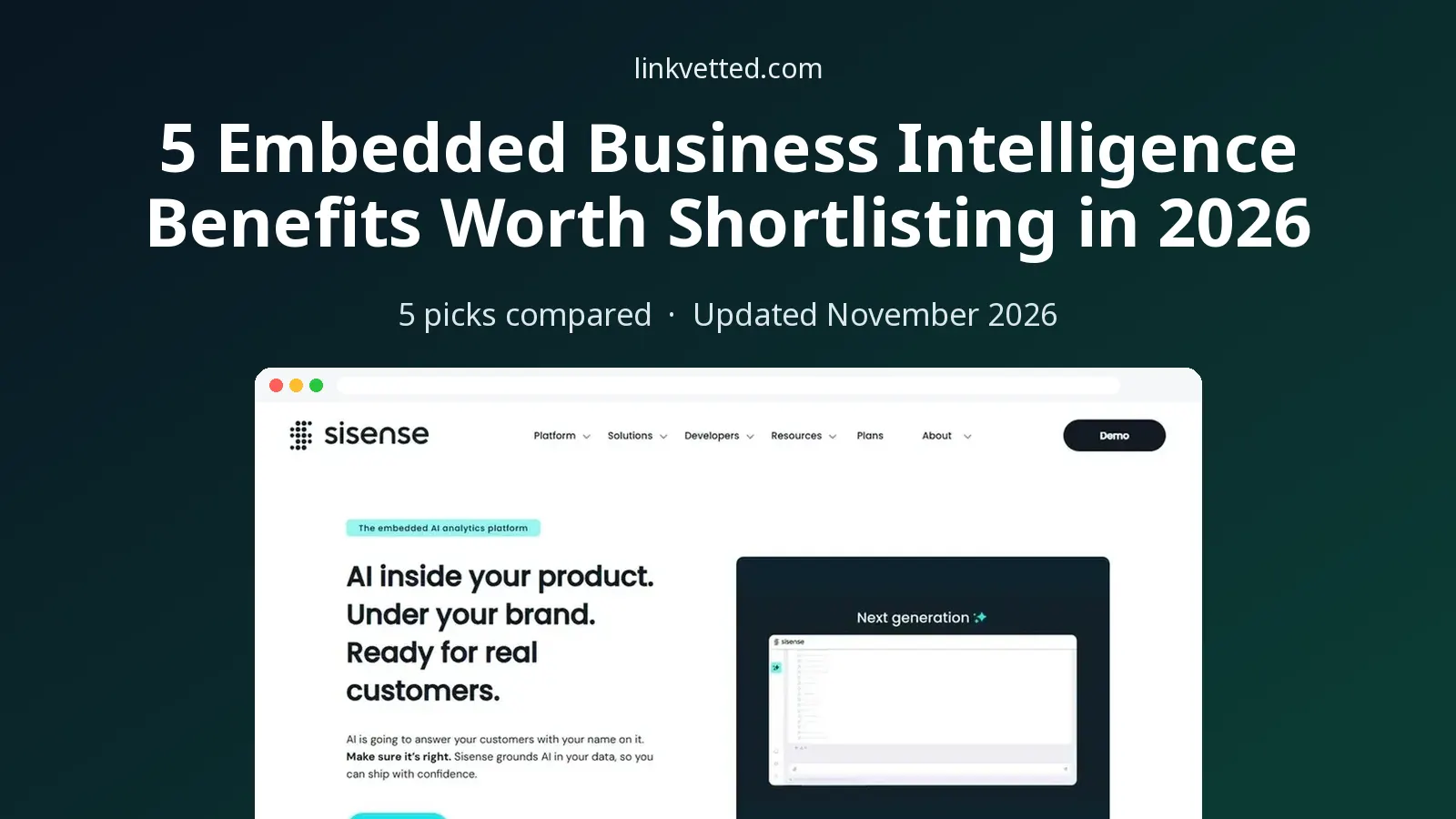
 Sisense
Adaptable embedding across skill levels
Starts atSee websiteVisit sisense.comFull review - Also consider
 Looker
Governed metrics with AI agents
Starts atSee websiteVisit cloud.google.comFull review
Direct answer
Our first pick is Domo, best for governed data for AI-driven insights. Listed starting prices: Tableau from $15 per user a month. Sisense is the stronger choice for adaptable embedding across skill levels, while Looker suits governed metrics with AI agents. The full list of 5 tools follows, with prices and free plan facts.
TL;DR:
- Domo takes the first slot, best suited to governed data for AI-driven insights.
- Tableau is the one to check for visual analytics embedded in products.
- Before buying Sisense, weigh this: breadth of choices can overwhelm newcomers.
- For the cheapest start, look at Tableau: $15 per user per month.
- Just one of the 5 tools, Tableau, has a free plan.
Last checked November 2026. Prices and plan details were read from the vendors' own pages in November 2026; vendors change plans often, so confirm the current price on the vendor site before you buy.
Quick comparison
| Tool | Best for | Starts at | Free plan? | |
|---|---|---|---|---|
| Domo | Governed data for AI-driven insights | See website | Free trial | Visit |
| Sisense | Adaptable embedding across skill levels | See website | Free trial | Visit |
| Looker | Governed metrics with AI agents | See website | Not stated | Visit |
 Qlik Sense | End-to-end data integration and analytics | See website | Not stated | Visit |
 Tableau | Visual analytics embedded in products | $15 per user a month | Yes | Visit |
5 embedded business intelligence benefits in detail
Short on time? The summary and table above give the quick view of 5 embedded business intelligence benefits, and the profiles that follow give the detail behind each entry.
Domo makes the most sense for governed data for AI-driven insights. Domo describes products that strengthen the whole data journey, connecting and moving data from any source, preparing it, and expanding access for exploration. On top of that, the full data journey approach means teams should expect onboarding across multiple capabilities before embedded analytics feels natural.
If you only have to drop a dashboard into an app, a narrower tool may be quicker. Pick Domo when governance and data preparation benefits are central to how your product will deliver embedded insight. This comparison lists no price for Domo; ask the vendor. On free options: Free trial.
Where it falls short: Embedding sits within a bigger data journey.
- Prepares and expands data access
- Focus on governed data for AI agents
- Platform breadth needs onboarding
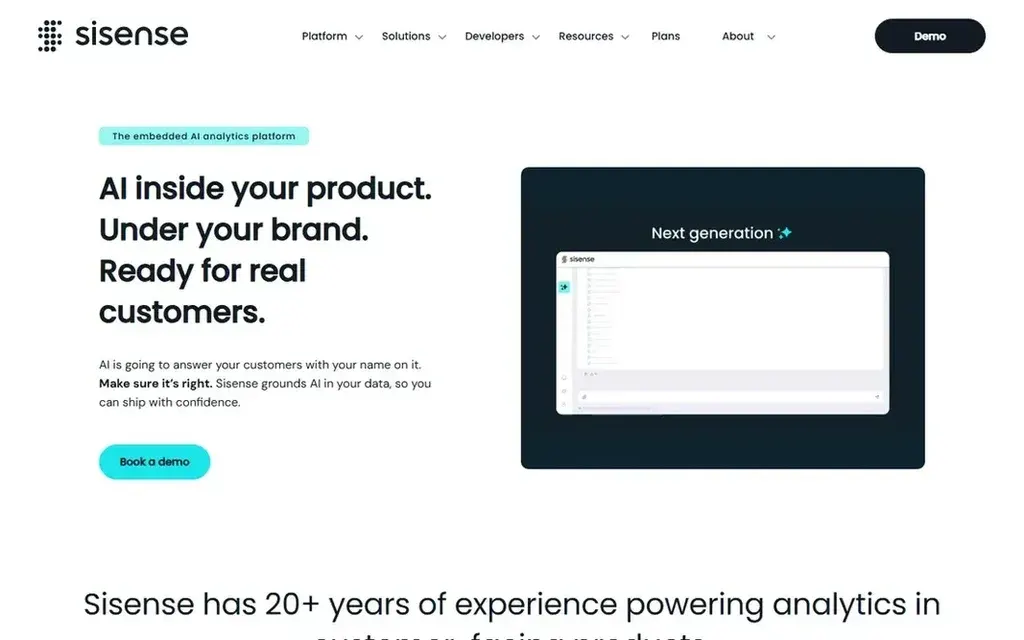
Choose Sisense for adaptable embedding across skill levels. Having multiple build paths means teams must decide standards early, or embedded work can fragment across approaches. Also, Sisense presents itself as an AI-powered embedded analytics product that unlocks insights and converts data into revenue.
Where it is weaker: Breadth of choices can overwhelm newcomers.
Highlights: Targeted at turning data into revenue. In daily use, products with a single straightforward dashboard need may not use that breadth. From a buyer's view, consider Sisense when varied skill levels inside one organization have to ship embedded analytics, and weigh whether your team can govern the mix. No starting price is listed for Sisense here; confirm pricing on the vendor site. On free options: Free trial.
- Pro-code
- Low-code and no-code choices
- Embedding still needs product planning
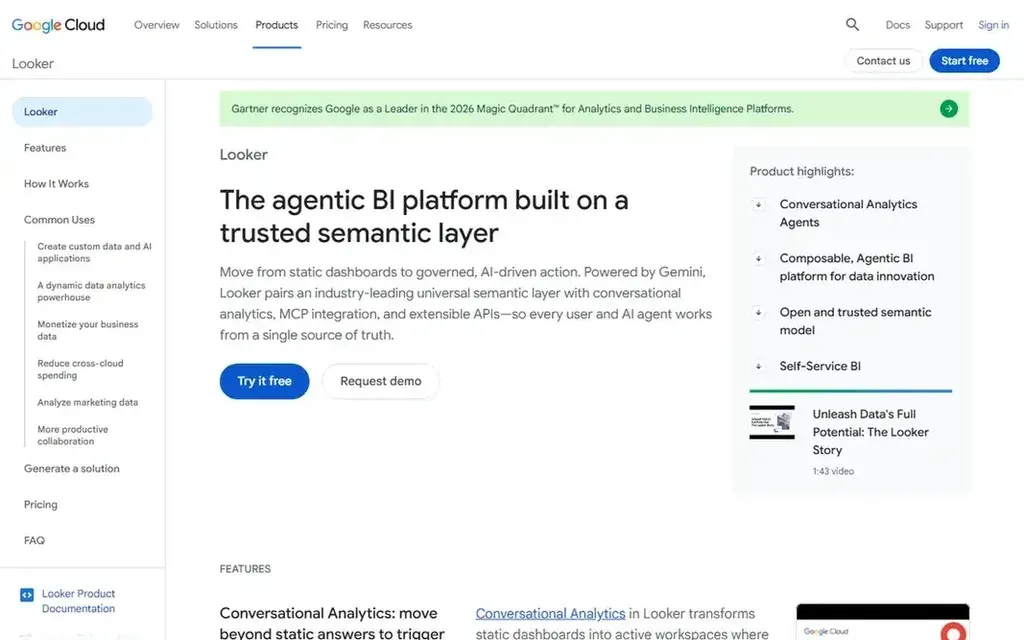
Looker is built with governed metrics with AI agents in mind. Looker is described as Google Cloud agentic business intelligence and embedded analytics.
Its core benefit is a trusted semantic layer that brings together metric definitions, so embedded dashboards and agents draw on the same governed numbers. Pick Looker when metric consistency and AI-assisted exploration are the central benefits you need from embedding. Check the vendor site for Looker pricing; none is listed in this comparison. Free plan details: Not stated.
Limits to weigh: Semantic modeling takes upfront effort.
- Embedded analytics from Google Cloud
- Trusted semantic layer brings together metrics
- Tied to Google Cloud ecosystem
For end-to-end data integration and analytics, Qlik Sense is a natural candidate. The embedded benefit is that analytics sits close to the pipelines that prepare the data, so products can present insights built on managed, integrated sources.
Choose Qlik Sense when integration and data quality benefits are as important to you as the embedded dashboards themselves. Qlik, now with Talend, documents a data fabric and end-to-end data integration, data quality and analytics options. Qlik Sense shows no starting price here, so confirm the cost on the vendor site. On free options: Not stated.
Drawbacks to consider: Wide system needs coordination.
- Handles integration and data quality
- Analytics alongside data pipelines
- Embedding is one part of a bigger stack
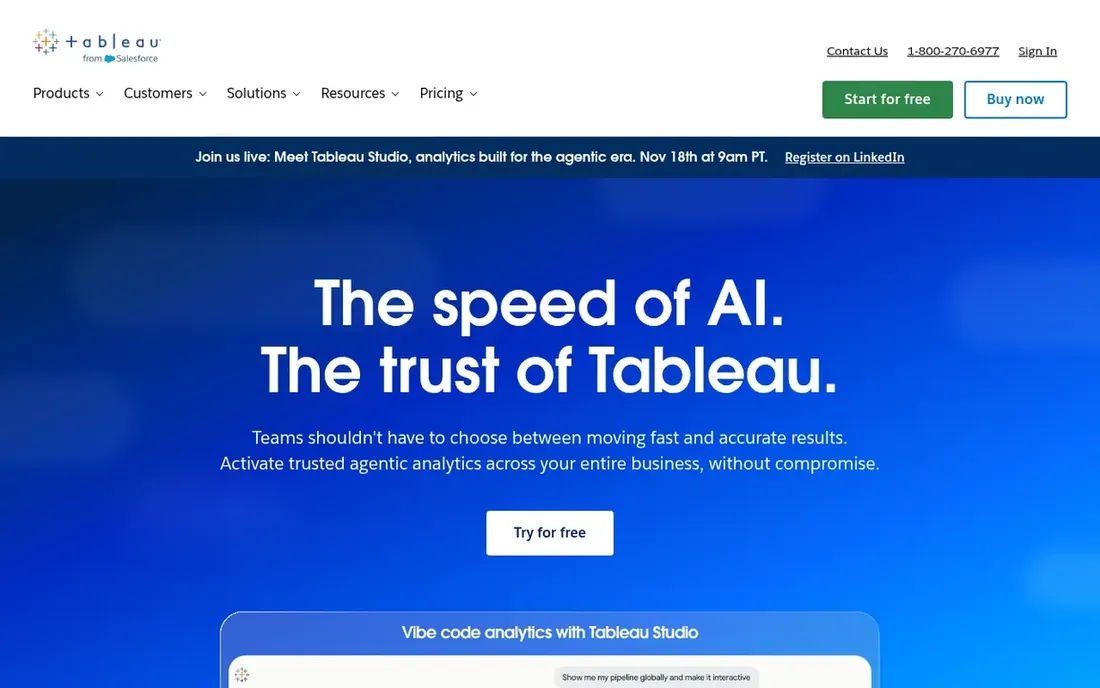
Tableau is aimed squarely at visual analytics embedded in products. Organizations that mainly need a light chart component inside an app may find a narrower embedded library more straightforward. Tableau is business intelligence and analytics software built around seeing and understanding data.
Its documented strengths are connecting to almost any database, building visualizations by drag-and-drop, and sharing them with a click. In practice, the benefit of rich visual adaptability includes configuration effort, since embedding Tableau into a product involves planning around data connections and sharing. What you pay to start with Tableau: $15 per user per month. Free access exists with Tableau.
Honest limits: Deep customization can get complicated.
- Connects to almost any database
- Share dashboards with a click
- Embedding requires setup work
How we compared the tools
Before you commit
- Ask Domo, Sisense, Looker and Qlik Sense for a written quote, since no starting price is shown.
- Test the free plan from Tableau against your real workload before relying on it.
- Use real work to test the free trial from Domo and Sisense, rather than a demo project.
- Read the limits listed for Domo first: system breadth needs onboarding.
- Confirm the exact Domo plan that includes your must-have features.
- Check how data leaves Tableau: formats, limits and whether exports are available on every plan.
FAQ
Can I try these tools before paying?
Often, yes. Tableau has a free plan and Domo and Sisense offer a free trial. Use your own data and a real task during the test, and check what the free tier or trial limits before you rely on it. For the full picture, the cards above cover all 5 entries of this embedded business intelligence benefits list, including price, free plan and limits.
Which options for embedded business intelligence benefits have a free plan?
Tableau is the only tool in this list with a free plan. Free plans usually cap users, projects or features, so check the limits on the vendor page. Several others offer a trial instead. Prices, free plan details and limits for all 5 tools in this embedded business intelligence benefits roundup sit on the individual cards above.
What is the cheapest option for embedded business intelligence benefits in this list?
On published monthly entry prices, Tableau is the lowest here at $15 per user per month. Entry price is only part of the cost, because seats, add-ons and billing terms can change the total. Each of the 5 options in this embedded business intelligence benefits guide has its own card above with the price, free plan and limits.
Is Domo the right pick for everyone comparing embedded business intelligence benefits?
No single tool suits every team. Domo comes first because it fits governed data for AI-driven insights, while Sisense suits flexible embedding across skill levels and Looker suits governed metrics with AI agents. Match the tool to your own size, budget and workflow before deciding.
What are the central benefits of embedded business intelligence?
Embedded business intelligence brings analytics into the applications people already use, so insight appears where decisions are made. Typical benefits bundle consistent metrics through a semantic layer, broader data access, and AI-assisted exploration.
Sources
- https://www.domo.com
- https://www.sisense.com
- https://cloud.google.com/looker
- https://www.qlik.com
- https://www.tableau.com