Best Emailing Services for Ecommerce in 2026: 9 Services Compared
Compare the best emailing services for ecommerce in 2026, with pricing, automation, and store integrations to help you pick the right platform for your store.
- Editor's choice
 Klaviyo
Data-led ecommerce growth
Starts at$20 per monthVisit klaviyo.comFull review - Great alternative
 Omnisend
Email, SMS, and push in one place
Starts at$16 per monthVisit omnisend.comFull review - Also consider
 Mailchimp
Small stores wanting an all-rounder
Starts at$13 per monthVisit mailchimp.comFull review
TL;DR:
- Klaviyo and Omnisend lead for store-first automation, while Brevo suits large lists that send less often.
- Pricing rises with list size on most platforms, so compare the cost at your current list size, not just the entry price.
- A free plan helps you test templates and flows, but abandoned cart and post-purchase flows matter more than a free tier alone.
- Check the store integration first: Shopify, WooCommerce, and BigCommerce support varies by platform and plan.
Quick comparison
| Tool | Best for | Starts at | Free plan? | |
|---|---|---|---|---|
| Klaviyo | Data-led ecommerce growth | $20 per month | Yes | Visit |
| Omnisend | Email, SMS, and push in one place | $16 per month | Yes | Visit |
| Mailchimp | Small stores wanting an all-rounder | $13 per month | Yes | Visit |
 Brevo | Large lists with modest send volume | $9 per month | Yes | Visit |
 Drip | Behaviour-based automation | $39 per month | Free trial | Visit |
 ActiveCampaign | Advanced automation plus CRM | $19 per month | Free trial | Visit |
 Constant Contact | Simple campaigns and events | $12 per month | Free trial | Visit |
 Kit | Creator-led stores and newsletters | See website | Yes | Visit |
 Shopify Email | Stores already on Shopify | See website | Yes | Visit |
The best emailing services for ecommerce
These platforms handle the jobs that matter to a store: welcome flows, abandoned carts, post-purchase follow-up, and repeat-purchase campaigns. Our pick for most growing stores is Klaviyo, with Omnisend close behind for smaller budgets.
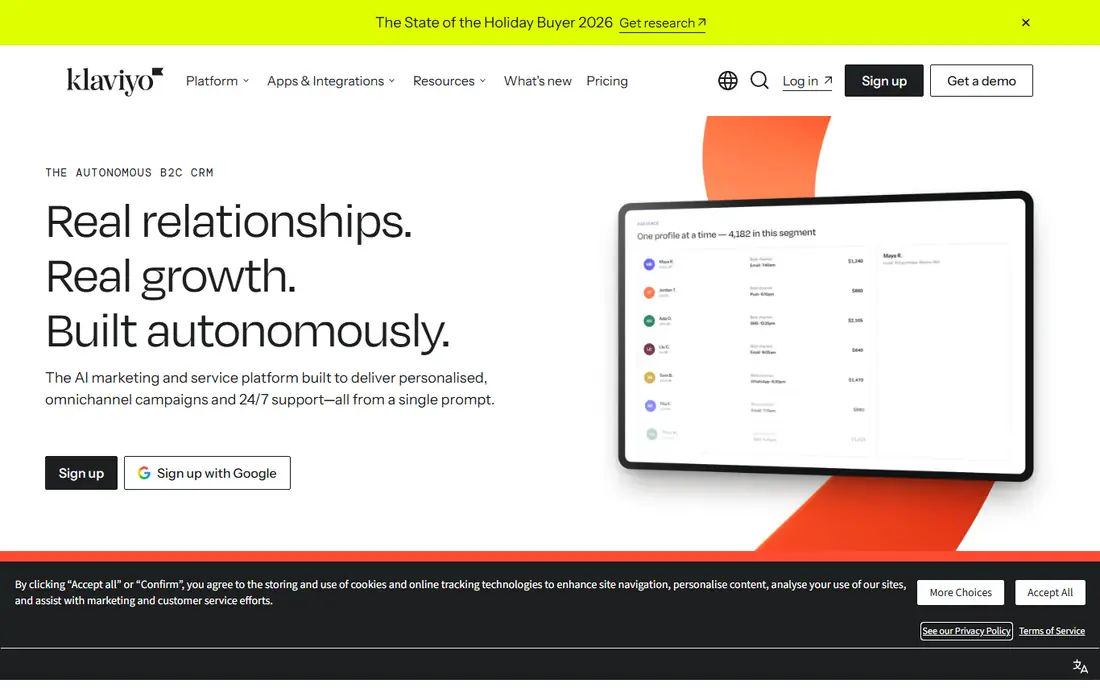
Klaviyo is built around customer data first and email second. It pulls purchase history, browsing behaviour, and predicted value into segments, so a store can send a different message to a first-time buyer, a repeat buyer, and a customer who has gone quiet. That depth is why larger direct-to-consumer brands tend to stay with it once they are sending at volume.
The trade-off is cost and complexity. The entry plan covers a small list, and the bill grows with active profiles, so a store should model the price at 5,000 and 10,000 profiles before committing. Teams that only send a monthly newsletter may find the power unnecessary. Teams that live on flows, testing, and retention will get more from it than from a simpler tool.
- Deep Shopify and WooCommerce data
- Strong segmentation
- Built-in SMS and reviews tools
- Costs rise quickly as profiles grow
- Setup takes time for smaller teams
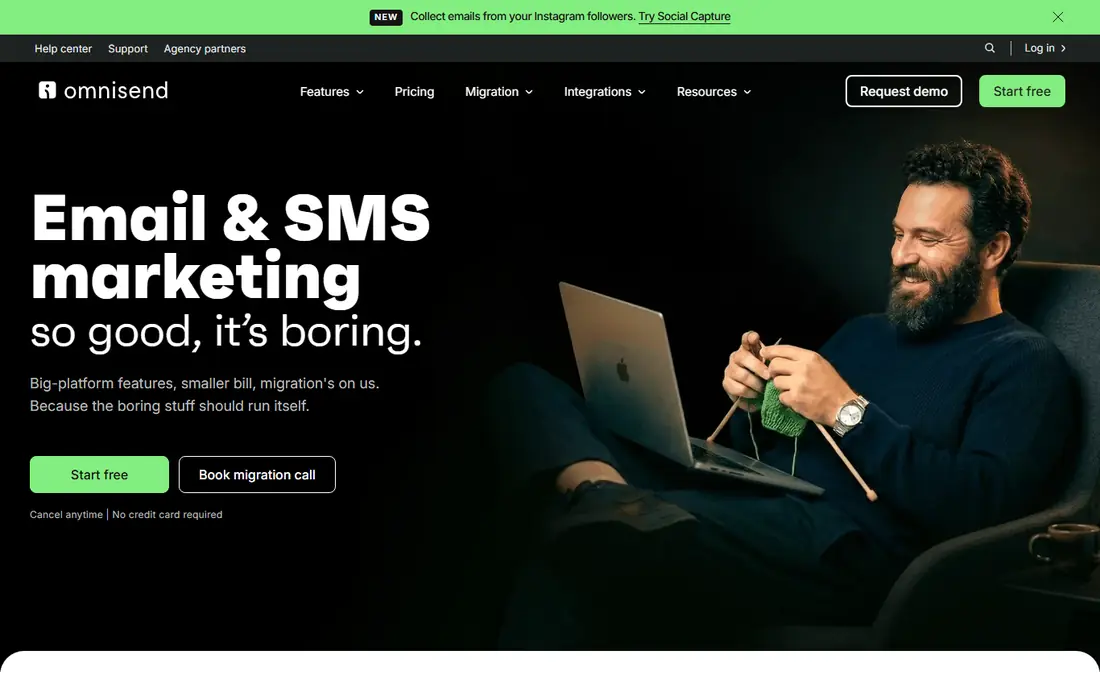
Omnisend suits a store that wants solid automation without hiring a specialist. Its pre-built flows cover welcome, abandoned cart, browse abandonment, and post-purchase messages, and the editor makes it easy to add product blocks and discount codes. Email, SMS, and web push can sit in the same flow, which helps a small team keep messages consistent.
The catch is the ceiling. Larger stores that want deep predictive analytics or complex branching may outgrow it sooner than they would Klaviyo. For stores under a few thousand contacts, though, the balance of price, speed, and features is hard to beat. The free plan is useful for testing, but paid plans are where the automation becomes practical.
- Ready-made ecommerce flows
- Email plus SMS and push
- Clear pricing for smaller stores
- Advanced reporting is thinner than Klaviyo
- Some features sit on the Pro plan
Mailchimp remains the safe, widely known choice for a small store that also needs landing pages, social posting, and basic automation in one account. Its templates are polished, its editor is easy to learn, and most store platforms connect to it without extra work. For a shop sending regular campaigns and a few simple flows, it does the job well.
The honest limit is ecommerce focus. Its segmentation and product recommendations are capable, but they do not go as deep as the store-first tools on this list. Pricing also deserves a close read, since the plan structure and contact counting can make a growing list more expensive than the headline price suggests. Check the cost at your real list size before you switch.
- Wide template library
- Familiar interface
- Many integrations beyond stores
- Ecommerce depth lags Klaviyo and Omnisend
- Billing counts unsubscribed contacts on some plans
Brevo prices by how many emails you send, not by how many contacts you store. That makes it a strong pick for a store with a large list that mails once or twice a month, or for a business that also needs transactional messages such as order confirmations. The free plan allows a limited number of emails per day with unlimited contacts, which is generous for testing.
The downside is design and store depth. Its ecommerce automation is solid rather than standout, and teams that want ready-made, highly polished store flows may prefer Omnisend or Klaviyo. Brevo wins on value and flexibility. It is less convincing as a single tool for a brand that wants the deepest retention analytics available.
- Unlimited contacts on the free plan
- Pricing by email volume
- Transactional email included
- Ecommerce templates are less polished
- SMS and chat add-ons raise the bill
Drip is made for established stores that want to act on behaviour: what a shopper viewed, bought, or ignored, and how that should change the next message. Its workflow builder handles branching, split testing, and goals without forcing a team into rigid templates. Revenue reporting keeps the focus on sales per subscriber, not just opens and clicks.
That focus comes at a price. The entry plan starts higher than Mailchimp or Brevo, and there is no free tier to fall back on. For a store still finding its audience, that cost may be hard to justify. For a store with steady traffic and a clear retention plan, the unlimited sends and behaviour tools can pay for themselves in recovered carts alone.
- Unlimited sends on paid plans
- Visual workflow builder
- Revenue reporting per person
- No permanent free plan
- Entry price is higher than simpler tools
ActiveCampaign fits a store or small business that wants email, automation, and customer records in one system. Its automation builder supports conditional paths, scoring, and site tracking, which helps teams tailor messages by behaviour over time. The CRM side also helps when a sale needs a human follow-up rather than another email.
The catch is complexity. A team that only wants a weekly campaign and an abandoned cart flow may find the setup heavy, and the price rises with contacts and features. It is a better fit for teams that will actually use the automation depth. Used lightly, it is more tool than most small stores need.
- Deep automation and conditional logic
- Built-in CRM
- Strong deliverability tools
- Learning curve is steep
- Interface can feel busy for simple campaigns
Constant Contact is a good choice for a small store owner who wants to send clean campaigns quickly and move on. The editor is straightforward, templates look professional, and extras such as event registration and surveys help businesses that sell in person as well as online. Support is a genuine strength for teams without a marketing specialist.
The limit is automation depth. Welcome and cart flows exist, but they are simpler than the store-first platforms here. A growing store that depends on complex retention flows will likely need to move later. For a shop that values simplicity and steady campaigns over advanced flows, Constant Contact is a calm, dependable option.
- Easy editor and templates
- Event and survey tools
- Helpful support for beginners
- Automation is basic compared with Klaviyo
- Ecommerce flows are limited
Kit, formerly ConvertKit, suits creators who sell digital products, courses, or small-batch goods alongside a newsletter. Its automation is visual and easy to follow, and its free plan covers a large subscriber count, which helps a creator grow an audience before paying. Landing pages and forms are simple to set up and look clean.
The trade-off is store depth. Kit does not match Klaviyo or Omnisend for product data, cart flows, or catalogue-driven recommendations. A creator-led store with simple needs will be happy here. A catalogue store with many products, variants, and repeat-purchase flows should pick a store-first platform instead.
- Generous free subscriber tier
- Clean automation for creators
- Good landing pages
- Ecommerce features are lighter than Klaviyo
- Pricing jumps on paid plans
Shopify Email is the simplest option for a store that already runs on Shopify. It lives inside the Shopify admin, pulls product and customer data directly, and lets a merchant send campaigns without learning a new platform. For a new store sending occasional campaigns, that simplicity is a real advantage.
The limit is scope. Automation, segmentation, and template variety are far more limited than dedicated email platforms, and it only makes sense for Shopify merchants. Once a store needs serious flows, SMS, or cross-channel campaigns, it should graduate to Klaviyo, Omnisend, or Drip. As a starting point, though, it is hard to fault.
- Built into Shopify admin
- Uses store data directly
- No separate tool to learn
- Automation and design options are limited
- Only practical for Shopify stores
How we picked these
We compared official pricing pages, store integrations, automation features, and free plan terms for platforms that serve online stores in the United States. We favoured tools with a live store integration, a clear abandoned cart or welcome flow, and published pricing that a small business can check before signing up. We left out generic newsletter tools with no real ecommerce features.
What to check before you choose
Start with your store platform and your list size, since those two facts narrow the list fast. A Shopify store will get the most from Klaviyo or Omnisend, while a WooCommerce store should check that its chosen tool syncs orders and products cleanly. Then price the tool at your current list size and at double that size, because email costs grow with the list.
Test the flows that earn money
Set up a welcome flow, an abandoned cart flow, and a post-purchase flow during any trial. Check that product images load, discount codes apply, and unsubscribes work. A pretty template means little if the cart flow fails on mobile.
Watch deliverability and consent
Only mail people who opted in, and keep list hygiene in mind as the list grows. Check that the platform supports double opt-in where you need it, clear unsubscribe links, and bounce handling. Good deliverability depends as much on list quality as on the tool itself.
FAQ
What is the best emailing service for ecommerce for a small store?
Omnisend and Mailchimp are strong starting points for a small store, since both offer a free plan and ready templates. Klaviyo is the better long-term pick if you plan to build deep flows and retention campaigns. Choose based on how much automation you will actually use in the first three months.
How much should an ecommerce email service cost?
Entry paid plans on this list start from $9 to $39 per month, but the real cost depends on list size and send volume. Brevo can be cheaper for large, lightly mailed lists, while Klaviyo and Drip cost more at scale. Always check the price at your current contact count before you commit.
Do I need SMS as well as email?
Not at first, but SMS helps for time-sensitive messages such as cart reminders and shipping updates. Klaviyo and Omnisend include SMS in the same platform, which keeps consent and messaging in one place. Start with email, then add SMS only for customers who opt in.
Can I switch email platforms later?
Yes, most platforms offer import tools and migration help, but flows, templates, and segments usually need rebuilding. Export your list, suppression list, and templates before cancelling. Run the new platform alongside the old one for one campaign cycle to catch problems early.
Is Shopify Email enough for a new store?
For occasional campaigns, yes, since it is built into Shopify and uses store data directly. It falls short once you need advanced automation, SMS, or detailed segmentation. Treat it as a starting point, and move to a dedicated platform when flows start driving regular revenue.