Best Email Marketing Platforms for Ecommerce in 2026: 8 Platforms Compared
Best email marketing platforms for ecommerce compared for 2026: 8 tools for stores, with pricing, free plans, automation and SMS options explained in detail.
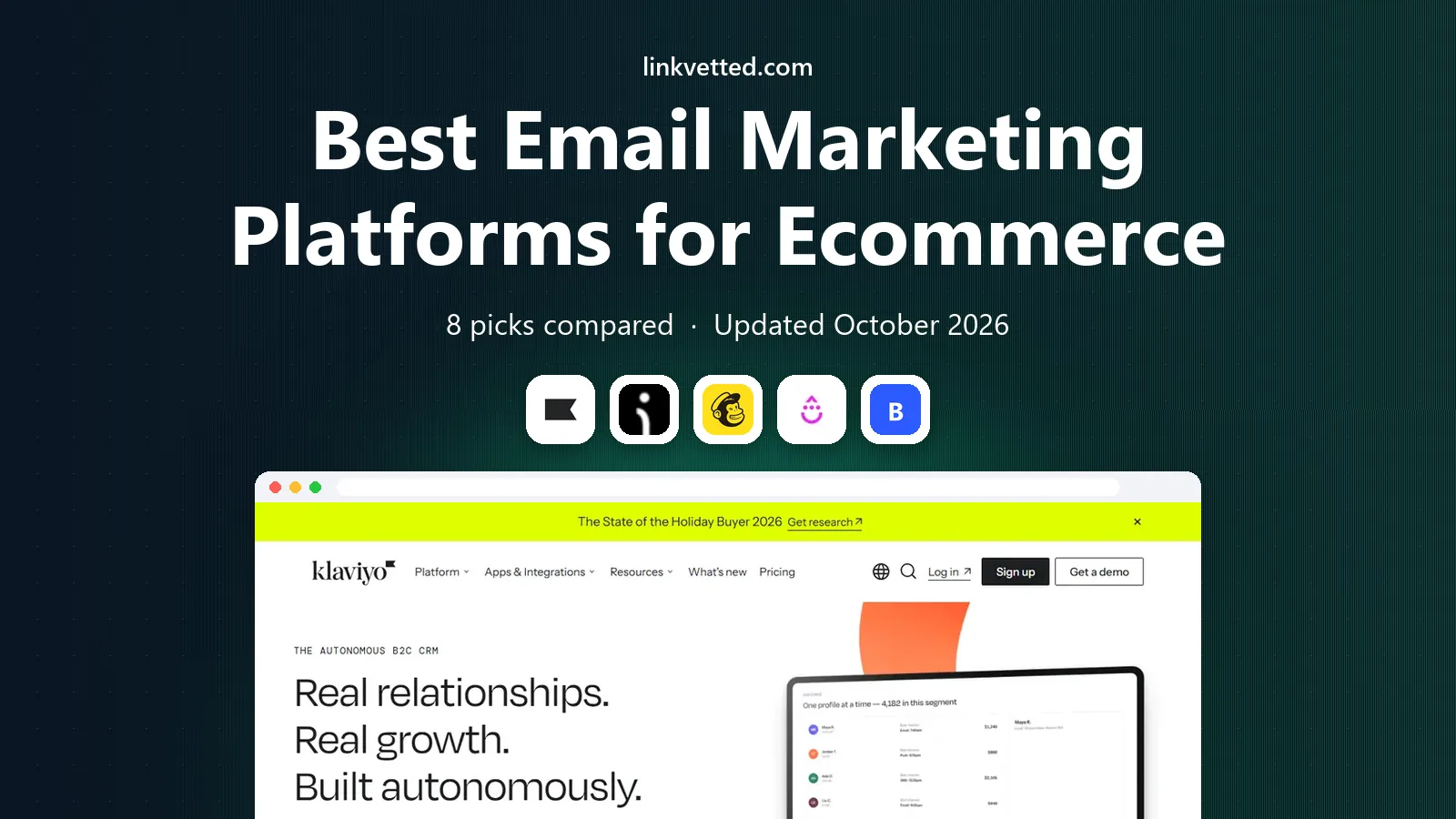
- Editor's choice
 Klaviyo
Deep ecommerce automation
Starts at$20 per monthVisit klaviyo.comFull review - Great alternative
 Omnisend
Ecommerce email plus SMS
Starts at$16 per monthVisit omnisend.comFull review - Also consider
 Mailchimp
General small store email
Starts at$13 per monthVisit mailchimp.comFull review
TL;DR:
- Klaviyo is the deepest ecommerce choice for Shopify and WooCommerce stores, with behaviour based flows and detailed segmentation.
- Omnisend gives smaller stores email, SMS and push in one workflow at a lower starting price than Klaviyo.
- Mailchimp and MailerLite suit stores that want simple newsletters and basic automation without a steep learning curve.
- Price depends on contacts, sends or both, so compare the cost at your actual list size, not only the starter price.
Quick comparison
| Tool | Best for | Starts at | Free plan? | |
|---|---|---|---|---|
| Klaviyo | Deep ecommerce automation | $20 per month | Yes | Visit |
| Omnisend | Ecommerce email plus SMS | $16 per month | Yes | Visit |
| Mailchimp | General small store email | $13 per month | Yes | Visit |
 Drip | Revenue focused ecommerce flows | $39 per month | Free trial | Visit |
 Brevo | Low cost volume sending | $9 per month | Yes | Visit |
 MailerLite | Simple value for small stores | $10 per month | Yes | Visit |
 ActiveCampaign | Advanced automation and CRM | $15 per month | Free trial | Visit |
 Shopify Email | Basic sends inside Shopify | See website | Yes | Visit |
The best email marketing platforms for ecommerce
These eight platforms cover deep store automation, simple newsletters and low cost sending for online stores.

Klaviyo is built around store data, not just a mailing list. It pulls in browsing, purchase history and product views, then lets you build flows for abandoned carts, welcome series, post purchase follow up and win back campaigns. Segmentation is detailed, so you can target buyers of one product, repeat buyers or lapsed customers with different messages.
That depth comes with cost and complexity. As contacts grow, monthly pricing climbs faster than on simpler platforms, and SMS adds further cost. Small stores may find the setup heavy for a simple newsletter. For stores where email drives a large share of revenue, Klaviyo is our pick for most serious sellers.
- Deep Shopify and WooCommerce data
- Behaviour based flows for cart, browse and post purchase
- Detailed segmentation and predictive tools
- Price rises fast as a list grows
- Learning curve is steeper than simpler tools

Omnisend is a strong middle option for stores that want more than a newsletter, without paying Klaviyo prices. It combines email, SMS and web push in single automation workflows, so a cart reminder can start by email and follow up by SMS. Templates and prebuilt flows for welcome, cart and post purchase work help new stores launch quickly.
Reporting and segmentation do not go as deep as Klaviyo, and larger stores may miss predictive tools. For small to mid-size stores, that trade is usually worth it, since the workflows are easier to build and maintain. If you want SMS without a second tool, Omnisend deserves a close look.
- Email, SMS and push in one workflow
- Ecommerce templates and flows built in
- Clear pricing for small stores
- Reporting is lighter than Klaviyo
- Advanced segmentation is less deep
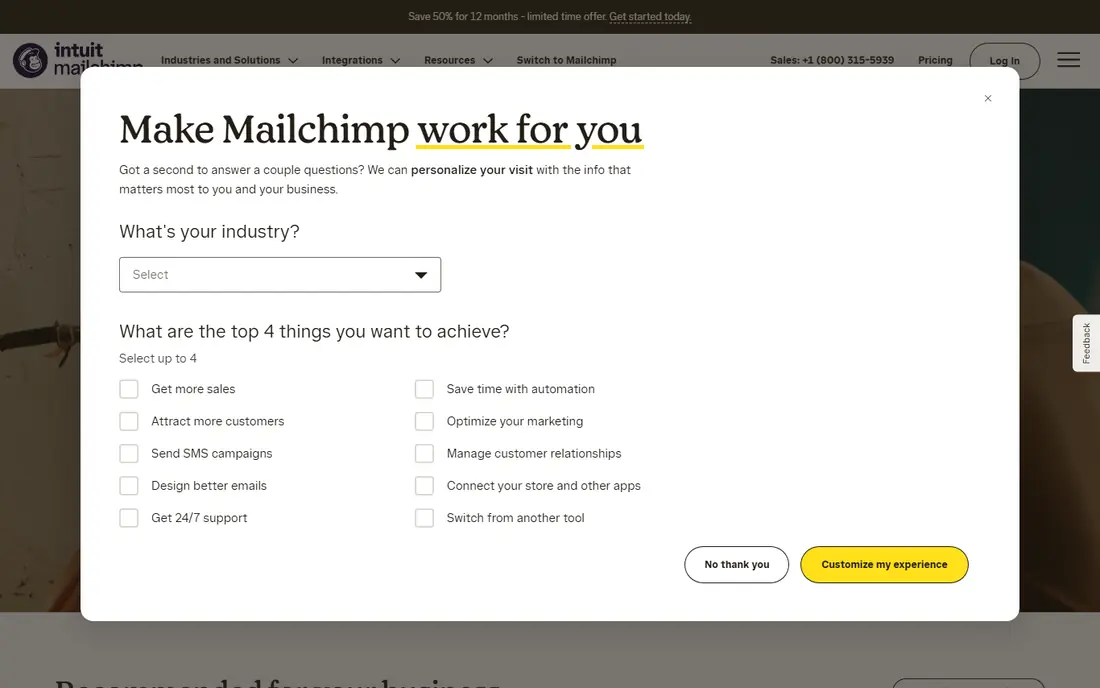
Mailchimp remains the most familiar name in email marketing, and for many small stores that familiarity helps. The editor is friendly, templates are plentiful, and integrations cover most store platforms, payment tools and social apps. Basic store flows for welcome and abandoned cart are included on paid plans, and the free plan lets a new store start without a card.
Ecommerce depth is the limit. Product data, segmentation and predictive tools are lighter than Klaviyo, and pricing can rise as contacts grow. If your store needs simple, reliable email and you value ease over depth, Mailchimp is a safe and well supported choice.
- Very large integration library
- Friendly editor and templates
- Good for newsletters and basic store flows
- Ecommerce data is shallower than Klaviyo
- Free plan limits automation and segmentation
Drip is made for stores that judge email by revenue, not only by opens. Its workflows link directly to store events, and revenue reporting shows which flows and campaigns actually led to sales. The visual builder makes multi-step paths, such as a post purchase series that changes by product, easier to follow than a list of separate rules.
The starting price is higher than Mailchimp or MailerLite, and there is no permanent free plan, only a trial. That makes Drip a poor fit for a brand new store with a tiny list. For an established store that wants clear revenue tracking from email, Drip is a focused and capable option.
- Ecommerce focused automation and revenue reporting
- Visual workflow builder
- Strong Shopify and WooCommerce links
- No permanent free plan
- Starting price is higher than simpler tools
Brevo, formerly Sendinblue, suits stores with large lists but modest send frequency, because pricing is based on email volume rather than contact count. You can keep a large list without paying per contact, and add SMS, WhatsApp and a simple CRM in the same account. That mix makes Brevo useful for stores that also need basic customer management.
Ecommerce data and segmentation are not as deep as Klaviyo, and some sending features need approval before use. For a store that sends a weekly newsletter and a few flows, Brevo offers strong value. Check the send limits on your plan, since a busy sale week can use volume faster than expected.
- Pricing based on sends, not contacts
- Email, SMS and WhatsApp in one place
- Built-in CRM tools
- Ecommerce segmentation is lighter than Klaviyo
- Some features need manual approval
MailerLite is our pick for small stores that want email done well without a complex setup. The editor is clean, landing pages are included, and basic automation for welcome emails and abandoned carts is easy to build. Pricing is friendly for small lists, and the free plan covers a new store while it grows.
Larger stores may miss deeper ecommerce integrations and reporting, and some advanced segmentation needs a higher plan. If you sell a modest catalogue and send regular newsletters plus a few flows, MailerLite keeps the work simple and the bill low. It is a good first paid tool for a growing store.
- Clean editor and landing pages
- Easy automation for welcome and cart flows
- Good value for small lists
- Ecommerce integrations are fewer than Mailchimp
- Advanced reporting is limited
ActiveCampaign suits stores and small businesses that want automation beyond basic email flows. Its builder supports conditional paths, lead scoring, site tracking and CRM records, so a store can follow a customer from first visit to repeat purchase in one system. Integrations cover stores, help desks and sales tools.
That power brings complexity, and a store that only needs a newsletter may find the interface heavy. There is also no permanent free plan, only a trial, so testing needs a deadline. For teams that want one system for email, automation and customer records, ActiveCampaign is a strong choice.
- Deep automation builder and CRM
- Lead scoring and conditional paths
- Many integrations
- No permanent free plan
- Setup can feel complex for simple newsletters
Shopify Email is the simplest option for a store that already runs on Shopify. It lives inside the Shopify admin, uses store customer data for segments, and lets you send campaigns and basic automations without learning a new platform. For a new Shopify store, that low friction matters, and the free monthly allowance covers early sending.
It is not a full email platform. Automation, segmentation and reporting are basic compared with Klaviyo or Omnisend, and it does not work outside Shopify. Use Shopify Email while your needs are simple, and move to a dedicated platform when flows, SMS or deeper reporting become important.
- Built into Shopify with no extra setup
- Uses store data for segments
- Simple templates and scheduling
- Only works for Shopify stores
- Automation and reporting are basic
How we picked these
We compared official pricing pages, feature pages, store integrations and public user reviews for email platforms that are live and maintained in October 2026. We required real ecommerce features, such as store data sync, cart flows or product based segmentation, rather than generic newsletter tools alone. We did not claim hands-on testing, and we checked that each homepage listed here belongs to the product named.
We also compared pricing at small list sizes, since starter prices can mislead. A platform that looks cheap for 500 contacts may be costly at 5,000, while a send based platform may stay cheaper for a large but quiet list. The notes above flag those differences, so you can model cost at your own list size.
How to choose an ecommerce email platform
A platform choice should follow your store size, your flows and your tolerance for setup time.
Start with flows, not templates
List the flows you need in the next six months, such as welcome, abandoned cart, browse abandonment, post purchase and win back. Check that each flow is available on the plan you would actually buy, not only on the top plan. Templates matter less, since you can rebuild a design, but a missing flow type forces a workaround or a second tool. Prioritise the three flows that will drive most revenue first.
Model the real monthly cost
Compare cost at 500, 2,000 and 10,000 contacts, and add SMS if you plan to use it. Contact based pricing rises with list growth, even if you rarely send, while send based pricing rises with campaign volume. Clean your list before you migrate, since paying for inactive contacts wastes money on every platform. A short trial with your real list, not a demo list, gives the truest cost picture.
Protect deliverability from day one
Set up domain authentication, use a clear sender name, and warm up a new sending domain slowly rather than blasting a full list at once. Keep signup forms clear about what subscribers will receive, and make unsubscribing easy, since complaints harm deliverability more than a smaller list does. Check spam and bounce reports weekly in the first month, and pause any flow that shows a sharp rise in complaints.
FAQ
What is the best email marketing platform for ecommerce?
Klaviyo is the best deep choice for established Shopify and WooCommerce stores, while Omnisend is a strong lower cost alternative with SMS included. Mailchimp and MailerLite suit smaller stores that want simple email. Choose by store size, flows and budget, not by brand alone.
Is Klaviyo better than Mailchimp for ecommerce?
Klaviyo is better for deep ecommerce automation, product based segmentation and behaviour flows, while Mailchimp is simpler and often cheaper at small list sizes. Stores that rely heavily on email revenue usually gain more from Klaviyo depth. Stores that mainly send newsletters may prefer Mailchimp ease and price.
How much does ecommerce email marketing cost?
Starter plans range from about 9 to 39 dollars per month at small list sizes, with free plans available on several tools. Cost rises with contacts or sends, and SMS adds a separate charge. Model the price at your current list size and at double that size before you commit.
Do I need SMS as well as email?
SMS can lift cart recovery and flash sale results, but it costs more per message and needs clear consent. Start with email flows, then add SMS only for high intent messages such as cart reminders and order updates. Keep SMS frequency low, and always include a clear opt out.
Can I migrate my list from another email platform?
Yes, most platforms offer import tools for contacts, tags and basic segments, and many offer migration help on paid plans. Automations, templates and historical reporting usually do not transfer cleanly, so rebuild your key flows by hand. Warm up sending on the new platform and check deliverability in the first weeks.
What is a good open rate for ecommerce email?
Open rates vary by industry, list quality and Apple privacy changes, so a single benchmark can mislead. Focus instead on clicks, revenue per email and unsubscribes for your own list over time. A clean, engaged list with modest opens usually beats a large, cold list with high opens but few sales.