Top 5 ELT Software for Cloud Data Warehouses for 2026 (Prices and Free Plans)
Compare 5 best ELT software for cloud data warehouses, with prices, free plans and who each fits. Concise write-ups of every option. Checked this month.
- Editor's choice
 Azure Data Factory
Azure-centric hybrid integration
Starts atSee websiteVisit azure.microsoft.comFull review - Great alternative
 Airbyte
Open-source control and self-hosting
Starts at$20 per monthVisit airbyte.comFull review - Also consider
 Fivetran
Automatic, low-maintenance data pipelines
Starts at$12,000Visit fivetran.comFull review
Direct answer
Start with Azure Data Factory if you need Azure-centric hybrid integration. Listed starting prices: Airbyte from $20 per month and Fivetran from $12,000. If your case is different, Airbyte suits open-source control and self-hosting and Fivetran suits automatic, low-maintenance data pipelines. All 5 tools are compared below on price, free plan and limits.
TL;DR:
- The list opens with Azure Data Factory, aimed at Azure-centric hybrid integration.
- Starting prices begin at $20 per month with Airbyte.
- Fivetran stands alone as the one tool in this list with a free plan.
- What to know about Airbyte first: self-hosting brings operational work.
Last checked November 2026. Prices and plan details were read from the vendors' own pages in November 2026; vendors change plans often, so confirm the current price on the vendor site before you buy.
Quick comparison
| Tool | Best for | Starts at | Free plan? | |
|---|---|---|---|---|
| Azure Data Factory | Azure-centric hybrid integration | See website | Free trial | Visit |
| Airbyte | Open-source control and self-hosting | $20 per month | Free trial | Visit |
| Fivetran | Automatic, low-maintenance data pipelines | $12,000 | Yes | Visit |
 Matillion | Warehouse-native transformation work | See website | Free trial | Visit |
| Talend Data Integration | Governed integration across environments | See website | Not stated | Visit |
ELT Software for Cloud Data Warehouses compared in detail
LinkVetted compared 5 ELT software for cloud data warehouses. The goal is a practical shortlist: published prices, free plan facts, best-fit use cases and honest limits for every entry.
Pick Azure Data Factory if this describes you: Azure-centric hybrid integration. Teams moving data into an Azure-hosted warehouse commonly treat it as the default starting point. Its advantages are most solid inside the Azure ecosystem, and teams on other clouds may prefer a platform-neutral tool.
Limits to weigh: Best value inside Azure.
On top of that, though it cuts coding, designing and maintaining pipelines still needs data engineering skills, so plan for that capacity. From a buyer's view, Azure Data Factory is Microsoft's cloud-based hybrid data integration service for building pipelines at enterprise scale, with a low-code approach to constructing data factories. This comparison lists no price for Azure Data Factory; ask the vendor. Free options: Free trial.
- Cloud-based hybrid integration
- Low-code pipeline building
- Pipeline design still takes skill
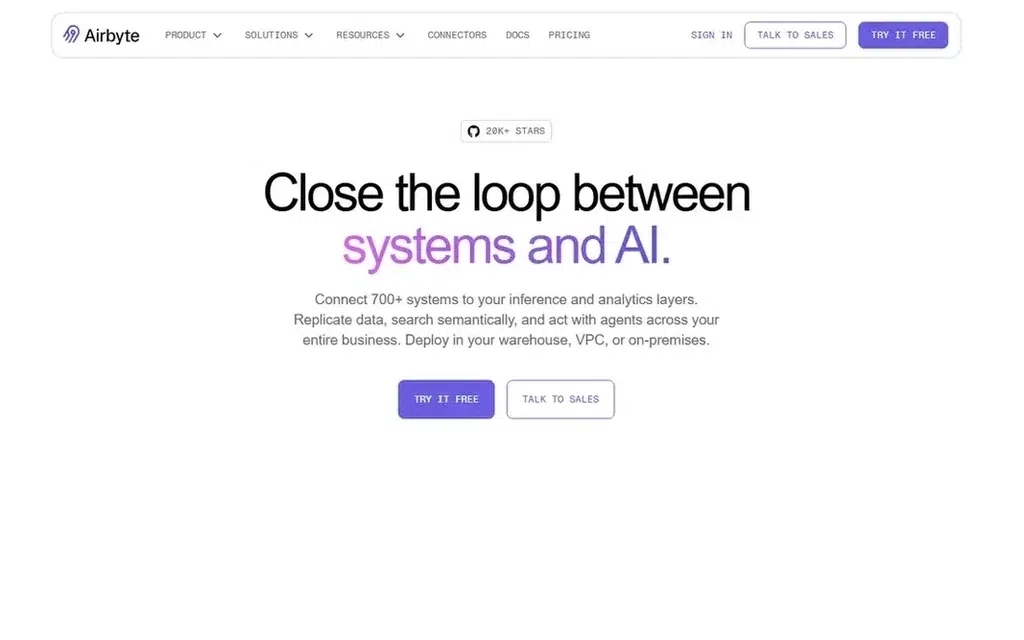
Airbyte works best for open-source control and self-hosting. It can run in your own VPC or on its hosted cloud offering, which appeals to teams that want to own their data context and feed AI agents with pipelines they control.
Where it falls short: Self-hosting brings operational work.
Teams without product engineering capacity may prefer a more managed service, whereas those with strict data residency needs may find the self-hosted model a solid fit. Beyond that, running pipelines yourself means owning upgrades, monitoring and connector maintenance, which can offset the adaptability. Price to start with Airbyte: $20 per month. On free options: Free trial.
- Open-source integration system
- Hundreds of documented sources
- Connector quality varies by source
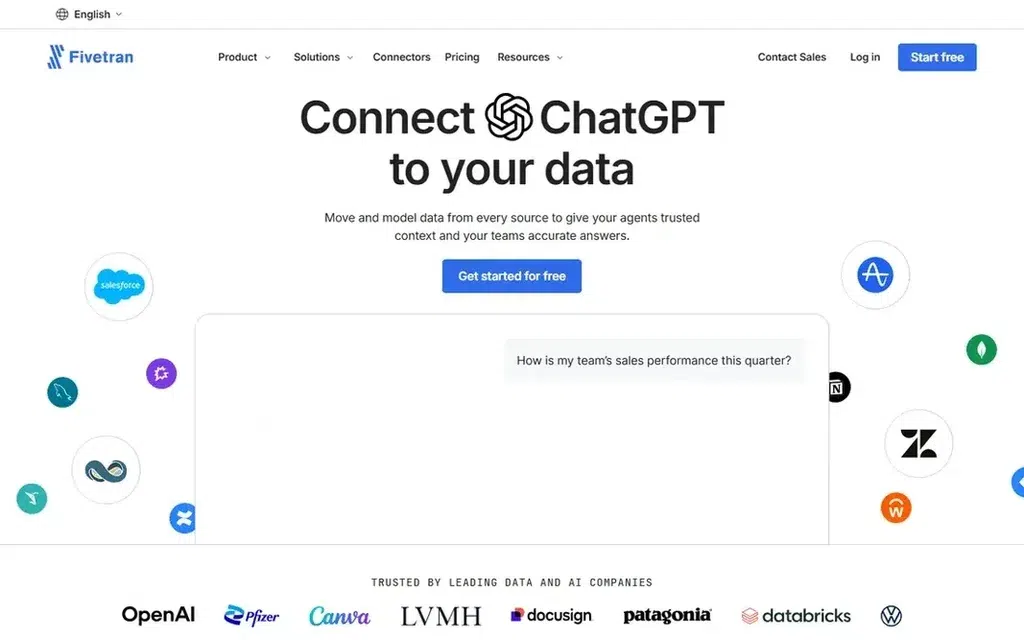
Fivetran is designed for automatic, low-maintenance data pipelines. Fivetran is an automatic data movement product that centralizes the data a team needs so analysts can deliver insights quicker. Teams standardizing on a cloud data warehouse frequently start here when breadth of sources and minimal maintenance matter more than deep customization.
What to check first: Less control over internals.
Consider another choice if your pipelines are highly custom or you want to run and modify connectors yourself. Since the product emphasizes automation, teams that require fine-grained control over every sync or transformation step may find it less adaptable than code-first alternatives. The starting price for Fivetran: $12,000. Fivetran offers a free plan.
Main advantages: Automatic data movement.
- Centralizes numerous sources
- Geared toward quicker insight delivery
- Automation can obscure pipeline detail
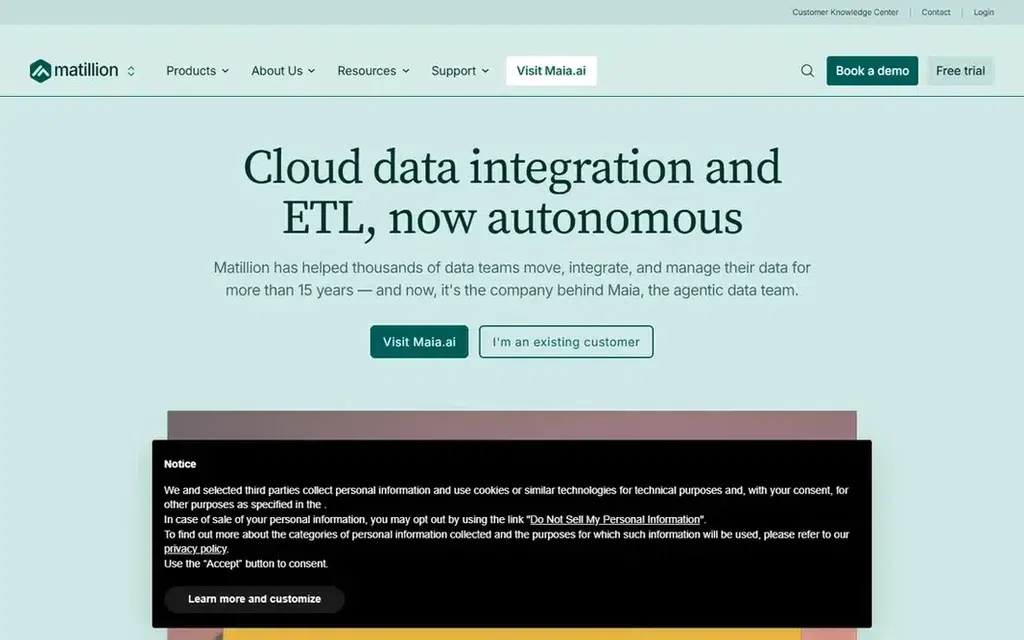
Matillion is designed for warehouse-native transformation work. Matillion is a data integration and transformation system designed around cloud data warehouses, letting teams build ELT pipelines and transformations where the data lives.
As for the details, if your primary need is straightforward, hands-off replication from plenty of sources, a dedicated movement tool may be more straightforward. Worth adding: Matillion rewards teams with warehouse skills and a clear transformation strategy, so smaller teams without that background should weigh the ramp-up time. No starting price is listed for Matillion here; confirm pricing on the vendor site. Free options: Free trial.
Where it is weaker: Needs warehouse familiarity.
- Transformation-focused workflows
- Aimed at cloud data systems
- Less suited to pure replication
Talend Data Integration
Best for: Governed integration across environments
Where Talend Data Integration fits: governed integration across environments. Teams already using Qlik tooling may find the combined product a natural extension of existing data work.
Where it falls short: Setup demands specialist skills.
From a buyer's view, if your priority is a fast managed pipeline with minimal configuration, a lighter tool is worth considering instead. Talend Data Integration shows no starting price here, so confirm the cost on the vendor site. On free options: Not stated.
- Data governance capabilities
- Wide integration and transformation
- Enterprise-oriented complexity
Selection criteria
Pricing pages, product documentation and feature lists were the main sources, and every entry carries at least one honest drawback. Prices and plan limits come from vendor pages and can change, so confirm them on the vendor site before you buy. The order reflects how well each tool fits the most common buying scenario for ELT software for cloud data warehouses, then price clarity, then free plan access. It is a starting point, not a verdict.
What to confirm before you sign up
- Get a written quote from Azure Data Factory, Matillion and Talend Data Integration; the list shows no starting price for them.
- Test the free plan from Fivetran against your real workload before relying on it.
- Take the trial from Azure Data Factory, Airbyte and Matillion and push a live task through it before you pay.
- Before choosing Azure Data Factory, weigh its main limit: best value inside Azure.
- Find out whether the entry plan of Talend Data Integration covers your must-haves or only a trimmed-down version.
- Ask Matillion whether prices are locked for the first term and what happens at renewal.
FAQ
Do these tools publish their prices?
Not all of them. Azure Data Factory, Matillion and Talend Data Integration publish no starting price, so expect a quote request for those. The rest, Airbyte included, show a starting price, though seats and billing terms still change the final cost.
Should I choose a managed or open-source ELT tool?
Managed tools cut operational work by handling connectors and syncs for you. Open-source choices like Airbyte provide more control and can run inside your own environment, but you take on maintenance and monitoring.
What is the difference between ETL and ELT for cloud warehouses?
ETL transforms data before loading it, whereas ELT loads raw data first and transforms it inside the warehouse. Cloud warehouses manage transformation well, so plenty of teams now favor ELT and pick tools built around loading plus in-warehouse transformation.
Which options for ELT software for cloud data warehouses have a free plan?
Fivetran is the only tool in this list with a free plan. Free plans usually cap users, projects or features, so check the limits on the vendor page. Several others offer a trial instead. Each of the 5 options in this ELT software for cloud data warehouses guide has its own card above with the price, free plan and limits.
Is Azure Data Factory the right pick for everyone comparing ELT software for cloud data warehouses?
No single tool suits every team. Azure Data Factory comes first because it fits Azure-centric hybrid integration, while Airbyte suits open-source control and self-hosting and Fivetran suits automated, low-maintenance data pipelines. Match the tool to your own size, budget and workflow before deciding.
Can I try these tools before paying?
Often, yes. Fivetran has a free plan and Azure Data Factory, Airbyte and Matillion offer a free trial. Use your own data and a real task during the test, and check what the free tier or trial limits before you rely on it.
Sources
- https://azure.microsoft.com/en-us/products/data-factory
- https://airbyte.com
- https://www.fivetran.com
- https://www.matillion.com
- https://www.talend.com