Best ELT Services to Use in 2026: 8 Services Compared
Compare the best elt services to use for English Language Teaching, with live tutors, structured courses and apps for learners at every level and budget.
- Editor's choice
 Preply
Flexible one-to-one tutors
Starts atSee websiteVisit preply.comFull review - Great alternative
 italki
Independent tutors and community teachers
Starts atSee websiteVisit italki.comFull review - Also consider
 Cambly
Casual conversation practice
Starts atSee websiteVisit cambly.comFull review
TL;DR:
- In this article, ELT means English Language Teaching: services that help learners study, practise and improve English, not any other use of those letters.
- Live tutor marketplaces such as Preply and italki suit learners who want flexible one-to-one lessons, while Lingoda and EF English Live suit learners who want a set curriculum.
- Self-paced apps such as Duolingo and Babbel suit daily practice, but they do not replace live speaking practice for most learners.
- Tutor prices vary by teacher, so check the actual lesson price for your level and goals, not just the platform average.
- Start with a trial lesson or a free tier, and set a clear goal, such as work meetings, exam prep or everyday conversation, before you pay for a long plan.
Quick comparison
| Tool | Best for | Starts at | Free plan? | |
|---|---|---|---|---|
| Preply | Flexible one-to-one tutors | See website | No | Visit |
| italki | Independent tutors and community teachers | See website | No | Visit |
| Cambly | Casual conversation practice | See website | No | Visit |
 Lingoda | Structured group and private classes | See website | No | Visit |
 EF English Live | Teacher-led school with levels | See website | No | Visit |
 Open English | Live classes for Latin American learners | See website | No | Visit |
 Duolingo | Daily self-paced practice | Free | Yes | Visit |
 Babbel | Structured app lessons | See website | No | Visit |
The best ELT services to use
English Language Teaching covers a wide range of services, from live tutors to apps to full online schools. This article frames ELT plainly as English Language Teaching, and compares services that help learners improve English for work, study, exams or daily life.
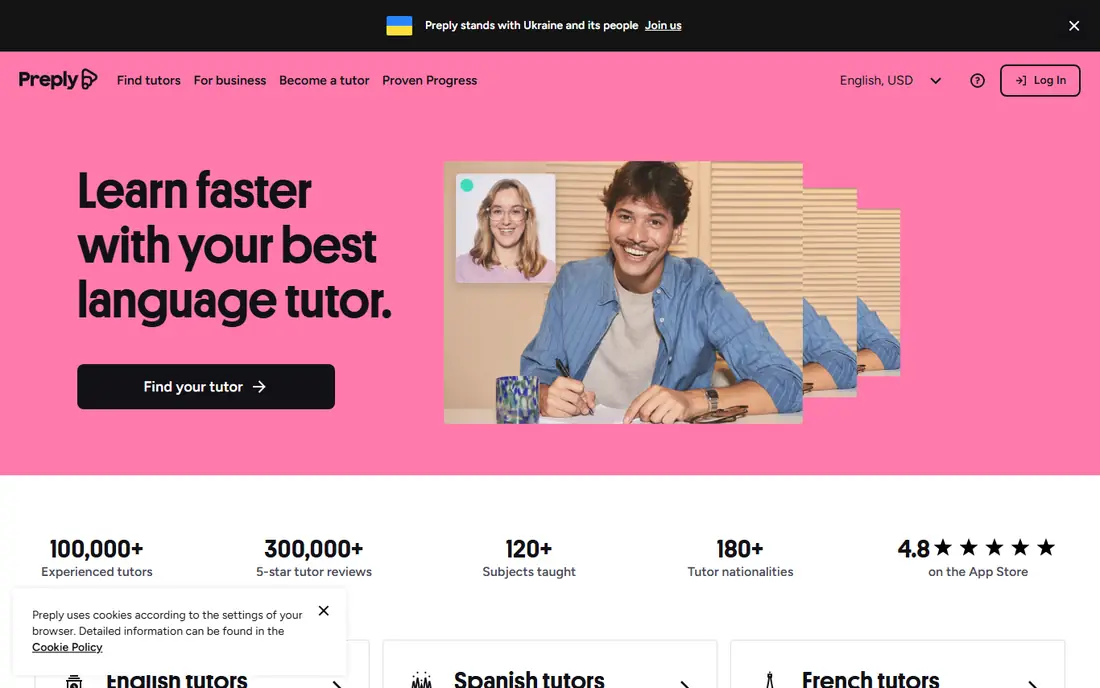
Preply is a marketplace where learners pick a tutor, book a lesson and set a schedule that fits their week. That flexibility suits adults with shifting work hours, learners preparing for a specific exam, and people who want a teacher who matches their accent preference or teaching style. You can filter by price, availability and specialism, which helps narrow a very large pool.
The trade-off is choice overload and price variation. Tutor rates range from a few dollars to over 40 dollars per hour in recent listings, so the platform average tells you little about your actual lesson cost. Book a trial lesson, check how the tutor corrects you and structures the hour, and only then commit to a regular slot.
- Very large tutor pool
- You choose your teacher and schedule
- Lessons for general, business and exam English
- Tutor prices vary widely
- Platform commission affects early lesson economics for teachers
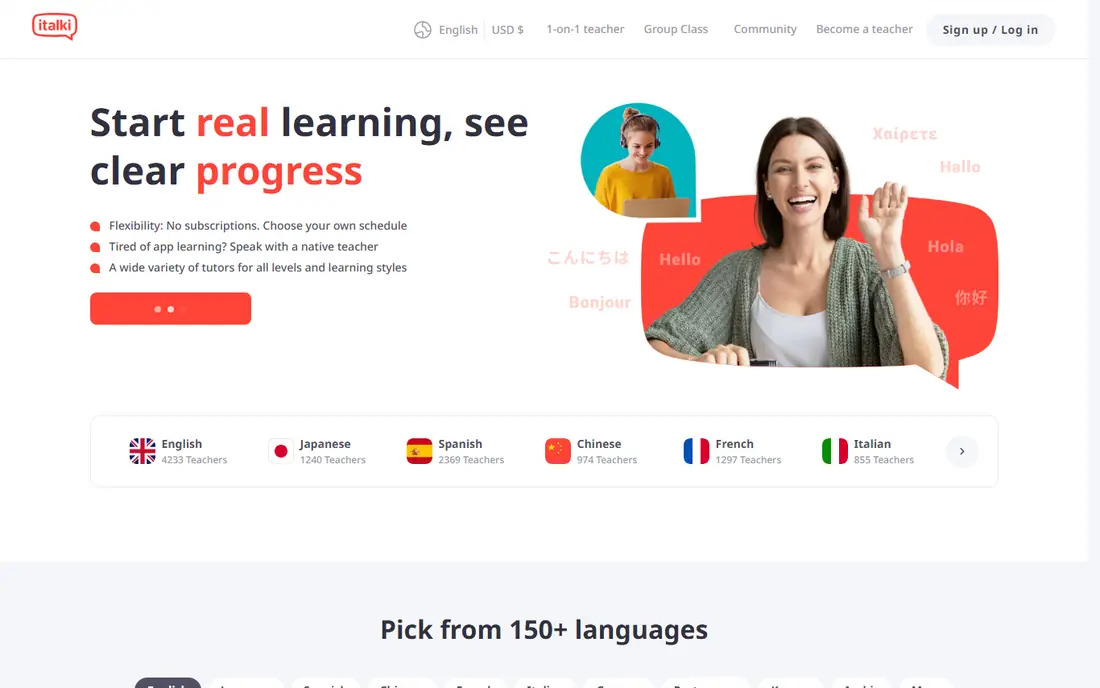
italki gives learners two kinds of teacher: professional teachers with qualifications and experience, and community tutors who focus on conversation practice. That split lets you pay less for chat practice and more for structured teaching, or mix both in the same week. Booking is per lesson, with no long subscription required.
The catch is that you are your own curriculum manager unless your teacher provides one. Learners who need a set path from A2 to B2 may prefer a school such as Lingoda or EF English Live. Learners who know what they want to practise, and who like choosing teachers directly, will find italki a good fit.
- Professional teachers and community tutors at different prices
- Flexible booking
- Strong learner community
- Quality varies by teacher
- You manage your own study plan unless you book a structured teacher
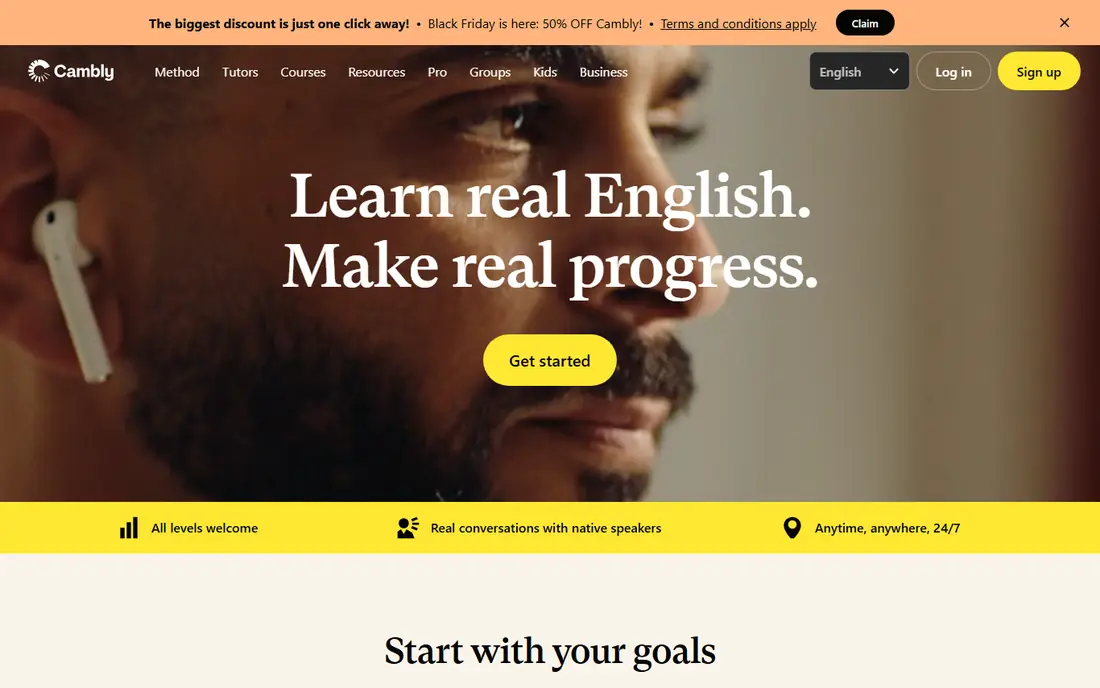
Cambly suits learners whose main goal is speaking confidence. You log in, talk with a native-speaking tutor, and practise everyday conversation without a heavy grammar lesson. Subscription minutes let you fit short sessions around work or study, which helps learners who struggle to commit to a fixed weekly class.
The limit is structure. Cambly is not the best pick if you need a formal curriculum, exam marking or a certificate path. It works best as a speaking supplement: use a course or app for grammar and vocabulary, then use Cambly to turn that knowledge into fluent conversation.
- Drop-in conversation with native speakers
- Subscription minutes to use flexibly
- Low-pressure format
- Less structured than a school curriculum
- Tutor pay and lesson depth vary by tutor
Lingoda runs like an online language school, with a curriculum that moves learners through CEFR levels from beginner to advanced. Classes are taught by qualified teachers, and you can choose group classes for lower cost or private classes for personal attention. That structure suits learners who want clear progress markers and a certificate of completion.
The trade-off is flexibility. Group classes run at set times, so learners with unpredictable schedules may miss sessions. Pricing also varies by plan and region, so check the current plan for your country. If you want a school-like path with regular classes, Lingoda is a strong ELT pick.
- Set curriculum aligned to CEFR levels
- Qualified teachers
- Group and private class options
- Fixed class times suit some schedules less well
- Pricing varies by plan and region
EF English Live, from EF Education First, offers a full online school model with levels, teacher-led classes and study materials. Learners follow a path, attend live classes, and get feedback on progress, which suits students who want a guided route rather than picking tutors themselves. Business English and exam preparation paths are part of the offer.
Pricing is personalised, so you need a quote for your region and plan, which makes direct comparison harder. The school model also means less freedom to switch teachers at will. For learners who want a trusted brand, a clear level system and regular teacher contact, EF English Live remains a solid choice.
- Long-established EF curriculum
- Teacher-led group and private lessons
- Progress tracking
- Pricing is personalised by region
- Less marketplace choice than Preply or italki
Open English runs live English classes with native-speaking teachers, available at many hours of the day. It is well known in Latin America, where its schedule and support suit learners across several time zones. Classes cover general English, with live interaction rather than recorded lessons alone.
The main limit is focus. Learners outside its core regions may find support and scheduling less tailored, and pricing is not published as a simple rate card. If you live in Latin America and want live classes at flexible hours, Open English is worth a trial. Elsewhere, Lingoda or EF English Live may fit better.
- Live classes around the clock
- Native-speaking teachers
- Strong presence in Latin America
- Pricing is quote-based
- Less focused on learners outside its core regions
Duolingo is the best-known free ELT app, and its strength is habit. Short, gamified lessons make it easy to practise vocabulary, grammar and listening for a few minutes each day. The free tier covers the core course, and a paid plan removes ads and adds offline access and extra features.
The limit is depth. Duolingo builds a base, but it does not give you live conversation, detailed writing feedback or exam-level speaking practice. Use it as a daily supplement: 15 minutes on Duolingo plus a weekly live lesson will take most learners further than either alone.
- Free tier for daily practice
- Gamified lessons that build a habit
- English courses for many first languages
- Limited live speaking practice
- Not a substitute for a teacher for advanced learners
Babbel offers structured app lessons designed around real conversation, with review tools to help vocabulary stick. Its lessons feel more like a course than a game, which suits adult learners who want clear explanations and practical phrases for work and travel. A subscription gives access to the full lesson library.
Babbel does not include live tutoring in its core plan, so speaking practice still needs a tutor or conversation partner. Check whether the English course for your first language covers your level, since depth varies. As a structured self-study tool, Babbel pairs well with Cambly or italki for live practice.
- Structured lessons built by language experts
- Conversation-focused content
- Review system for vocabulary
- No live tutor in the core app plan
- English course depth varies by learner first language
How we picked these
We compared ELT services that teach English to learners, using vendor sites, tutor listings and recent comparisons of online English teaching platforms. We included marketplaces, schools and apps because ELT learners have different goals, budgets and schedules, and we marked pricing as See website where tutor rates vary or vendors price by region and quote. We framed ELT as English Language Teaching throughout, since that is the most established meaning for learners searching for English teaching services.
What to check before you pay
Set one clear goal first
General English, business meetings, IELTS preparation and everyday conversation need different teachers and materials. Write down your goal, your current level if you know it, and how many hours per week you can study. That short brief helps a tutor or school place you correctly.
Test the teacher, not just the platform
On marketplaces, book trial lessons with two or three teachers and compare how they correct errors, set homework and structure the hour. A platform with a large pool is only useful if you find a teacher whose style keeps you coming back.
Mix live practice with self-study
Most learners progress fastest with a mix: a structured course or app for grammar and vocabulary, plus live lessons for speaking and feedback. Budget for both, even if the live part is only one lesson per week, rather than spending everything on a single app or a single tutor.
FAQ
What does ELT mean in this article?
ELT means English Language Teaching. This article compares services that help learners study and improve English, including live tutors, online schools and self-study apps.
Which ELT service is best for speaking practice?
Cambly suits casual conversation, while Preply and italki suit one-to-one lessons with a teacher you choose. Lingoda and EF English Live add structure if you want speaking practice inside a set curriculum.
Is Duolingo enough to learn English?
Duolingo is a good daily practice tool, but most learners also need live speaking practice and feedback to reach a confident conversational level. Pair it with a tutor or a live class for best results.
How much do ELT tutors cost?
Tutor prices vary widely. Preply listings in recent comparisons range from a few dollars to over 40 dollars per hour, depending on the tutor. Schools and apps use subscription or quote-based pricing, so check the actual lesson or plan price for your level.
Do I need a certificate from an ELT service?
It depends on your goal. Employers and universities often accept established proficiency tests rather than a course certificate, so check what your target institution requires. A course certificate still helps show progress and commitment for work purposes.