Best E-Commerce Platform for My Small Business in 2026: Prices, Free Plans and 6 Picks
Best e-commerce platform for my small business in 2026: 6 contenders with entry costs and free tiers. Short, factual notes on every option. Choose faster.
- Editor's choice
 WooCommerce
Open-source keeps on WordPress
Starts at$29 per monthVisit woocommerce.comFull review - Great alternative
 Adobe Commerce
Enterprise-scale B2B and B2C commerce
Starts atSee websiteVisit business.adobe.comFull review - Also consider
 Square Online
All-in-one online store with Square
Starts atSee websiteVisit squareup.comFull review
Direct answer
If you need open-source keeps on WordPress, WooCommerce is the first tool to look at here. Listed starting prices: WooCommerce from $29 per month and Shopify from $19 a month. Adobe Commerce is the stronger choice for enterprise-scale B2B and B2C commerce, while Square Online suits all-in-one online store with Square. The full list of 6 tools follows, with prices and free plan facts.
TL;DR:
- WooCommerce is the opening pick, best for open-source keeps on WordPress.
- Neither WooCommerce nor BigCommerce, nor any of the other 4 tools, has a permanent free plan; trials and quotes are the norm.
- BigCommerce is the one to check for scalable commerce across channels and regions.
- Shopify is the lowest-priced starter here at $19 per month.
Last checked November 2026. Prices and plan details were read from the vendors' own pages in November 2026; vendors change plans often, so confirm the current price on the vendor site before you buy.
Quick comparison
| Tool | Best for | Starts at | Free plan? | |
|---|---|---|---|---|
| WooCommerce | Open-source keeps on WordPress | $29 per month | Not stated | Visit |
| Adobe Commerce | Enterprise-scale B2B and B2C commerce | See website | Not stated | Visit |
| Square Online | All-in-one online store with Square | See website | Not stated | Visit |
 Shopify | All-in-one commerce for small companies | $19 a month | Free trial | Visit |
 Wix eCommerce | Configurable all-in-one e-commerce websites | See website | Not stated | Visit |
 BigCommerce | Scalable commerce across channels and regions | See website | Not stated | Visit |
The 6 tools in detail
This LinkVetted guide covers 6 options for e-commerce platform for my small business. Each profile lists a starting price, free plan details, strengths and drawbacks, so you can drop poor fits quickly.
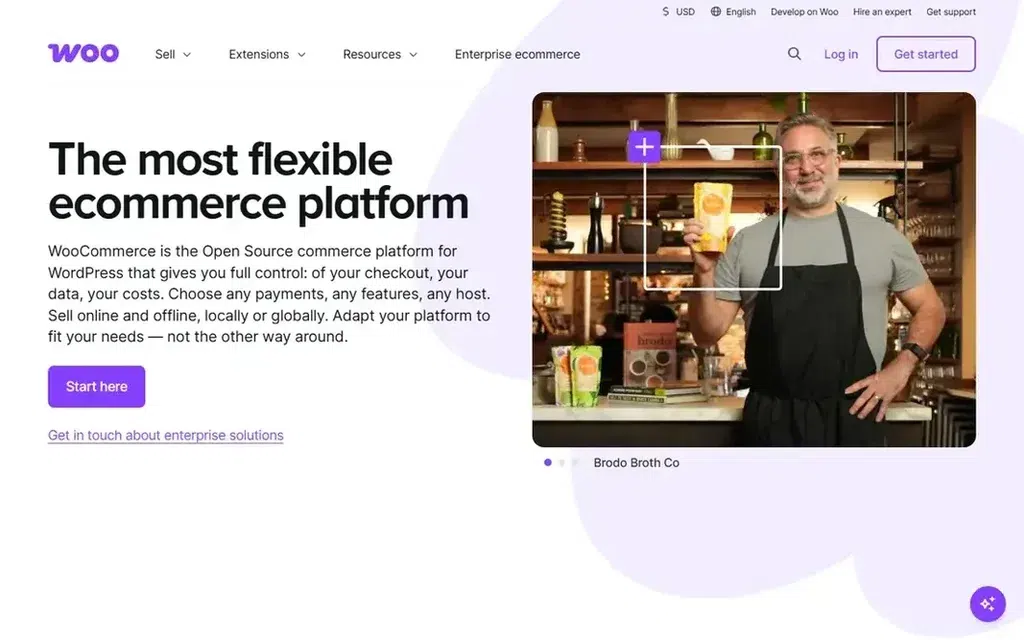
Where WooCommerce fits: open-source stores on WordPress. Pick WooCommerce when openness, control and WordPress integration are priorities.
Running WooCommerce means managing a WordPress site, including hosting, updates and extensions, which can demand technical attention. WooCommerce pricing: $29 per month. As for free access: Not stated.
Points against: More technical setup than hosted builders.
- Open-source e-commerce product
- Designed for long-term business use
- Needs WordPress knowledge to handle
Adobe Commerce serves enterprise-scale B2B and B2C commerce. Adobe Commerce, also known as Magento, is described on its homepage as an AI-powered composable e-commerce product for B2B and B2C that gives personalized experiences at global scale. Consider Adobe Commerce only when scale, composability and advanced B2B or B2C needs justify the complexity.
On top of that, Adobe Commerce is complicated and generally needs development resources to implement and maintain, which can be heavy for a small business. More straightforward hosted systems are commonly a better starting point. Adobe Commerce does not show a starting price in this comparison, so check the vendor site for current pricing. Free access: Not stated.
Where it is weaker: Generally beyond small business needs.
- Aimed at personalized experiences at global scale
- AI-powered composable system
- Complicated and resource-intensive to run
Choose Square Online for all-in-one online store with Square. It suits small companies, especially those already using Square for in-person sales, that want an online store connected to a familiar system.
Where it falls short: Customization restricted to system choices.
Check the vendor site for Square Online pricing; none is listed in this comparison. Free access: Not stated.
- Produce and customize a store to fit your brand
- Aimed at selling online
- Most useful for companies using Square tools

Shopify is built with all-in-one commerce for small companies in mind. Shopify is an all-in-one commerce product for companies that want to build or grow rapidly. Since Shopify is a hosted system, you work within its system and rules instead of owning the full stack.
Honest limits: Continuing subscription is required to sell.
Beyond that, firms that require deep custom development or a completely open-source setup may prefer another choice. In daily use, choose Shopify when simplicity and an integrated toolset matter more than complete technical control. The starting price for Shopify: $19 per month. Free options: Free trial.
- Supports selling and growth with AI features
- Manages plenty of parts of a business in one platform
- Less control over the underlying codebase
Wix eCommerce targets configurable all-in-one e-commerce websites. Keeps with complicated or unusual requirements may outgrow it.
It suits small companies that want to design a store visually and manage selling from one place, notably those who value ease of building a branded site without separate systems. Pricing for Wix eCommerce is not stated here, so ask the vendor for current figures. Free options: Not stated.
Trade-offs to know: Features rely on the chosen package.
- Supports selling in several places
- All-in-one e-commerce product
- Design-first approach may limit deep customization

BigCommerce serves scalable commerce across channels and regions. BigCommerce describes itself as commerce made for momentum, powering modern buying experiences across brands, regions and channels from a single, scalable foundation.
In practice, companies seeking the simplest possible start may prefer a lighter builder. As for the details, choose BigCommerce when multi-channel and regional selling are part of your near-term plan. Check the vendor site for BigCommerce pricing; none is listed in this comparison. Trial and free access: Not stated.
Downsides: May be more than a very small shop needs.
- Regions and channels
- Focus on modern buying experiences
- Setup can need more planning
What went into this list
LinkVetted looked at what each vendor publishes: pricing, plan limits, feature coverage for e-commerce platform for my small business and stated drawbacks. No hands-on testing is claimed. Prices and plan limits come from vendor pages and can change, so confirm them on the vendor site before you buy. Tools are placed by general fit for e-commerce platform for my small business, with price clarity and free access as tie-breakers. A different team can reasonably rank them differently.
What to check before you buy
- Confirm the entry price on the vendor page. For Adobe Commerce, Square Online, Wix eCommerce and BigCommerce that means a quote rather than a fixed price.
- Run a trial of Shopify with real work before paying for a year; your own workflow is the best test.
- Read the limits listed for WooCommerce first: needs WordPress knowledge to handle.
- List the apps you already depend on and check that Shopify supports each one on the plan you would buy.
- Involve the people who will use BigCommerce daily; a short pilot beats a long feature checklist.
FAQ
Do these tools publish their prices?
Not all of them. Adobe Commerce, Square Online, Wix eCommerce and BigCommerce publish no starting price, so expect a quote request for those. The rest, WooCommerce included, show a starting price, though seats and billing terms still change the final cost.
What is the cheapest option for e-commerce platform for my small business in this list?
On published monthly entry prices, Shopify is the lowest here at $19 per month. Entry price is only part of the cost, because seats, add-ons and billing terms can change the total. All 6 picks in this E-Commerce platform for my small business comparison list a starting price, free plan details and the main limits on their cards above.
How do I compare e-commerce platforms fairly?
List the features you actually need, for example selling channels, design control and technical support, then check each vendor's documented capabilities and limits. Use the vendor sites to confirm details, since offerings change.
Can I try these tools before paying?
Often, yes. Shopify offers a free trial. Use your own data and a real task during the test, and check what the free tier or trial limits before you rely on it. For the full picture, the cards above cover all 6 entries of this E-Commerce platform for my small business list, including price, free plan and limits.
Is WooCommerce the right pick for everyone comparing e-commerce platform for my small business?
No single tool suits every team. WooCommerce comes first because it fits open-source stores on WordPress, while Adobe Commerce suits enterprise-scale B2B and B2C commerce and Square Online suits all-in-one online store with Square. Match the tool to your own size, budget and workflow before deciding.
When should a small business choose WooCommerce?
It provides more control over the site but needs managing hosting, updates and extensions. If you prefer a completely hosted setup, another system may be more straightforward.
Sources
- https://woocommerce.com
- https://business.adobe.com/products/magento/magento-commerce.html
- https://squareup.com/us/en/online-store
- https://www.shopify.com
- https://www.wix.com/ecommerce
- https://www.bigcommerce.com