Best E-Commerce Data Integration Software (2026): 6 Picks Checked on Vendor Pages
Shortlisting the best E-Commerce data integration software? 6 products compared on cost, free access and ideal buyer. Real limits included. Pick by budget.
- Editor's choice
 Salesforce Commerce Cloud
Unified commerce within the Salesforce ecosystem
Starts atSee websiteVisit salesforce.comFull review - Great alternative
 Stripe
Payment infrastructure and financial data integration
Starts at$10.00 a monthVisit stripe.comFull review - Also consider
 Adobe Commerce
Enterprise B2B and B2C personalization at scale
Starts atSee websiteVisit business.adobe.comFull review
Direct answer
Our first pick is Salesforce Commerce Cloud, best for unified commerce within the Salesforce ecosystem. Listed starting prices: Stripe from $10.00 a month, Shopify from $19 a month and WooCommerce from $29 per month. Stripe is the stronger choice for payment infrastructure and financial data integration, while Adobe Commerce suits enterprise B2B and B2C personalization at scale. Details, prices and limits for the rest of the 6 tools are below.
TL;DR:
- Number one here is Salesforce Commerce Cloud, a fit for unified commerce within the Salesforce ecosystem.
- The cheapest monthly starting price in the list is $10.00 per month, offered by Stripe.
- None of the 6 tools, from Salesforce Commerce Cloud to WooCommerce, has a free plan, so budget for a subscription or use a trial.
- What to know about BigCommerce first: may be overkill for small firms.
Last checked November 2026. Prices and plan details were read from the vendors' own pages in November 2026; vendors change plans often, so confirm the current price on the vendor site before you buy.
Quick comparison
| Tool | Best for | Starts at | Free plan? | |
|---|---|---|---|---|
| Salesforce Commerce Cloud | Unified commerce within the Salesforce ecosystem | See website | Not stated | Visit |
| Stripe | Payment infrastructure and financial data integration | $10.00 a month | Not stated | Visit |
| Adobe Commerce | Enterprise B2B and B2C personalization at scale | See website | Not stated | Visit |
 BigCommerce | Scalable multi-channel commerce operations | See website | Not stated | Visit |
 Shopify | All-in-one commerce with built-in integration tools | $19 a month | Free trial | Visit |
 WooCommerce | Open-source customization and developer control | $29 per month | Not stated | Visit |
Every option for E-Commerce data integration software explained
Short on time? The summary and table above give the quick view of 6 tools for E-Commerce data integration software, and the profiles that follow give the detail behind each entry.
Salesforce Commerce Cloud
Best for: Unified commerce within the Salesforce ecosystem
Salesforce Commerce Cloud is aimed squarely at unified commerce within the Salesforce ecosystem. Salesforce Commerce Cloud is a commerce system that integrates tightly with Salesforce's CRM and marketing tools. It enables firms to unify customer data and deliver consistent experiences across channels, making it a capable choice for organizations already invested in the Salesforce ecosystem.
Points against: Best value only for Salesforce users.
In practice, the system is pricey and complicated to implement, and its value is maximized only when used alongside other Salesforce products. Also, businesses not using Salesforce may find better fit with Adobe Commerce or BigCommerce. This comparison lists no price for Salesforce Commerce Cloud; ask the vendor. As for free access: Not stated.
- Deep integration with Salesforce CRM
- Scalable for large enterprises
- Pricey and complicated to implement
For payment infrastructure and financial data integration, Stripe is a natural candidate. Stripe is not a complete e-commerce system, so it must be paired with a storefront option.
On cost, Stripe starts like this: $10.00 per month. Trial and free access: Not stated.
Where it falls short: Not a full commerce system.
- Global money movement capabilities
- Adaptable billing models
- Needs development for custom integrations
Adobe Commerce makes the most sense for enterprise B2B and B2C personalization at scale. For less demanding needs, consider BigCommerce or Shopify. The platform's complexity and cost can be prohibitive for smaller companies, and it generally needs dedicated technical resources.
Beyond that, Adobe Commerce (Magento) is an AI-powered composable ecommerce product for B2B and B2C businesses, delivering personalized experiences at global scale. It is built for enterprises that require solid data integration and the capacity to craft unique customer journeys across several touchpoints. Check the vendor site for Adobe Commerce pricing; none is listed in this comparison. Trial and free access: Not stated.
What to check first: High complexity and cost.
- Solid B2B and B2C capabilities
- Global scale personalization
- Needs dedicated technical resources

BigCommerce is built with scalable multi-channel commerce operations in mind. It is aimed at momentum, making it a good match for expanding firms that require to handle complicated, multi-channel operations without sacrificing performance or adaptability.
The main drawbacks: Integration setup can be complicated.
On top of that, the system's scalability may be more than small companies need, and integration setup can need technical expertise. This comparison lists no price for BigCommerce; ask the vendor. On free options: Not stated.
- Single scalable foundation for several channels
- Supports brands and regions
- May be overkill for small companies

Shopify makes the most sense for all-in-one commerce with built-in integration tools. It merges ecommerce software with AI-driven tools to handle every part of your business, from sales to operations. This makes it a good fit for merchants who want a unified system with broad integration choices and minimal technical overhead.
Watch-outs: Less adaptable for deep customizations.
Even so, Shopify's app-based ecosystem can result in higher costs as you scale, and deep customizations may need workarounds. If you need extreme adaptability or open-source control, consider WooCommerce or Adobe Commerce instead. Entry price for Shopify: $19 per month. Free options: Free trial.
- AI-powered tools for business growth
- Full product handling storefront and backend
- Can become expensive as you add apps
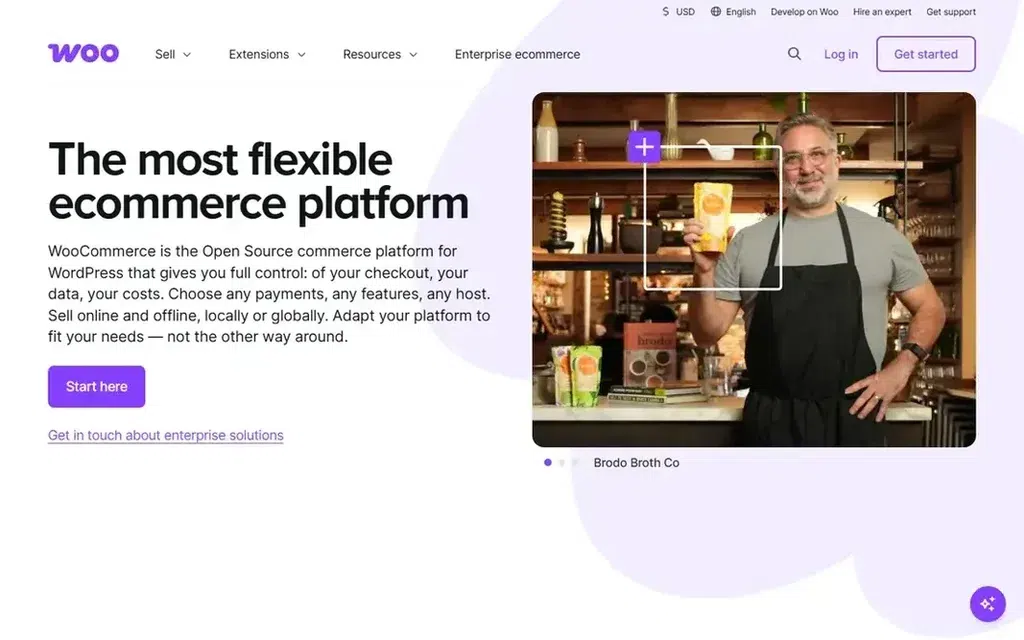
WooCommerce is a good fit for open-source customization and developer control. WooCommerce is the open-source ecommerce system that helps merchants and developers build successful businesses for the long term. It gives you deep customization choices and links up with a broad array of data sources, making it well suited to those who want full control over their e-commerce data integration.
Trade-offs to know: Needs technical knowledge to run.
That said, WooCommerce demands technical expertise and continuing maintenance, which can be a burden for non-technical users. On top of that, if you prefer a managed option, Shopify or BigCommerce may be better suited. WooCommerce starts at: $29 per month. On free options: Not stated. What works well: Open-source system with full control.
- Large community of developers
- Highly configurable
- Integration maintenance can be time-consuming
How these tools were picked
We compared the tools on published pricing, free plan or trial availability, feature coverage for E-Commerce data integration software, and the limits each vendor documents. Plan names, prices and limits change often. Treat the figures here as a starting point and verify them with the vendor. The order reflects how well each tool fits the most common buying scenario for E-Commerce data integration software, then price clarity, then free plan access. It is a starting point, not a verdict.
A buyer's checklist
- Get a written quote from Salesforce Commerce Cloud, Adobe Commerce and BigCommerce; the list shows no starting price for them.
- Run a trial of Shopify with real work before paying for a year; your own workflow is the best test.
- Read the limits listed for Salesforce Commerce Cloud first: pricey and complicated to implement.
- Work out what Adobe Commerce costs with your real seat count, add-ons and usage, not just the entry price.
- Ask whether WooCommerce integrates with your current software, and whether that comes standard or as an add-on.
FAQ
Can I integrate several tools together?
For instance, Stripe can be integrated with Shopify or BigCommerce for payment processing. That said, ensure compatibility and consider the complexity of managing several integrations.
What is the cheapest option for E-Commerce data integration software in this list?
On published monthly entry prices, Stripe is the lowest here at $10.00 per month. Entry price is only part of the cost, because seats, add-ons and billing terms can change the total. For the full picture, the cards above cover all 6 entries of this E-Commerce data integration software list, including price, free plan and limits.
How do I choose the right system for my business?
Consider your business size, technical resources, and integration needs. If you need open-source adaptability, WooCommerce is a solid fit. Enterprises may prefer Adobe Commerce or Salesforce Commerce Cloud.
Do these tools publish their prices?
Not all of them. Salesforce Commerce Cloud, Adobe Commerce and BigCommerce publish no starting price, so expect a quote request for those. The rest, Stripe included, show a starting price, though seats and billing terms still change the final cost.
Is Salesforce Commerce Cloud the right pick for everyone comparing E-Commerce data integration software?
No single tool suits every team. Salesforce Commerce Cloud comes first because it fits unified commerce within the Salesforce ecosystem, while Stripe suits payment infrastructure and financial data integration and Adobe Commerce suits enterprise B2B and B2C personalization at scale. Match the tool to your own size, budget and workflow before deciding.
What are typical integration challenges?
Typical challenges bundle data mapping, API limitations, and maintaining synchronization across systems. As for the details, choosing a product with solid native integrations and developer support can mitigate these issues.
Sources
- https://www.salesforce.com/commerce
- https://stripe.com
- https://business.adobe.com/products/magento/magento-commerce.html
- https://www.bigcommerce.com
- https://www.shopify.com
- https://woocommerce.com