Best Data Virtualization Software for Remote Teams for 2026: Our 6 Vetted Picks
Best data virtualization software for remote teams: 6 tools compared on price, free plans and fit. The catches are listed up front. Reviewed in November 2026.
- Editor's choice
 Dremio
Open lakehouse for high-performance analytics
Starts atSee websiteVisit dremio.comFull review - Great alternativeTIBCO Data Virtualization
Enterprise data virtualization layer
Starts atSee websiteVisit tibco.comFull review - Also considerCData Virtuality
AI accuracy with context-aware access
Starts at$79 per monthVisit cdata.comFull review
Direct answer
Start with Dremio if you need open lakehouse for high-performance analytics. Listed starting prices: CData Virtuality from $79 per month and Starburst Galaxy from $0.50 /credit. For a different need, TIBCO Data Virtualization covers enterprise data virtualization layer and CData Virtuality covers AI accuracy with context-aware access. The full list of 6 tools follows, with prices and free plan facts.
TL;DR:
- Dremio takes the first slot, best suited to open lakehouse for high-performance analytics.
- For the cheapest start, look at CData Virtuality: $79 per month.
- Just one of the 6 tools, Starburst Galaxy, has a free plan.
- AtScale is the one to check for universal semantic layer for analytics.
Last checked November 2026. Prices and plan details were read from the vendors' own pages in November 2026; vendors change plans often, so confirm the current price on the vendor site before you buy.
Quick comparison
| Tool | Best for | Starts at | Free plan? | |
|---|---|---|---|---|
| Dremio | Open lakehouse for high-performance analytics | See website | Not stated | Visit |
| TIBCO Data Virtualization | Enterprise data virtualization layer | See website | Not stated | Visit |
| CData Virtuality | AI accuracy with context-aware access | $79 per month | Free trial | Visit |
| Starburst Galaxy | Governed data access without movement | $0.50 /credit | Yes | Visit |
| Denodo Platform | Live data unification and governance | See website | Not stated | Visit |
| AtScale | Universal semantic layer for analytics | See website | Not stated | Visit |
The 6 tools in detail
This LinkVetted guide covers 6 data virtualization software for remote teams. Each profile lists a starting price, free plan details, strengths and drawbacks, so you can drop poor fits quickly.
Pick Dremio if this describes you: open lakehouse for high-performance analytics. Dremio is centered on the lakehouse architecture, so it may be less well suited to organizations seeking pure data virtualization across diverse operational systems. It generally needs a data lake or similar storage foundation.
Where it falls short: Needs data lake infrastructure.
In daily use, the product is made for analytics and AI, making it a solid choice for data-driven teams. It offers a foundation for remote teams that require fast queries on large datasets without broad data movement. Pricing for Dremio is not stated here, so ask the vendor for current figures. As for free access: Not stated.
- Accelerates AI and analytical workloads
- Works across all enterprise data
- Lakehouse focus may not suit all virtualization needs
TIBCO Data Virtualization
Best for: Enterprise data virtualization layer
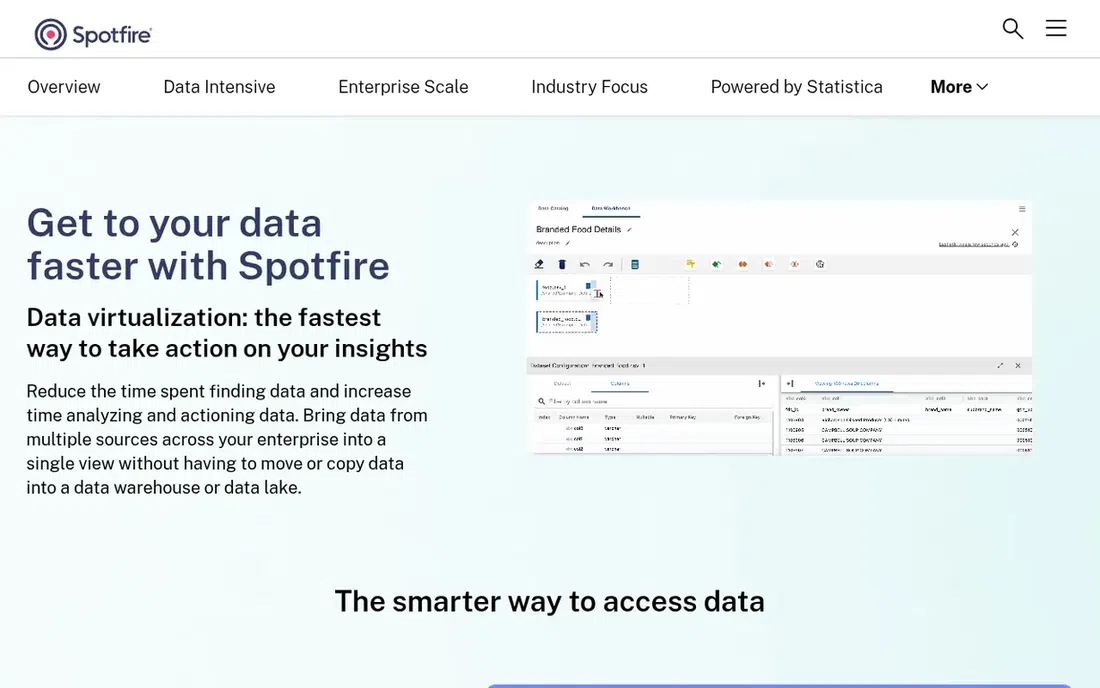
Think of TIBCO Data Virtualization for enterprise data virtualization layer. TIBCO Data Virtualization is a data virtualization product from TIBCO, built to supply a virtual data layer across disparate sources.
The main drawbacks: Restricted public information on current features.
Remote teams that already use TIBCO products may find it integrates well with existing infrastructure. TIBCO Data Virtualization shows no starting price here, so confirm the cost on the vendor site. Trial and free access: Not stated.
- Supports diverse data sources
- Established data virtualization capabilities
- May need TIBCO ecosystem for full value
CData Virtuality
Best for: AI accuracy with context-aware access
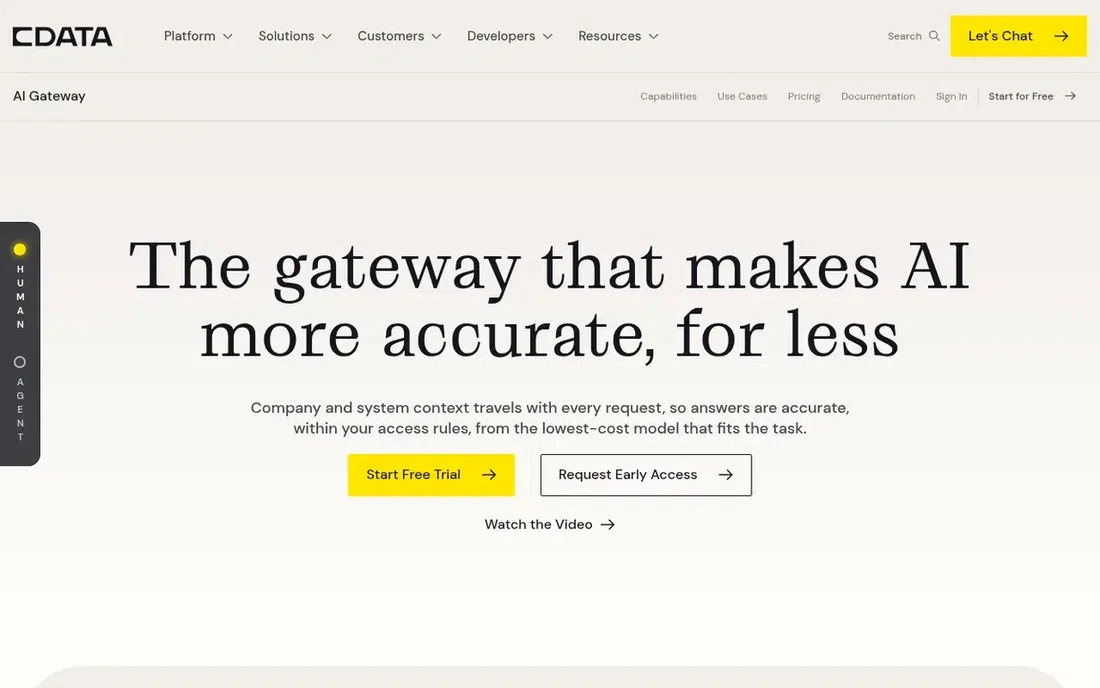
CData Virtuality serves AI accuracy with context-aware access. Teams looking for wide data integration and transformation might need extra tools. Also, CData Virtuality appears specialized for AI gateway scenarios, so it may not include all traditional data virtualization needs.
As for the details, CData Virtuality is presented as an AI gateway that ensures company and system context travels with every request, so answers are accurate and within access rules, using the lowest-cost model that suits the task. This makes it a good match for remote teams building AI-driven applications that need governed data access. Starting cost for CData Virtuality: $79 per month. Free options: Free trial.
Points against: Centred on AI gateway use cases.
- Enforces access rules
- Context travels with each request
- Newer branding may cause confusion
Starburst Galaxy
Best for: Governed data access without movement
Starburst Galaxy is aimed squarely at governed data access without movement. Starburst Galaxy is described as an enterprise intelligence system that links governed enterprise data to AI agents and trusted answers without unnecessary data movement. This makes it right for remote teams that require to query data across sources whereas maintaining governance.
What to check first: Centred on enterprise intelligence.
Beyond that, the system emphasizes avoiding data duplication and enabling AI-driven insights. It may be more than needed for straightforward virtualization tasks. Starburst Galaxy cost at the entry level: $0.50 /credit. Free access exists with Starburst Galaxy.
- Supports trusted answers
- Avoids unnecessary data movement
- May need Starburst ecosystem
Denodo Platform
Best for: Live data unification and governance
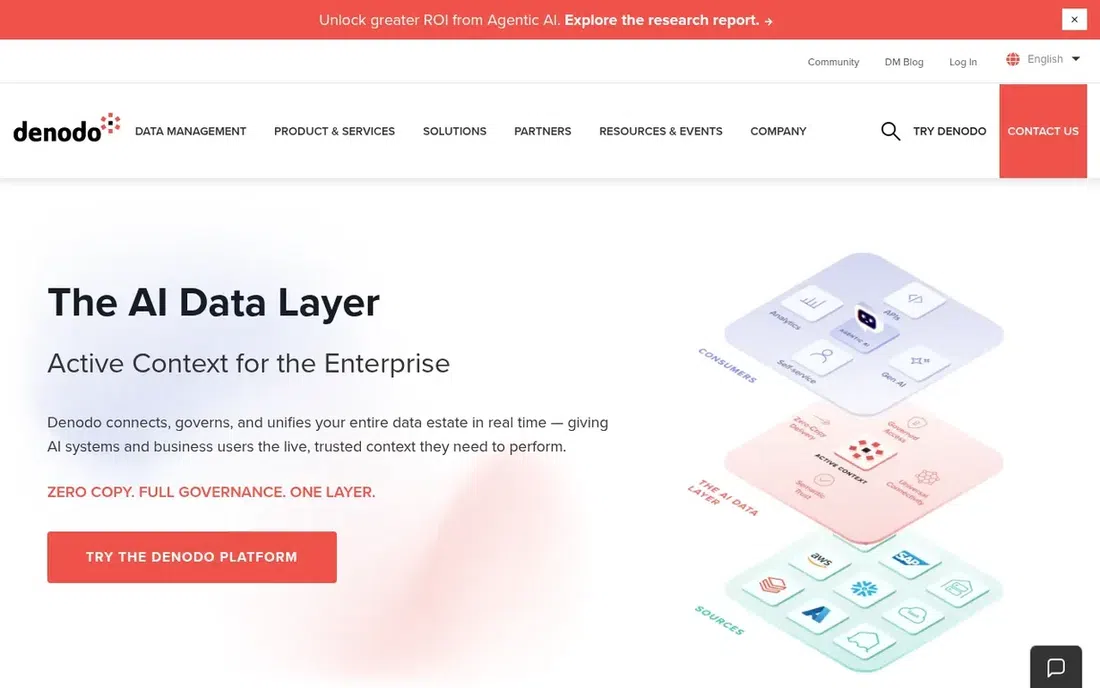
Denodo Platform works best for live data unification and governance. Denodo Platform is a data virtualization tool that links, governs, and brings together your whole data estate in live. It supplies AI systems and business users with live, trusted context, making it a good match for remote teams that require consistent access to distributed data sources without replication.
Where it falls short: Complicated for straightforward use cases.
In daily use, Denodo may be complicated to implement and handle, particularly for teams without dedicated data engineering resources. The product emphasizes governance and live delivery, which can benefit organizations with strict data policies. Denodo Platform does not show a starting price in this comparison, so check the vendor site for current pricing. Free options: Not stated.
- Brings together data for business users
- Links and governs whole data estate
- May need specialized setup
AtScale
Best for: Universal semantic layer for analytics
AtScale targets universal semantic layer for analytics. The system ensures trusted analytics by centralizing metric definitions. It relies on a data warehouse for computation.
Downsides: Depends on warehouse infrastructure.
Teams seeking full virtualization across several sources might need to combine it with other tools. AtScale supplies a universal semantic layer for AI and analytics, where one metric is defined once, computed in your warehouse, and served the same way to every AI, BI tool, and team. Check the vendor site for AtScale pricing; none is listed in this comparison. On free options: Not stated.
- Serves same metrics to all tools
- Computed in your warehouse
- Semantic layer focus, not full virtualization
How we compared the tools
Selection started from tools commonly considered for data virtualization software for remote teams, then narrowed to 6 that have clear pricing information or a clear quote process. Where a price is missing, the vendor does not list one publicly or ties it to a quote. Always confirm before budgeting. We ordered the tools by general fit, then by how clearly pricing is shown, then by free access. A buyer with unusual needs may reorder them.
What to check before you buy
- Ask Dremio, TIBCO Data Virtualization, Denodo Platform and AtScale for a written quote, since no starting price is shown.
- Test the free plan from Starburst Galaxy against your real workload before relying on it.
- Use real work to test the free trial from CData Virtuality, rather than a demo project.
- Before choosing Dremio, weigh its main limit: Lakehouse focus may not suit all virtualization needs.
- A short pilot of TIBCO Data Virtualization with your real workflow tells you more than a feature table.
- Read the plan comparison for Starburst Galaxy carefully; key features often start on a higher tier.
FAQ
How are the tools for data virtualization software for remote teams ordered?
Dremio sits first and AtScale last because the order follows typical fit for data virtualization software for remote teams, then price clarity and free access. It is a judgement call, so read each profile for fit and limits.
Can these tools support AI workloads for remote teams?
Multiple tools, like Denodo Platform, CData Virtuality, and Starburst Galaxy, explicitly support AI by supplying governed, live data access. Evaluate each tool's AI capabilities based on your specific use cases and data sources.
Do these tools publish their prices?
Not all of them. Dremio, TIBCO Data Virtualization, Denodo Platform and AtScale publish no starting price, so expect a quote request for those. The rest, CData Virtuality included, show a starting price, though seats and billing terms still change the final cost.
What are the key factors to consider when evaluating data virtualization software?
Consider data source connectivity, governance and security features, performance, simplicity, and integration with your existing tools. Also assess deployment choices to ensure they fit your remote team's infrastructure.
Which options for data virtualization software for remote teams have a free plan?
Starburst Galaxy is the only tool in this list with a free plan. Free plans usually cap users, projects or features, so check the limits on the vendor page. One other tool offers a trial instead. For the full picture, the cards above cover all 6 entries of this data virtualization software for remote teams list, including price, free plan and limits.
What is the cheapest option for data virtualization software for remote teams in this list?
On published monthly entry prices, CData Virtuality is the lowest here at $79 per month. Entry price is only part of the cost, because seats, add-ons and billing terms can change the total. Prices, free plan details and limits for all 6 tools in this data virtualization software for remote teams roundup sit on the individual cards above.
Sources
- https://www.dremio.com
- https://www.tibco.com/products/data-virtualization
- https://www.cdata.com/virtuality
- https://www.starburst.io
- https://www.denodo.com
- https://www.atscale.com
Related guides
- Choosing Account-Based Analytics Software for Remote Teams in 2026: 5 Options Compared
- The 6 Best Big Data Analytics Software for Remote Teams in 2026, Ranked
- 5 Best Business Intelligence Software for Remote Teams for 2026, Vetted and Compared
- Top 5 Contract Analytics Software for Remote Teams for 2026 (Prices and Free Plans)