Best Data Masking Software in 2026: 9 Tools Compared
Best data masking software in 2026: 9 data masking tools compared on static and dynamic masking, referential integrity, compliance, price and governance.
- Editor's choice
 Delphix
Test data delivery
Starts atSee websiteVisit delphix.comFull review - Great alternative
 Informatica
Enterprise governance
Starts atSee websiteVisit informatica.comFull review - Also consider
 K2view
Entity-level masking
Starts atSee websiteVisit k2view.comFull review
TL;DR:
- Delphix is our pick for most test-data programs because it combines masking with fast, virtualized delivery of realistic test data.
- Informatica suits enterprises that need masking inside a broader governance, catalog, and data quality platform.
- K2view fits organizations with fragmented systems that need entity-level masking across many sources at once.
- Redgate Data Masker and Microsoft dynamic data masking give database teams lower-cost entry points, especially inside SQL Server estates.
- Referential integrity matters more than masking speed alone, since masked data that breaks joins will break tests and trust.
Quick comparison
| Tool | Best for | Starts at | Free plan? | |
|---|---|---|---|---|
| Delphix | Test data delivery | See website | No | Visit |
| Informatica | Enterprise governance | See website | No | Visit |
| K2view | Entity-level masking | See website | No | Visit |
 IBM InfoSphere Optim | Legacy and mainframe | See website | No | Visit |
 Immuta | Dynamic access control | See website | No | Visit |
 Oracle Data Masking and Subsetting | Oracle estates | See website | No | Visit |
 Microsoft Dynamic Data Masking | SQL Server baseline | See website | No | Visit |
 Redgate Data Masker | DBA-led masking | See website | Free trial | Visit |
 Tonic.ai | Synthetic test data | See website | No | Visit |
The best data masking software
Data masking replaces sensitive values in non-production data with realistic but fake values, so developers and testers can work without holding real customer data. The right tool depends on whether you need static copies for testing, dynamic views for production access, or both, and on how many systems your data spans.
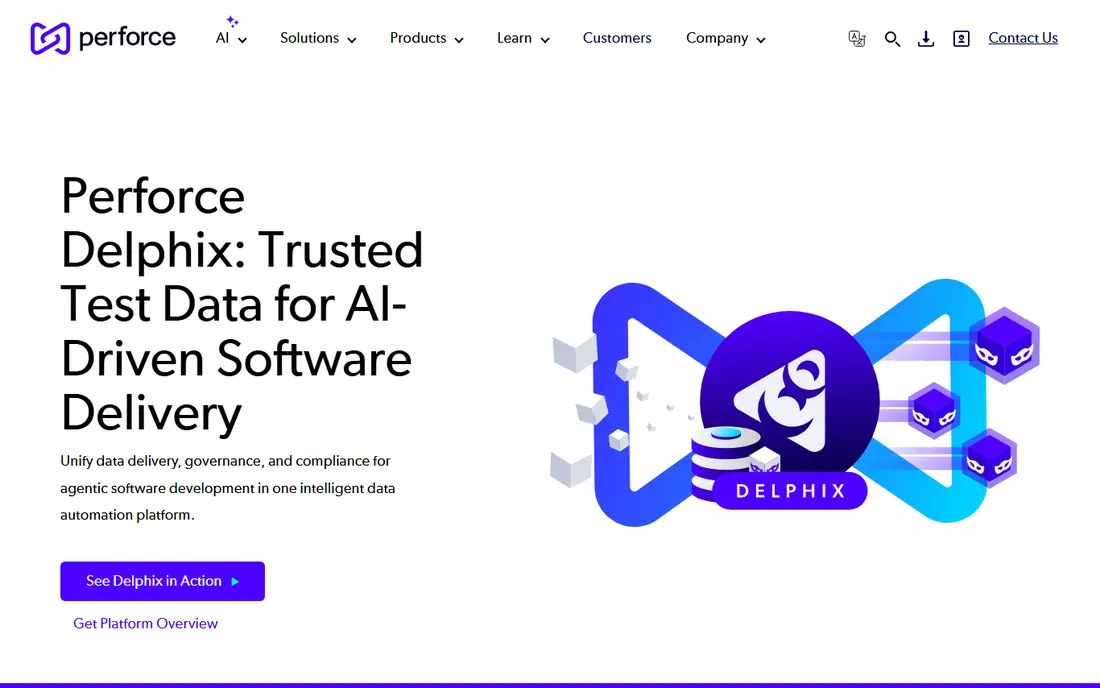
Delphix, now part of Perforce, is the strongest choice for teams whose main problem is test data. It discovers sensitive fields, masks them with referential integrity, and delivers virtual copies quickly, so developers do not wait for full database copies. That combination reduces storage, speeds refresh cycles, and keeps non-production data compliant.
The trade-off is scope and price. Delphix is an enterprise platform with quote-based pricing, not a simple masking utility for one database. Teams with large test estates, frequent refresh needs, and compliance pressure will get the most value. Small teams with one database should look at Redgate or Microsoft options first.
- Masking plus virtualized test data delivery
- Strong referential integrity
- Supports many data sources
- Quote-based pricing
- Platform scope exceeds what a small database team needs
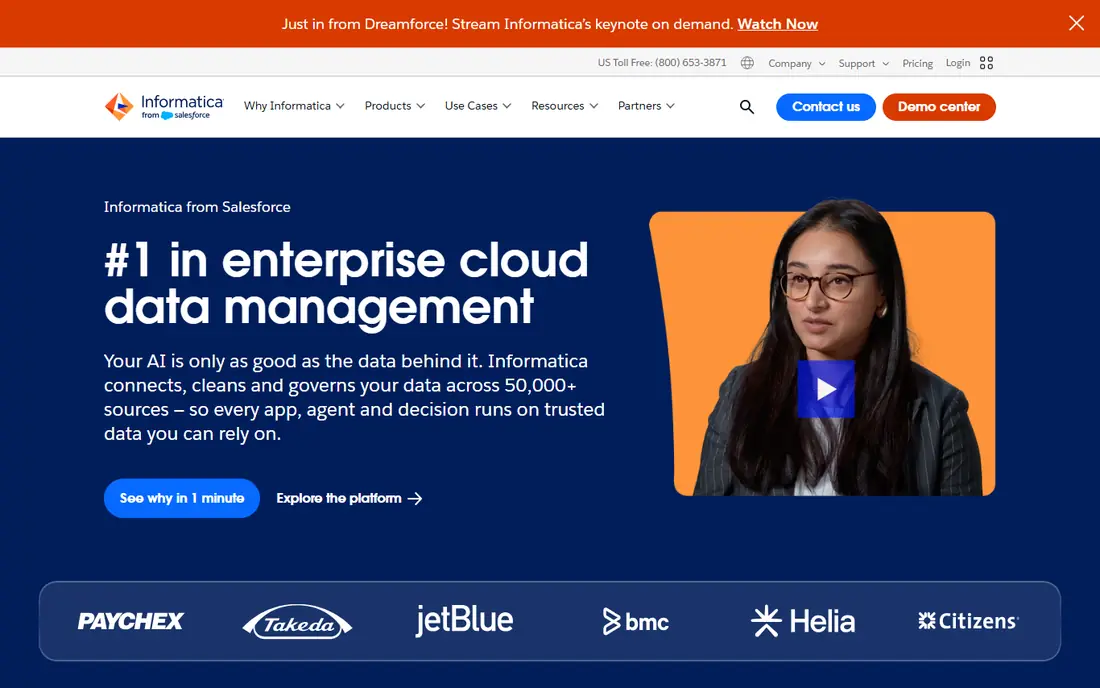
Informatica suits enterprises that already use its governance, catalog, and data quality tools. Masking sits inside that broader platform, so policies, lineage, and classification can inform what gets masked and how. It supports both static masking for test copies and dynamic masking for controlled production access.
Pricing is quote-based and consumption-based, which makes budgeting harder for small teams. For large organizations with governance, analytics, and test data needs in one program, Informatica gives a unified approach that point tools cannot match. For masking alone, a focused tool may be simpler and cheaper.
- Static and dynamic masking
- Strong governance and catalog integration
- Broad data source support
- Quote-based and consumption-based pricing
- Platform complexity for small teams

K2view takes an entity approach: it masks a customer or business entity consistently across all systems that hold that entity, rather than masking one database at a time. That matters when customer data lives in CRM, billing, support, and warehouse systems, and a test set must stay coherent across them.
The approach requires modeling work upfront, since entities must be defined across sources. For organizations with fragmented estates and strict test-data needs, that work pays off. For a single-database team, K2view will feel larger than needed, and a DBA-led tool will be faster to deploy.
- Entity-level masking across systems
- Strong for fragmented data estates
- Built-in discovery and catalog
- Quote-based pricing
- Implementation needs data modeling work
IBM InfoSphere Optim remains relevant for legacy estates, mainframes, and long-running enterprise databases. It masks static copies, preserves referential integrity, and subsets large databases so test copies stay manageable. Organizations with decades of legacy data often already run Optim as part of their test data process.
Modern cloud and lakehouse teams may find Optim less aligned with their stack, and pricing is quote-based. For legacy-heavy organizations, however, Optim gives proven masking for systems that newer tools handle less well. Check IBM current product status and support terms before planning a new deployment.
- Strong legacy and mainframe support
- Proven static masking
- Subsetting for large databases
- Quote-based pricing
- Older interface and deployment model
- Less focus on modern lakehouse use
Immuta is a different kind of masking tool. Instead of creating masked copies, it applies dynamic policies at query time, so analysts see masked or redacted values based on their role and purpose. That approach suits lakehouse and warehouse analytics, where copying data for every use case is impractical.
Teams that need static test copies for development should not choose Immuta alone, since it does not create masked test databases in the same way. For production analytics access control, with governance and audit needs, Immuta is a strong choice. Pair it with a static tool when both test data and live access control are required.
- Dynamic, policy-based access for analytics
- Strong for lakehouse and warehouse data
- Fine-grained controls
- Not a static test-data masking tool
- Quote-based pricing
- Needs a modern data platform
Oracle Data Masking and Subsetting, part of Oracle Enterprise Manager, is the natural choice for Oracle-heavy estates. It masks sensitive data in Oracle databases, preserves formats so downstream validation still works, and subsets data for test environments. Integration with Oracle tooling makes deployment smoother inside an Oracle shop.
Outside Oracle, its value drops sharply. Licensing is processor-based, which can be costly, and non-Oracle sources need another tool. For organizations standardized on Oracle, it gives the deepest integration. For mixed estates, Delphix, Informatica, or K2view will cover more sources.
- Deep Oracle integration
- Format-preserving masking
- Subsetting and referential integrity
- Oracle-focused
- Licensing is processor-based and costly outside Oracle estates
Microsoft dynamic data masking, often called DDM, is the baseline option for SQL Server and Azure SQL teams. It masks values at query time for users without permission to see the real data, without changing stored values. Since it is included with SQL Server and Azure SQL, it costs nothing extra to start.
The limit is scope. DDM is dynamic only, so it does not create masked test copies, and its masking functions are simpler than dedicated tools. It also lacks the discovery, catalog, and policy depth of Informatica or Immuta. For a SQL Server team that needs a quick production access control, DDM is a sensible first step before buying a dedicated platform.
- Included with SQL Server and Azure SQL
- Simple dynamic masking for production access
- Low entry cost
- Dynamic only, not static test masking
- Limited masking functions
- Governance needs separate tools
Redgate Data Masker, now part of Redgate Software, suits database teams that want masking inside familiar SQL Server or Oracle workflows. It creates static masked copies with referential integrity, so test databases remain usable. Database administrators can set rules, preview results, and refresh masked copies without a large platform project.
Enterprise governance, cross-system entity masking, and dynamic access control are thinner than in Delphix or Informatica. For a DBA-led team with a clear set of databases to mask, Redgate gives a practical, focused tool at a lower entry point than enterprise platforms. Check current edition pricing on the Redgate site, since packaging changes over time.
- Published pricing approach in comparisons
- Fits SQL Server and Oracle workflows
- Strong for database teams
- Static masking focus
- Less breadth for enterprise governance
- Pricing varies by edition
Tonic.ai combines static masking with synthetic data generation, which helps teams that need realistic test data without copying production data at all. Developers can generate data that matches schema and statistical patterns, while sensitive values are masked or replaced. That approach suits modern product teams with frequent test needs.
Synthetic data still needs tuning for complex schemas, foreign keys, and business rules, or tests may pass on data that does not reflect real edge cases. Governance and catalog depth are also thinner than enterprise platforms. For teams that want fast, realistic test data with masking built in, Tonic.ai is a strong modern option.
- Static masking plus synthetic data generation
- Realistic test data for development
- Cloud and self-hosted options
- Quote-based pricing
- Synthetic data needs tuning for complex schemas
- Less governance depth than Informatica
How we picked these
We compared official product pages and recent data masking comparisons for tools still offered in 2026. We favored tools with a clear static or dynamic masking capability, referential integrity, and a distinct use case: test data, governance, entity masking, legacy support, or dynamic access. We wrote See website for pricing because most enterprise masking tools use quote-based or consumption-based pricing, and a single published figure would be misleading. Compliance coverage reflects vendor documentation for GDPR, HIPAA, PCI DSS, and CCPA, not a legal guarantee.
How to choose data masking software
Start with the use case: static test copies, dynamic production access, or both. Static tools such as Delphix, Redgate, and Tonic.ai create masked copies for development. Dynamic tools such as Immuta and Microsoft DDM control what live users see. Informatica and K2view cover broader combinations, but at enterprise cost and complexity.
Prove referential integrity first
Mask a sample database, run your application test suite against it, and check joins, foreign keys, and business rules. Masked data that breaks joins will cause false test failures and erode developer trust. Deterministic masking, where the same input always maps to the same masked output across tables, is essential for consistent results.
Classify before you mask
Discovery and classification should come before masking rules. If you do not know where personal data lives, you will miss fields in new tables and columns. Use the tool discovery features, review results with data owners, and set a refresh cadence that matches schema changes, so new sensitive fields are caught quickly.
Plan refresh and governance
Decide how often masked copies refresh, who can request unmasked access, and how masked data is audited. A masking tool without a refresh and access process will drift, and developers will work around stale data. Keep a small allowlist of fields that must stay unmasked for test logic, review it quarterly, and document every exception.
FAQ
What is the best data masking software?
Delphix is our pick for most test-data programs because it combines masking with fast virtualized delivery. Informatica suits enterprises that need masking inside a broader governance platform, while K2view suits fragmented estates that need entity-level consistency. Database teams with a smaller scope should look at Redgate or Microsoft dynamic masking first.
What are the best data masking tools for test data?
Delphix, Tonic.ai, and Redgate Data Masker are strong for test data, since they create static masked copies with referential integrity. Tonic.ai adds synthetic data generation, which helps when copying production data is not desired. Always validate masked copies with your application test suite, not just by eye.
What is the difference between static and dynamic data masking?
Static masking creates a masked copy of data for testing or development, so the stored copy no longer holds real values. Dynamic masking hides values at query time for users without permission, while stored data stays unchanged. Static masking suits test environments, while dynamic masking suits controlled production access.
Is data masking enough for GDPR and HIPAA compliance?
Masking helps, but it is not a complete compliance solution on its own. Organizations also need discovery, access controls, audit logs, retention rules, and legal review of what counts as personal data. Use masking as part of a broader data protection program, and confirm requirements with compliance and legal teams.
How much does data masking software cost?
Most enterprise masking tools use quote-based pricing, so cost depends on data volume, sources, users, and deployment model. Microsoft dynamic masking is included with SQL Server and Azure SQL, giving a low-cost baseline. Redgate offers a more focused entry point for database teams, while Delphix, Informatica, and K2view are enterprise-priced platforms.
Sources
- https://www.delphix.com
- https://www.informatica.com
- https://www.k2view.com
- https://www.ibm.com/products/infosphere-optim
- https://www.immuta.com
- https://www.oracle.com/database/technologies/data-masking-subsetting.html
- https://www.microsoft.com/en-us/sql-server
- https://www.red-gate.com/products
- https://www.tonic.ai